


heygen-com/hyperframesFrameworks & SDKs
Write HTML. Render video. Built for agents.
49k
SHAFT gives you a single Java framework for testing web, mobile, API, CLI, database, and native apps. It combines orchestration, evidence capture, and reporting so your tests run with less setup and produce consistent output. The repo is modular, so you can start with `shaft-engine` and add tools like CLI, MCP, or browser provider modules when needed.
Builders who want reusable end-to-end testing in Java with one framework and shared reporting.
You can run broad test coverage with less plumbing and get unified evidence from each run.
Runs tests across web, mobile, API, CLI, database, and native desktop flows.
Provides a maintainable Java API for writing tests with readable actions and assertions.
Collects screenshots, logs, attachments, and Allure reports in one flow.
Supports repeatable local and CI runs through explicit configuration.
Ships optional modules for BrowserStack, capture, heal, CLI, MCP, and IntelliJ support.
Includes first-party skills plus MCP and CLI assets for agent-assisted test work.
mvn test


Reliable Java test automation, from first intent to production-grade evidence.
One strong, maintainable framework for Web, Mobile, API, CLI, Database, and native testing—with synchronized actions, configuration-first execution, readable assertions, and unified reports.



Generate your first project · Explore the user guide · Star SHAFT on GitHub ⭐
SHAFT removes the repeated plumbing around drivers, waits, assertions, configuration, test data, screenshots, logs, and Allure evidence. Its modular Maven reactor keeps the core lean and lets teams add advanced tooling only when they need it.
Open the SHAFT landing page and generate a ready-to-run Maven project.
Extract it and run:
mvn test
Inspect the sample result, screenshots, logs, and Allure evidence.
The generated project uses the canonical Maven coordinate io.github.shafthq:shaft-engine and gives you a repeatable baseline for local runs and CI.
Test intent and configuration enter SHAFT's orchestration layer, fan out across the required execution surfaces, and return through one unified evidence flow.
flowchart LR
    accTitle: SHAFT execution and evidence workflow
    accDescr: Test intent and configuration enter SHAFT orchestration, run across Web, Mobile, API, and Native execution surfaces, and produce unified evidence.
    I[Test intent] --> S[SHAFT orchestration]
    C[Configuration] --> S
    S --> W[Web]
    S --> M[Mobile]
    S --> A[API]
    S --> N[Native, CLI, and Database]
    W --> E[Unified evidence]
    M --> E
    A --> E
    N --> E
| Engineering need | What SHAFT provides |
|---|---|
| Stable UI automation | Managed Selenium and Appium drivers, synchronized actions, locator builders, screenshots, and accessibility evidence. |
| End-to-end coverage | REST, GraphQL, Database, CLI, and native desktop actions in the same test flow. |
| Trustworthy verdicts | Hard and soft assertions, structured logs, attachments, failure context, and Allure reports. |
| Scalable execution | Configuration-first local, Grid, BrowserStack, LambdaTest, TestNG, JUnit, and Cucumber runs. |
| Maintainable architecture | A focused engine, BOM-aligned optional modules, public extension points, and reusable test assets. |
| Assisted workflows | Capture, Doctor, deterministic Heal, MCP/CLI tools, provider adapters, and an IntelliJ IDEA plugin. |
shaft-engine, then adopt visual, video,
cloud, native, or agentic modules without rebuilding the test architecture.SHAFT ships 30 first-party skills for planning, authoring, running, diagnosing,
and reporting tests. Start with $shaft-developer; it routes the immediate job
to one focused specialist. Exact MCP names and CLI syntax are generated from
source in shaft-mcp-tools.md and
shaft-cli-commands.md.
BrowserStack, LambdaTest, Applitools, and JetBrains have provided tooling or open-source program support. This is support for the project, not a claim of financial sponsorship, customer status, or endorsement.
SHAFT is free and MIT licensed. You can support ongoing maintenance, documentation, and public infrastructure through GitHub Sponsors.
MIT licensed — see LICENSE.
Sign in to join the discussion.
No comments yet. Be the first to say what this is good for.
Write HTML. Render video. Built for agents.
Ultra-lightweight, open-source, self-hosted personal AI agent framework in Python with WebUI, tools, memory, MCP, multi-agent workflows, automation, and chat apps

SkillOpt is a text-space optimizer that trains reusable natural-language skills for frozen LLM agents through trajectory-driven edits, validation-gated updates, and deployable best_skill.md artifacts.
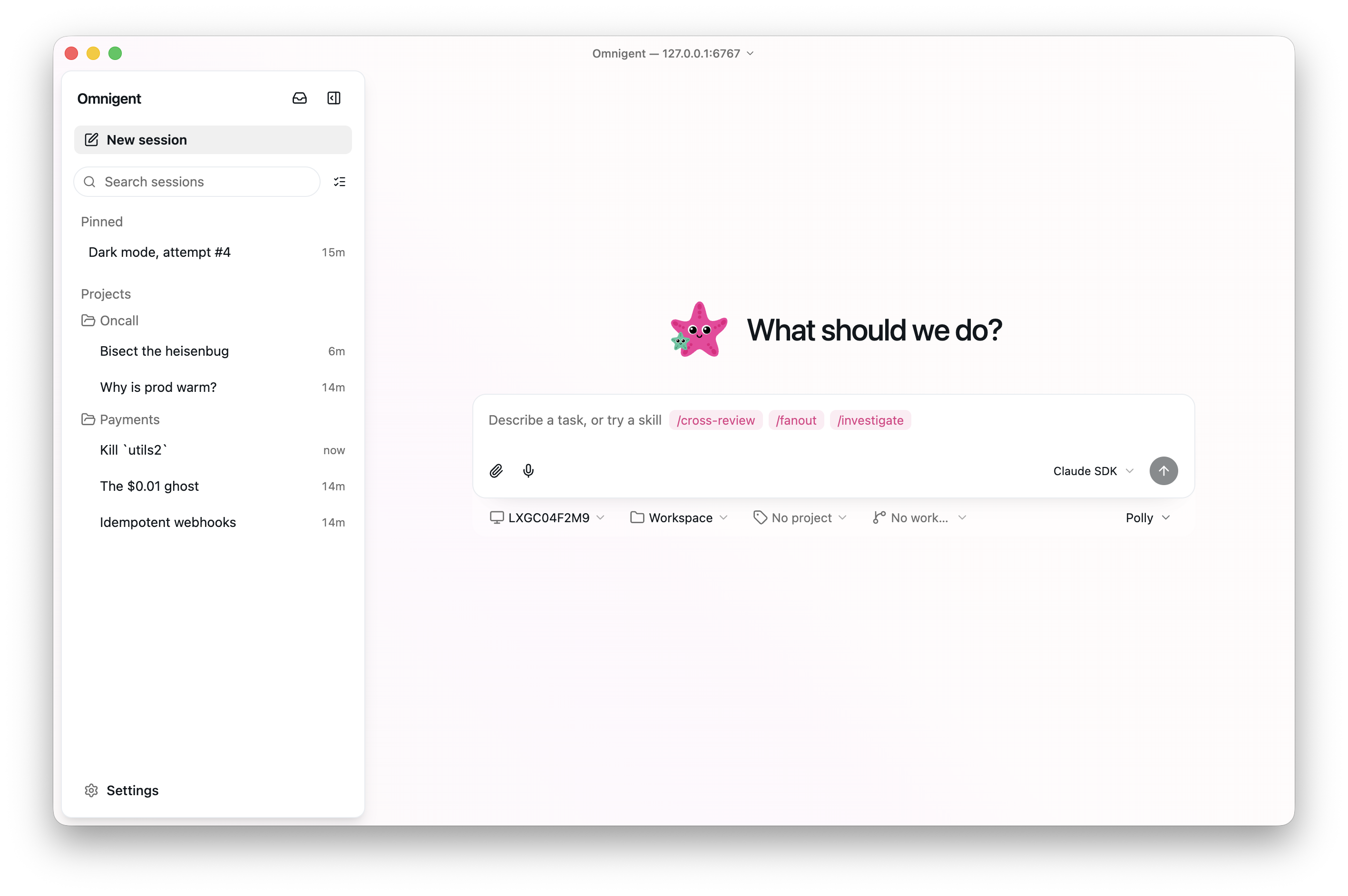
Omnigent is an open-source AI agent framework and meta-harness: orchestrate Claude Code, Codex, Cursor, Pi, and custom agents — swap harnesses without rewriting, enforce policies and sandboxing, and collaborate in real time from any device.

A theoretical reconstruction of the Claude Mythos architecture, built from first principles using the available research literature.
🕷️ An adaptive Web Scraping framework that handles everything from a single request to a full-scale crawl!