
koala73/worldmonitorConnectors
Real-time global intelligence dashboard. AI-powered news aggregation, geopolitical monitoring, and infrastructure tracking in a unified situational awareness interface
86k
This project exposes Discord actions through Model Context Protocol so an agent can work with a server instead of only reading text. It supports message, channel, role, moderation, webhook, invite, scheduled event, permission, forum, and emoji tools.
Builders who want their MCP agent to operate Discord servers and messages.
You can let your agent send messages, manage channels, and handle moderation inside Discord.
Gets server details and finds a Discord user ID by name for mention usage.
Sends, edits, deletes, and reads channel messages and private messages, including attachment metadata and cursors.
Creates, edits, deletes, finds, lists, and moves text channels and categories.
Creates and manages webhooks and invites, and sends messages through webhooks.
Lists, creates, edits, deletes, assigns, and removes roles, and supports kick, ban, timeout, nickname, and voice moderation actions.
Creates and manages forum channels and posts, scheduled events, permissions, and custom emoji.
export DISCORD_TOKEN="YOUR_DISCORD_BOT_TOKEN"
export DISCORD_GUILD_ID="OPTIONAL_DEFAULT_SERVER_ID"
export SPRING_PROFILES_ACTIVE=http
docker run -d -i \
  --name discord-mcp \
  --restart unless-stopped \
  -p 8085:8085 \
  -e SPRING_PROFILES_ACTIVE \
  -e DISCORD_TOKEN \
  -e DISCORD_GUILD_ID \
  saseq/discord-mcp:latest
git clone https://github.com/SaseQ/discord-mcp
cd discord-mcp
cat > .env <<EOF
SPRING_PROFILES_ACTIVE=http
DISCORD_TOKEN=<YOUR_DISCORD_BOT_TOKEN>
DISCORD_GUILD_ID=<OPTIONAL_DEFAULT_SERVER_ID>
EOF
docker compose up -d --build



A Model Context Protocol (MCP) server for the Discord API using (JDA), designed to integrate Discord bots with MCP-compatible applications such as Claude, ChatGPT etc. It allows AI assistants to interact with Discord by managing channels, sending messages, and retrieving server information. Ideal for building powerful Discord automation and AI-driven workflows.
[!NOTE] Docker installation is required. Full instructions can be found on docker.com.
export DISCORD_TOKEN="YOUR_DISCORD_BOT_TOKEN"
export DISCORD_GUILD_ID="OPTIONAL_DEFAULT_SERVER_ID"
export SPRING_PROFILES_ACTIVE=http
[!IMPORTANT] Instructions for creating a Discord bot and retrieving its token can be found here.
[!TIP] The
DISCORD_GUILD_IDenv variable is optional.When provided, it sets a default Discord server ID so any tool that accepts a
guildIdparameter can omit it.
docker run -d -i \
  --name discord-mcp \
  --restart unless-stopped \
  -p 8085:8085 \
  -e SPRING_PROFILES_ACTIVE \
  -e DISCORD_TOKEN \
  -e DISCORD_GUILD_ID \
  saseq/discord-mcp:latest
Default MCP endpoint URL (HTTP profile): http://localhost:8085/mcp
git clone https://github.com/SaseQ/discord-mcp
cd discord-mcp
cat > .env <<EOF
SPRING_PROFILES_ACTIVE=http
DISCORD_TOKEN=<YOUR_DISCORD_BOT_TOKEN>
DISCORD_GUILD_ID=<OPTIONAL_DEFAULT_SERVER_ID>
EOF
docker compose up -d --build
docker ps --filter name=discord-mcp
curl -fsS http://localhost:8085/actuator/health
[!TIP] You do not need to set
LOGGING_PATTERN_CONSOLEmanually. Logging is configured automatically for bothhttpand legacystdiomodes.
Default MCP endpoint URL (HTTP profile): http://localhost:8085/mcp
Health endpoint (Actuator): http://localhost:8085/actuator/health
git clone https://github.com/SaseQ/discord-mcp
NOTE: Maven installation is required to use the mvn command. Full instructions can be found here.
cd discord-mcp
mvn clean package # The jar file will be available in the /target directory
Run the JAR as a long-running server:
DISCORD_TOKEN=<YOUR_DISCORD_BOT_TOKEN> \
DISCORD_GUILD_ID=<OPTIONAL_DEFAULT_SERVER_ID> \
SPRING_PROFILES_ACTIVE=http \
java -jar /absolute/path/to/discord-mcp-1.0.0.jar
NOTE: The
DISCORD_GUILD_IDenvironment variable is optional. When provided, it sets a default Discord server ID so any tool that accepts aguildIdparameter can omit it.
Default MCP endpoint URL (HTTP profile): http://localhost:8085/mcp
Recommended (HTTP singleton mode):
{
  "mcpServers": {
    "discord-mcp": {
      "url": "http://localhost:8085/mcp"
    }
  }
}
Legacy mode (stdio, starts a new process/container per client session):
{
  "mcpServers": {
    "discord-mcp": {
      "command": "docker",
      "args": [
        "run",
        "--rm",
        "-i",
        "-e",
        "DISCORD_TOKEN=<YOUR_DISCORD_BOT_TOKEN>",
        "-e",
        "DISCORD_GUILD_ID=<OPTIONAL_DEFAULT_SERVER_ID>",
        "saseq/discord-mcp:latest"
      ]
    }
  }
}
Recommended (HTTP singleton mode):
claude mcp add discord-mcp --transport http http://localhost:8085/mcp
Legacy mode (stdio, starts a new process/container per client session):
claude mcp add discord-mcp -- docker run --rm -i -e DISCORD_TOKEN=<YOUR_DISCORD_BOT_TOKEN> -e DISCORD_GUILD_ID=<OPTIONAL_DEFAULT_SERVER_ID> saseq/discord-mcp:latest
codex mcp add discord-mcp --url http://localhost:8085/mcp
codex mcp list
Run this command:
openclaw mcp set discord-mcp '{"url":"http://localhost:8085/mcp","transport":"streamable-http"}'
openclaw mcp list
OR
Pasting the following configuration into your OpenClaw ~/.openclaw/config.json file:
{
  "mcp": {
    "servers": {
      "discord-mcp": {
        "url": "http://localhost:8085/mcp",
        "transport": "streamable-http"
      }
    }
  }
}
Go to: Settings -> Cursor Settings -> MCP -> Add new global MCP server
Pasting the following configuration into your Cursor ~/.cursor/mcp.json file is the recommended approach. You may also install in a specific project by creating .cursor/mcp.json in your project folder. See Cursor MCP docs for more info.
{
  "mcpServers": {
    "discord-mcp": {
      "url": "http://localhost:8085/mcp"
    }
  }
}
http://localhost:8085/mcpdiscord-mcp inside your workflow.localhost may point to the n8n container itself, not your host machine.http://discord-mcp:8085/mcpSTDIO local config (Default, legacy):
Past the following configuration into your Claude Desktop
claude_desktop_config.jsonfile.
{
  "mcpServers": {
    "discord-mcp": {
      "command": "docker",
      "args": [
        "run",
        "--rm",
        "-i",
        "-e",
        "DISCORD_TOKEN=<YOUR_DISCORD_BOT_TOKEN>",
        "-e",
        "DISCORD_GUILD_ID=<OPTIONAL_DEFAULT_SERVER_ID>",
        "saseq/discord-mcp:latest"
      ]
    }
  }
}
Remote MCP Connector:
Settings -> Connectors.https://<PUBLIC_HOST>/mcp).Claude Desktop remote connectors are managed via Connectors UI (not
claude_desktop_config.json).http://localhost:8085/mcpis reachable only from your machine. For Claude Desktop remote connectors, expose the endpoint with public HTTPS (for example tunnel/reverse proxy).
get_server_info: Get detailed discord server informationget_user_id_by_name: Get a Discord user's ID by username in a guild for ping usage <@id>send_private_message: Send a private message to a specific useredit_private_message: Edit a private message from a specific userdelete_private_message: Delete a private message from a specific userread_private_messages: Read private message history from a specific user (includes attachment metadata, supports count 1-100 and optional cursor: before or after or around)send_message: Send a message to a specific channeledit_message: Edit a message from a specific channeldelete_message: Delete a message from a specific channelread_messages: Read message history from a specific channel (includes attachment metadata, supports count 1-100 and optional cursor: before or after or around)add_reaction: Add a reaction (emoji) to a specific messageremove_reaction: Remove a specified reaction (emoji) from a messagecreate_text_channel: Create a new text channeledit_text_channel: Edit settings of a text channel (name, topic, nsfw, slowmode, category, position)delete_channel: Delete a channelfind_channel: Find a channel type and ID using name and server IDlist_channels: List of all channelsget_channel_info: Get detailed information about a channelmove_channel: Move a channel to another category and/or change its positioncreate_category: Create a new category for channelsedit_category: Edit a category (rename or move position)delete_category: Delete a categoryfind_category: Find a category ID using name and server IDlist_channels_in_category: List of channels in a specific categorycreate_webhook: Create a new webhook on a specific channeldelete_webhook: Delete a webhooklist_webhooks: List of webhooks on a specific channelsend_webhook_message: Send a message via webhooklist_roles: Get a list of all roles on the server with their detailscreate_role: Create a new role on the serveredit_role: Modify an existing role's settingsdelete_role: Permanently delete a role from the serverassign_role: Assign a role to a userremove_role: Remove a role from a userkick_member: Kicks a member from the serverban_member: Bans a user from the serverunban_member: Removes a ban from a usertimeout_member: Disables communication for a member for a specified durationremove_timeout: Removes a timeout (unmute) from a member before it expiresset_nickname: Changes a member's nickname on the serverget_bans: Returns a list of banned users on the server with ban reasonscreate_voice_channel: Create a new voice channel in a guildcreate_stage_channel: Create a new stage channel for audio eventsedit_voice_channel: Edit settings of a voice or stage channel (name, bitrate, user limit, region)move_member: Move a member to another voice channeldisconnect_member: Disconnect a member from their current voice channelmodify_voice_state: Server mute or deafen a member in voice channelscreate_guild_scheduled_event: Schedule a new event on the server (voice, stage, or external)edit_guild_scheduled_event: Modify event details or change its status (start, complete, cancel)delete_guild_scheduled_event: Permanently delete a scheduled eventlist_guild_scheduled_events: List all active and scheduled events on the serverget_guild_scheduled_event_users: Get list of users interested in a scheduled eventlist_channel_permission_overwrites: List all permission overwrites for a channel with role/member breakdownupsert_role_channel_permissions: Create or update permission overwrite for a role on a channelupsert_member_channel_permissions: Create or update permission overwrite for a member on a channeldelete_channel_permission_overwrite: Delete a permission overwrite for a role or member from a channelcreate_invite: Create a new invite link for a specific channellist_invites: List all active invites on the server with their statisticsdelete_invite: Delete (revoke) an invite so the link stops workingget_invite_details: Get details about a specific invite (works for any public invite)create_forum_channel: Create a new forum channeledit_forum_channel: Edit settings of a forum channel (name, topic, nsfw, slowmode, category, position, default sort, default layout)list_forum_channels: List all forum channels in the serverget_forum_channel_info: Get detailed information about a forum channel including tags and settingslist_forum_tags: List all available tags in a forum channelcreate_forum_post: Create a new forum post (thread) with an initial message in a forum channellist_forum_posts: List active posts (threads) in a forum channelmodify_forum_post: Modify a forum post: lock/unlock, archive/unarchive, pin/unpin, or change applied tagslist_emojis: List all custom emojis on the serverget_emoji_details: Get detailed information about a specific custom emojicreate_emoji: Upload a new custom emoji to the server (base64 or image URL, max 256KB)edit_emoji: Edit an existing emoji's name or role restrictionsdelete_emoji: Permanently delete a custom emoji from the serverIf
DISCORD_GUILD_IDis set, theguildIdparameter becomes optional for all tools above.
A more detailed examples can be found in the Wiki.
Sign in to join the discussion.
No comments yet. Be the first to say what this is good for.
Real-time global intelligence dashboard. AI-powered news aggregation, geopolitical monitoring, and infrastructure tracking in a unified situational awareness interface
High-performance code intelligence MCP server. Indexes codebases into a persistent knowledge graph — average repo in milliseconds. 158 languages, sub-ms queries, 99% fewer tokens. Single static binary, zero dependencies.
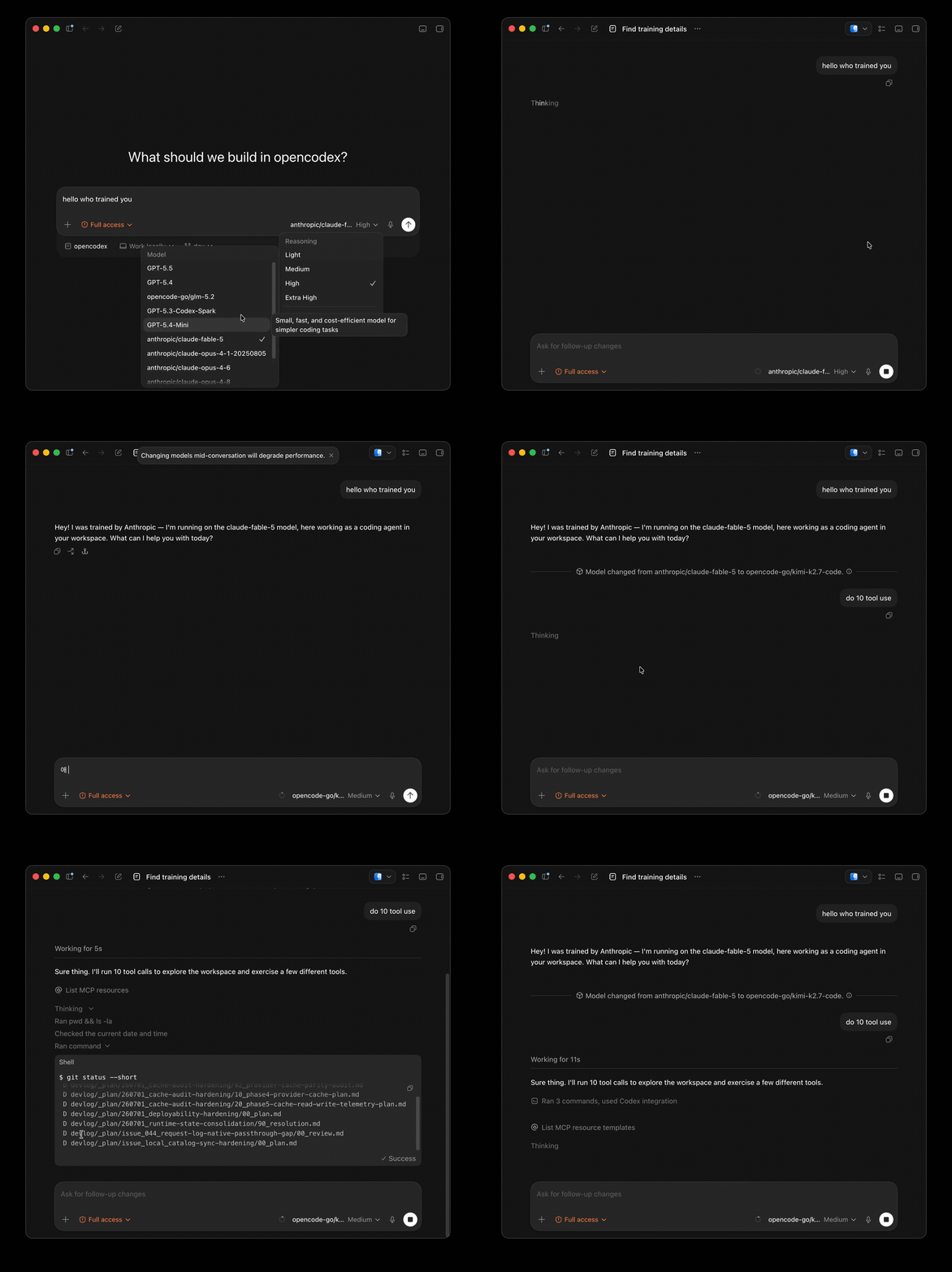
Universal provider proxy for OpenAI Codex & Claude Code — use any LLM (Claude, Gemini, Grok, DeepSeek, Ollama…) with Codex CLI, App, SDK, and Claude Code

Git-native persistent memory for AI coding agents. Implements Google OKF v0.2 with sub-300µs in-memory BM25 search, embedded MCP server, and progressive disclosure. Slashes token bloat by 80% with zero external databases or dependencies. Built in pure Go.

Local-first code intelligence graph for MCP and CLI. Builds a persistent map of your codebase so AI coding tools read only what matters, with benchmarked context reductions on reviews and large-repo workflows.

Stop your AI from making things up — it proposes, deterministic tools decide, every claim checked against ground truth with evidence. Grounded facts and context survive resets. Reverse engineering is the proving ground. MCP server + CLI.