








heygen-com/hyperframesFrameworks & SDKs
Write HTML. Render video. Built for agents.
49k
FastMCP is a Python framework for Model Context Protocol work. It lets you turn ordinary Python functions into MCP tools, resources, and prompts, and it manages the protocol details around them. It also includes client support for connecting to local or remote MCP servers, plus app patterns for interactive UIs inside the conversation. The repo ships with documentation, examples, tests, and supporting packages for slim, remote, and task-oriented use cases.

Builders who want to create or connect MCP tools and servers in Python.
You can build MCP integrations in Python without wiring up schema, transport, and lifecycle details by hand.
Define tools with `@mcp.tool` on normal Python functions and run the server with `mcp.run()`.
Connect to MCP servers by URL with protocol handling for local and remote servers.
Serve tools with interactive UIs rendered in the conversation.
Generate tool schema, validation, and documentation from Python code.
Ship with many example apps and server patterns under `examples/` and `docs/`.
uv add fastmcp
The Model Context Protocol (MCP) connects LLMs to tools and data. FastMCP is a full MCP application framework for servers, clients, and interactive apps. A server starts with ordinary Python:
from fastmcp import FastMCP

mcp = FastMCP("Demo 🚀")

@mcp.tool
def add(a: int, b: int) -> int:
    """Add two numbers"""
    return a + b

if __name__ == "__main__":
    mcp.run()
Building an effective MCP application is harder than it looks. FastMCP handles all of it. Declare a tool with a Python function, and the schema, validation, and documentation are generated automatically. Connect to a server with a URL, and transport negotiation, authentication, and protocol lifecycle are managed for you. You focus on your logic, and the MCP part just works: with FastMCP, best practices are built in.
That's why FastMCP is the standard framework for working with MCP. FastMCP 1.0 was incorporated into the official MCP Python SDK in 2024. Today, the actively maintained standalone project is downloaded a million times a day, and some version of FastMCP powers 70% of MCP servers across all languages.
FastMCP has three pillars:
Servers Expose tools, resources, and prompts to LLMs. |
Apps Give your tools interactive UIs rendered directly in the conversation. |
Clients Connect to any MCP server — local or remote, programmatic or CLI. |
Servers wrap your Python functions into MCP-compliant tools, resources, and prompts. Clients connect to any server with full protocol support. And Apps give your tools interactive UIs rendered directly in the conversation.
Building in TypeScript? FastMCP for TypeScript is the official counterpart, built and maintained by the same team. Same pillars, same ideas, npm install @prefecthq/fastmcp-ts.
Ready to build? Start with the installation guide or jump straight to the quickstart.
FastMCP handles the MCP application layer. Prefect Horizon is the enterprise MCP gateway for scaling servers and tools across teams, with centralized governance over how they are deployed, discovered, secured, and used.
FastMCP and Horizon are built by the same team at Prefect.
Deploy FastMCP servers from GitHub with branch previews and instant rollback. Create a private registry of every MCP your company uses. Secure access with SSO and tool-level RBAC. Get audit logs, observability, and governance across your MCP stack. Remix approved tools into purpose-built endpoints for teams and agents.
Start with FastMCP. Scale with Horizon →
We recommend adding FastMCP to your project with uv:
uv add fastmcp
For full installation instructions, including verification and upgrading, see the Installation Guide.
Upgrading? We have guides for:
FastMCP's complete documentation is available at gofastmcp.com, including detailed guides, API references, and advanced patterns.
Documentation is also available in llms.txt format, which is a simple markdown standard that LLMs can consume easily:
llms.txt is essentially a sitemap, listing all the pages in the documentation.llms-full.txt contains the entire documentation. Note this may exceed the context window of your LLM.Community: Join our Discord server to connect with other FastMCP developers and share what you're building.
We welcome contributions! See the Contributing Guide for setup instructions, testing requirements, and PR guidelines.
Sign in to join the discussion.
No comments yet. Be the first to say what this is good for.
Write HTML. Render video. Built for agents.
Ultra-lightweight, open-source, self-hosted personal AI agent framework in Python with WebUI, tools, memory, MCP, multi-agent workflows, automation, and chat apps

SkillOpt is a text-space optimizer that trains reusable natural-language skills for frozen LLM agents through trajectory-driven edits, validation-gated updates, and deployable best_skill.md artifacts.
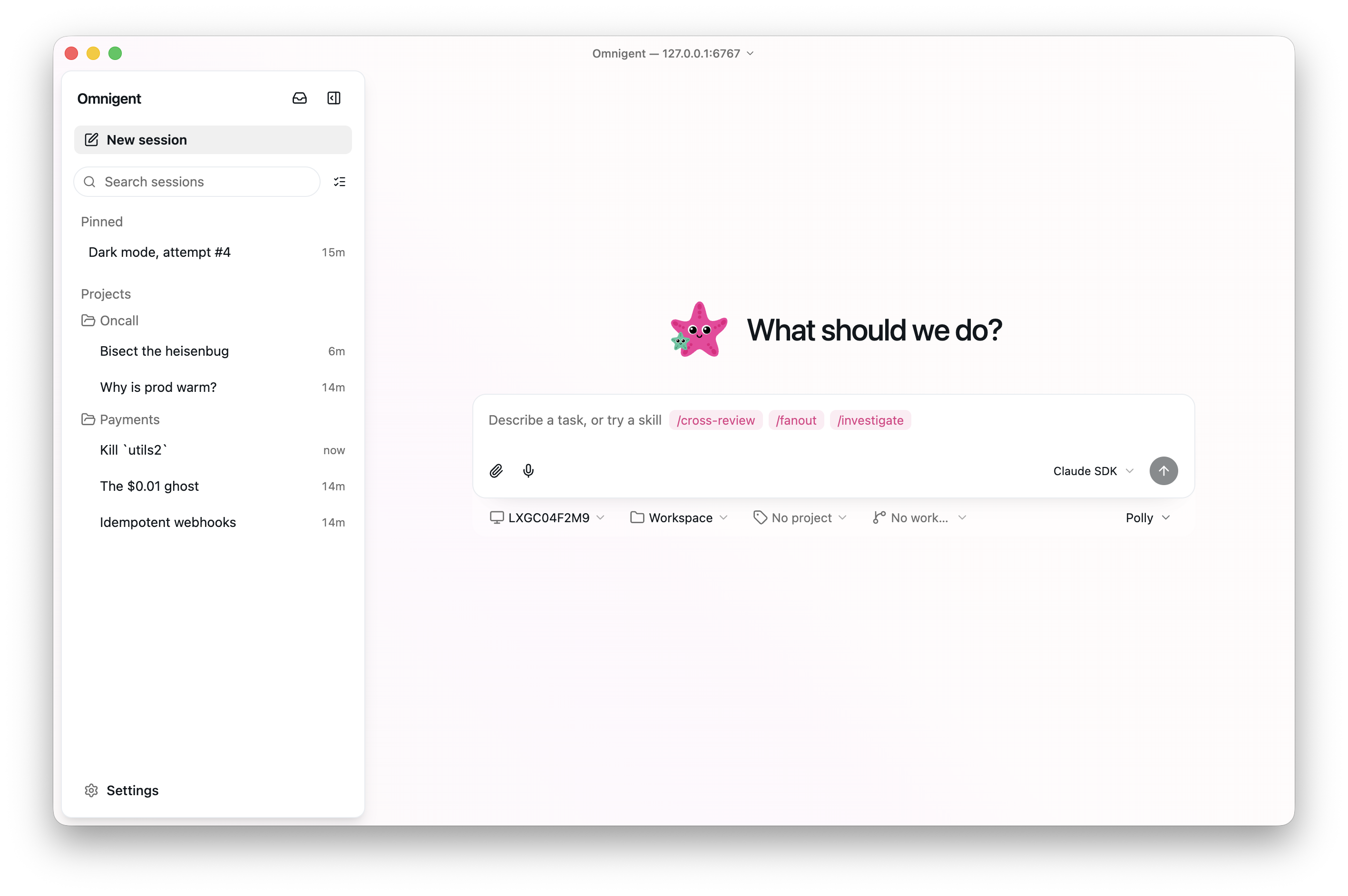
Omnigent is an open-source AI agent framework and meta-harness: orchestrate Claude Code, Codex, Cursor, Pi, and custom agents — swap harnesses without rewriting, enforce policies and sandboxing, and collaborate in real time from any device.

A theoretical reconstruction of the Claude Mythos architecture, built from first principles using the available research literature.
🕷️ An adaptive Web Scraping framework that handles everything from a single request to a full-scale crawl!