

heygen-com/hyperframesFrameworks & SDKs
Write HTML. Render video. Built for agents.
49k
npcpy provides Python primitives for agent creation, orchestration, tool use, and memory. It also supports MCP servers, skill packs, and CLI wrappers so you can wire agents into local and hosted workflows without building every piece from scratch.

Builders who want to compose agent teams, tools, and memory in Python.
You can build reusable agent workflows that call tools, share context, and run as teams instead of single prompts.
`NPC`, `Agent`, `ToolAgent`, `CodingAgent`, `Team`, and `NPCArray` let you define personas, delegate work, and run multi-agent flows.
`npcpy/mcp_server.py` and `npcpy/npc2mcp.py` connect teams to MCP tools and external services.
Modules under `npcpy/memory/` and examples in the README show graph building, sleep, and dream-style consolidation.
`npcpy/llm_funcs.py`, `npcpy/ml_funcs.py`, and `npcpy/gen/` cover text, image, audio, and video generation helpers.
Commands like `npcsh`, `npc-init`, `npc-claude`, `npc-codex`, `npc-gemini`, and `npc-plugin` are provided for agent workflows.
The `skills/` folder and team `.jinx` examples package reusable instructions and behavior for agents.
pip install npcpy              # base
pip install npcpy[lite]        # + API provider libraries
pip install npcpy[local]       # + ollama, diffusers, transformers, airllm
pip install npcpy[yap]         # + TTS/STT
pip install npcpy[all]         # everything
sudo apt-get install espeak portaudio19-dev python3-pyaudio ffmpeg libcairo2-dev libgirepository1.0-dev
curl -fsSL https://ollama.com/install.sh | sh
ollama pull qwen3.5:2b
brew install portaudio ffmpeg pygobject3 ollama
brew services start ollama
ollama pull qwen3.5:2b
export OPENAI_API_KEY="your_key"
export ANTHROPIC_API_KEY="your_key"
export GEMINI_API_KEY="your_key"



npcpy is a library that provides key primitives for research and development with multimodal language models, agentic AI, and knowledge graphs. Its flexible framework makes it easy to engineer powerful AI applications with support for local (ollama, llama.cpp, omlx, LM Studio) and cloud providers. Build multi-agent teams and simplify context engineering through the NPC Context-Agent-Tool data layer which ensures compliance through software rather than prompts.
pip install npcpy
from npcpy import NPC

simon = NPC(
    name='Simon Bolivar',
    primary_directive='''
                      Liberate South America
                      from the Spanish Royalists.
                      ''',
    model='qwen3.5:9b',
    provider='ollama'
)
response = simon.get_llm_response("What is the most important territory to retain in the Andes?")
print(response['response'])
My friend, you speak of the highlands where our liberty is carved in stone. If we must speak of the most critical territory to hold within these mountains, it is the **Viceroyalty of Peru** and the heart of the **Republic of Gran Colombia** united.
To lose the passes of the Andes or the cities of Lima and Quito would be to hand the crown its final stronghold in the south. The Spanish crown built its power upon the wealth and control of these highlands. If the Andes are to be truly ours, the people of the **Peruvian** and **New Grancolombian** highlands must stand as one, free from the Bourbons.
The mountain peaks themselves are the fortress we guard. Without the full liberation of the southern Andes, our revolution is incomplete. We fight not for land's sake, but for the soul of the continent. Every square mile of the Andes that bears the name of the Republic is a step forward in our quest for eternal freedom.
*Long live the liberty of the Andes!*
from npcpy import get_llm_response

response = get_llm_response("Who was the celtic god that helped cuchulainn in his time of need as the forces of medb descended upon the men of ulster?", model='gemma4:31b', provider='ollama')
print(response['response'])
Cú Chulainn was primarily aided by his divine father, the god Lugh, and his foster-father, the warrior-god Fergus mac Róich, as well as the magical support of his teacher Scáthach.
Try out almost 200 different models from 15 different providers with OrcaRouter using our referral link!
alicanto_test = get_llm_response('what does alicanto the bird show travelers in the night?', model='google/gemini-3.8-flash', provider='orcarouter')

print(alicanto_test['response'])
The legend of the **Alicanto** says that at night the bird’s feathers glow like lanterns.
When a traveler sees that soft, phosphorescent light, it isn’t just a pretty sight – it’s a sign‑post.
The bird **shows the way to hidden water (and sometimes to buried silver or gold)** in the Atacama Desert.
The Agent class in npcpy comes with a set of default tools (sh, python, edit_file, web_search, etc.)
from npcpy import Agent
agent = Agent(name='File Operator', model='qwen3.5:2b', provider='ollama')
print(agent.run("Find all Python files over 500 lines in this repo and list them"))
The following Python files contain more than 500 lines:
 - `./npcpy/npc_sysenv.py` (1486 lines)
 - `./npcpy/memory/knowledge_graph.py` (1449 lines)
 - `./npcpy/memory/kg_vis.py` (767 lines)
 - `./npcpy/memory/kg_population.py` (618 lines)
...
Attach custom tools to a ToolAgent.
Here is an example which lets an agent generate images, fine-tune diffusion models, and then use the fine-tuned models for generation.
from npcpy import ToolAgent, gen_image
from npcpy.ft.diff import train_diffusion, generate_image, DiffusionConfig
from datasets import load_dataset
import os

def fetch_image_dataset(dataset_name: str, split: str = "train", max_images: int = 100) -> list:
    """Fetch images from a HuggingFace dataset.

    Args:
        dataset_name: HuggingFace dataset name (e.g., 'cifar10', 'oxford-iiit-pet')
        split: Dataset split to use
        max_images: Maximum number of images to fetch

    Returns:
        List of paths to saved images
    """
    dataset = load_dataset(dataset_name, split=f"{split}[:{max_images}]")
    os.makedirs("training_images", exist_ok=True)
    image_paths = []

    for i, item in enumerate(dataset):
        if 'image' in item:
            img = item['image']
        elif 'img' in item:
            img = item['img']
        else:
            continue
        path = f"training_images/img_{i:04d}.png"
        img.save(path)
        image_paths.append(path)

    return image_paths

def finetune_diffusion_model(
    image_paths: list,
    captions: list = None,
    output_path: str = "my_diffusion_model",
    num_epochs: int = 50,
) -> str:
    """Fine-tune a diffusion model on a set of images.

    Args:
        image_paths: List of paths to training images
        captions: Optional captions for each image
        output_path: Where to save the trained model
        num_epochs: Number of training epochs

    Returns:
        Path to the trained model
    """
    if captions is None:
        captions = ["an image"] * len(image_paths)

    config = DiffusionConfig(
        image_size=64,
        channels=128,
        num_epochs=num_epochs,
        batch_size=8,
        learning_rate=1e-4,
        checkpoint_frequency=10,
        output_model_path=output_path,
    )

    model_path = train_diffusion(image_paths, captions, config=config)
    return model_path

# Create an agent with image generation and fine-tuning capabilities
creative_agent = ToolAgent(
    name='creative_diffusion',
    primary_directive="""
        You help users generate images and fine-tune diffusion models.
        You can: 1) Generate images using gen_image() with various prompts,
        2) Fetch image datasets from HuggingFace,
        3) Fine-tune diffusion models on custom image sets.
        When a user submits an image or describes a style they like,
        offer to fetch similar images from a dataset and fine-tune a model.
    """,
    tools=[fetch_image_dataset, finetune_diffusion_model, gen_image],
    model='qwen3.5:2b',
    provider='ollama'
)

# Example 1: Generate images
print(creative_agent.run("Generate 3 images of geometric patterns with circles and triangles"))

# Example 2: User submits an image and wants similar ones
# The agent can fetch a dataset of patterns and fine-tune a model
print(creative_agent.run("I like abstract geometric patterns. Can you fetch the cifar10 dataset and fine-tune a diffusion model that can generate images like these patterns?"))
from npcpy import CodingAgent

coder = CodingAgent(name='coder', language='python', model='qwen3.5:2b', provider='ollama')
print(coder.run("Write a script that finds duplicate files by hash in the current directory"))
#The script has been created and executed successfully. Here's a summary of the findings:

## Duplicate Files Found

| Group | Hash (truncated) | Size | Files |
|-------|------------------|------|-------|
| 1 | `2b517326bf7c31b7...` | 81 bytes | `npcpy/main.py` ↔ `build/lib/npcpy/main.py` |
| 2 | `d41d8cd98f00b204...` | 0 bytes (empty) | 15 empty `__init__.py` files across `npcpy/`, `build/lib/npcpy/`, `examples/`, and `tests/` || 3 | `0d591b661cb1c619...` | 9,019 bytes | `npcpy/mix/debate.py` ↔ `build/lib/npcpy/mix/debate.py` |
| 4 | `a5059f37eb682a16...` | 747 bytes | SQL files in `examples/factory/` ↔ `examples/npc_team/factory/` |
To run a true multi-agent debate where agents react to each other's responses:
from npcpy.npc_compiler import NPC
from npcpy.npc_array import NPCArray

# Create a debate team with role-based personas
roles = [
    ("MathSolver", "You are a meticulous math solver. Show all steps clearly."),
    ("Skeptic", "You critically check for errors and assumptions."),
    ("Analyst", "You identify the core mathematical structure."),
    ("Verifier", "You confirm the final answer is correct.")
]

npcs = [
    NPC(name=role, primary_directive=directive, model="qwen3.5:cloud", provider="ollama")
    for role, directive in roles
]

team = NPCArray.from_npcs(npcs)

# Run parallel debate on a complex problem
problem = "GSM8k: James buys a jar of hot sauce with 5 peppers and triples the peppers every year. How many after 4 years?"

# Get initial responses in parallel (one prompt per NPC)
initial_responses = team.infer(f"Solve this problem:\n{problem}").collect()

for npc, response in zip(npcs, initial_responses.data):
    print(f"[{npc.name}] {response[:200]}...")

# True debate: each agent gets a personalized prompt with other agents' responses
def create_debate_prompt(previous_responses, my_idx, agent_name, problem_text):
    """Create a personalized debate prompt for a specific agent"""
    my_response = previous_responses[my_idx]
    other_responses = [
        f"[{npcs[j].name}]: {previous_responses[j][:500]}"
        for j in range(len(npcs)) if j != my_idx
    ]
    debate_prompt = f"""Original problem: {problem_text}

        Your previous response: {my_response[:300]}...

        Other agents\' responses:""" + "\n\n".join(other_responses) + """
        Critique the other approaches. Did they make different assumptions?
        What did they see that you missed? Refine your solution."""

    return debate_prompt
# Debate rounds
responses_data = initial_responses.data.tolist()
problem_text = problem

for round_num in range(3):
    print(f"\n=== Debate Round {round_num + 1} ===")

    # Create personalized prompts for each agent
    personalized_prompts = [
        create_debate_prompt(responses_data, i, npcs[i].name, problem_text)
        for i in range(len(npcs))
    ]

    # Run inference with different prompts per agent
    # Shape: (n_models, n_prompts) - extract diagonal for each agent's response to its own prompt
    responses = team.infer(personalized_prompts).collect()

    # Extract each model's response to its own personalized prompt
    responses_data = [responses.data[i, i] for i in range(len(npcs))]

    # Print each agent's refined response
    for i, npc in enumerate(npcs):
        response = responses_data[i]
        print(f"[{npc.name}] {response[:200]}...")

# Alternative: use reduce to get consensus
consensus = team.infer(responses_data[0]).consensus(axis=0).collect()
print(f"\nFinal consensus: {consensus.data[0][:500]}...")
For iterative refinement (same prompt to all agents, updating each round):
# Simple chain refinement: all agents see same synthesis
from npcpy.npc_array import NPCArray

def synthesis_round(all_responses):
    return f"""Given these perspectives:
{chr(10).join([f'- {r[:200]}...' for r in all_responses])}

Re-solve the problem incorporating insights from all approaches."""

# Chain runs the synthesis function on all responses, then feeds result back
refined = team.infer(f"Solve: {problem}").chain(
    synthesis_round,
    n_rounds=3
).collect()
from npcpy.memory.knowledge_graph import (
    kg_initial, kg_evolve_incremental, kg_sleep_process, kg_dream_process
)
from npcpy.llm_funcs import get_llm_response

# Initialize KG from text corpus
content_text = """Pirate Prentice is in the lavatory stands pissing. Then he threads himself into a wool robe he wears inside out.
The day feels like rain."""

kg = kg_initial(content_text, model="gemma3:4b", provider="ollama")

# Evolve with new content
new_content = """The phone call, when it comes, rips easily across the room.
Pirate knows it's got to be for him."""

kg, _ = kg_evolve_incremental(kg, new_content, model="gemma3:4b", provider="ollama")

# Sleep - consolidate and prune
kg, sleep_report = kg_sleep_process(kg, model="gemma3:4b", provider="ollama")

# Dream - generate speculative connections
kg, dream_report = kg_dream_process(kg, model="gemma3:4b", provider="ollama", num_seeds=3)

print(f"KG has {len(kg['facts'])} facts and {len(kg['concepts'])} concepts")
from npcpy.serve import start_flask_server
import os

# Serve your NPC team via REST API
if __name__ == "__main__":
    is_dev = not getattr(os.sys, 'frozen', False)
    port = os.environ.get('INCOGNIDE_PORT', '5437' if is_dev else '5337')
    frontend_port = os.environ.get('FRONTEND_PORT', '7337' if port == '5437' else '6337')

    start_flask_server(
        port=port,
        cors_origins=f"localhost:{frontend_port}",
        db_path=os.path.expanduser('~/npcsh_history.db'),
        user_npc_directory=os.path.expanduser('~/.npcsh/npc_team'),
        debug=False
    )
from npcpy import get_llm_response
from npcpy.streaming import parse_stream_chunk

response = get_llm_response("Explain quantum entanglement.", model='qwen3.5:2b', provider='ollama', stream=True)
for chunk in response['response']:
    content, _, _ = parse_stream_chunk(chunk, provider='ollama')
    if content:
        print(content, end='', flush=True)

# Works the same with any provider
response = get_llm_response("Explain quantum entanglement.", model='gemini-2.5-flash', provider='gemini', stream=True)
for chunk in response['response']:
    content, _, _ = parse_stream_chunk(chunk, provider='gemini')
    if content:
        print(content, end='', flush=True)
Include the expected JSON structure in your prompt. With format='json', the response is auto-parsed — response['response'] is already a dict or list.
from npcpy import get_llm_response

response = get_llm_response(
    '''List 3 planets from the sun.
    Return JSON: {"planets": [{"name": "planet name", "distance_au": 0.0, "num_moons": 0}]}''',
    model='qwen3.5:2b', provider='ollama',
    format='json'
)
for planet in response['response']['planets']:
    print(f"{planet['name']}: {planet['distance_au']} AU, {planet['num_moons']} moons")

response = get_llm_response(
    '''Analyze this review: 'The battery life is amazing but the screen is too dim.'
    Return JSON: {"tone": "positive/negative/mixed", "key_phrases": ["phrase1", "phrase2"], "confidence": 0.0}''',
    model='qwen3.5:2b', provider='ollama',
    format='json'
)
result = response['response']
print(result['tone'], result['key_phrases'])
Pass a Pydantic model and the JSON schema is sent to the LLM directly.
from npcpy import get_llm_response
from pydantic import BaseModel
from typing import List

class Planet(BaseModel):
    name: str
    distance_au: float
    num_moons: int

class SolarSystem(BaseModel):
    planets: List[Planet]

response = get_llm_response(
    "List the first 4 planets from the sun.",
    model='qwen3.5:2b', provider='ollama',
    format=SolarSystem
)
for p in response['response']['planets']:
    print(f"{p['name']}: {p['distance_au']} AU, {p['num_moons']} moons")
from npcpy.llm_funcs import gen_image, gen_video
from npcpy.gen.audio_gen import text_to_speech

# Image — OpenAI, Gemini, Ollama, or diffusers
images = gen_image("A sunset over the mountains", model='gemma3:4b', provider='ollama')
images[0].save("sunset.png")

# Audio — OpenAI, Gemini, ElevenLabs, Kokoro, gTTS
audio_bytes = text_to_speech("Hello from npcpy!", engine="gtts")
with open("hello.wav", "wb") as f:
    f.write(audio_bytes)

# Video — Gemini Veo
result = gen_video("A cat riding a skateboard", model='veo-3.1-fast-generate-preview', provider='gemini')
print(result['output'])
from npcpy import NPC, Team

team = Team(team_path='./npc_team')
result = team.orchestrate("Analyze the latest sales data and draft a report")
print(result['output'])
Or define a team in code:
from npcpy import NPC, Team

coordinator = NPC(name='lead', primary_directive='Coordinate the team. Delegate to @analyst and @writer.')
analyst = NPC(name='analyst', primary_directive='Analyze data. Provide numbers and trends.', model='gemini-2.5-flash', provider='gemini')
writer = NPC(name='writer', primary_directive='Write clear reports from analysis.', model='qwen3:8b', provider='ollama')

team = Team(npcs=[coordinator, analyst, writer], forenpc='lead')
result = team.orchestrate("What are the trends in renewable energy adoption?")
print(result['output'])
team.ctx:
context: |
  Research team for analyzing scientific literature.
  The lead delegates to specialists as needed.
forenpc: lead
model: qwen3.5:2b
provider: ollama
output_format: markdown
max_search_results: 5
mcp_servers:
  - path: ~/.npcsh/mcp_server.py
lead.npc:
#!/usr/bin/env npc
name: lead
primary_directive: |
  You lead the research team. Delegate literature searches to @searcher,
  data analysis to @analyst. Synthesize their findings into a coherent summary.
jinxes:
  - {{ Jinx('sh') }}
  - {{ Jinx('python') }}
  - {{ Jinx('delegate') }}
  - {{ Jinx('web_search') }}
searcher.npc:
#!/usr/bin/env npc
name: searcher
primary_directive: |
  You search for scientific papers and extract key findings.
  Use web_search and load_file to find and read papers.
model: gemini-2.5-flash
provider: gemini
jinxes:
  - {{ Jinx('web_search') }}
  - {{ Jinx('load_file') }}
  - {{ Jinx('sh') }}
Jinxes can reference a specific NPC to always run under that persona, and access ctx variables from team.ctx:
jinxes/search_and_summarize.jinx:
#!/usr/bin/env npc
jinx_name: search_and_summarize
description: Search for papers and summarize findings using the searcher NPC.
npc: {{ NPC('searcher') }}
inputs:
  - query
steps:
  - name: search
    engine: natural
    code: |
      Search for papers about {{ query }}.
      Return up to {{ ctx.max_search_results }} results.
  - name: summarize
    engine: natural
    code: |
      Summarize the findings in {{ ctx.output_format }} format:
      {{ output }}
The npc: field binds the jinx to a specific NPC — when this jinx runs, it always uses the searcher persona regardless of which NPC invoked it. Any custom keys in team.ctx (like output_format, max_search_results) are available as {{ ctx.key }} in Jinja templates and as context['key'] in Python steps.
my_project/
├── npc_team/
│   ├── team.ctx
│   ├── lead.npc
│   ├── searcher.npc
│   ├── analyst.npc
│   ├── jinxes/
│   │   └── skills/
│   └── models/
├── agents.md             # Optional: define agents in markdown
└── agents/               # Optional: one .md file per agent
    └── translator.md
.npc and .jinx files are directly executable:
./npc_team/lead.npc "summarize the latest arxiv papers on transformers"
./npc_team/jinxes/lib/sh.jinx bash_command="echo hello"
Add MCP servers to your team for external tool access:
team.ctx:
forenpc: assistant
mcp_servers:
  - path: ./tools/db_server.py
  - path: ./tools/api_server.py
db_server.py:
from mcp.server.fastmcp import FastMCP

mcp = FastMCP("Database Tools")

@mcp.tool()
def query_orders(customer_id: str, limit: int = 10) -> str:
    """Query recent orders for a customer."""
    # Your database logic here
    return f"Found {limit} orders for customer {customer_id}"

@mcp.tool()
def search_products(query: str) -> str:
    """Search the product catalog."""
    return f"Products matching: {query}"

if __name__ == "__main__":
    mcp.run()
The team's NPCs automatically get access to MCP tools alongside their jinxes.
For a remote server that uses Streamable HTTP, set its transport explicitly. For example, Parallel Search MCP provides live web search and URL fetching without requiring an account or API key:
forenpc: assistant
mcp_servers:
  - url: https://search.parallel.ai/mcp
    transport: streamable-http
    tools:
      - web_search
      - web_fetch
Remote URLs continue to use SSE when transport is omitted.
agents.md — multiple agents in one file:
## summarizer
You summarize long documents into concise bullet points.
Focus on key findings, methodology, and conclusions.

## fact_checker
You verify claims against reliable sources and flag inaccuracies.
Always cite your sources.
agents/translator.md — one file per agent with optional frontmatter:
---
model: gemini-2.5-flash
provider: gemini
---
You translate content between languages while preserving tone and idiom.
Skills are knowledge-content jinxes that provide instructional sections to agents on demand.
npc_team/jinxes/skills/code-review/SKILL.md:
---
name: code-review
description: Use when reviewing code for quality, security, and best practices.
---
# Code Review Skill

## checklist
- Check for security vulnerabilities (SQL injection, XSS, etc.)
- Verify error handling and edge cases
- Review naming conventions and code clarity

## security
Focus on OWASP top 10 vulnerabilities...
Reference in your NPC:
jinxes:
  - {{ Jinx('skills/code-review') }}
# The NPC shell — the recommended way to use NPC teams
npcsh                        # Interactive shell with agents, tools, and jinxes

# Scaffold a new team
npc-init

# Launch AI coding tools as an NPC from your team
npc-claude --npc corca       # Claude Code
npc-codex --npc analyst      # Codex
npc-gemini                   # Gemini CLI (interactive picker)
npc-opencode / npc-aider / npc-amp

# Register MCP server + hooks for deeper integration
npc-plugin claude
Run any jinx in parallel across a list of NPC instances and collect results as an array:
from npcpy import NPC
from npcpy.npc_array import NPCArray

# Three NPCs with different models/providers
npcs = [
    NPC(name='gramsci_1930', primary_directive='''
        You are Antonio Gramsci writing in his Prison Notebook in 1930.
        Defend the concept of hegemony as the predominance of one social group
        over others through cultural and ideological leadership rather than
        mere force. Argue that consent is more durable than coercion.
    ''', model='qwen3:4b', provider='ollama'),
    NPC(name='critic_1970', primary_directive='''
        You are a post-structuralist critic in 1970 responding to Gramsci.
        Question whether hegemony can truly explain contemporary power structures
        or if it relies on an outdated base-superstructure model that
        underestimates the autonomy of cultural production.
    ''', model='qwen3:4b', provider='ollama'),
    NPC(name='historian_present', primary_directive='''
Sign in to join the discussion.
No comments yet. Be the first to say what this is good for.
Write HTML. Render video. Built for agents.
Ultra-lightweight, open-source, self-hosted personal AI agent framework in Python with WebUI, tools, memory, MCP, multi-agent workflows, automation, and chat apps

SkillOpt is a text-space optimizer that trains reusable natural-language skills for frozen LLM agents through trajectory-driven edits, validation-gated updates, and deployable best_skill.md artifacts.
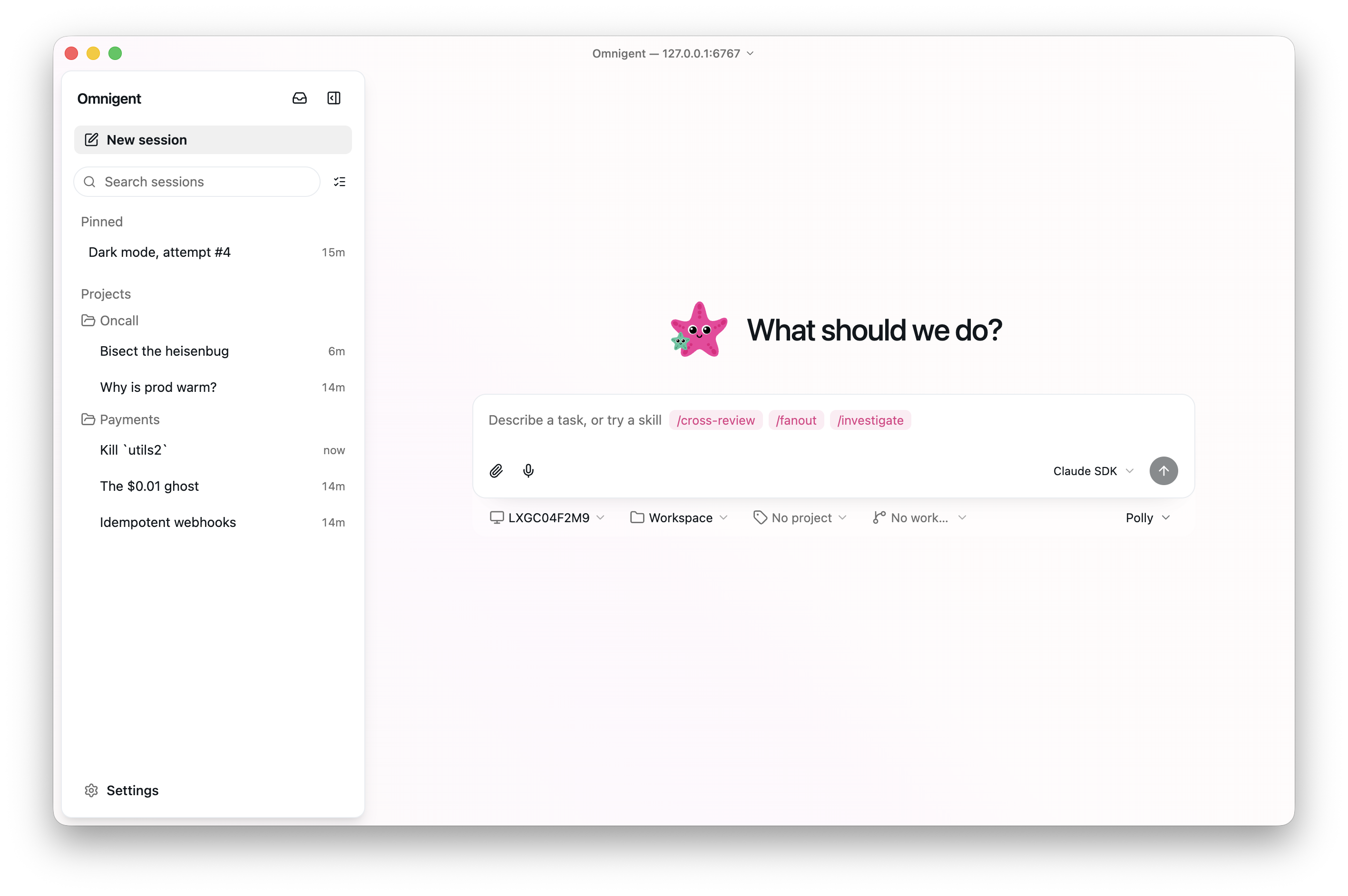
Omnigent is an open-source AI agent framework and meta-harness: orchestrate Claude Code, Codex, Cursor, Pi, and custom agents — swap harnesses without rewriting, enforce policies and sandboxing, and collaborate in real time from any device.

A theoretical reconstruction of the Claude Mythos architecture, built from first principles using the available research literature.
🕷️ An adaptive Web Scraping framework that handles everything from a single request to a full-scale crawl!