

heygen-com/hyperframesFrameworks & SDKs
Write HTML. Render video. Built for agents.
49k
PyOmniTS gives you a common training setup for many time series models so you can swap models, datasets, and loss functions without changing the core training code. It is built around shared experiment code in `exp/`, model definitions in `models/`, supporting layers in `layers/`, and dataset providers in `data/`. The repository is aimed at benchmarking and reproduction work, especially for irregular time series as well as forecasting and classification. It also ships per-model scripts and documentation so you can run existing setups or adapt them for new papers.

Builders who compare time series models, reproduce paper results, or adapt datasets and losses into a shared training setup.
You can train and benchmark many time series models in one framework without rewriting the surrounding experiment code.
`exp/exp_basic.py` and `exp/exp_main.py` provide the common training and evaluation flow.
`models/` contains many forecasting, classification, and imputation models for regular and irregular time series.
`layers/` holds the supporting modules used by the models, including model-specific subfolders.
`data/data_provider/` contains dataset classes and loading logic for supported time series datasets.
`loss_fns/` includes MAE, MSE, cross-entropy, dual MSE, and model-provided loss handling.
`scripts/` contains run setups for individual models and benchmark configurations.
@inproceedings{li_LearningRecursiveMultiScale_2026,
    author = {Li, Boyuan and Liu, Zhen and Luo, Yicheng  and Ma, Qianli},
    booktitle = {International Conference on Learning Representations},
    title = {Learning Recursive Multi-Scale Representations for Irregular Multivariate Time Series Forecasting},
    year = {2026}
}@inproceedings{li_HyperIMTSHypergraphNeural_2025,
author = {Li, Boyuan and Luo, Yicheng and Liu, Zhen and Zheng, Junhao and Lv, Jianming and Ma, Qianli},
booktitle = {Forty-Second International Conference on Machine Learning},
title = {HyperIMTS: Hypergraph Neural Network for Irregular Multivariate Time Series Forecasting},
year = {2025}
}

📊 Time series analysis leaderboard is now available on our 🤗 Hugging Face space. Discover the performance of different models!

This is also the official repository for the following paper:
Learning Recursive Multi-Scale Representations for Irregular Multivariate Time Series Forecasting (ICLR 2026) [poster] [OpenReview] [arXiv]
@inproceedings{li_LearningRecursiveMultiScale_2026,
author = {Li, Boyuan and Liu, Zhen and Luo, Yicheng and Ma, Qianli},
booktitle = {International Conference on Learning Representations},
title = {Learning Recursive Multi-Scale Representations for Irregular Multivariate Time Series Forecasting},
year = {2026}
}
HyperIMTS: Hypergraph Neural Network for Irregular Multivariate Time Series Forecasting (ICML 2025) [poster] [OpenReview] [arXiv]
@inproceedings{li_HyperIMTSHypergraphNeural_2025,
    author = {Li, Boyuan and Luo, Yicheng and Liu, Zhen and Zheng, Junhao and Lv, Jianming and Ma, Qianli},
    booktitle = {Forty-Second International Conference on Machine Learning},
    title = {HyperIMTS: Hypergraph Neural Network for Irregular Multivariate Time Series Forecasting},
    year = {2025}
}
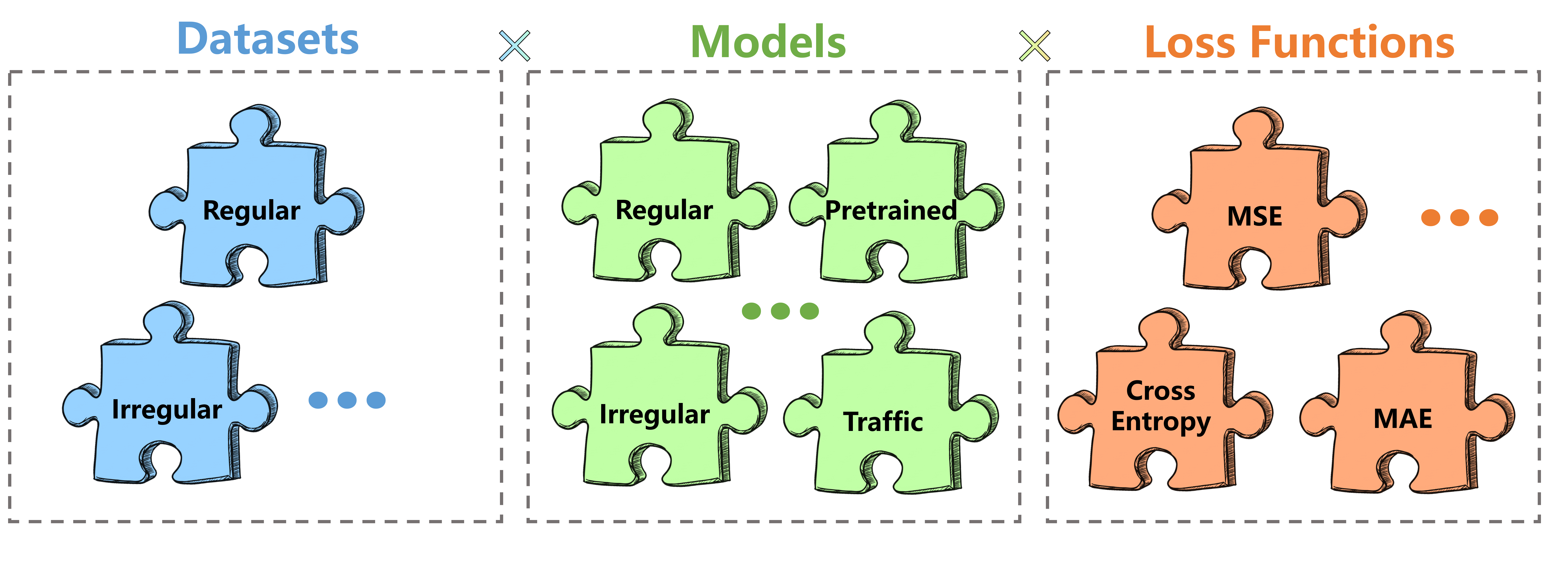
forward; Accept datasets with any number/type of return values in __getitem__; Accept tailored loss calculation for specific models.Checkout the new documentation website.
Using 🦞agent? Check out our official PyOmniTS skill on clawhub. Your agent will understand the essentials of our framework, and even automate the code replication process by adapting other papers' codes into PyOmniTS!
54 models, covering regular, irregular, pretrained, and traffic models, have been included in PyOmniTS, and more are coming.
Model classes can be found in models/, and their dependencies can be found in layers/
| Model | Venue | Type | Forecasting | Classification | Imputation | Available Versions |
|---|---|---|---|---|---|---|
| Ada-MSHyper | NeurIPS 2024 | MTS | ✅ | ✅ | ✅ | v1.0.0+ |
| APN | AAAI 2026 | IMTS | ✅ | - | - | v1.3.2+ |
| ASTGI | ICLR 2026 | IMTS | ✅ | - | - | v2.0.1+ |
| Autoformer | NeurIPS 2021 | MTS | ✅ | ✅ | ✅ | v1.0.0+ |
| Scaleformer | ICLR 2023 | MTS | ✅ | - | ✅ | v2.0.0+ |
| BigST | VLDB 2024 | MTS | ✅ | ✅ | ✅ | v1.0.0+ |
| Crossformer | ICLR 2023 | MTS | ✅ | ✅ | ✅ | v1.0.0+ |
| CRU | ICML 2022 | IMTS | ✅ | ❌ | ✅ | v1.0.0+ |
| DLinear | AAAI 2023 | MTS | ✅ | ✅ | ✅ | v1.0.0+ |
| ETSformer | arXiv 2022 | MTS | ✅ | ✅ | ✅ | v1.0.0+ |
| FEDformer | ICML 2022 | MTS | ✅ | ✅ | ✅ | v1.0.0+ |
| FiLM | NeurIPS 2022 | MTS | ✅ | ✅ | ✅ | v1.0.0+ |
| FourierGNN | NeurIPS 2023 | MTS | ✅ | ✅ | ✅ | v1.0.0+ |
| FreTS | NeurIPS 2023 | MTS | ✅ | ✅ | ✅ | v1.0.0+ |
| GNeuralFlow | NeurIPS 2024 | IMTS | ✅ | ❌ | ✅ | v1.0.0+ |
| GraFITi | AAAI 2024 | IMTS | ✅ | ✅ | ✅ | v1.0.0+ |
| GRU-D | Scientific Reports 2018 | IMTS | ✅ | ✅ | ✅ | v1.0.0+ |
| GRUwE | TMLR 2026 | IMTS | ✅ | - | - | - |
| HD-TTS | ICML 2024 | IMTS | ✅ | - | ✅ | v2.0.0+ |
| Hi-Patch | ICML 2025 | IMTS | ✅ | ✅ | ✅ | v1.0.0+ |
| higp | ICML 2024 | MTS | ✅ | ✅ | ✅ | v1.0.0+ |
| HyperIMTS (Ours) | ICML 2025 | IMTS | ✅ | - | ✅ | v1.0.0+ |
| Informer | AAAI 2021 | MTS | ✅ | ✅ | ✅ | v1.0.0+ |
| iTransformer | ICLR 2024 | MTS | ✅ | ✅ | ✅ | v1.0.0+ |
| Koopa | NeurIPS 2023 | MTS | ✅ | ❌ | ✅ | v1.0.0+ |
| Latent_ODE | NeurIPS 2019 | IMTS | ✅ | ❌ | ✅ | v1.0.0+ |
| Leddam | ICML 2024 | MTS | ✅ | ✅ | ✅ | v1.0.0+ |
| LightTS | arXiv 2022 | MTS | ✅ | ✅ | ✅ | v1.0.0+ |
| Mamba | Language Modeling 2024 | MTS | ✅ | ✅ | ✅ | v1.0.0+ |
| MICN | ICLR 2023 | MTS | ✅ | ✅ | ✅ | v1.0.0+ |
| MOIRAI | ICML 2024 | Any | ✅ | - | ✅ | v1.0.0+ |
| mTAN | ICLR 2021 | IMTS | ✅ | ✅ | ✅ | v1.0.0+ |
| NeuralFlows | NeurIPS 2021 | IMTS | ✅ | ❌ | ✅ | v1.0.0+ |
| NHITS | AAAI 2023 | MTS | ✅ | - | ✅ | v2.0.0+ |
| Nonstationary Transformer | NeurIPS 2022 | MTS | ✅ | ✅ | ✅ | v1.0.0+ |
| PatchTST | ICLR 2023 | MTS | ✅ | ✅ | ✅ | v1.0.0+ |
| Pathformer | ICLR 2024 | MTS | ✅ | - | ✅ | v2.0.0+ |
| PrimeNet | AAAI 2023 | IMTS | ✅ | ✅ | ✅ | v1.0.0+ |
| Pyraformer | ICLR 2022 | MTS | ✅ | ✅ | ✅ | v2.0.0+ |
| Raindrop | ICLR 2022 | IMTS | ✅ | ✅ | ✅ | v1.0.0+ |
| Reformer | ICLR 2020 | MTS | ✅ | ✅ | ✅ | v1.0.0+ |
| ReIMTS (Ours) | ICLR 2026 | IMTS | ✅ | ✅ | - | v2.0.0+ |
| SeFT | ICML 2020 | IMTS | ✅ | ✅ | ✅ | v1.0.0+ |
| SegRNN | arXiv 2023 | MTS | ✅ | ✅ | ✅ | v1.0.0+ |
| Temporal Fusion Transformer | arXiv 2019 | MTS | ✅ | - | - | v1.0.0+ |
| TFMixer | ICML 2026 | IMTS | ✅ | - | - | v2.0.1+ |
| TiDE | TMLR 2023 | MTS | ✅ | ✅ | ✅ | v1.0.0+ |
| TimeCHEAT | AAAI 2025 | MTS | ✅ | ✅ | ✅ | v1.0.0+ |
| TimeMixer | ICLR 2024 | MTS | ✅ | ✅ | ✅ | v1.0.0+ |
| TimesNet | ICLR 2023 | MTS | ✅ | ✅ | ✅ | v1.0.0+ |
| tPatchGNN | ICML 2024 | IMTS | ✅ | ✅ | ✅ | v1.0.0+ |
| Transformer | NeurIPS 2017 | MTS | ✅ | ✅ | ✅ | v1.0.0+ |
| TSMixer | TMLR 2023 | MTS | ✅ | ✅ | ✅ | v1.0.0+ |
| Warpformer | KDD 2023 | IMTS | ✅ | ✅ | ✅ | v1.0.0+ |
Dataest classes are put in data/data_provider/datasets, and dependencies can be found in data/dependencies:
11 datasets, covering regular and irregular ones, have been included in PyOmniTS, and more are coming.
| Dataset | Type | Field | Forecasting |
|---|---|---|---|
| ECL | MTS | electricity | ✅ |
| ETTh1 | MTS | electricity | ✅ |
| ETTm1 | MTS | electricity | ✅ |
| Human Activity | IMTS | biomechanics | ✅ |
| ILI | MTS | healthcare | ✅ |
| MIMIC III | IMTS | healthcare | ✅ |
| MIMIC IV | IMTS | healthcare | ✅ |
| PhysioNet'12 | IMTS | healthcare | ✅ |
| Traffic | MTS | traffic | ✅ |
| USHCN | IMTS | weather | ✅ |
| Weather | MTS | weather | ✅ |
Datasets for classification and imputation have not released yet.
The following loss functions are included under loss_fns/:
| Loss Function | Task | Note |
|---|---|---|
| CrossEntropyLoss | Classification | - |
| MAE | Forecasting/Imputation | - |
| ModelProvidedLoss | - | Some models prefer to calculate loss within forward(), such as GNeuralFlows. |
| MSE_Dual | Forecasting/Imputation | |
| MSE | Forecasting/Imputation | - |
PyOmniTS is continously evolving:
We encountered the following problems when using existing ones:
Argument & return value chaos for models' forward():
Different models usually take varying number and shape of arguments, especially ones from different domains. Changes to training logic are needed to support these differences.
Return value chaos for datasets' __getitem__():
datasets can return a number of tensors in different shapes, which have to be aligned with arguments of models' forward() one by one.
Changes to training logic are also needed to support these differences.
Argument & return value chaos for loss functions' forward():
loss functions take different types of tensors as input, require aligning with return values from models' forward().
Overwhelming dependencies:
some existing pipelines use fancy high-level packages in building the pipeline, which can lower the flexibility of code modification.
Ladbaby 💻 🐛 |
Sign in to join the discussion.
No comments yet. Be the first to say what this is good for.
Write HTML. Render video. Built for agents.
Ultra-lightweight, open-source, self-hosted personal AI agent framework in Python with WebUI, tools, memory, MCP, multi-agent workflows, automation, and chat apps

SkillOpt is a text-space optimizer that trains reusable natural-language skills for frozen LLM agents through trajectory-driven edits, validation-gated updates, and deployable best_skill.md artifacts.
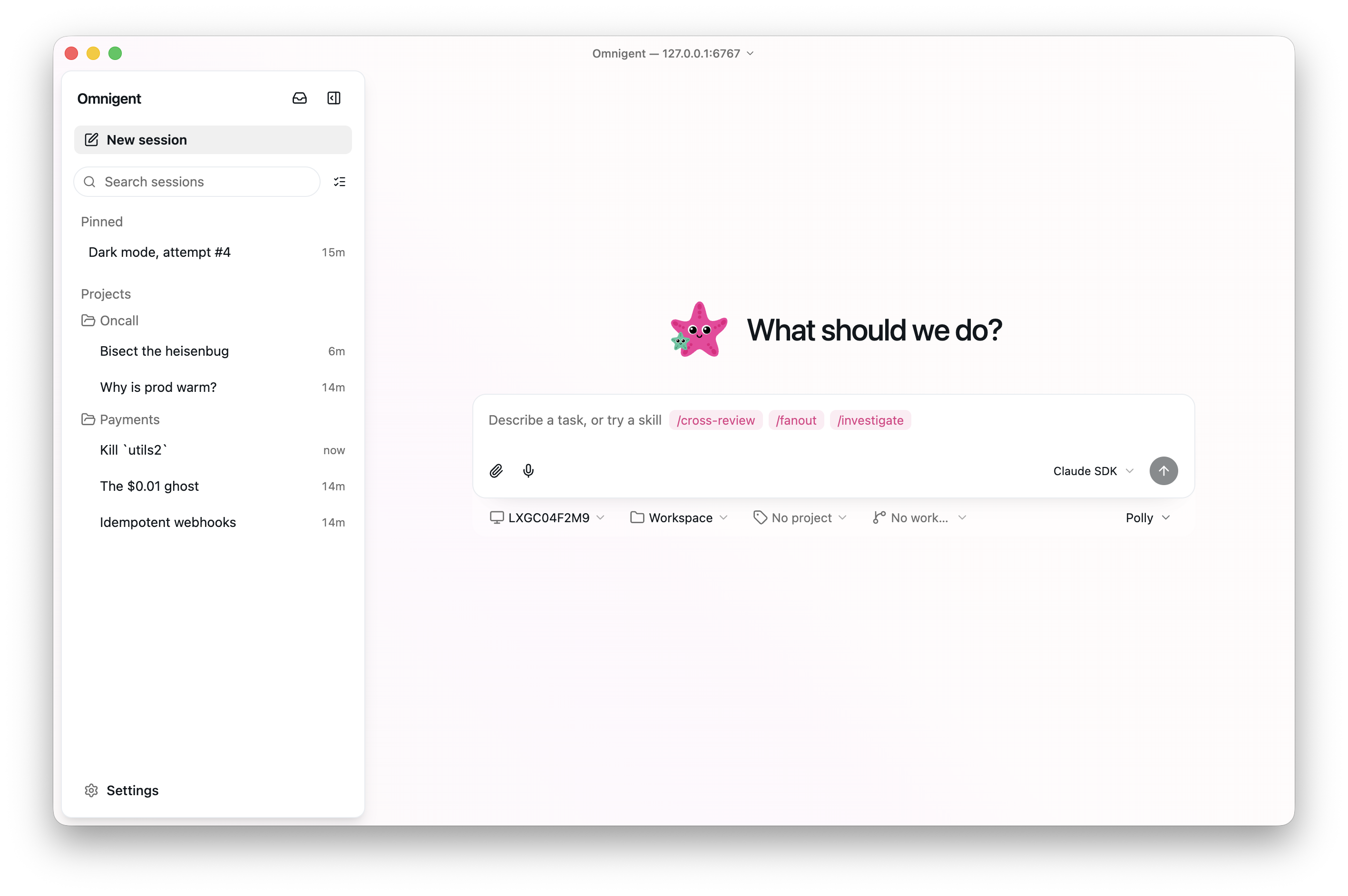
Omnigent is an open-source AI agent framework and meta-harness: orchestrate Claude Code, Codex, Cursor, Pi, and custom agents — swap harnesses without rewriting, enforce policies and sandboxing, and collaborate in real time from any device.

A theoretical reconstruction of the Claude Mythos architecture, built from first principles using the available research literature.
🕷️ An adaptive Web Scraping framework that handles everything from a single request to a full-scale crawl!