

heygen-com/hyperframesFrameworks & SDKs
Write HTML. Render video. Built for agents.
49k
This package plugs Agent Skills into Pydantic AI so an agent can discover skills by name, load full instructions only when needed, and reach bundled files through dedicated tools. It extends the upstream skills capability with remote registries, programmatic skills, `${SKILL_DIR}` resolution, and sandboxed execution for skill scripts.
Builders who use Pydantic AI and want reusable skills, registries, and bundled skill files in their agent workflows.
You can give your agent a growing skills library without loading every skill into the prompt at once.
Shows each skill’s name and description first, then loads the full skill only when the model chooses it.
Loads skills from Git and S3 sources, with composition features like filter, prefix, rename, and merge.
Adds `read_skill_resource` and `run_skill_script` so skills can ship reference files and executable scripts.
Runs untrusted skill scripts in a container or virtual filesystem instead of on the host.
Lets you define skills in Python instead of only from filesystem folders.
Wraps skills as Pydantic AI capabilities and uses the framework’s built-in `load_capability` flow.
uv add pydantic-ai-skills


Remote skill registries and bundled-file execution for Agent Skills in Pydantic AI.
Agent Skills are modular packages of instructions, resources, and scripts that teach an agent to
handle a specialized task. On disk, a skill is just a folder: a SKILL.md file holding a name, a
description, and Markdown instructions, plus any reference documents and executable scripts the task
needs.
Your agent starts out seeing only the name and description of each skill. When a task calls for one, it loads that skill's full instructions, and reads a reference document or runs a script only if it actually needs to. This is progressive disclosure: your skill library can grow without every skill paying for space in the prompt.
📖 Full documentation — including video tutorials.
pydantic-ai-harnesspydantic-ai-harness ships a Skills capability
that reads SKILL.md packages from local directories and turns each into a deferred Pydantic AI
capability. It stops there by design — it
does not enumerate, read, or execute bundled files,
and it has no notion of a remote source.
pydantic-ai-skills is the companion that fills those gaps. It requires harness and delegates to
it, so SKILL.md parsing, validation, the catalog and instruction rendering are all upstream's,
and adds:
read_skill_resource and run_skill_script, so a skill that ships a
reference document or a script (including those in
Anthropic's skills repository) runs as written.${SKILL_DIR} resolution — harness leaves the placeholder in place; this substitutes the path.If your skills are instructions and nothing else, use harness directly — it is a smaller dependency and identical behaviour. Feature-by-feature: comparison.
Upgrading from v1? v2 is a clean break:
SkillsToolset,SkillsDirectory,reload()and thelist_skills/load_skilltools are gone, replaced by harness and Pydantic AI's ownload_capability. See the migration guide.
uv add pydantic-ai-skills
Millennials may continue to use pip install pydantic-ai-skills. It still works, like your Spotify
playlist from 2013.
Point a SkillsCapability at one or more skill libraries and add it to your agent:
from pydantic_ai import Agent
from pydantic_ai_skills import SkillsCapability

agent = Agent(
    model='gateway/openai:gpt-5.2',
    instructions='You are a helpful research assistant.',
    capabilities=[SkillsCapability('./skills')],
)

result = await agent.run('What are the last 3 papers on arXiv about machine learning?')
print(result.output)
Or pull them from a repository:
from pydantic_ai_skills import GitSkillsRegistry, SkillsCapability

capability = SkillsCapability(
    './skills',
    registries=[GitSkillsRegistry('https://github.com/anthropics/skills', path='skills')],
)
Each skill becomes its own deferred capability: the model sees names and descriptions up front,
loads the ones it needs with Pydantic AI's built-in load_capability, then reaches that skill's
files with the two tools this package adds:
| Tool | Purpose |
|---|---|
read_skill_resource(skill_name, resource_name) | Read a bundled file such as references/FORMS.md |
run_skill_script(skill_name, script_name, args) | Run a bundled script with named arguments |
Both stay behind the same boundary as the skill's instructions: by default they refuse a skill the model has not loaded.
See Quick Start.
my-skill/
├── SKILL.md      # Required: YAML frontmatter + Markdown instructions
├── REFERENCE.md  # Optional: extra docs, read on demand
├── scripts/      # Optional: executable scripts
└── resources/    # Optional: templates, data files
---
name: my-skill
description: Brief description of what this skill does and when to use it
---

# My Skill

## When to Use This Skill

Use this skill when you need to...

## Instructions

1. Step 1
2. Step 2
name (max 64 chars, lowercase letters, numbers and hyphens; it must match the directory) and
description (max 1024 chars) are the fields the runtime acts on. Other frontmatter is accepted but
inert — including behavioural fields such as allowed-tools, which do not restrict anything
here. See
Creating Skills.
include / exclude.${SKILL_DIR} resolution, and rebuild strategies.Only use skills from sources you trust. Skills give agents new capabilities through instructions and code, so a malicious skill can direct an agent to invoke tools or execute code in ways that don't match its stated purpose — with risks including data exfiltration and unauthorized system access. Audit any skill from an unknown source before use. See Security & Deployment.
Contributions are welcome — see Contributing.
Thanks to Anthropic for the Agent Skills open format, the Pydantic AI team for the framework, and the community for feedback and contributions.
This project was highly inspired by pydantic-deepagents, which provided foundational ideas and patterns for agent skills and progressive disclosure in Pydantic AI.
MIT License — see LICENSE.
Sign in to join the discussion.
No comments yet. Be the first to say what this is good for.
Write HTML. Render video. Built for agents.
Ultra-lightweight, open-source, self-hosted personal AI agent framework in Python with WebUI, tools, memory, MCP, multi-agent workflows, automation, and chat apps

SkillOpt is a text-space optimizer that trains reusable natural-language skills for frozen LLM agents through trajectory-driven edits, validation-gated updates, and deployable best_skill.md artifacts.
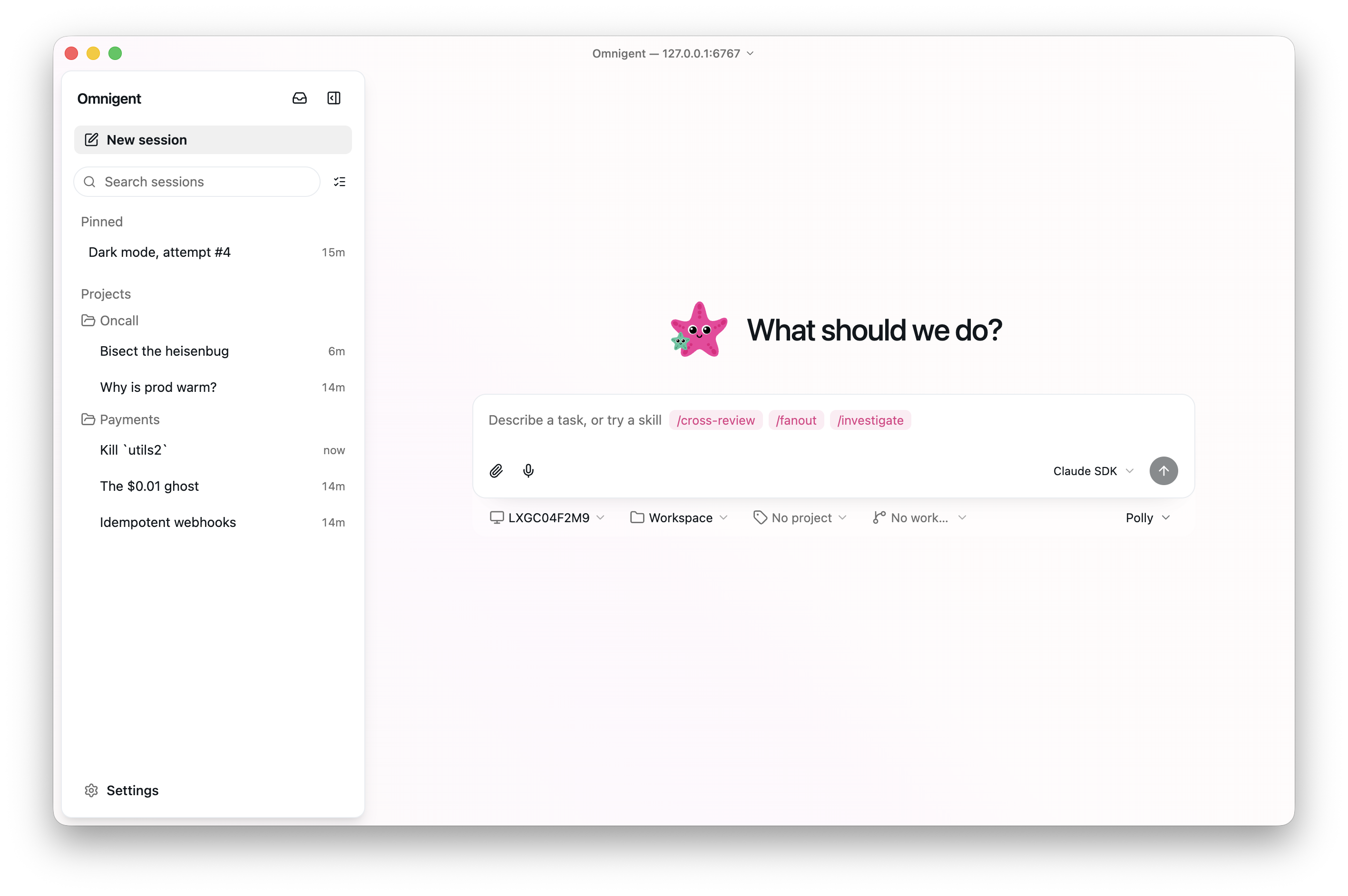
Omnigent is an open-source AI agent framework and meta-harness: orchestrate Claude Code, Codex, Cursor, Pi, and custom agents — swap harnesses without rewriting, enforce policies and sandboxing, and collaborate in real time from any device.

A theoretical reconstruction of the Claude Mythos architecture, built from first principles using the available research literature.
🕷️ An adaptive Web Scraping framework that handles everything from a single request to a full-scale crawl!