


NousResearch/
hermes-agent

The agent that grows with you
245k
AI Maestro is a control plane for agent-led work. It shows your agents, lets them message each other, keeps memory across sessions, and coordinates work across tmux, Docker, and remote machines. The repo also includes plugin and skill support so you can extend what agents can do.
Builders who want their agents to remember work, message each other, and run across multiple computers.
You can manage a team of agents from one place instead of copying context between terminals.
Create, view, and switch between agents in one UI, with support for tmux, Docker, EC2, and Fargate.
Lets agents send direct messages with the Agent Messaging Protocol, including priorities and signed messages.
Indexes past conversations, decisions, and code relationships so agents can search memory and query the code graph later.
Connects machines into a peer network so agents can move and run across hosts without a central server.
Ships with a Claude Code plugin and skill setup so agents can pick up reusable capabilities.
Includes teams, meetings, Kanban-style task tracking, playback, search, and transfer tools for agent work.
curl -fsSL https://raw.githubusercontent.com/23blocks-OS/ai-maestro/main/scripts/remote-install.sh | sh
wsl --install
git clone https://github.com/23blocks-OS/ai-maestro.git
cd ai-maestro
yarn install
yarn dev
I was running 35 AI agents across multiple terminals and became the human mailman between them. So I built AI Maestro.
The OS for AI-first organizations — orchestrate any AI agent with persistent memory, agent-to-agent messaging, and multi-machine support.

-lightgrey)

I gave an AI agent a real task — not autocomplete, a real engineering problem. It checked the code, read the logs, queried the database, and came back with the answer. That was the moment. This thing can actually work.
Within a week I was running 35 agents across terminals. They were productive, but they couldn't talk to each other. I became the human message bus — copying context from one terminal, pasting into another. I was the bottleneck in my own AI team.
So I built AI Maestro — one dashboard to see every agent, on every machine, with persistent memory and direct agent-to-agent communication. Today I run 80+ agents across multiple computers, building real companies with them every day.
What makes this different:
AI Maestro is an operating system for an AI-first company. Not a task runner — a place where a standing team works.
An agent here is closer to an employee than to a job. It has a name, a face, a memory that survives the session, an inbox — and it owns something: a product, a repository, a process, a customer. Its memory and code graph are indexed against what it owns, which is why it gets better at that thing over months rather than starting cold every morning.
Because agents own things, they don't share a working copy. Two agents that need the same repository each clone it, work on their own branch, and integrate through git — push, pull request, review, merge — exactly like two engineers on a team.
That's deliberate, and it follows from the one thing that defines this product: your agents run on different machines. A shared checkout needs a shared filesystem. Git worktrees — the isolation primitive the single-machine agent IDEs are built on — are several working directories over one .git store on one disk, so they stop working the moment your backend agent is on a Linux box and your iOS agent is on a Mac. A clone is the only primitive that survives the move. It's why transferring an agent to another host clones its repos to the destination: an agent's repositories travel with the agent.
curl -fsSL https://raw.githubusercontent.com/23blocks-OS/ai-maestro/main/scripts/remote-install.sh | sh
This installs everything you need:
Time: 5-10 minutes · Requires: Node.js 18+, tmux
Windows: Install WSL2 first, then run the curl command inside Ubuntu:
wsl --install
Linux: Ensure build tools are installed: sudo apt install tmux build-essential
git clone https://github.com/23blocks-OS/ai-maestro.git
cd ai-maestro
yarn install
yarn dev
See QUICKSTART.md for detailed setup options.
Dashboard opens at http://localhost:23000
Every feature was born from running a real AI-first organization. We built them in the order we needed them.
I had 35 terminals and couldn't tell which was which.
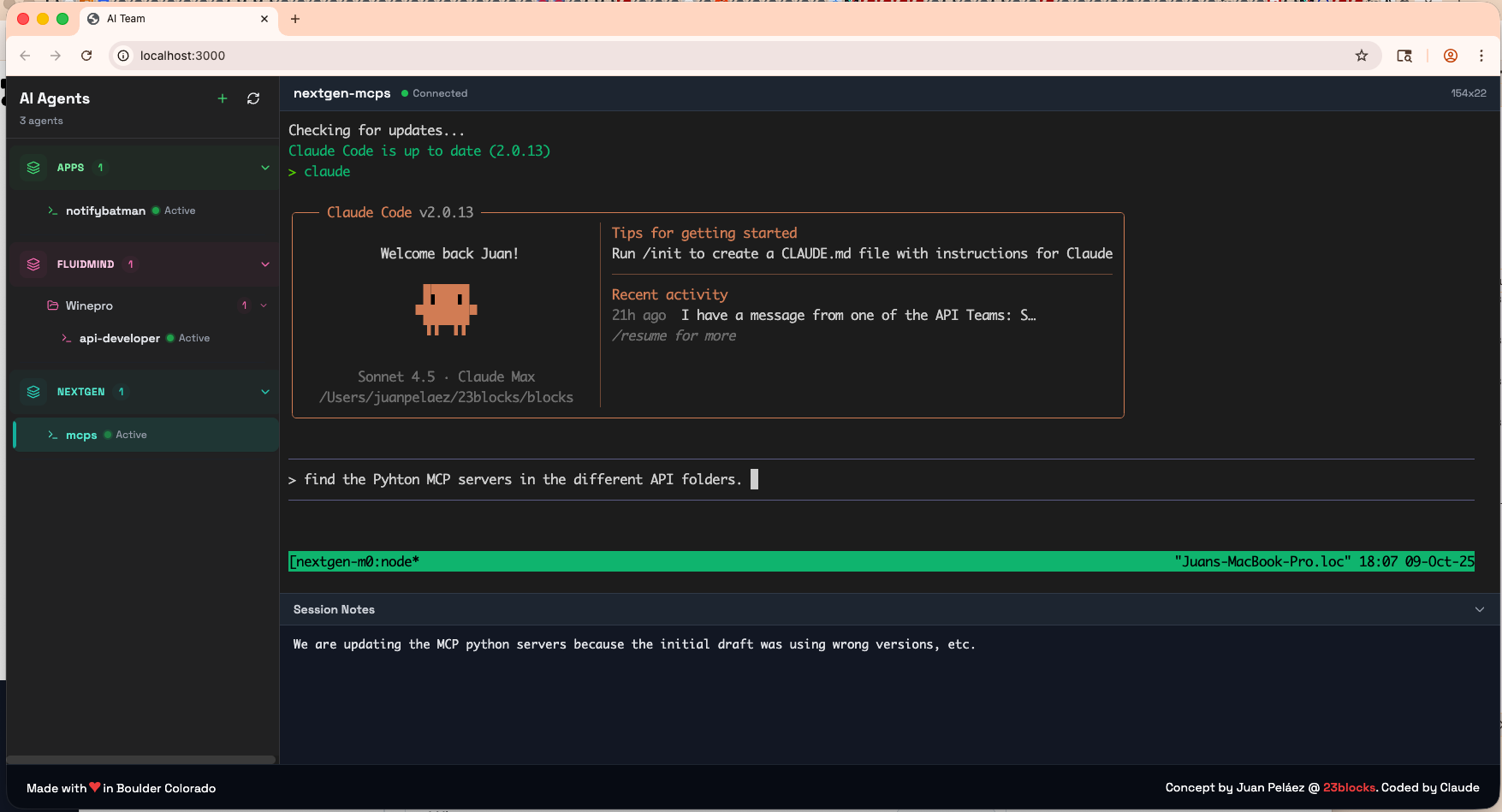
See and manage all your AI agents in one place. Create agents from the UI with a guided wizard, organize them with smart naming (project-backend-api becomes a 3-level tree with auto-coloring), and switch between any agent with a click. Four deployment modes: tmux (local), Docker (containerized), AWS EC2 (dedicated instance), and AWS ECS Fargate (serverless). Auto-discovers tmux sessions, Docker containers, cloud deployments, and standalone agents.
My Mac Mini was sitting there idle. What if I ran agents on that too?
A peer mesh network where every machine is equal. Add a computer, it joins the mesh. Every agent on every machine, visible from one dashboard. Use each machine for what it's best at — Mac for iOS builds, Linux for Docker, cloud for heavy compute. No central server required.
Worker machines can run headless (yarn headless) — the full API and agent runtime with no UI, in about 100MB of RAM. Run the dashboard where you sit; run agents wherever the compute is.
I was the mailman — copying messages between agents because they couldn't talk to each other.
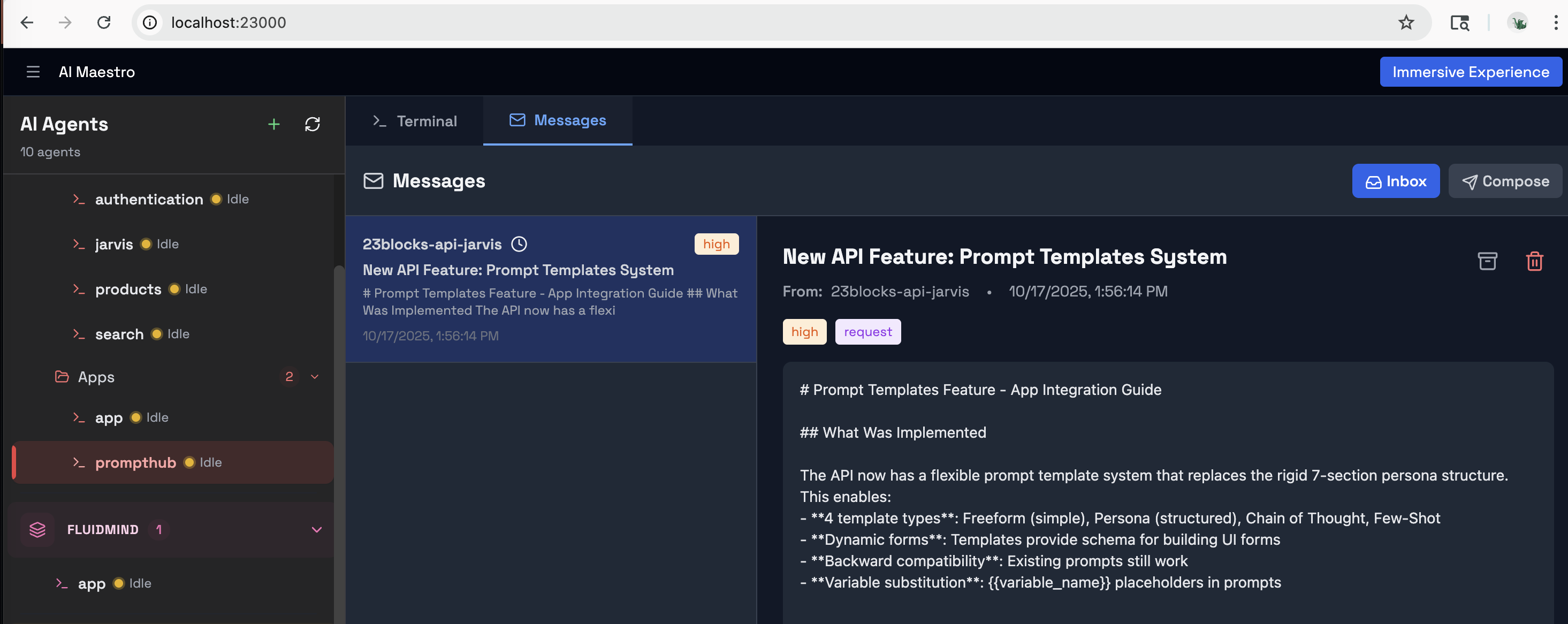
The Agent Messaging Protocol (AMP) gives your agents email-like communication. Priority levels, message types, cryptographic signatures, and push notifications. Tell your agent "send a message to backend about the deployment" — it just works. Agents coordinate directly while you manage the big picture.
Before AMP: You copy research from one terminal, paste into another, repeat 50 times a day. With AMP: "Research agent, send your findings to the writing agent." Done.
A friend in Singapore wanted his agents to talk to mine. But I didn't want to give him access to my network.
Connect your AI agents to Slack, Discord, Email, and WhatsApp through organizational gateways. Smart routing (@AIM:agent-name), thread-aware responses, and content security with 34 prompt injection patterns detected at the gateway — before any agent sees the message.
Every morning, my agents woke up with amnesia.
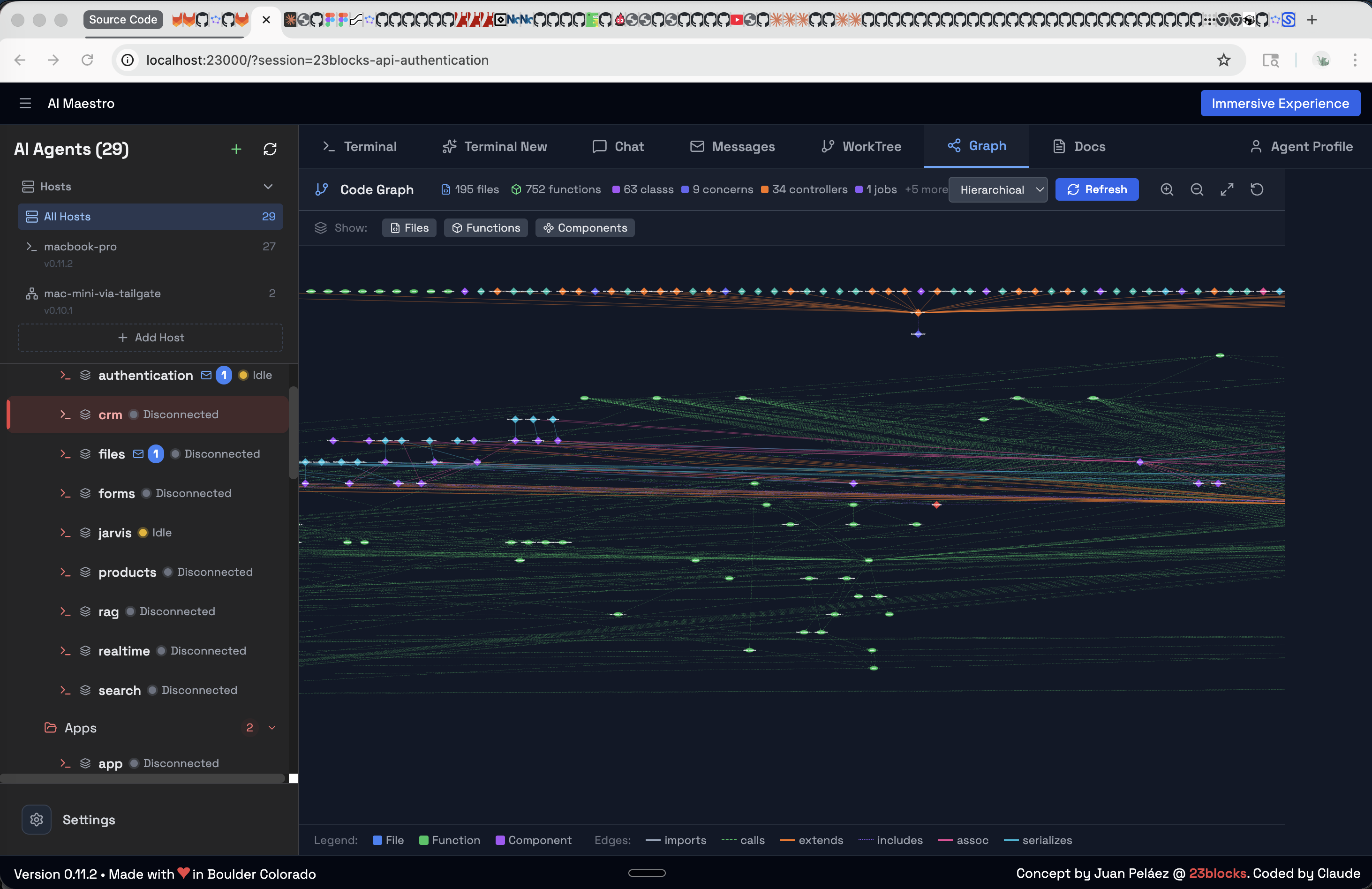
Three layers of intelligence that grow over time: Memory (agents remember past conversations and decisions), Code Graph (interactive visualization of your entire codebase with delta indexing), and Documentation (auto-generated, searchable docs from your code). Agents get smarter the longer they work with you.
Talking isn't working. I needed agents to coordinate on actual deliverables.
Assemble agents into teams, run meetings in split-pane war rooms, and track tasks on a full Kanban board with drag-and-drop, dependencies, and 5 status columns. Cross-machine teams work seamlessly. This is project management for your AI workforce.
Some jobs shouldn't wait for me to remember to ask.
Give an agent its own schedule — morning triage, a nightly dependency check, a Monday report. The timer belongs to the agent, not the machine, so a schedule travels with the agent when it moves hosts, and fires when that agent goes idle instead of interrupting it mid-task.
At 80 agents, they all looked the same.
Custom avatars, personality profiles, and roles for every agent. When an agent has a face and a job title, you instinctively assign it the right work — just like a real team.
Agents can also speak and be seen: a voice pipeline with your choice of TTS provider, and live animated faces that move while the agent talks. Open a call with an agent and it looks back at you. Nobody else is doing this, and once you've reviewed a plan by listening to it on a walk, the terminal feels like a downgrade.
One caveat worth stating plainly: true lip-sync — mouth movement driven by the actual audio — needs the OpenAI or ElevenLabs voice and an API key. The default browser voice (web-speech) renders straight to your speakers and exposes no audio stream to measure, so the face animates from a synthetic envelope instead. It looks alive; it is not tracking the words. That is a limit of the Web Speech API, not something we plan to work around.
One agent on my laptop. Another on EC2. A third on Fargate. All in the same dashboard.
Four ways to run agents, each for a different need:
| Mode | What | Best For |
|---|---|---|
| tmux | Direct terminal sessions on your machine | Local development, zero setup |
| Docker | Containerized agents with resource limits | Isolation, reproducibility, multi-project |
| AWS EC2 | Dedicated Graviton instance with native install, Nginx + SSL | Always-on agents, SSH access, persistent workloads |
| AWS ECS Fargate | Serverless containers, auto-built Docker image | Burst scaling, zero maintenance, pay-per-use |
Cloud agents are Terraform-managed. EC2 installs Node.js, tmux, and AI CLIs directly on ARM64 hardware (no Docker overhead). ECS auto-builds your Docker image, pushes to ECR, and runs on Fargate. Both deploy with one command from the dashboard or CLI.
# EC2: dedicated instance with SSL
aimaestro-agent.sh create my-api --ec2 \
  --domain api.example.com --ssl-email admin@example.com --key-name my-key

# ECS Fargate: serverless (auto-builds image)
aimaestro-agent.sh create worker --ecs
Every AI-first organization starts with one agent. Lola is yours — a batteries-included Chief of Staff framework built for AI Maestro. She handles email triage, semantic memory, task management, and content security out of the box. Install the platform, deploy Lola, and you have your first employee on day one.
# Clone and deploy Lola on AI Maestro
git clone https://github.com/23blocks-OS/lolabot.git
cd lolabot && ./setup.sh
The LolaBot Ecosystem:
Every agent is built from five dimensions:
| Dimension | What | Where | |
|---|---|---|---|
| WHO | Personality | Domain expertise, workflows, deliverables | Agent Library (150+) |
| HOW | Capabilities | Skills, scripts, CLI tools, Canvas | Plugin Builder |
| TRUST | Identity | Cryptographic keys, OAuth tokens | AID |
| TALK | Communication | Agent-to-agent messaging | AMP |
| ACT | Actions | Tool execution, API calls, workflows | AAP |
Open Protocols — AI Maestro is built on three open standards:
AI Maestro is the stage. Pick personalities, give them skills, and run them from one dashboard.
Read the full ecosystem guide →
Founders building AI-first organizations. You're the CEO, your agents are the team. Solo operators, agency owners, and anyone running a business where AI agents do the work and you drive the strategy. Start with Lola, add specialists, scale your AI workforce.
Developers running multiple AI agents. If you have 3+ agents and you're switching between terminals, losing context, and playing messenger — this is for you. Works with Claude Code, Codex, Aider, Cursor, or any terminal-based AI.
Teams coordinating AI-assisted work. Multiple developers, multiple agents, multiple machines. One dashboard. Agent-to-agent messaging replaces you as the bottleneck.
Creators and operators who want to connect AI agents to the outside world through Slack, Discord, or Email — without exposing their infrastructure.
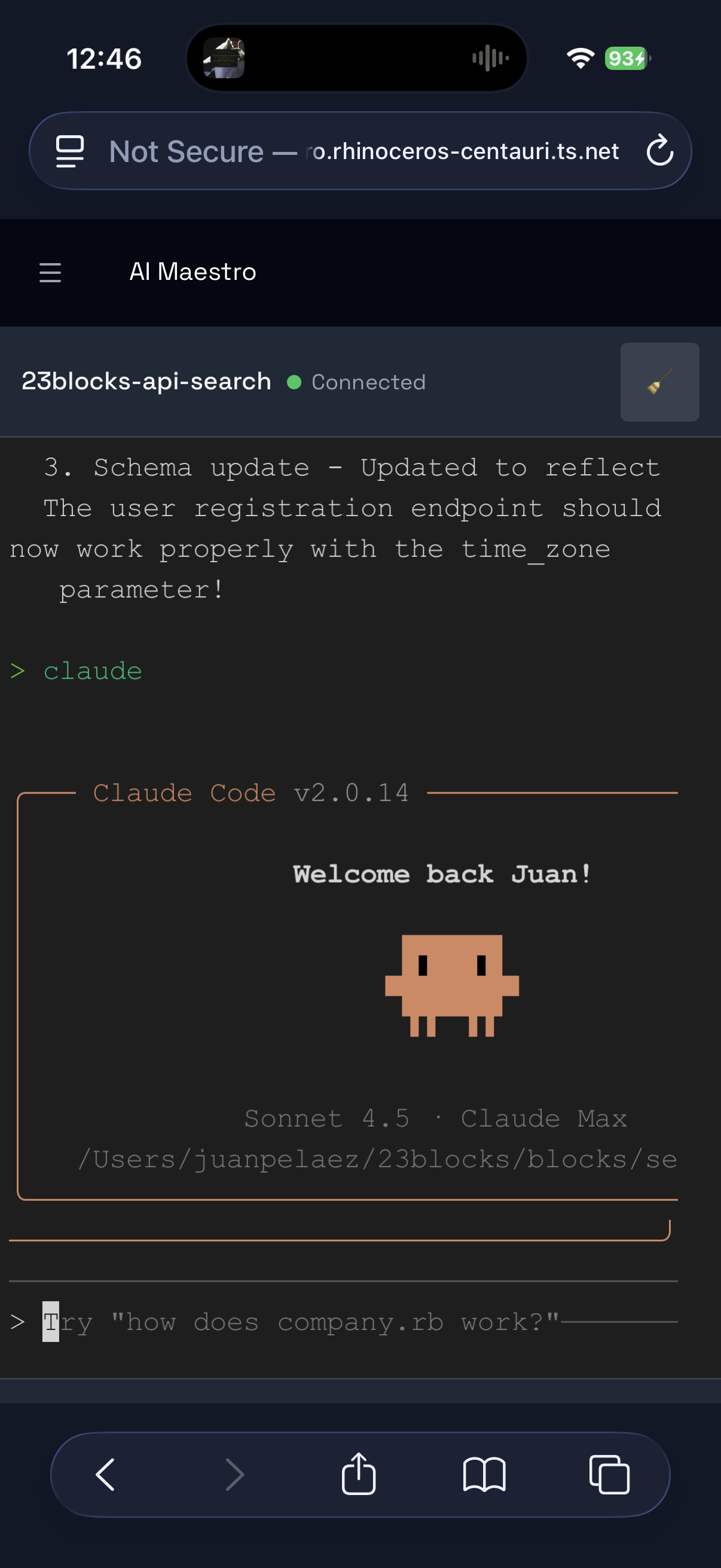
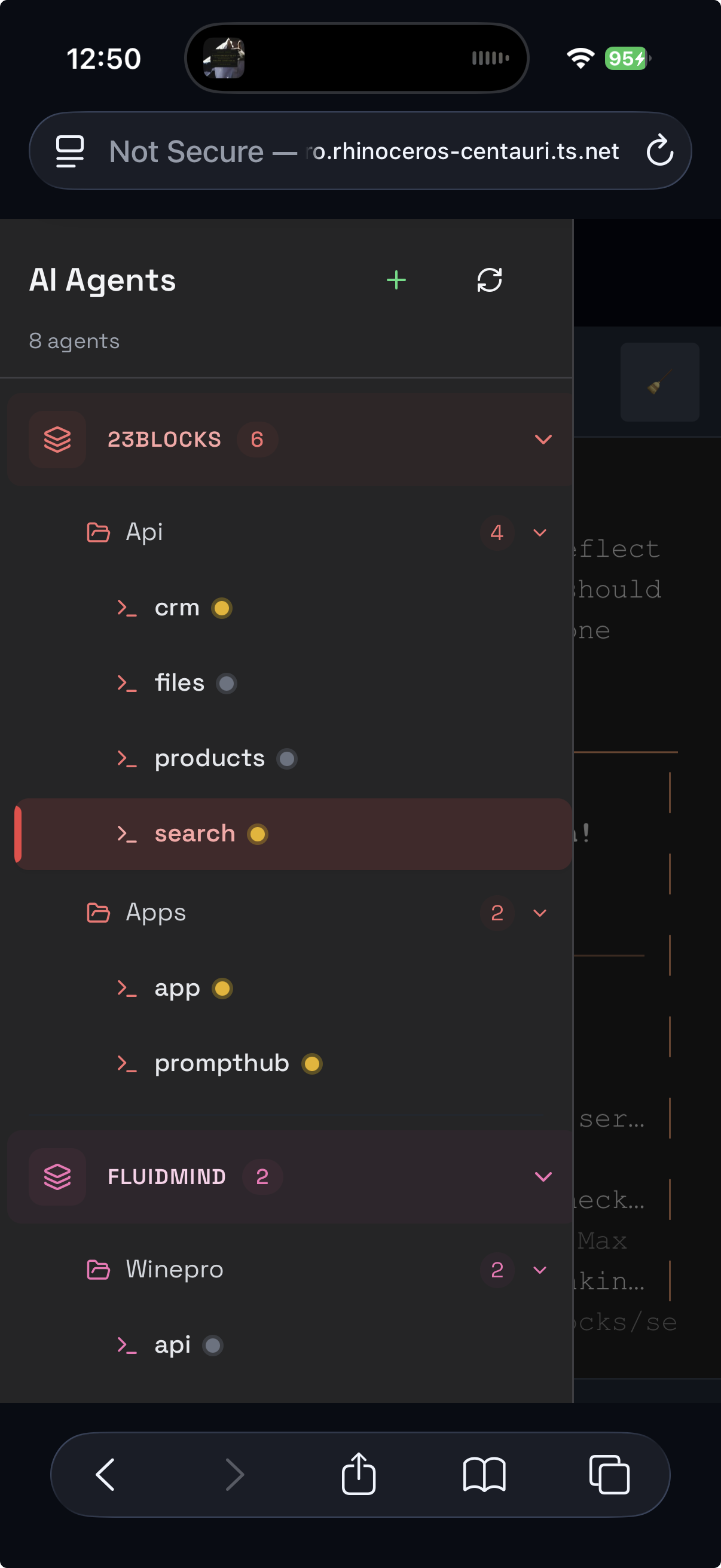
Code Graph — Interactive codebase visualization
Agent Inbox — Direct agent-to-agent messaging
New here?
Going deeper:
Troubleshooting:
Open Protocols:
Extending:
See the full roadmap and join the discussion.
We love contributions. See CONTRIBUTING.md for guidelines.
MIT — see LICENSE. Free for any purpose, including commercial.
Made with love in Boulder (USA), Roma (Italy), and many other cool places
Built by AI Agents with Humans in the driver seat — for AI-first organizations, AI-enabled humans, and autonomous agents
Do I need to use Claude Code? No. AI Maestro works with any terminal-based AI agent — Claude Code, Codex, Aider, Cursor, OpenClaw, Hermes, Droid, or your own scripts. We're agent-agnostic.
Does it work on Linux / Windows? Yes. macOS and Linux natively. Windows via WSL2 — see the Windows guide.
Can agents on different machines talk to each other? Yes. The Agent Messaging Protocol (AMP) handles cross-machine messaging with cryptographic signatures and push notifications. No central server required.
What are AID and AAP? AID (Agent Identity) gives each agent a portable cryptographic identity. AAP (Agent Actions Protocol) standardizes how agents execute tools and trigger workflows. Together with AMP, they form the open protocol stack that AI Maestro is built on.
What is the Canvas skill? Canvas lets agents generate visual artifacts — diagrams, charts, and interactive documents — directly from conversations. It's part of the plugin system and available to any agent.
How is this different from just using tmux? tmux gives you terminals. AI Maestro gives you an organization — persistent memory, agent-to-agent messaging, team coordination, Kanban boards, multi-machine mesh, cloud deployment, and gateway integrations. tmux is the foundation; AI Maestro is the building.
What is LolaBot? LolaBot is an open-source agent framework — a batteries-included Chief of Staff that handles email, memory, tasks, and security. The LolaBot Factory offers pre-built agent templates for one-click deployment.
What does it cost? Nothing. MIT licensed, free for any purpose including commercial — no seats, no usage fees, no paid tier. You bring your own agent subscriptions (Claude Code, Codex, whatever you already pay for) and AI Maestro just runs them. Note that some tools in this space are source-available rather than open source, under licenses that forbid offering them as a service; MIT has no such restriction.
Do you collect telemetry?
No. No analytics SDK, no account, no login, no phone-home. The only telemetry in the product is the agent metrics shown on your own dashboard, and those post to localhost:23000 — your machine. Point them at a central collector only if you choose to run one.
How does this compare to the parallel-agent IDEs? Different job, and deliberately so. Tools like Orca, Paseo, Superset and Conductor run several agents on one repository on one machine, each in an isolated git worktree, then diff the results so you can merge the best one. It's a disposable fan-out: five attempts at the same task, keep one, throw away four. They're good at it. If that's the workflow you want today, use one of them.
AI Maestro is built for the case after that one — a standing team of agents that own things, remember their work, message each other, and run across every machine you have. We don't use worktrees because worktrees can't leave the machine they're on: they're several working directories over one .git store on one disk. Our agents each clone what they own and integrate through pull requests, like a human team, which is the only model that works when the backend agent is on Linux and the iOS agent is on a Mac. See the mental model.
Can I run several agents on the same repository?
Yes — give each one its own clone. Backend owns the API, frontend owns the web app, infra owns the Terraform, even inside a monorepo. They coordinate over AMP and merge through git. For a large repo, git clone --filter=blob:none or --reference to a local mirror keeps the disk cost down. And an individual agent is free to use git worktree inside its own clone — worktrees are a fine tool within an agent, just not how we isolate agents from each other.
Is there a hosted / cloud version? Not yet. AI Maestro runs on your machines. You own your data, your agents, and your infrastructure.
How do I add more agents?
Create them from the dashboard UI, the CLI (aimaestro-agent.sh create), or just start a new tmux session — AI Maestro auto-discovers it.
Sign in to join the discussion.
No comments yet. Be the first to say what this is good for.
The agent that grows with you

Open-source coding agent for your terminal, built in Rust and on a journey of continuous community improvement. Issues and PRs welcome.
A lightweight alternative to OpenClaw that runs in containers for security. Connects to WhatsApp, Telegram, Slack, Discord, Gmail and other messaging apps,, has memory, scheduled jobs, and runs directly on Anthropic's Agents SDK

OpenSquilla — Token-Efficient AI Agent with same budget, higher intelligence density
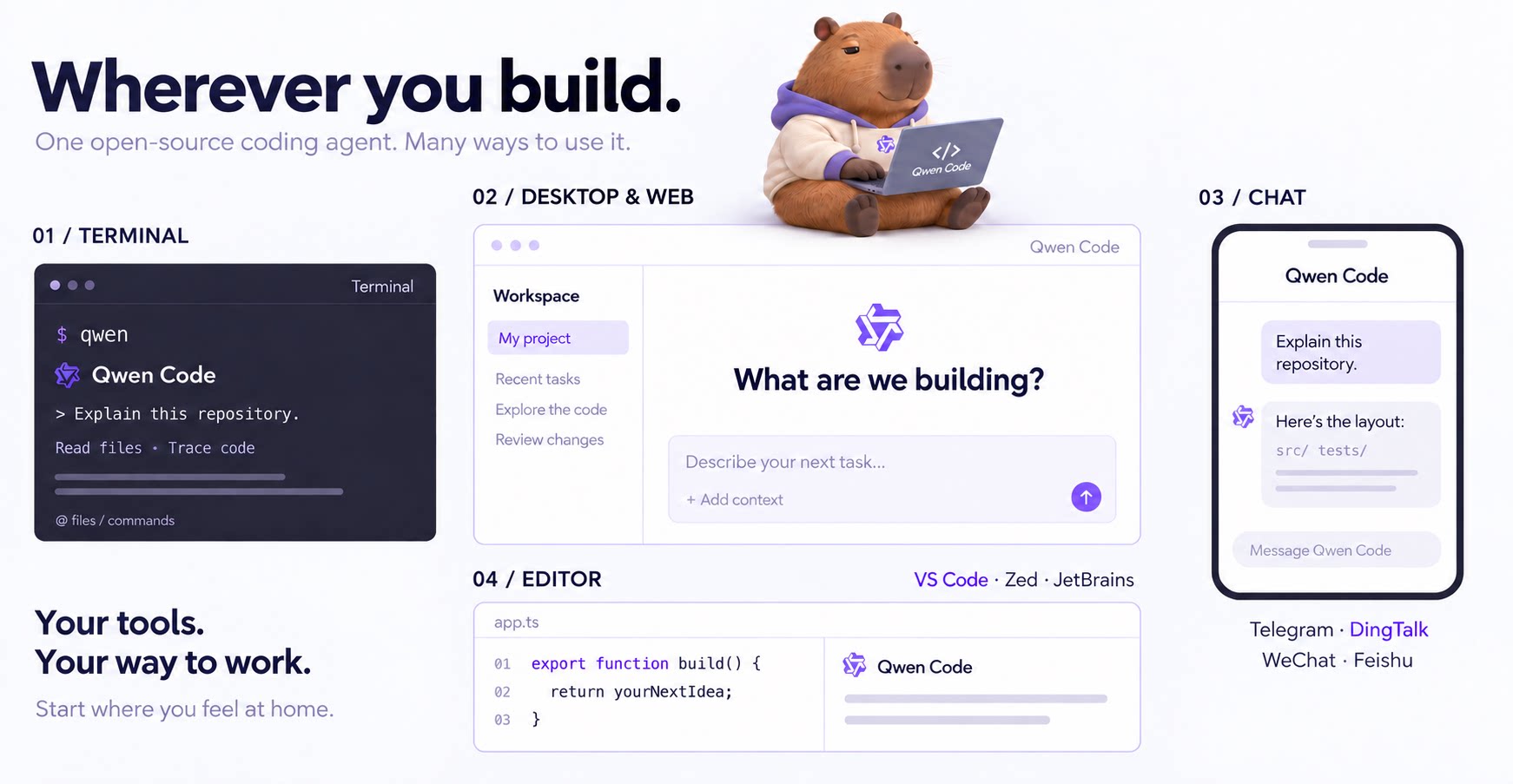
An open-source AI coding agent that lives in your terminal.

Run and supervise teams of coding agents from planning to merge. Any harness (Claude code, codex, +25 more). Desktop, web, mobile, and cloud agents.