
koala73/worldmonitorConnectors
Real-time global intelligence dashboard. AI-powered news aggregation, geopolitical monitoring, and infrastructure tracking in a unified situational awareness interface
86k
This server exposes Microsoft 365 actions to Claude through MCP. It includes tools for Outlook email and calendar, OneDrive files, mail folders and rules, and Power Automate flows. Authentication is handled through OAuth and tokens are stored locally.
Builders who want Claude to read email, manage calendars, and move files in Microsoft 365.
You can ask Claude to work with your Outlook, OneDrive, and Power Automate data instead of switching between apps.
List, search, read, send, and mark emails as read or unread.
List, create, accept, decline, cancel, and delete calendar events.
List and create mail folders, move emails, and manage inbox rules.
List, search, download, upload, share, and organize OneDrive files and folders.
List environments and flows, trigger flows, view run history, and toggle flows on or off.
Stores and refreshes Microsoft Graph and Flow API tokens through the `auth/` modules.
Supports mock data and test scripts so you can try the server without live API calls.
npm install

A comprehensive MCP (Model Context Protocol) server that connects Claude with Microsoft 365 services through the Microsoft Graph API and Power Automate API.
├── index.js                 # Main entry point
├── config.js                # Configuration settings
├── auth/                    # Authentication modules
│   ├── index.js             # Authentication exports
│   ├── token-manager.js     # Token storage and refresh (Graph + Flow)
│   └── tools.js             # Auth-related tools
├── calendar/                # Calendar functionality
│   ├── index.js             # Calendar exports
│   ├── list.js              # List events
│   ├── create.js            # Create event
│   ├── delete.js            # Delete event
│   ├── cancel.js            # Cancel event
│   ├── accept.js            # Accept event
│   └── decline.js           # Decline event
├── email/                   # Email functionality
│   ├── index.js             # Email exports
│   ├── list.js              # List emails
│   ├── search.js            # Search emails
│   ├── read.js              # Read email
│   ├── send.js              # Send email
│   └── mark-as-read.js      # Mark email read/unread
├── folder/                  # Folder functionality
│   ├── index.js             # Folder exports
│   ├── list.js              # List folders
│   ├── create.js            # Create folder
│   └── move.js              # Move emails
├── rules/                   # Email rules functionality
│   ├── index.js             # Rules exports
│   ├── list.js              # List rules
│   └── create.js            # Create rule
├── onedrive/                # OneDrive functionality
│   ├── index.js             # OneDrive exports
│   ├── list.js              # List files/folders
│   ├── search.js            # Search files
│   ├── download.js          # Get download URL
│   ├── upload.js            # Simple upload (<4MB)
│   ├── upload-large.js      # Chunked upload (>4MB)
│   ├── share.js             # Create sharing link
│   └── folder.js            # Create/delete folders
├── power-automate/          # Power Automate functionality
│   ├── index.js             # Power Automate exports
│   ├── flow-api.js          # Flow API client
│   ├── list-environments.js # List environments
│   ├── list-flows.js        # List flows
│   ├── run-flow.js          # Trigger flow
│   ├── list-runs.js         # Run history
│   └── toggle-flow.js       # Enable/disable flow
└── utils/                   # Utility functions
    ├── graph-api.js         # Microsoft Graph API helper
    ├── odata-helpers.js     # OData query building
    └── mock-data.js         # Test mode data
| Tool | Description |
|---|---|
list-emails | List recent emails from inbox |
search-emails | Search emails with filters |
read-email | Read email content |
send-email | Send a new email |
mark-as-read | Mark email as read/unread |
list-events | List calendar events |
create-event | Create calendar event |
accept-event | Accept event invitation |
decline-event | Decline event invitation |
delete-event | Delete calendar event |
list-folders | List mail folders |
create-folder | Create mail folder |
move-emails | Move emails between folders |
list-rules | List inbox rules |
create-rule | Create inbox rule |
| Tool | Description |
|---|---|
onedrive-list | List files in a path |
onedrive-search | Search files by query |
onedrive-download | Get download URL |
onedrive-upload | Upload small file (<4MB) |
onedrive-upload-large | Chunked upload (>4MB) |
onedrive-share | Create sharing link |
onedrive-create-folder | Create folder |
onedrive-delete | Delete file or folder |
| Tool | Description |
|---|---|
flow-list-environments | List Power Platform environments |
flow-list | List flows in environment |
flow-run | Trigger a manual flow |
flow-list-runs | Get flow run history |
flow-toggle | Enable/disable a flow |
npm install.env.example to .env and add your Azure credentialsnpm run auth-servernpm install
http://localhost:3333/auth/callback.env fileoffline_accessUser.ReadMail.Read, Mail.ReadWrite, Mail.SendCalendars.Read, Calendars.ReadWriteFiles.Read, Files.ReadWriteFor Power Automate (optional):
cp .env.example .env
Edit .env:
# Get these values from Azure Portal > App Registrations > Your App
MS_CLIENT_ID=your-application-client-id-here
MS_CLIENT_SECRET=your-client-secret-VALUE-here
MS_TENANT_ID=your-tenant-id-here
USE_TEST_MODE=false
Important Notes:
MS_CLIENT_ID and MS_CLIENT_SECRET in the .env fileMS_TENANT_ID for single-tenant apps to avoid /common endpoint errorsOUTLOOK_CLIENT_ID and OUTLOOK_CLIENT_SECRETAdd to your Claude Desktop config:
{
  "mcpServers": {
    "m365-assistant": {
      "command": "node",
      "args": ["/path/to/outlook-mcp/index.js"],
      "env": {
        "USE_TEST_MODE": "false",
        "OUTLOOK_CLIENT_ID": "your-client-id",
        "OUTLOOK_CLIENT_SECRET": "your-client-secret"
      }
    }
  }
}
npm run auth-serverauthenticate tool in Claude~/.outlook-mcp-tokens.jsonPower Automate requires a separate token with the Flow API scope. Configure additional Azure AD permissions for https://service.flow.microsoft.com//.default scope.
Limitations:
"Cannot find module"
npm install
"Port 3333 in use"
npx kill-port 3333
npm run auth-server
"Invalid client secret" (AADSTS7000215)
"Authentication required"
~/.outlook-mcp-tokens.json and re-authenticate# Run with MCP Inspector
npm run inspect
# Run in test mode (mock data)
npm run test-mode
# Run Jest tests
npm test
TOOLS array in index.jsSign in to join the discussion.
No comments yet. Be the first to say what this is good for.
Real-time global intelligence dashboard. AI-powered news aggregation, geopolitical monitoring, and infrastructure tracking in a unified situational awareness interface
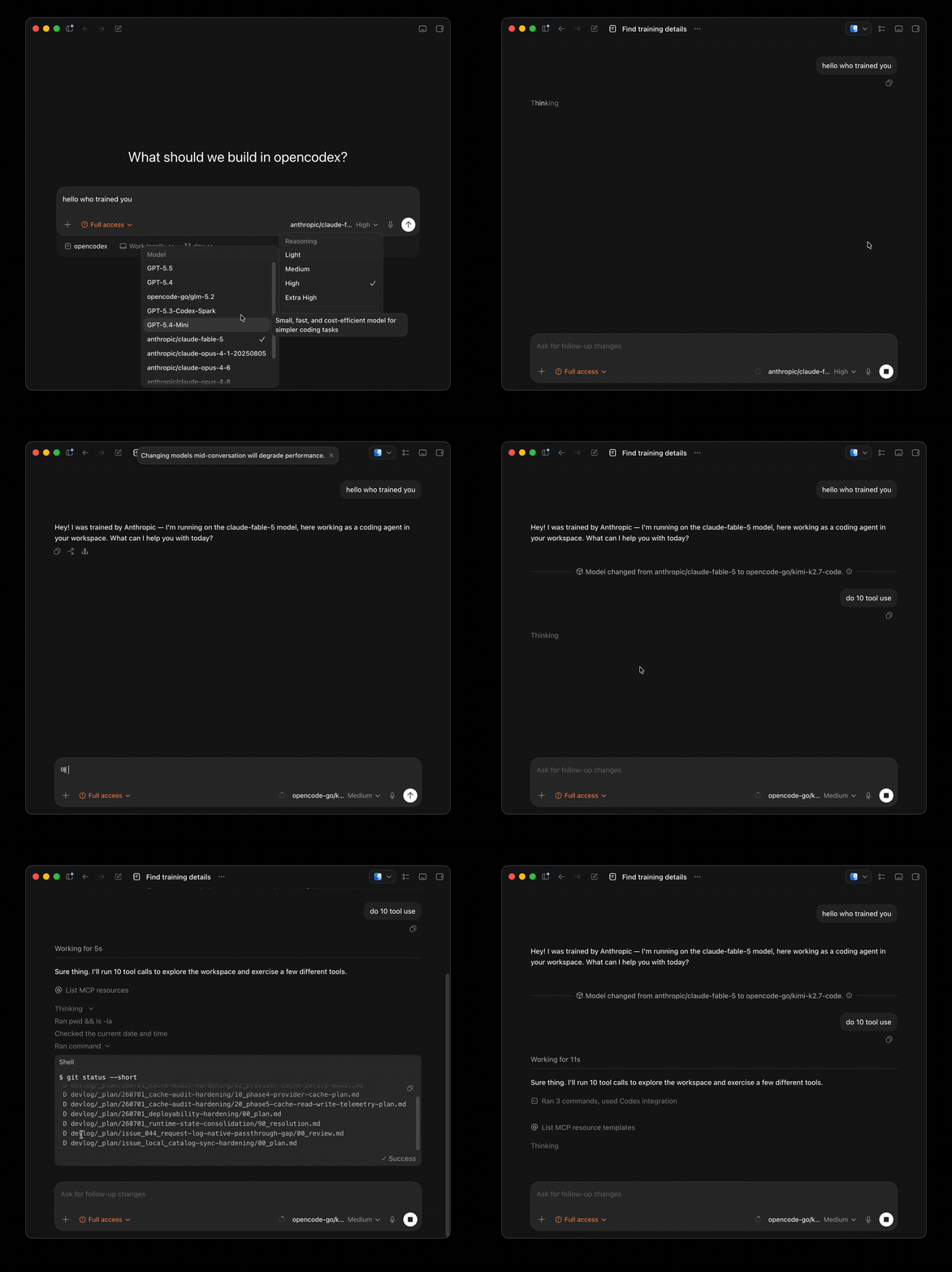
Universal provider proxy for OpenAI Codex & Claude Code — use any LLM (Claude, Gemini, Grok, DeepSeek, Ollama…) with Codex CLI, App, SDK, and Claude Code

Git-native persistent memory for AI coding agents. Implements Google OKF v0.2 with sub-300µs in-memory BM25 search, embedded MCP server, and progressive disclosure. Slashes token bloat by 80% with zero external databases or dependencies. Built in pure Go.

Context7 Platform -- Up-to-date code documentation for LLMs and AI code editors

BankMCP™: your AI can now read your bank. Self-hosted, read-only MCP server for your own bank accounts via open banking (Enable Banking). Standard MCP; tested with Claude and Ollama.
Open-source auth gateway connecting 1400+ SaaS providers to AI agents through SDK, CLI, MCP, HTTP, and OpenAPI.