


rohitg00/ai-engineering-from-scratchTutorials & Guides
Learn it. Build it. Ship it for others.
54k
FLOW is a structured SEO playbook built around four stages: Find, Leverage, Optimize, and Win. Each pillar uses the same doc pattern so a builder and an agent can read the same source, follow the evidence, and reuse the prompts.
Builders who want a cited SEO framework for AI search, local search, and agent-assisted content work.
You can plan, audit, and improve SEO work with one shared playbook instead of scattered notes and guesswork.
Organizes the work into Find, Leverage, Optimize, and Win, each with its own docs and diagrams.
Ships 42 prompts in `docs/09-prompts/` that an agent can reuse for SEO tasks.
Tracks sources, retrieval dates, and stats provenance so claims stay auditable.
Provides a parallel `obsidian-vault/` with wikilinks, frontmatter, and graph view support.
Includes `llms.txt`, `llms-full.txt`, and `CLAUDE.md` for loading the repo into agents.
git clone https://github.com/AgriciDaniel/flow.git
cd flow
# Point Claude Code / Cursor / Codex / Gemini at this folder.
# Brief it: "Use FLOW as the framework. Cite the bibliography. No unsourced stats."
# From SEO-Agent repo root — mirrors + ingests in one command
python claude-seo/scripts/sync_flow_content.py
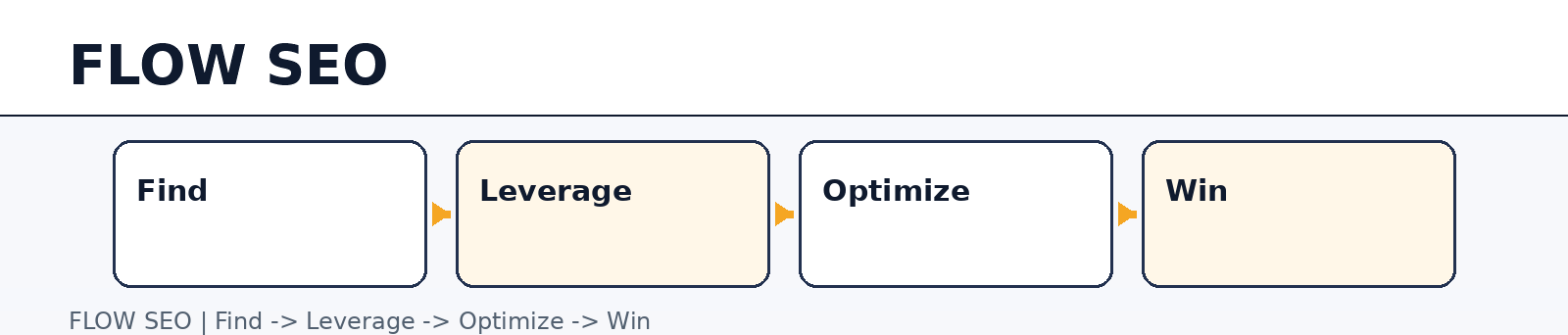

Find → Leverage → Optimize → Win. An evidence-led SEO knowledge base for humans and AI agents — built for 2026 search reality.






FLOW is a complete operating model for SEO in the AI-search era: classic organic visibility, AI Overviews and LLM citations, local search and Google Business Profile, off-site corroboration, and conversion measurement — all wired together with cited 2026 evidence and 42 standardized AI prompts.
flowchart LR
    F["<b>FIND</b><br/>map demand &<br/>surfaces"]
    L["<b>LEVERAGE</b><br/>distributed<br/>presence"]
    O["<b>OPTIMIZE</b><br/>extraction &<br/>trust"]
    W["<b>WIN</b><br/>convert &<br/>measure"]

    F --> L --> O --> W
    W -.refresh.-> F

    classDef stage fill:#0f1a2e,stroke:#f5a623,stroke-width:2px,color:#ffffff,padding:10px
    class F,L,O,W stage
Each stage is a doc pillar. Each pillar has a What / Why-2026 / How-to-apply / Sources structure so a human reader, a search engine, and an AI agent can all extract from the same page.
Search in 2026 is not one results page and one click path. The same query can reach a buyer through Google organic, AI Overviews, ChatGPT or Perplexity citations, local pack listings, Reddit threads, YouTube videos, or LinkedIn discussions — often without a single visit to the brand's site. Most public SEO knowledge predates this reality.
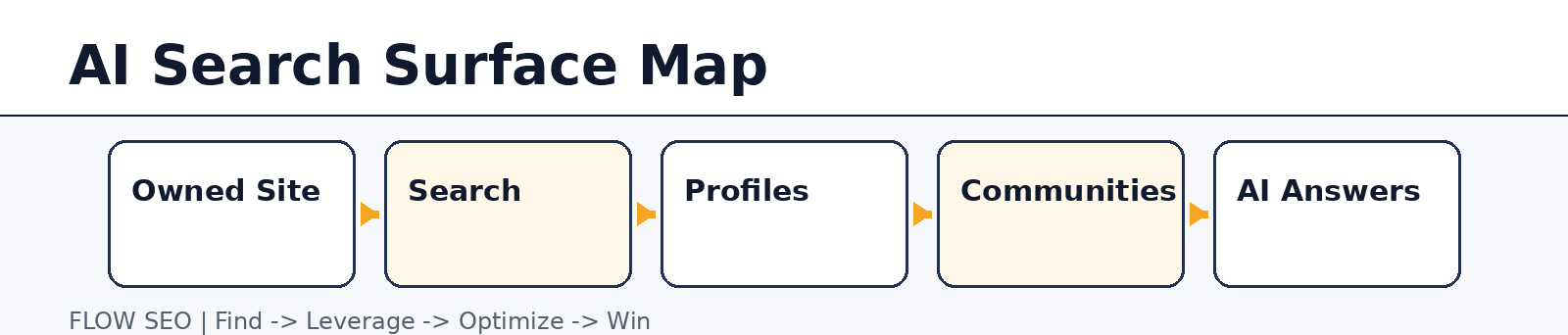

FLOW treats those surfaces as one connected system. Every doc here is grounded in a 2026-current source with a retrieval date, every claim that couldn't be verified got dropped, and every prompt is reproducible by an AI agent reading from this repo.
Every public statistic in this repo carries:
Unverifiable stats were dropped. Contradicted stats were replaced with verified alternatives. Three independent 2025–2026 datasets agree that AI Overviews materially reduce click-through to position one:
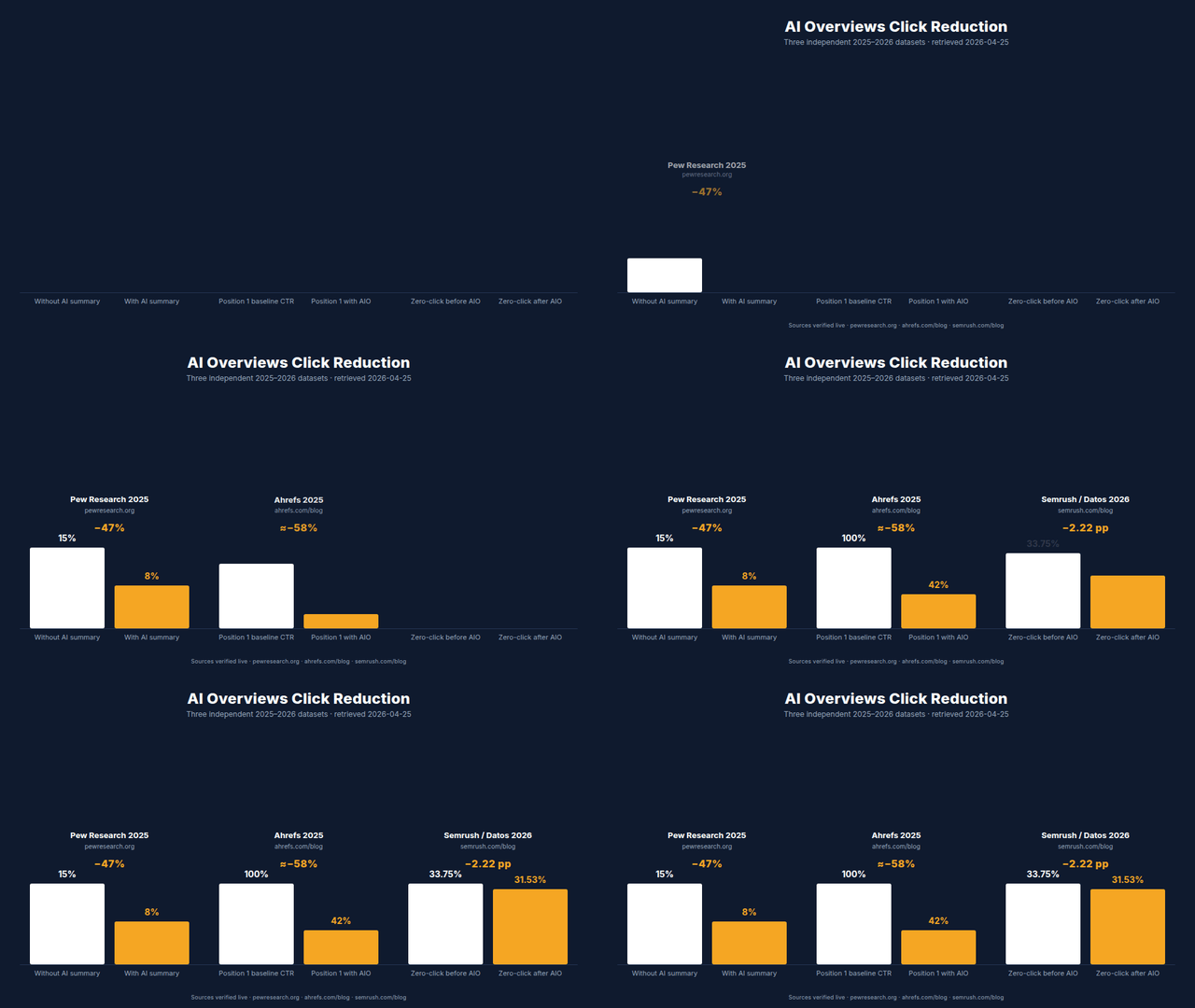
The full provenance ledger lives at docs/10-references/stats-provenance.json.
| If you are… | Start with… |
|---|---|
| A solo SEO operator or in-house marketer | docs/00-START-HERE.md → docs/01-framework/flow-framework.md |
| A local-business owner or local-SEO consultant | docs/07-local-seo/ — full pillar from map pack to property audits |
| A B2B / SaaS / service-business strategist | docs/08-playbooks/ — five business-type playbooks with stage-flow diagrams |
| An AI agent (Claude, GPT, Gemini, Cursor, Codex) | llms.txt → load context. docs/09-prompts/ → 42 standardized prompts |
| An Obsidian power user | Clone this repo, open obsidian-vault/ as a vault — wikilinks and frontmatter intact |
docs/00-START-HERE.mdgit clone https://github.com/AgriciDaniel/flow.git
cd flow
# Point Claude Code / Cursor / Codex / Gemini at this folder.
# Brief it: "Use FLOW as the framework. Cite the bibliography. No unsourced stats."
Then hand it real work: draft a brief, audit a page, plan a topic cluster, score a service page on the dual-surface scorecard.
SEO-Agent is the primary AI consumer of FLOW. It ingests all 72 docs into a persistent brain so every session starts with FLOW doctrine in context:
# From SEO-Agent repo root — mirrors + ingests in one command
python claude-seo/scripts/sync_flow_content.py
See CLAUDE.md for the full integration guide.
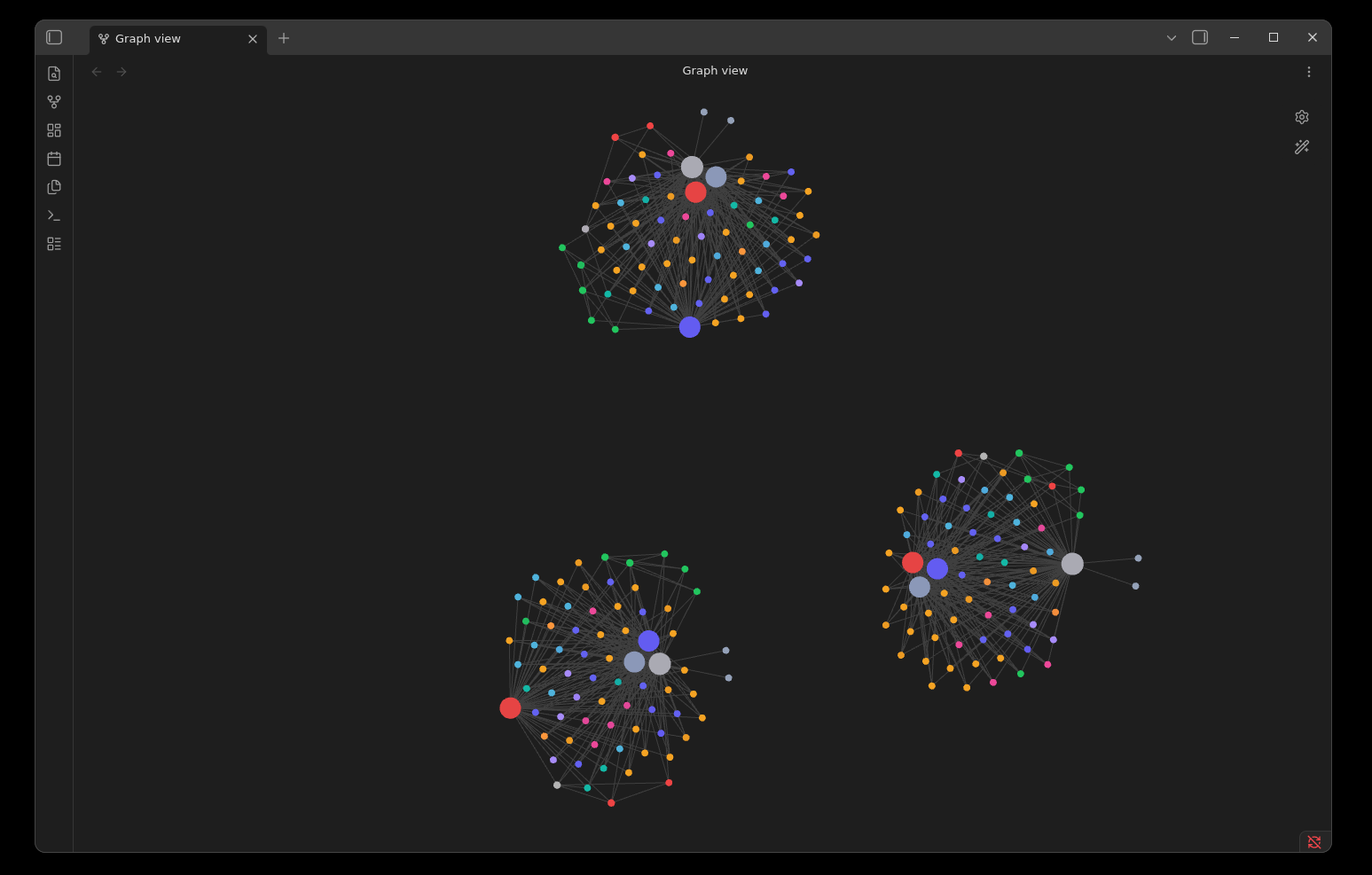
obsidian-vault/ in Obsidian (Open folder as vault)The bundled .obsidian/graph.json ships with a tag-based color scheme so the FLOW pillars are visible at a glance. Open the graph view (Ctrl+G) to navigate the 78 cross-linked notes:
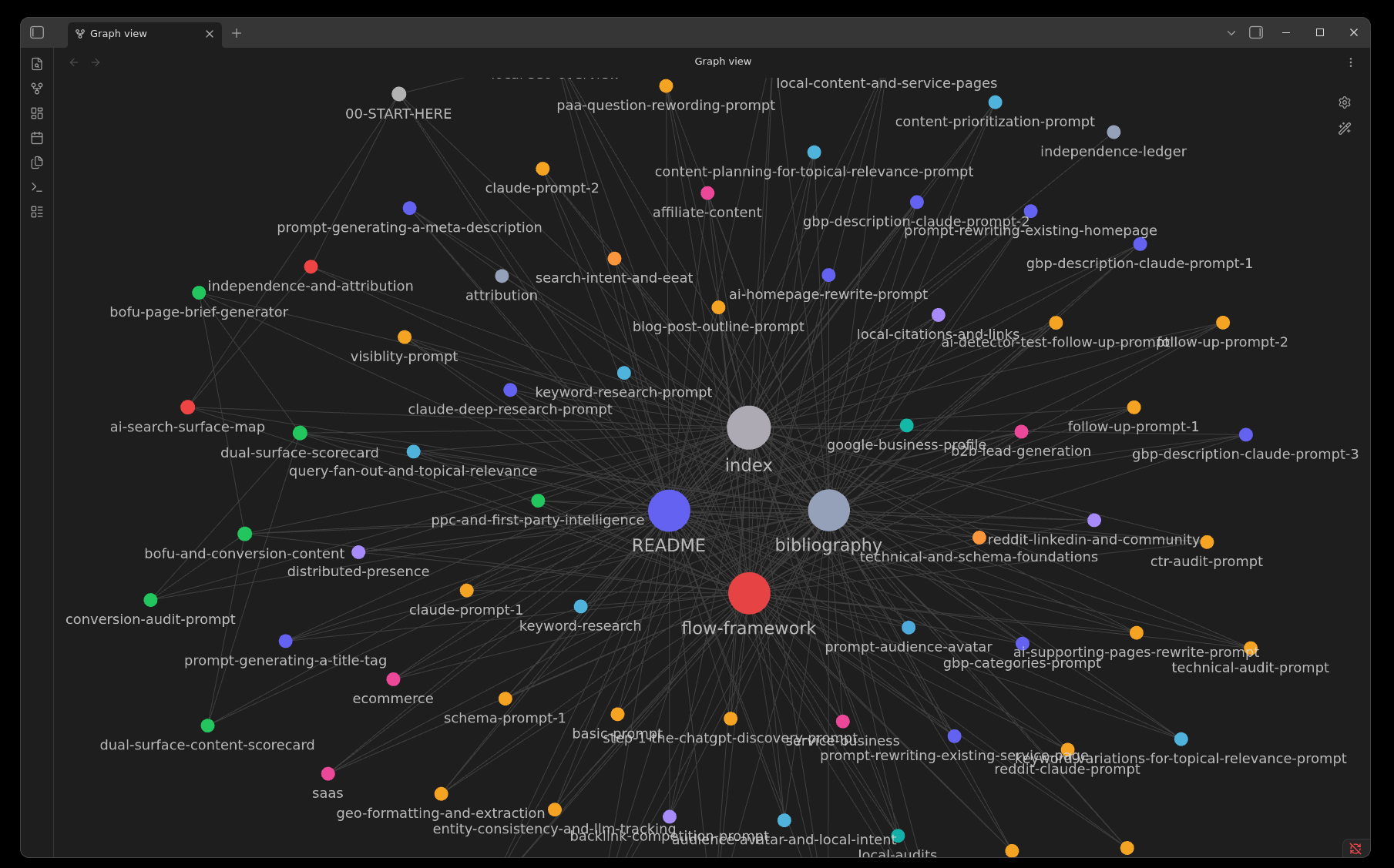
The graph filter ships scoped to obsidian-vault/, so the duplicate docs/ tree at the repo root and the standards files don't crowd the canvas. The same data with showOrphans: false and the path filter applied collapses to three focused clusters:
| Stage | Sample diagram | Live in |
|---|---|---|
| FIND | 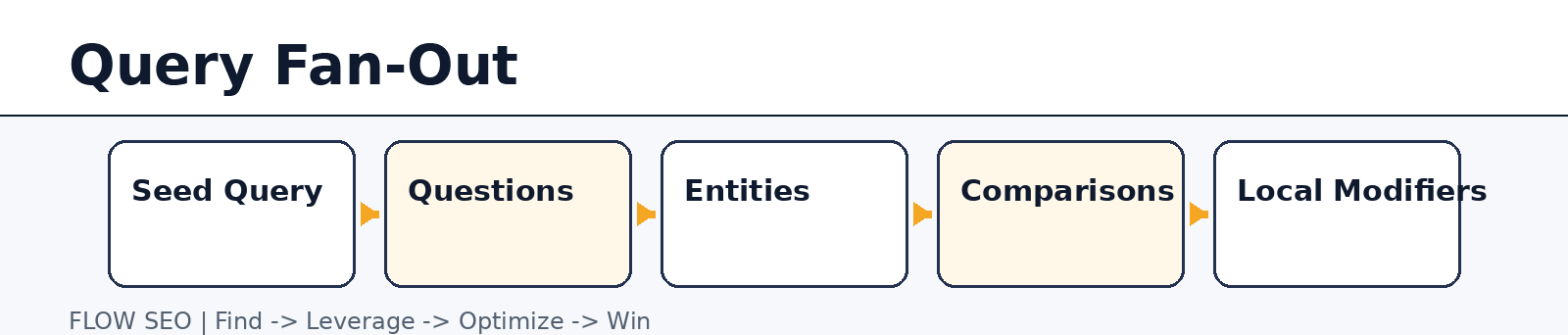 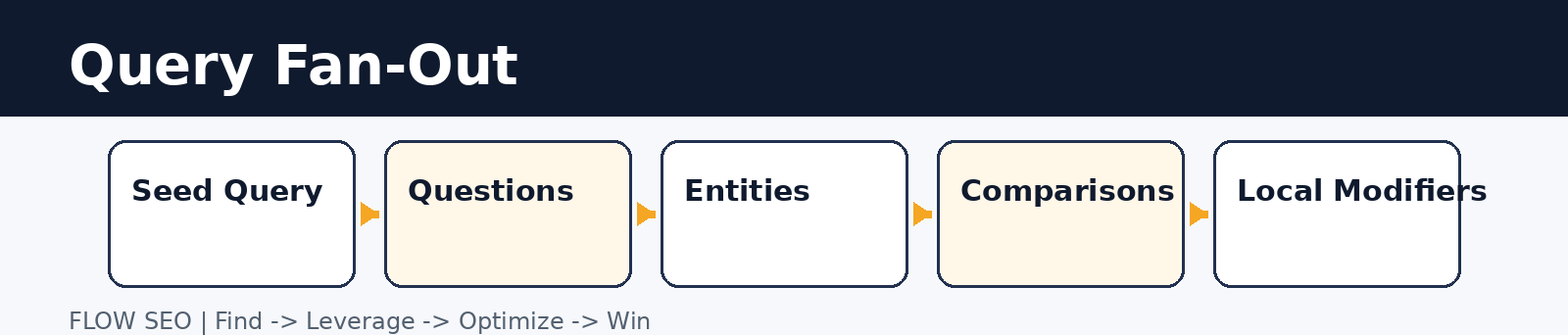 | docs/03-find/ |
| LEVERAGE | 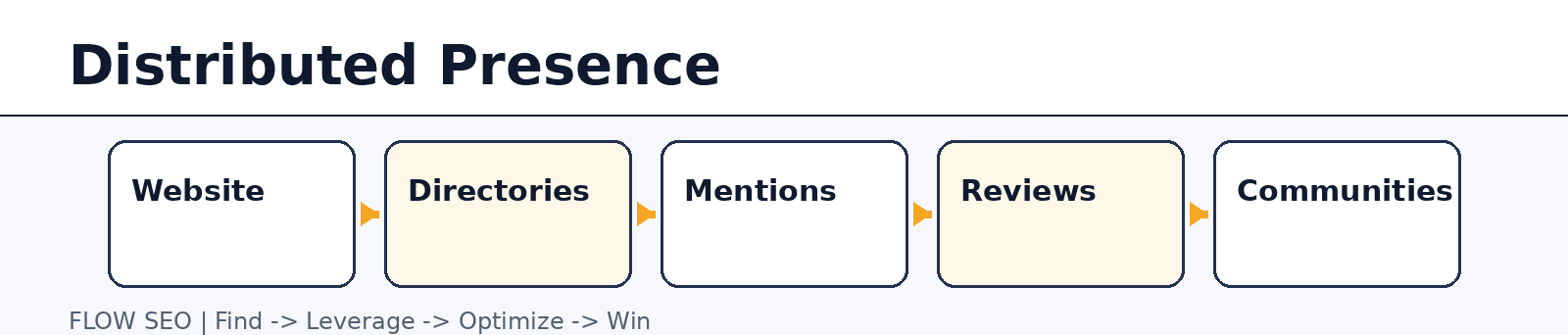  | docs/04-leverage/ |
| OPTIMIZE | 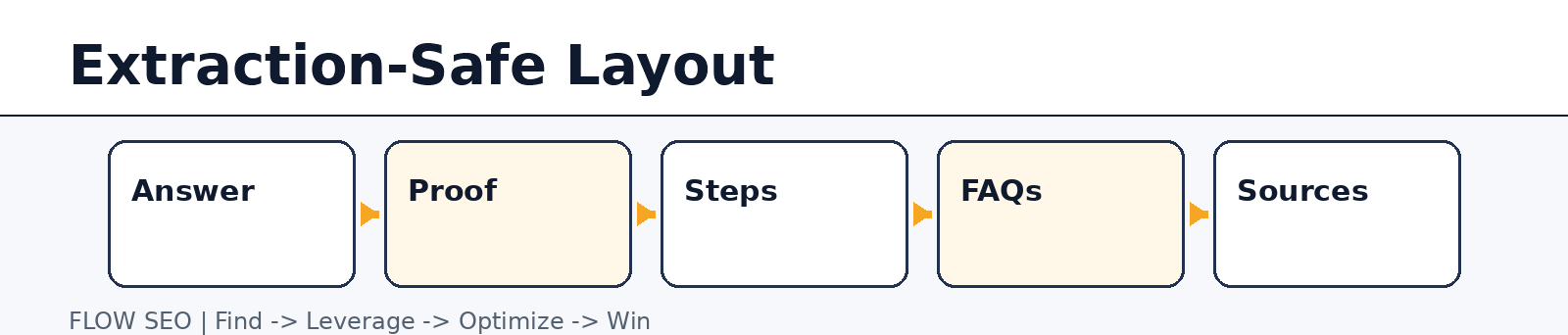 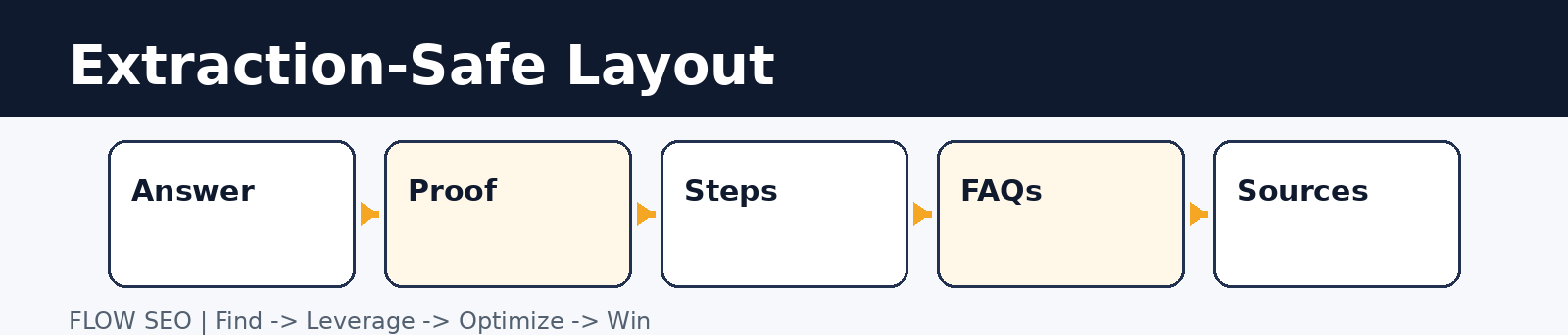 | docs/05-optimize/ |
| WIN | 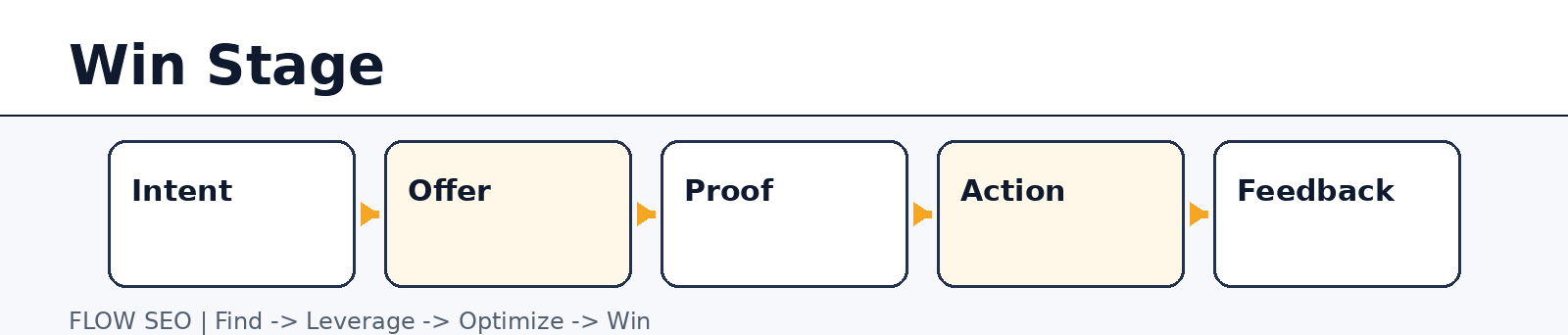 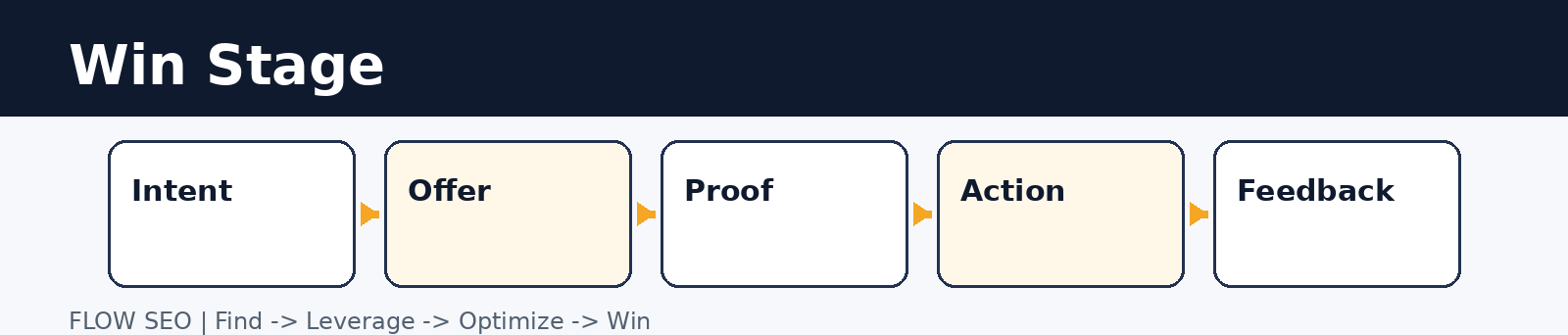 | docs/06-win/ |
| LOCAL | 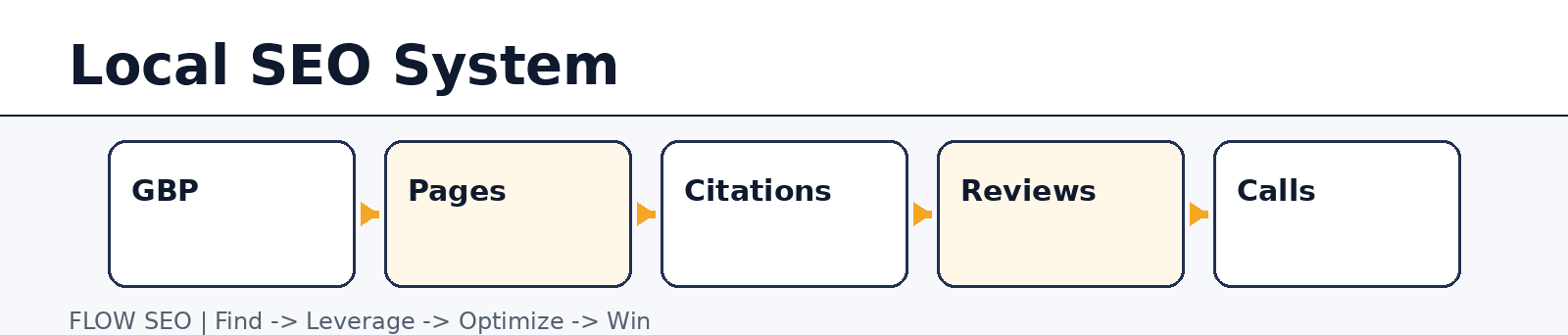  | docs/07-local-seo/ |
| PLAYBOOKS | 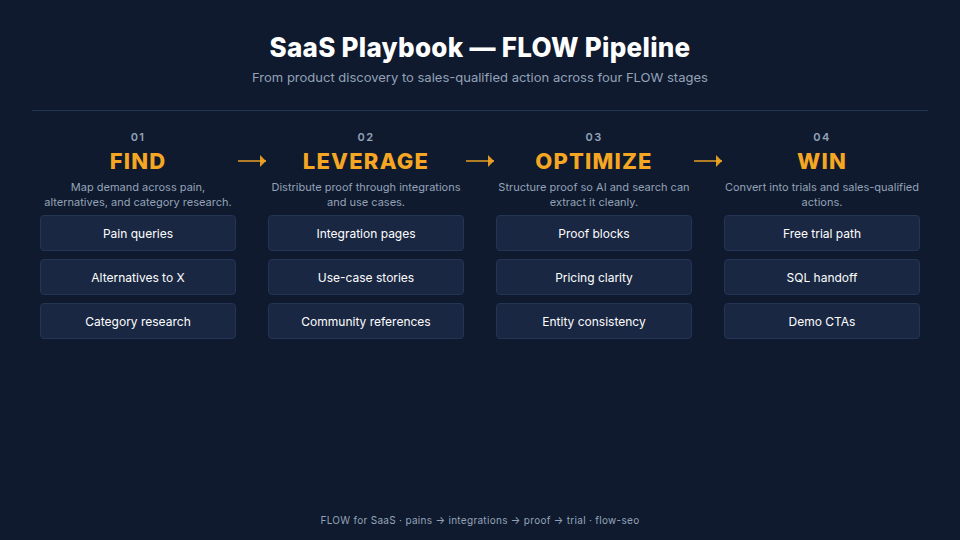 | docs/08-playbooks/ |
Plus four animated Remotion visuals anchored to verified statistics: AI Overviews click reduction, Google Business Profile completeness uplift, ChatGPT local source mix, and the dual-surface scorecard.
flow/
├── README.md                    ← you are here
├── LICENSE.md                   ← CC BY 4.0 (content) + MIT (scripts)
├── CONTRIBUTING.md              ← how to propose corrections / additions
├── CODE_OF_CONDUCT.md           ← Contributor Covenant 2.1
├── CHANGELOG.md                 ← release history
├── SECURITY.md                  ← vulnerability disclosure policy
├── llms.txt                     ← AI crawler manifest (llmstxt.org spec)
├── llms-full.txt                ← concatenated full-content variant for agent ingestion
├── docs/
│   ├── 00-START-HERE.md
│   ├── 01-framework/            ← FLOW framework, AI search surface map
│   ├── 02-foundations/          ← search intent, E-E-A-T, technical / schema
│   ├── 03-find/                 ← keyword research, audience avatar, query fan-out
│   ├── 04-leverage/             ← distributed presence, citations, Reddit + LinkedIn
│   ├── 05-optimize/             ← GEO formatting, entity consistency, CTR, schema
│   ├── 06-win/                  ← BOFU + conversion, PPC + first-party, scorecard
│   ├── 07-local-seo/            ← Local SEO pillar (map pack, GBP, property audits)
│   ├── 08-playbooks/            ← SaaS / Ecommerce / Service / B2B / Affiliate
│   ├── 09-prompts/              ← 42 standardized AI prompts
│   └── 10-references/           ← bibliography, attribution, independence ledger
├── assets/
│   ├── diagrams/                ← FLOW-native diagrams (PNG + animated GIF)
│   ├── canvases/                ← Obsidian canvas exports
│   └── social-preview.png       ← GitHub social card
├── obsidian-vault/              ← parallel mirror with wikilinks + frontmatter
├── examples/                    ← worked examples per pillar
└── scripts/
    └── check_docs.py            ← evidence-standard CI check
docs/10-references/attribution.md.Corrections, source improvements, and 2026-current citations are welcome. See CONTRIBUTING.md for the evidence standard, prompt schema, and PR checklist.
Found an outdated statistic? Open an issue using the Source correction template — it's the highest-value contribution this repo accepts.
Daniel Agrici — built FLOW as a 2026 reframing of decade-old SEO methodology against current AI-search reality. Connect via the repo's Discussions tab.
LICENSE.md and docs/10-references/attribution.mdYou can use, adapt, and redistribute the content commercially with attribution. Scripts can be forked without copyleft.
If FLOW helps you ship something, star the repo and share the framework. That's the attribution chain that keeps the evidence layer current.
Sign in to join the discussion.
No comments yet. Be the first to say what this is good for.
Learn it. Build it. Ship it for others.

Bash is all you need - A nano claude code–like 「agent harness」, built from 0 to 1

A visual, example-driven guide to Claude Code — from basic concepts to advanced agents, with copy-paste templates that bring immediate value.

Specification and documentation for Agent Skills
💻 vibe coding 101|The first course for AI-native product builders.

45+ tips for getting the most out of Claude Code, from basics to advanced - includes a custom status line script and Claude Code running itself in a container. Also includes the dx plugin: skills for everyday dev workflows.