

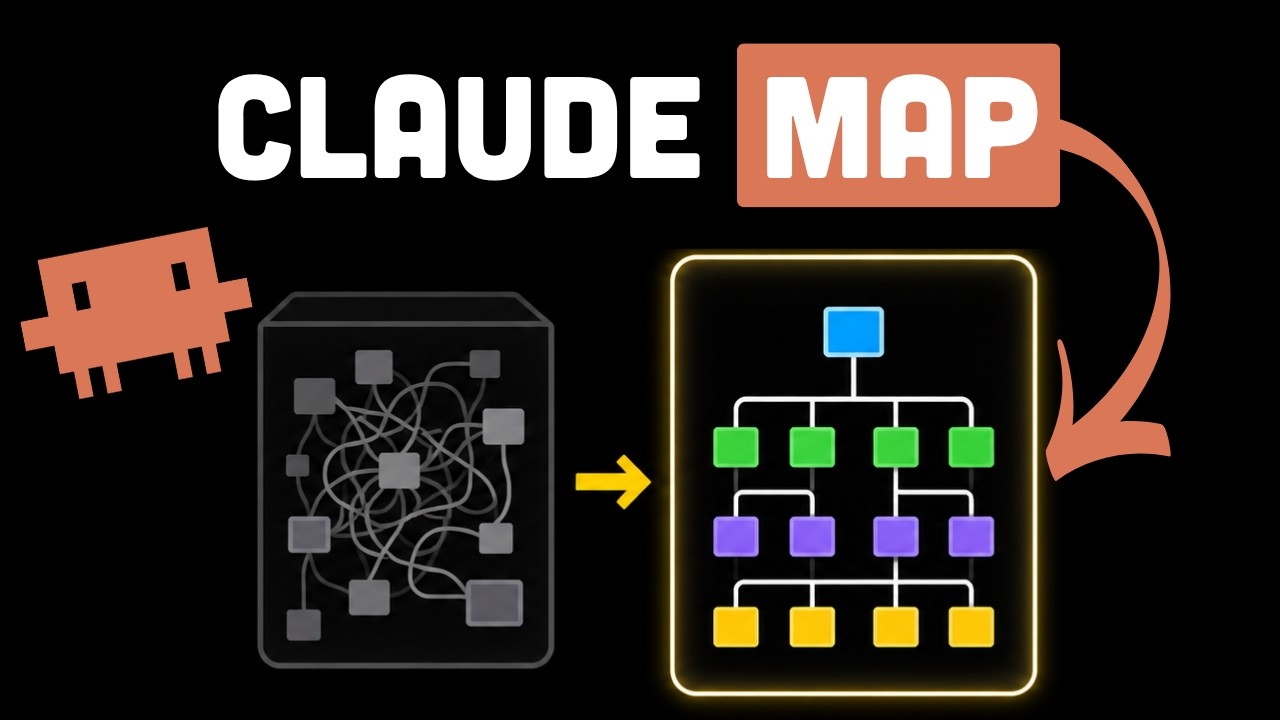
Graphs that teach > graphs that impress. Turn any code into an interactive knowledge graph you can explore, search, and ask questions about. Works with Claude Code, Codex, Cursor, Copilot, Gemini CLI, and more.
82k
Claude-AD packages an internal Active Directory assessment method for Claude Code. It combines skills, agents, and slash commands so Claude can follow the usual engagement flow, account for hardened-domain constraints, and note the telemetry each technique leaves behind. The repo is built around standard tools such as netexec, impacket, certipy, bloodyAD, and BloodHound CE.
Builders who use Claude Code to plan and run internal Active Directory assessments.
You can keep your agent on a consistent AD assessment flow instead of re-explaining the playbook each time.
Encodes the setup, collection, exploitation, and post-exploitation order for an AD engagement.
Covers NTLM and Kerberos fallback, AES-only domains, LDAP signing and channel binding, clock skew, FQDN SPN traps, Protected Users, LAPS, gMSA, and MachineAccountQuota.
Maps techniques to Windows event IDs, likely MDI alerts, and defender-visible signals.
Includes skills for Kerberos attacks, ADCS ESC1-ESC17, ACL abuse, coercion and NTLM relay, and compliance mapping.
Provides agents for enumeration, attack-path reasoning, and exploit execution with a human confirmation gate.
Adds `/ad-scope`, `/ad-recon`, and `/ad-attack-paths` for guided AD workflows.
/plugin marketplace add ADScanPro/Claude-AD
/plugin install claude-ad@claude-ad
Active Directory pentest methodology for Claude Code.



Skills, agents and commands that give Claude the playbook for an internal Active Directory assessment: the phase order, the environment constraints that break your tooling, the telemetry each technique leaves behind, and how a finding maps to a compliance control. It drives standard tooling (netexec, impacket, certipy, bloodyAD, BloodHound CE). You still run the engagement; Claude carries the method.
Every AD assessment follows the same spine: map before you exploit, harvest the easy credentials before you spray, collect the graph before you reason about paths. That spine, plus the hundred small constraints a hardened domain throws at you (NTLM disabled, AES-only Kerberos, LDAP channel binding, SPNs that must be FQDNs), is what separates an operator who finishes the engagement from one who spends a day debugging invalidCredentials.
Claude-AD encodes that method as Claude Code skills so Claude runs the standard tools in the right order, reads the environment correctly, and tells you what each step will look like to a defender.
It covers:
It orchestrates third-party tools. BloodHound CE (Apache-2.0), impacket, certipy, netexec and bloodyAD do the work; Claude-AD is the method that drives them.
Claude-AD is a Claude Code plugin. From inside Claude Code:
/plugin marketplace add ADScanPro/Claude-AD
/plugin install claude-ad@claude-ad
The first line registers this repo as a marketplace; the second installs the plugin. Once installed, the skills load automatically when you work on an AD engagement, and the commands (/ad-scope, /ad-recon, /ad-attack-paths) are available.
Claude-AD/
├── skills/
│   ├── ad-methodology/          # phase order and why
│   ├── ad-environment-constraints/  # what breaks your tooling in a hardened domain
│   ├── ad-opsec-telemetry/      # Event IDs and MDI alerts per technique
│   ├── kerberos-attacks/        # Kerberoasting, AS-REP, delegation
│   ├── adcs-attacks/            # ESC1-ESC17 with certipy
│   ├── acl-abuse/               # GenericAll, WriteDACL, replication rights
│   ├── coercion-ntlm-relay/     # PetitPotam/PrinterBug/DFSCoerce + ntlmrelayx
│   └── compliance-mapping/      # conceptual technique -> DORA/NIS2/ENS control
├── agents/
│   ├── ad-enumerator.md         # runs collection with standard tooling
│   ├── ad-attack-planner.md     # reasons low-priv -> Domain Admin paths
│   └── ad-exploit-operator.md   # executes one step, with a human gate
└── commands/
    ├── ad-scope.md
    ├── ad-recon.md
    └── ad-attack-paths.md
This is for authorized engagements only: your own lab, a domain you are contracted to test, a CTF. The exploitation agents ask for confirmation before any action that modifies the directory (a password reset, a group add, an RBCD write), and note where rollback applies. Use it where you have permission to.
Claude-AD gives you the method. It tells Claude what to run, in what order, what each technique looks like on the wire, and which compliance control it touches. You still drive every tool by hand and read every result yourself.
ADscan is the engine. It runs the whole chain from a low-privilege user to Domain Admin on its own, on-prem, with guardrails and rollback, and turns the result into a report with control IDs a DORA, NIS2 or ENS auditor will accept. Where this repo hands Claude the playbook, ADscan is the tool that executes it end to end and writes the evidence.
ADscan is free and source-available. If the manual method here is useful and you want it run and mapped for you, that is what it is for.
Claude-AD stands on the shoulders of the community. The techniques it encodes are documented in depth at The Hacker Recipes, the reference every skill here points back to for exact syntax. It sits alongside the growing set of Claude Code security collections (Claude-OSINT, Claude-BugHunter, claude-pentest), filling the Active-Directory-internal gap those bundles leave open. The tooling it drives (BloodHound CE, impacket, certipy, netexec, bloodyAD) is the work of their respective authors.
New techniques, sharper detection guidance, corrections to the compliance mapping: open an issue or a PR. Keep it AD-internal and keep the commands real.
MIT. See LICENSE. ADscan itself is a separate product under the Business Source License 1.1 (source-available).
Keywords: Active Directory penetration testing · Claude Code skills · red team · Kerberoasting · AS-REP roasting · ADCS ESC1-ESC17 · DCSync · ACL abuse · NTLM relay & coercion (PetitPotam, PrinterBug, DFSCoerce) · Kerberos delegation · BloodHound CE attack paths · OPSEC & MDI telemetry · DORA / NIS2 / ENS compliance mapping · netexec · impacket · certipy · bloodyAD.
Sign in to join the discussion.
No comments yet. Be the first to say what this is good for.
Graphs that teach > graphs that impress. Turn any code into an interactive knowledge graph you can explore, search, and ask questions about. Works with Claude Code, Codex, Cursor, Copilot, Gemini CLI, and more.
Self-organizing AI second brain for Obsidian + Claude Code. Drop any source and Claude reads, links, and files it into one connected knowledge graph of plain Markdown you own. AI note-taking, personal knowledge management (PKM), and an open-source Notion alternative. Based on Karpathy's LLM Wiki pattern.
Universal SEO skill for Claude Code. 25 sub-skills + 18 sub-agents covering technical SEO, E-E-A-T, schema, GEO/AEO, backlinks, local SEO, maps intelligence, semantic clustering, e-commerce SEO, international SEO, Google APIs, and PDF/Excel reporting. Optional DataForSEO, Firecrawl, and Banana extensions.

Persistent memory for Claude Code and 6 other CLI agents, stored as plain markdown in your Obsidian vault. Stop re-explaining your projects, decisions and people every session. 45 commands: hybrid semantic search, self-rewriting notes, key-less web research, and scheduled agents that maintain the vault while you sleep.
AI-powered bug bounty hunting toolkit that works with or without subscription.

Semi-automated research assistant for academic research and software development. Supports Claude Code, Codex CLI, Kimi Code CLI, and OpenCode across ideation, coding, experiments, writing, and publication.