
obra/
superpowers

obra/superpowersSkills
An agentic skills framework & software development methodology that works.
285k
1 add
This repository adds BMAD skill packs to Codex and routes work through `bmad:*` intents. It keeps workflow state in YAML files in your repo so planning, delivery, and review stay visible and repeatable.
Builders who use OpenAI Codex and want structured project state instead of one-off prompts.
You can move Codex through defined phases with saved project context instead of re-explaining the work each time.
Uses `bmad:*` intents such as `bmad:init`, `bmad:status`, `bmad:prd`, `bmad:architecture`, and `bmad:code-review` to guide work.
Stores project settings, workflow progress, and sprint tracking in `bmad/project.yaml`, `bmad/workflow-status.yaml`, and `bmad/sprint-status.yaml`.
Installs skill folders like `bmad-analyst`, `bmad-architect`, `bmad-developer`, and `bmad-scrum-master` under `skills/`.
Organizes work into analysis, planning, solutioning, and implementation with matching outputs in `docs/bmad/` and `docs/stories/`.
Provides Unix and Windows installers that copy the skills into the right Codex skill path and validate dependencies first.
./installers/install-codex.sh
./installers/install-codex.sh --dest "<project>/.agents/skills"
./installers/install-codex.ps1
./installers/install-codex.ps1 -Dest "<project>\.agents\skills"
codex
bmad:init name "My Project" communication language is English documentation language is English
bmad:status
bmad:next



BMAD Skills for OpenAI Codex adds a structured, intent-driven workflow to Codex for product discovery, planning, architecture, and implementation.
It installs reusable BMAD skills, introduces bmad:* intents, and keeps project workflow state in explicit YAML files inside your repository.
Original GitHub project: xmm/codex-bmad-skills
This repository provides:
bmad:*bmad/*.yamlUse it when you want Codex to guide work through defined phases instead of relying on ad-hoc prompts.
This project is for:
yq v4+python3 (or python)The installers validate both dependencies before install.
./installers/install-codex.sh
./installers/install-codex.sh --dest "<project>/.agents/skills"
./installers/install-codex.ps1
./installers/install-codex.ps1 -Dest "<project>\.agents\skills"
Notes:
--dest and -Dest are optional$HOME/.agents/skillscodex
bmad:init name "My Project" communication language is English documentation language is English
bmad:status
bmad:next
For a guided walkthrough, see Getting Started.
After initialization, the project contains:
bmad/project.yaml - project settings and language preferencesbmad/workflow-status.yaml - current workflow phase and progressbmad/sprint-status.yaml - sprint and delivery trackingdocs/bmad/ - generated BMAD documentsdocs/stories/ - implementation storiesBMAD in Codex is organized into four main phases.
Use this phase to explore the problem space and define direction.
Typical intents:
bmad:product-briefbmad:researchbmad:brainstormTypical outputs:
docs/bmad/product-brief.mddocs/bmad/research-report.mddocs/bmad/brainstorm.mdUse this phase to turn discovery into scoped plans and product documentation.
Typical intents:
bmad:prdbmad:tech-specbmad:prioritizebmad:ux-designTypical outputs:
docs/bmad/prd.mddocs/bmad/tech-spec.mddocs/bmad/prioritization.mddocs/bmad/ux-design.mdPlanning rules:
tech-specprd and architectureUse this phase to define architecture and validate readiness before implementation.
Typical intents:
bmad:architecturebmad:gate-checkTypical outputs:
docs/bmad/architecture.mddocs/bmad/gate-check.mdUse this phase to plan delivery, create stories, build, and review.
Typical intents:
bmad:sprint-planbmad:create-storybmad:dev-storybmad:code-reviewTypical outputs:
docs/bmad/sprint-plan.mddocs/stories/STORY-*.mddocs/bmad/code-review.mdThese intents are optional and can be used in any phase:
bmad:create-skillbmad:create-workflowbmad:ideatebmad:research-deepbmad:user-flowbmad:initbmad:statusbmad:nextbmad:product-briefbmad:researchbmad:brainstormbmad:prdbmad:tech-specbmad:prioritizebmad:architecturebmad:gate-checkbmad:sprint-planbmad:create-storybmad:dev-storybmad:code-reviewbmad:ux-designbmad:user-flowbmad:ideatebmad:research-deepbmad:create-skillbmad:create-workflow.
├── AGENTS.md
├── installers/
├── skills/
│ ├── bmad-orchestrator/
│ ├── bmad-analyst/
│ ├── bmad-product-manager/
│ ├── bmad-architect/
│ ├── bmad-scrum-master/
│ ├── bmad-developer/
│ ├── bmad-ux-designer/
│ ├── bmad-creative-intelligence/
│ ├── bmad-builder/
│ └── bmad-shared/
└── docs/
Key directories:
skills/ - the BMAD skills used by Codexinstallers/ - install scripts for supported environmentsdocs/ - documentation and examplesThe core Codex workflow is already usable today.
Current implementation focus:
The BMAD Method (Breakthrough Method for Agile AI-Driven Development) is created and maintained by the BMAD Code Organization.
This repository is an implementation and adaptation of BMAD for OpenAI Codex. The methodology, core workflow patterns, and BMAD concepts remain the intellectual property of the BMAD Code Organization.
This OpenAI Codex adaptation was initially based on BMAD Method v6 for Claude Code.
Original sources:
MIT License. See LICENSE.
Sign in to join the discussion.
No comments yet. Be the first to say what this is good for.
An agentic skills framework & software development methodology that works.

Turn any codebase, with its docs, SQL schemas, configs, and PDFs, into a queryable knowledge graph. A /graphify skill for Claude Code, Cursor, Codex, and Gemini CLI: local deterministic AST parsing, every edge explained, no vector store.

Topic in, narrated explainer video out. A Claude Code / Codex skill that turns any topic into a black-canvas motion-graphics explainer video with TTS voiceover, subtitles and a chapter progress bar. Chinese or English; every frame drawn in code with Remotion.
Public repository for Agent Skills
Open-source AI job search: scan job portals, evaluate listings into a structured A-H report with a global 1-5 score, tailor your CV, track applications — runs locally in your AI coding CLI (Claude Code, Codex, OpenCode, Antigravity…)
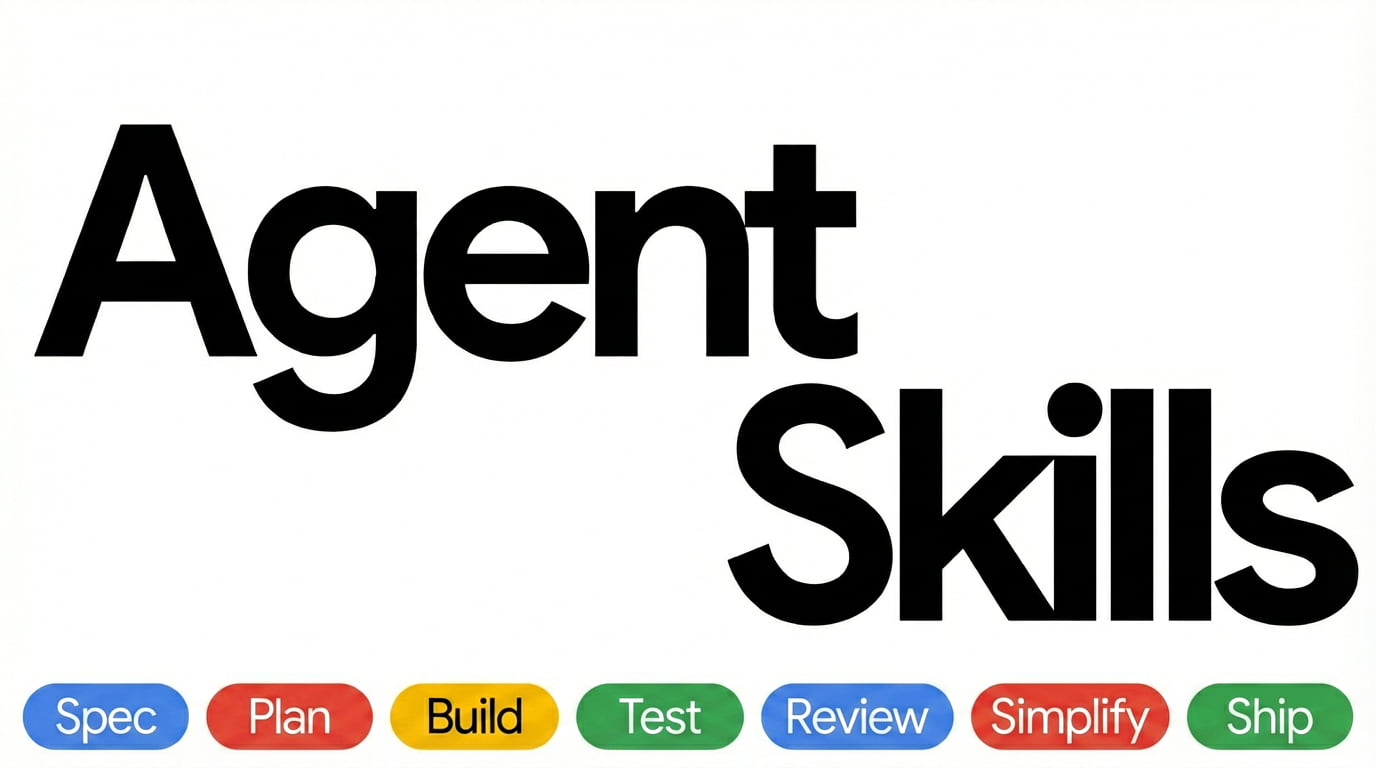
Production-grade engineering skills for AI coding agents.