SDLC Infrastructure Threat Framework (SITF)
A comprehensive framework for analyzing and defending against attacks targeting Software Development Lifecycle infrastructure.
Quick Start
🌐 Try Online (No Installation Required)
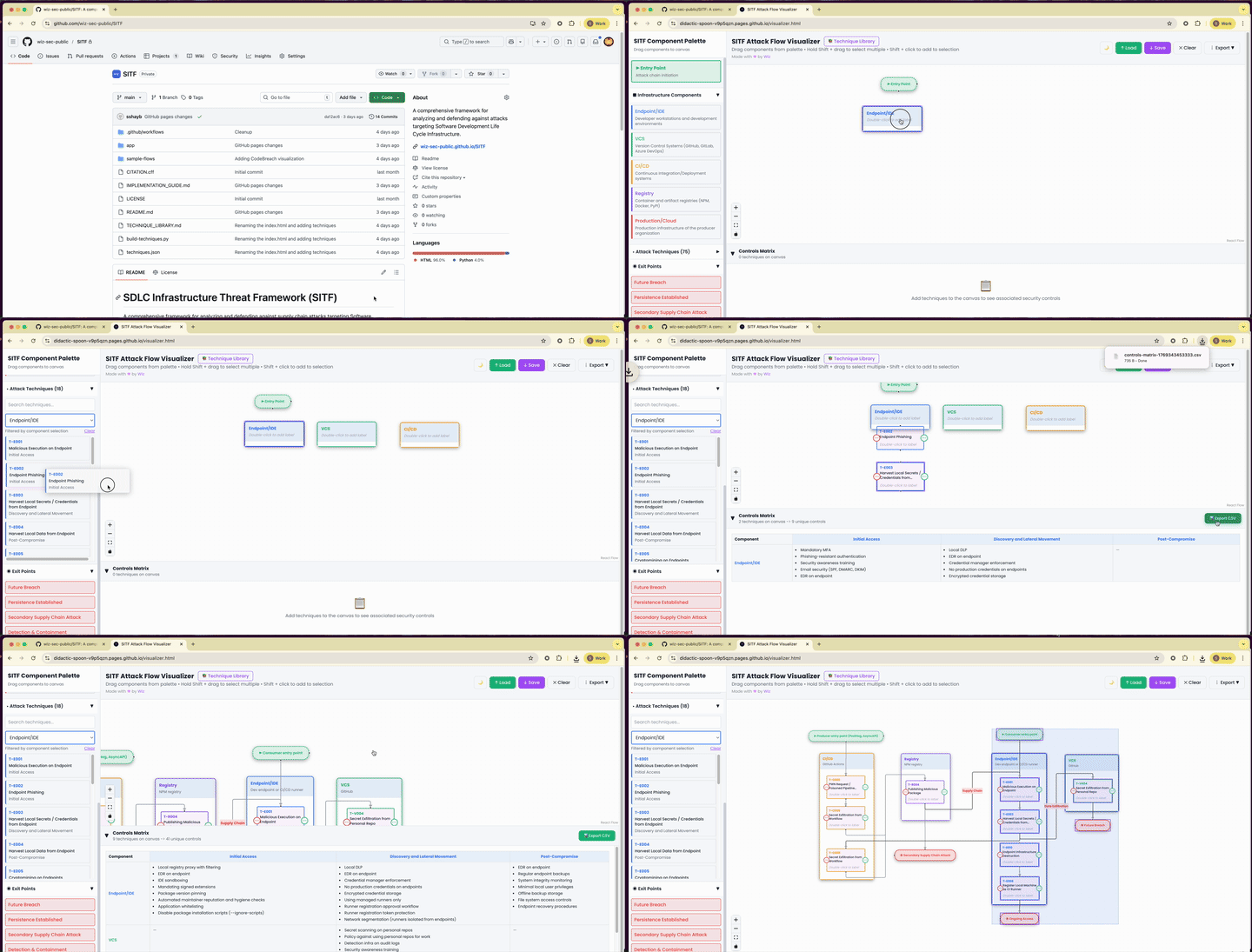
Launch the Flow Builder - Interactive tool for mapping attack flows
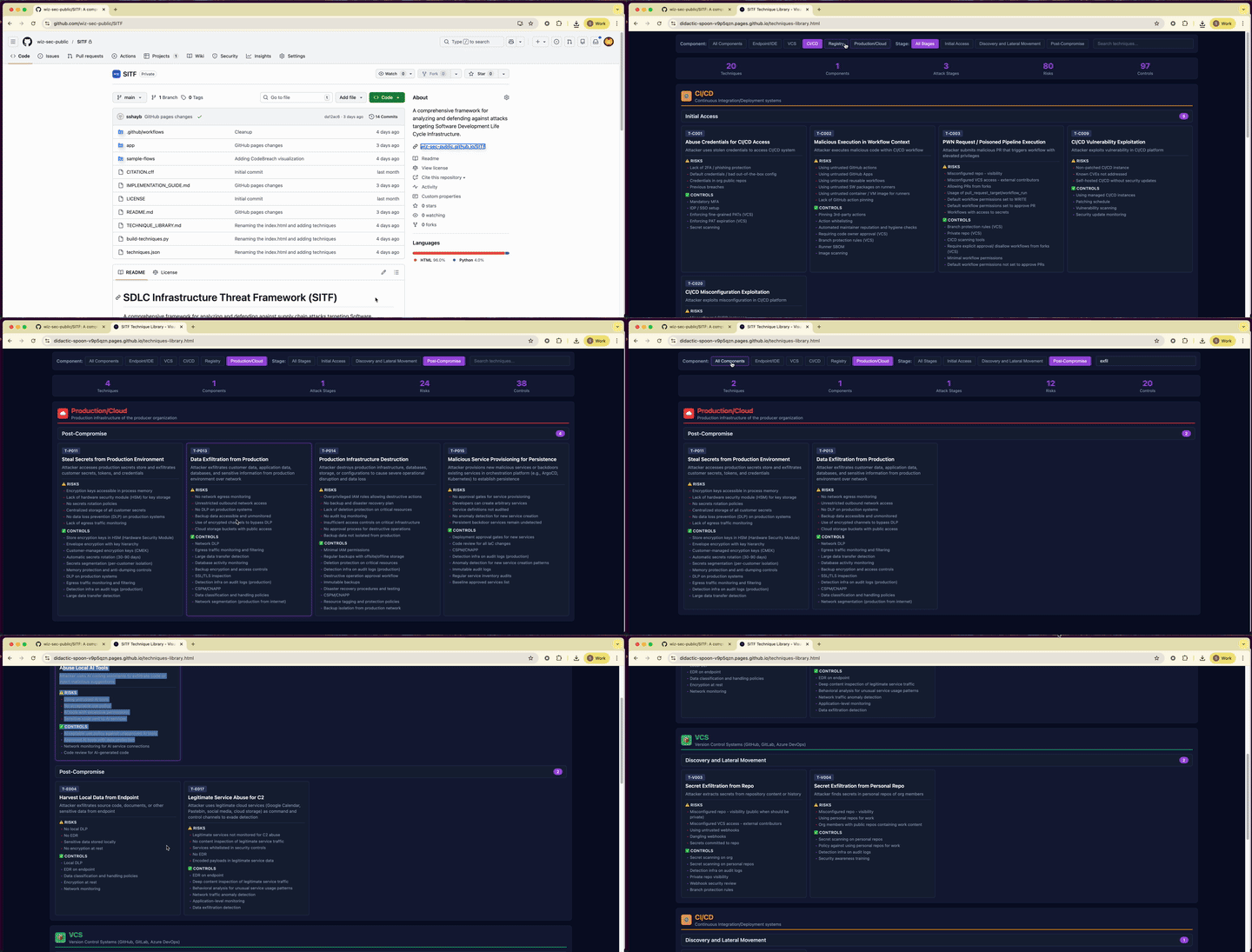
Explore Techniques Visually - Interactive visual explorer with filtering and search
🤖 Use with Claude AI
Automated Attack Flow Generation - Use Claude skills to automatically generate SITF-compliant attack flows and technique proposals:
| Skill | Purpose |
|---|
/attack-flow | Generate flows from public incidents and breach reports |
/red-team-flow | Generate flows from red team/pentest engagement reports |
/technique-proposal | Create new technique definitions when gaps are identified |
See SKILLS.md for detailed usage instructions and examples.
📁 Use Locally
Launch builder locally - Download visualizer.html locally, open and build offline
Explore techniques - Download techniques-library.html locally, open and browse techniques offline
📖 Documentation
Read the Implementation Guide - Complete methodology, case studies, and usage instructions
What is SITF?
SITF helps security teams analyze supply chain attacks by:
- Visualizing attack stages across SDLC components (Endpoint, VCS, CI/CD, Registry, Production)
- Identifying the risks that enabled each attack technique
- Mapping risks to appropriate security controls
- Understanding attack paths and lateral movement patterns
Framework Components
- 5 Infrastructure Components: Endpoint/IDE, VCS, CI/CD, Registry, Production/Cloud
- 75+ Attack Techniques: Pre-mapped with enabling risks and security controls
- Dual Control Types: Protective controls (prevent attacks) and Detective controls (detect attacks)
- Framework Mappings: Controls mapped to industry frameworks (OWASP SPVS)
- Interactive Visualizer: Drag-and-drop interface for building attack flow diagrams
- Real-World Case Studies: CircleCI breach, Shai-Hulud-2, TrustWallet, tj-actions, CodeBreach, s1ngularity
Documentation
Claude AI Skills
SITF includes Claude AI skills for automated attack flow generation. See SKILLS.md for complete documentation.
| Skill | Input | Output |
|---|
/attack-flow | Incident name, URL, or web search | sample-flows/<name>.json |
/red-team-flow | Engagement report (file/URL/text) | flows/red-team/<name>.json |
/technique-proposal | Gap description | technique-proposals/<id>.md |
Contributing
Adding or Modifying Techniques
Manual Method:
- Edit
techniques.json - the source of truth
- Run
python3 build-techniques.py to regenerate documentation and web app
- Commit all changes (JSON, Markdown, and HTML)
- Submit PR or use locally
Automated Method (with Claude):
- Use
/technique-proposal to generate a complete technique definition
- Add the generated JSON to
techniques.json
- Run
python3 build-techniques.py to regenerate documentation
- Submit PR with the proposal rationale
The build script generates:
TECHNIQUE_LIBRARY.md - Human-readable documentationapp/techniques-library.html - Visual technique explorer with filtering and searchapp/visualizer.html - Interactive attack flow builder
Creating Attack Flows
Manual Method:
Automated Method (with Claude):
- Use
/attack-flow <attack-name> websearch to automatically generate flows from incident reports
Target Audience: Incident Response Teams, Security Architects, Threat Intelligence Teams, Security Engineers
Focus: Protecting producer organizations (software vendors, OSS maintainers) who create supply chain components
Starting April 14 2026, SITF is licensed under CC BY-NC 4.0. Versions prior to this date remain under CC BY-NC-ND 4.0.