
DietrichGebert/ponytailPlugins
Makes your AI agent think like the laziest senior dev in the room. The best code is the code you never wrote.
138k
1 add
Claude Paperloom is a Claude Code plugin that turns papers into an Obsidian knowledge graph. It fetches a paper from a URL, arXiv ID, DOI, or PDF, writes structured notes, extracts atomic findings, and connects them with typed edges like `supports` and `contradicts`.
Builders who want Claude Code to file research papers into Obsidian and keep them linked over time.
You can drop in a paper and get a structured note, extracted claims, and graph links without manual filing.
`/paperloom:ingest` fetches a URL, arXiv ID, DOI, or PDF, then summarizes and files the paper into the vault.
Each paper gets a 4-section summary: Key Takeaways, Background, Main Idea & Summary, and Critique.
Claims are split into one finding per file with frontmatter and backlinks so they can be linked across papers.
The graph uses relations like `supports`, `contradicts`, `extends`, `uses`, and `similar-to`, with paper-level aggregation.
It matches references by arXiv ID, DOI, title, or author-year without sending the reference list to the model.
It ships Dataview views for authors, fields, contradictions, credibility, and recent papers.
The package includes Claude Code plugin metadata, commands, agents, templates, and pipeline scripts.

A Claude Code Plugin for Self-maintaining research knowledge graph for Claude Code + Obsidian.



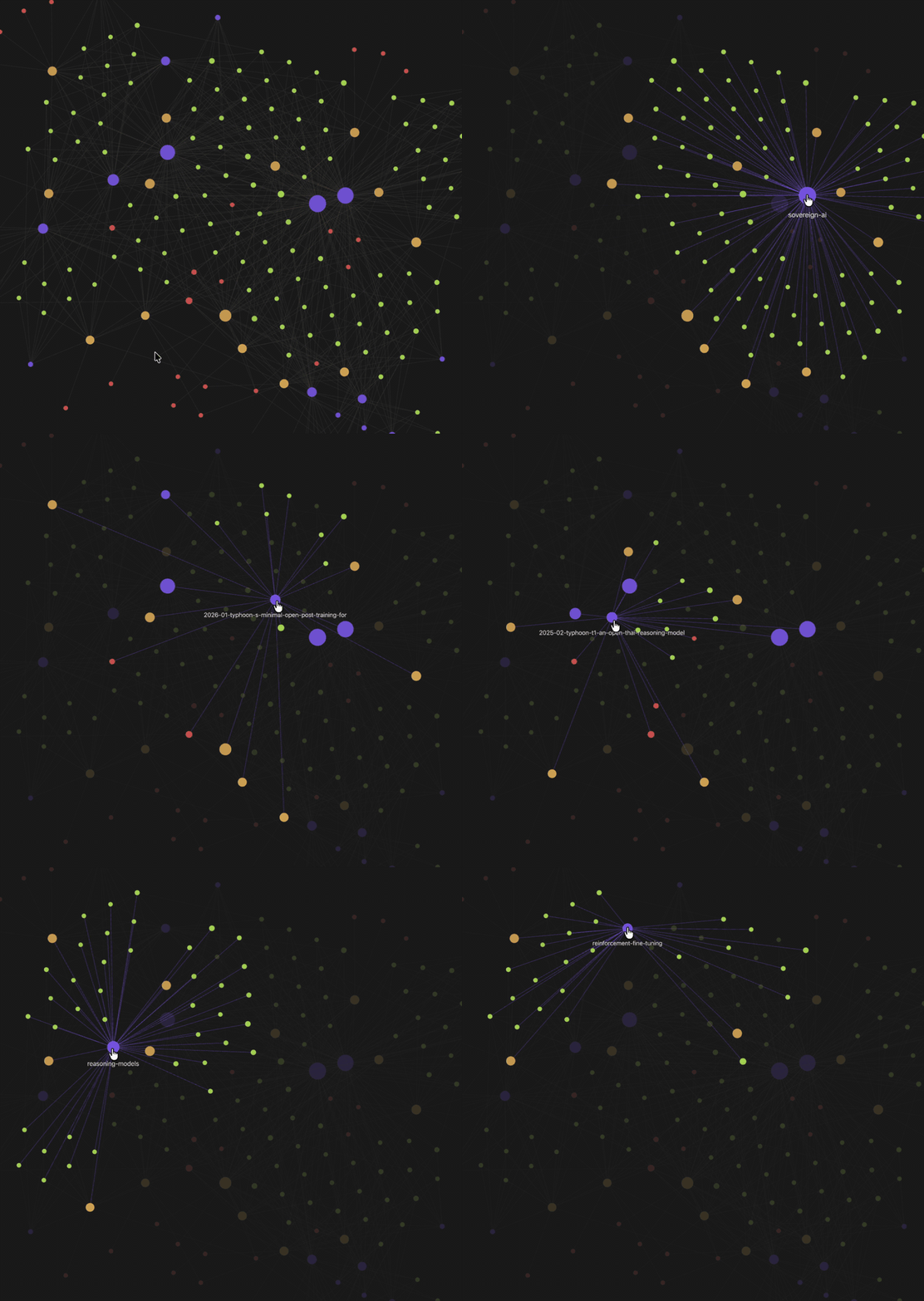
|
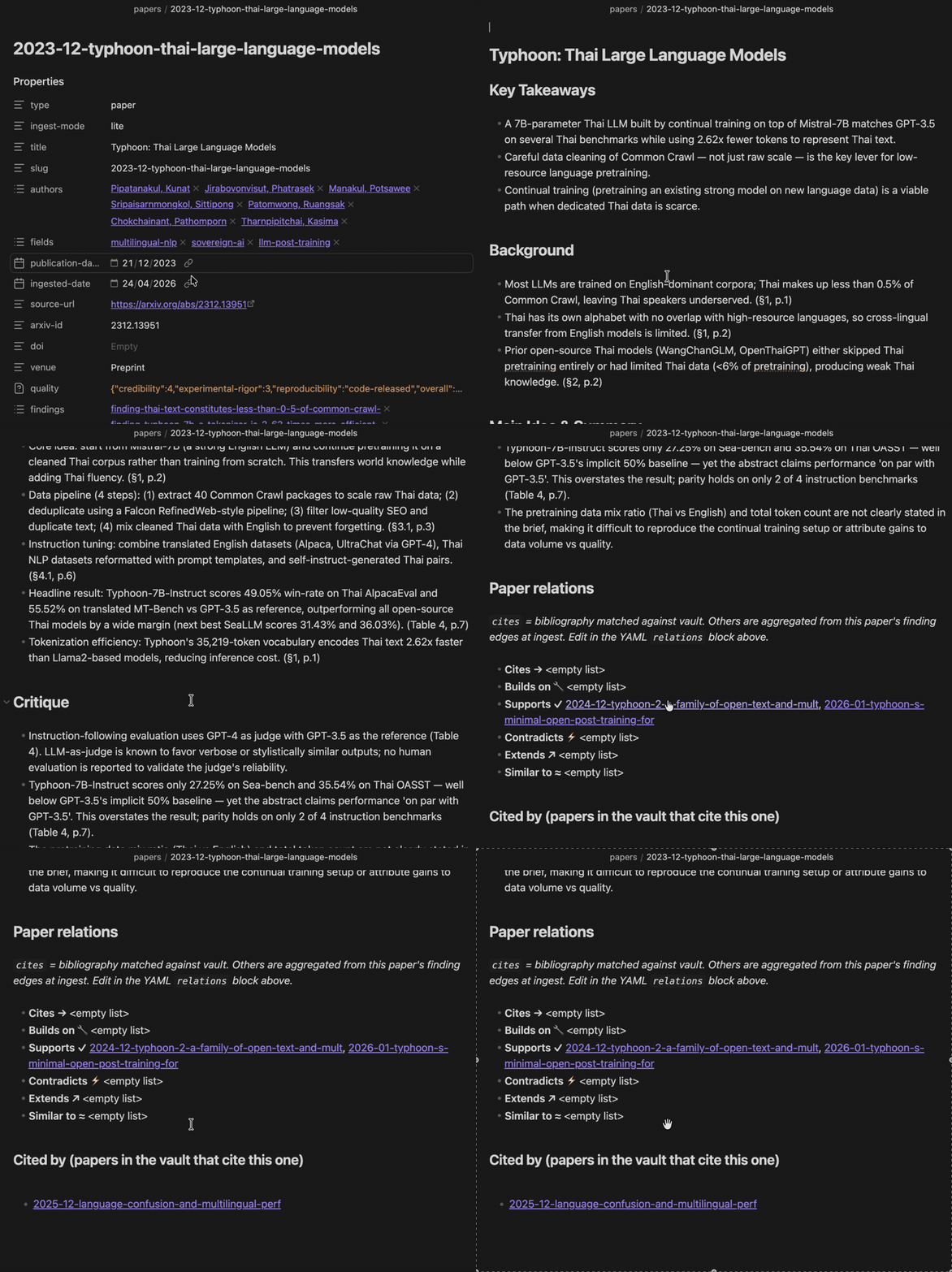
|
| Knowledge graph view — 🟡 papers · 🟢 findings · 🟣 fields · 🔴 authors. Example shown: Typhoon.AI research papers. | Per-paper info page — 4-section summary (incl. critique), atomic findings, metadata + quality scores, and typed edges to related work. |
Keep every paper you care about. See how they connect. Drop in a URL, arXiv ID, DOI, or PDF — Claude files it into an Obsidian vault, extracts the atomic claims, and wires them to everything you've read before with typed edges: supports, contradicts, extends, uses, similar-to.
Based on Andrej Karpathy's LLM Wiki pattern, tuned for research papers. 4 LLM calls per paper. Zero manual filing. Linking cost stays constant as the graph grows.
supports, contradicts, extends, uses, similar-to; auto-aggregated to paper-level (cites, builds-on, …).# 1. Install the plugin
claude --plugin-dir /path/to/claude-paperloom
# 2. Scaffold your vault (default ~/PaperLoom)
# On first run, this creates `.venv` at the plugin root and installs
# dependencies from `requirements.txt` automatically.
/paperloom:init
# 3. Ingest your first paper
/paperloom:ingest https://arxiv.org/abs/1706.03762
Open the vault folder in Obsidian and turn off Restricted Mode once to activate Dataview.
| You run | Claude does |
|---|---|
/paperloom:init [path] | Scaffold the vault. Idempotent. Seeds Dataview. |
/paperloom:ingest <url|arxiv-id|doi|pdf> | Fetch, summarize, extract findings, link. Skips if already in vault. |
/paperloom:query <question> | Search + synthesize across the vault with wikilink citations. |
/paperloom:lint | Health check. Auto-wires near-duplicate findings with bidirectional similar-to. |
Sign in to join the discussion.
No comments yet. Be the first to say what this is good for.
Makes your AI agent think like the laziest senior dev in the room. The best code is the code you never wrote.
Graphs that teach > graphs that impress. Turn any code into an interactive knowledge graph you can explore, search, and ask questions about. Works with Claude Code, Codex, Cursor, Copilot, Gemini CLI, and more.

OmO: Just type "mass ulw" keyword with your prompt. Now you are the master of graph engineering.
Persistent Context Across Sessions for Every Agent – Captures everything your agent does during sessions, compresses it with AI, and injects relevant context back into future sessions. Works with Claude Code, OpenClaw, Codex, Gemini, Hermes, Copilot, OpenCode + More
Opinionated Oxlint rules for rejecting low-evidence TypeScript and JavaScript patterns
Teams-first Multi-agent orchestration for Claude Code