
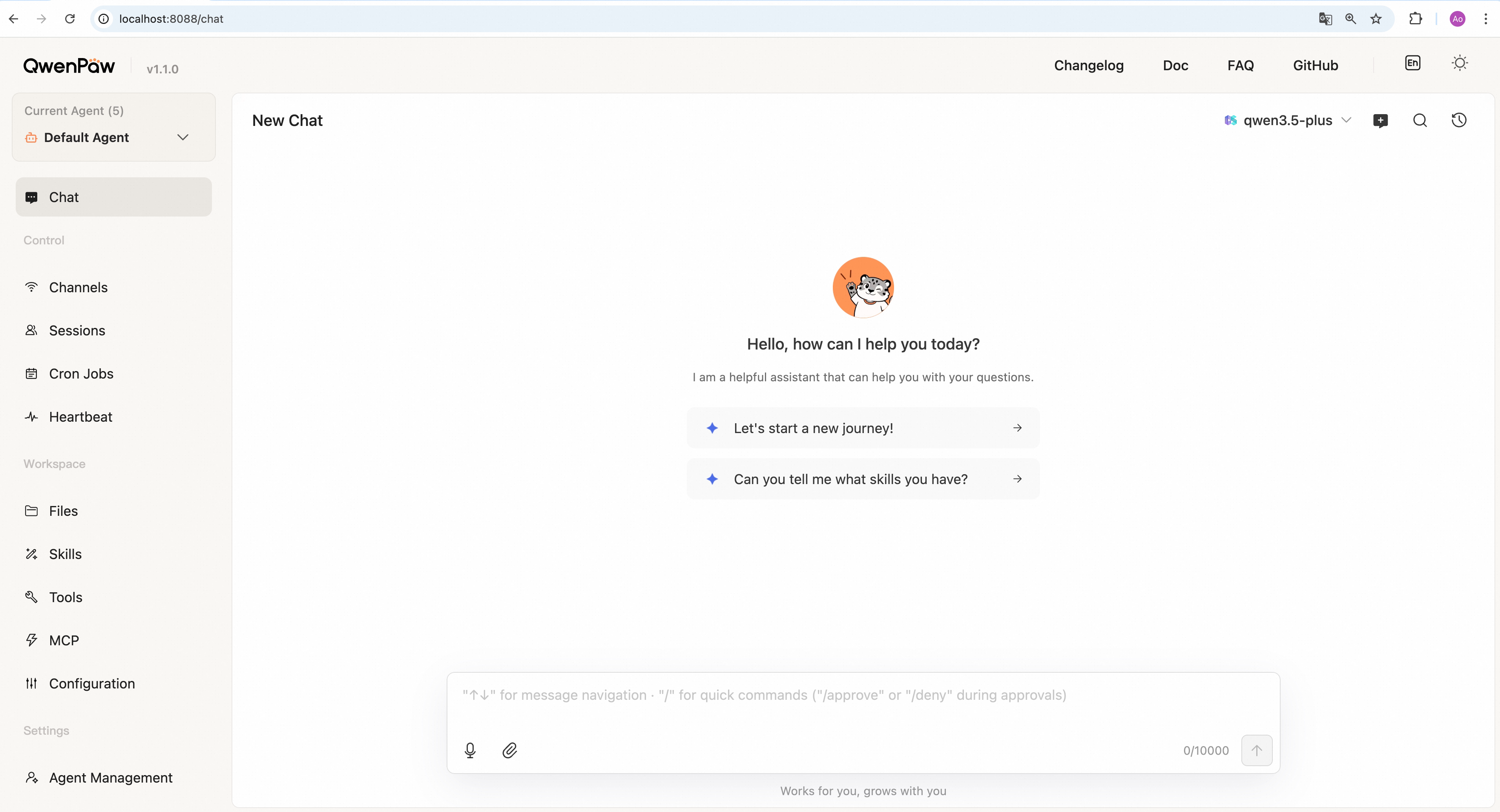
Your Personal AI Assistant; easy to install, deploy on your own machine or on the cloud; supports multiple chat apps with easily extensible capabilities.
35k
phpMyFAQ is a full FAQ site that runs on PHP 8.4+ with MySQL, PostgreSQL, SQLite, SQL Server, and search backends like Elasticsearch or OpenSearch. It ships with Docker, Kubernetes, REST API docs, plugins, translations, and admin tooling for running the application in production or local development.
Builders who want to deploy and operate a FAQ website with database-backed content and search.
You can publish and manage a multilingual FAQ site with search, permissions, and revision history.
Stores content in supported databases including MySQL, MariaDB, PostgreSQL, SQL Server, and SQLite.
Works with Elasticsearch or OpenSearch for faster search across FAQ content.
Includes 40+ languages and translation files under `phpmyfaq/translations/`.
Provides `Dockerfile`, `docker-compose.yml`, `docker-compose.prod.yml`, and `.docker/` profiles for local and production use.
Includes manifests in `kubernetes-deploy/` for deployment, service, and ingress.
Publishes OpenAPI specs in `docs/openapi.json` and `docs/openapi.yaml`.
Includes PHPUnit, Vitest, Playwright, and helper scripts under `tests/`, `bin/`, and `scripts/`.
$ docker compose --profile nginx --profile mariadb --profile opensearch --profile redis up
$ docker build -t phpmyfaq-test . && docker run --rm -it docker.io/library/phpmyfaq-test:latest
$ grep vm.max_map_count /etc/sysctl.conf
vm.max_map_count=262144
$ docker run --rm --privileged --pid=host alpine nsenter -t 1 -m -u -n -i sysctl -w vm.max_map_count=262144
$ git clone git://github.com/thorsten/phpMyFAQ.git
$ cd phpMyFAQ
$ git checkout main
$ curl -s https://getcomposer.org/installer | php
$ php composer.phar install
$ curl -fsSL https://get.pnpm.io/install.sh | sh -
$ pnpm install
$ pnpm build



phpMyFAQ is a multilingual, AI-ready, and scalable FAQ platform built for modern knowledge management. Powered by PHP 8.4+ and a fully database-driven architecture, it delivers fast search with Elasticsearch/OpenSearch, flexible multi-user permissions, and a powerful content management system with revision history and WYSIWYG editing.
With 40+ languages, responsive Twig-based templates, a REST API, 2FA security, enterprise authentication (LDAP, Active Directory, Entra ID), and a built-in plugin system, phpMyFAQ integrates seamlessly into almost any environment.
Deploy it on traditional hosting or run it in the cloud via Docker.
phpMyFAQ requires PHP 8.4 or higher and a supported database system. Supported databases include MySQL, MariaDB, Percona Server, PostgreSQL, Microsoft SQL Server, and SQLite3.
For enhanced search capabilities using Elasticsearch or OpenSearch, Elasticsearch 8.x or later or OpenSearch 2.x or later is required.
For a complete and up-to-date list of system requirements, please refer to the official documentation at phpmyfaq.de.
The best way to install phpMyFAQ is to download it on phpmyfaq.de, unzip the package, and open http://www.example.org/phpmyfaq/setup/ in your preferred browser.
The Dockerfile provided in this repo only builds an environment to run any release for development purpose.
It does not contain any code
as the phpmyfaq folder is meant to be mounted as the /var/www/html folder in the container.
For development purposes, you can run your current phpMyFAQ source code from your local repo. Every service is gated behind a Compose profile, so you pick exactly the combination you need (one web server + the databases and search engines you want to test against).
The easiest way is the bin/dev helper, which maps friendly names to profiles and adds guardrails (it refuses to
start two web servers on the same port, auto-adds Redis, generates self-signed dev TLS certificates, and
installs dependencies on first run):
$ bin/dev up nginx mariadb opensearch         # exactly these (Redis added automatically)
$ bin/dev up apache postgres elasticsearch --tools
$ bin/dev preset default                      # nginx + mariadb + opensearch + redis
$ bin/dev preset full                         # one web server + every backing service
$ bin/dev down                                # stop and remove the running stack
$ bin/dev ps | logs [service] | shell <service>
Run bin/dev help, bin/dev presets, or bin/dev profiles for the full list. The same commands are available
through pnpm: pnpm dev:up, pnpm dev:down, pnpm dev:default, pnpm dev:full, etc.
If you prefer raw Compose, pass the profiles yourself — a bare docker compose up now starts nothing, because no
service is in the default profile:
$ docker compose --profile nginx --profile mariadb --profile opensearch --profile redis up
The available services (grouped by their profile) are:
Web servers — pick one (all bind :443), each with PHP 8.5 support:
nginx): mounts phpmyfaq as /var/www/html, served via the php-fpm container.apache): mounts phpmyfaq as /var/www/html.frankenphp): mounts phpmyfaq as /var/www/html, with HTTP/3 support.Databases — pick any:
mariadb): MariaDB database (reachable under the db network alias).postgres): PostgreSQL database.mssql): Azure SQL Edge image (runs natively on Apple Silicon and x86).Search engines — pick any:
elasticsearch): Open Source Software image (no XPack installed).opensearch): OpenSearch image (no XPack installed).Cache:
redis): Redis database (added automatically by bin/dev unless --no-redis).Admin tools (--tools, or the phpmyadmin / pgadmin profiles):
phpmyadmin): a PHP tool to inspect your MariaDB database.pgadmin): a PHP tool to inspect your PostgreSQL database.Dependency bootstrap (build profile, run once via bin/dev build):
Then services will be available at the following addresses:
To run the test using Docker, you have to install the Composer development dependencies
$ docker build -t phpmyfaq-test . && docker run --rm -it docker.io/library/phpmyfaq-test:latest
The vm.max_map_count kernel setting needs to be set to at least 262144 for production use. Depending on your platform:
The vm.max*map_count setting should be set permanently in */etc/sysctl.conf_:
$ grep vm.max_map_count /etc/sysctl.conf
vm.max_map_count=262144
To apply the setting on a live system type: sysctl -w vm.max_map_count=262144
Docker Desktop runs containers inside a managed Linux VM. Open a shell in that VM and apply the setting there:
$ docker run --rm --privileged --pid=host alpine nsenter -t 1 -m -u -n -i sysctl -w vm.max_map_count=262144
This change is not persistent and must be reapplied after restarting Docker Desktop.
To run phpMyFAQ locally, you need at least a running web server with PHP support and a database.
$ git clone git://github.com/thorsten/phpMyFAQ.git
$ cd phpMyFAQ
$ git checkout main
$ curl -s https://getcomposer.org/installer | php
$ php composer.phar install
$ curl -fsSL https://get.pnpm.io/install.sh | sh -
$ pnpm install
$ pnpm build
Then open http://www.example.org/phpmyfaq/setup/ in your browser.
To run our unit tests via PHPUnit v13.x, execute this command on your CLI
$ curl -s https://getcomposer.org/installer | php
$ php composer.phar install
$ composer test
Please note that phpMyFAQ needs to be installed via Composer.
To run our TypeScript tests via Vitest, execute this command on your CLI
$ curl -fsSL https://get.pnpm.io/install.sh | sh -
$ pnpm install
$ pnpm test
The end-to-end suite drives a real browser against a freshly installed instance
that is seeded with bilingual (German + English) test data. Provisioning,
serving, and teardown are fully automated by the bin/e2e helper, so no manual
setup or existing installation is required — your local configuration is backed
up and restored automatically.
Install the browser once, then run the suite:
$ pnpm install
$ pnpm e2e:install                # downloads the Chromium browser
$ pnpm e2e:local                  # SQLite + built-in PHP server (fast)
$ pnpm e2e:docker                 # dedicated MariaDB container (production-like)
bin/e2e installs phpMyFAQ headlessly via php bin/console phpmyfaq:install,
seeds the test data with php bin/console phpmyfaq:seed-testdata, serves the
app, and runs Playwright. Pass extra arguments through to Playwright after --,
for example ./bin/e2e local -- tests/e2e/search.spec.ts. The specs live in
tests/e2e/ and cover bilingual content, search, admin login, and basic
accessibility.
The suite also runs on every pull request and nightly in CI
(.github/workflows/e2e.yml) using the SQLite path, uploading the Playwright
HTML report and failure traces as build artifacts.
For transparency and insight into our release cycle, and for striving to maintain backward compatibility, phpMyFAQ will be maintained under the Semantic Versioning guidelines as much as possible.
Releases will be numbered with the following format:
<major>.<minor>.<patch>
And constructed with the following guidelines:
For more information on SemVer, please visit http://semver.org/.
Found a bug, or do you have a feature request? Please open a new issue. Before opening any issue, please search for existing issues.
Please check out our page about contributing on phpmyfaq.de.
You can read the complete documentation on here.
The REST API documentation is available as an OpenAPI 3.0 specification:
The Swagger UI is available at https://api-docs.phpmyfaq.de/.
If you like to chat with the phpMyFAQ team, please join our Discord server. We're happy to help you with your questions!
Mozilla Public License 2.0, see LICENSE for more information.
Copyright © 2001–2026 Thorsten Rinne and the phpMyFAQ Team
Sign in to join the discussion.
No comments yet. Be the first to say what this is good for.
Your Personal AI Assistant; easy to install, deploy on your own machine or on the cloud; supports multiple chat apps with easily extensible capabilities.
User-friendly AI Interface (Supports Ollama, OpenAI API, ...)
😎 Awesome lists about all kinds of interesting topics [NOTE: Pull requests are temporarily disabled until I have a chance to catch up with the existing ones]
🤯 LobeHub is your Chief Agent Operator, organizing your agents into 7×24 operations by hiring, scheduling, and reporting on your entire AI team.

Open-source backend-as-a-service. Postgres, auth, storage, functions, AI gateway, MCP.
Open-source, desktop-grade AI agent that gets real work done — data analysis, slides, docs, video & web research. Built on OpenClaw; runs tools on your real desktop and takes commands from your phone via WeChat, Feishu, DingTalk & Telegram.