
DietrichGebert/ponytailPlugins
Makes your AI agent think like the laziest senior dev in the room. The best code is the code you never wrote.
138k
1 add
Code Abyss installs a layered runtime for coding agents: persona voice cards, output styles, and a routed skill system. It is designed to make replies more consistent, more domain-aware, and less generic across Claude Code, Codex, Gemini CLI, and OpenClaw.
Builders who want their agent to sound and decide more consistently while they code, review, or handle security work.
You can give your agent a stable voice and reusable skill set instead of re-explaining how you want it to work every session.
Pairs named personas with output styles so the agent can keep a consistent voice without hard-coding one tone.
Loads domain skills on demand from `skills/`, including security, architecture, frontend, data, and self-evolution flows.
Ships dedicated skills for defending applications, cloud and supply chain security, detection and response, and security architecture.
Defines a schema-backed persona format with converters and validation so voice stays separate from judgment.
Generates the right files for Claude Code, Codex CLI, Gemini CLI, and OpenClaw from one install flow.
Includes scripts and tests to validate skills, install output, persona behavior, and configuration drift.
npx code-abyss                      # Interactive — pick target, persona, style
npx code-abyss --list-styles        # Browse styles
npx code-abyss --uninstall claude   # Clean removal, restores user backups
Need code graph intelligence? Use the companion abyss Rust CLI — it auto-attaches its hooks to claude/codex/gemini. The indexing-code skill ships its calling convention; the CLI ships separately.


Website · Spec · 中文文档 · Changelog · Submit Persona
Most AI coding agents have no memory of who they are. They respond in the same flat tone whether they're debugging a race condition, reviewing architecture, or triaging a P0 incident. They forget your conventions between sessions. They flip-flop on advice. They sound like a help-desk script.
And when you ask them about security — pentest, code audit, threat modeling, IR — most agents fall back to generic OWASP recitation, because the underlying skill library was never written by people who actually run red/blue/purple teams.
You don't want a help desk. You want a principal engineer who shows up with a personality, executes consistently, closes the loop — and has a security spine when things get real.
One command installs a layered runtime into your agent:
┌───────────────────────────────────────────────────────────┐
│  Voice      who it sounds like  →  config/personas/*.json │
│  Judgment    how it decides      →  skills/_kernel/*      │ ← lazy, router-invoked
│  Style       how it sounds       →  output-styles/*.md    │
└───────────────────────────────────────────────────────────┘

  6 personas  ×  6 styles  =  36 validated combinations
Pick any persona. Pair it with any style. Underneath both sits a discipline kernel — 9 bundles of engineering judgment (when to push back, how to size scope, when a domain calls for a specific tradeoff) invoked by a thin router on demand instead of baked into every prompt. The always-on core stays small (iron laws, skill routing, a precedence anchor, the safety floor); everything else loads lazily so adding discipline content doesn't blow the context budget. Your agent becomes a consistent character with structured execution, domain expertise, and a backstop against the trained agree-reflex — across every session.
SKILL.md ≤ 110 lines (avg 59), heavy content lives in references/cultivating-skills / cultivating-personas let the agent distill repeated workflows into reusable skills, with a safety scan and a three-tier publish funnel (local → project → community)abyss persona slug (邪修红尘仙) ships with npm — all other personas are fetched from GitHub on first use and cached locally, slimming the packageindexing-code skill (calling convention only): the indexing-code skill ships the calling convention for the external abyss Rust CLI (call graph + temporal analysis). The CLI itself is a separate product with its own release cadence — install it with its own install.sh / cargo binstall / @code-abyss/cli npm wrapperabyss Rust CLI ships four-language reference resolution (Go / TypeScript / Python / Rust), benchmarked against SCIP ground truth across five corpora at ≥98.5% gated precision. See its repo for numbersabyss skill-manifest when the installed abyss CLI is ≥ 0.5.22 — exposed CLI commands, MCP tools, and daemon socket verbs are discovered at install time instead of hard-coded--with-abyss / --with-mcp deprecated; graph hooks for claude/codex/gemini move toward abyss attach (completed in v5.0)doctor / compose / score. Upgrade guide: docs/MIGRATION-v5.mdnpx code-abyss@5.0.0-rc.1 -t claude -y # persona / skills / style + default enforcement + inject map
curl -fsSL https://raw.githubusercontent.com/telagod/abyss/main/install.sh | bash # abyss CLI (separate product)
abyss attach claude # code-graph hooks (idempotent)
npx code-abyss doctor # health + migration hints
Swap -t claude for codex / gemini / openclaw. For openclaw/pi/hermes (whose hook surface abyss CLI does not own), use npx code-abyss -t openclaw --with-hooks to spawn the bundled install-hooks.sh. Or as a Claude Code plugin:
claude plugin install code-abyss
v5 cutover: code-abyss does not download the abyss binary or inject graph hooks for claude/codex/gemini (
--with-abyss/--with-mcpremoved). Character Stop-hook is default on (opt out:--no-enforcement). Recompose without reinstall:npx code-abyss compose -t claude --persona <slug> --style <slug>.
|
CORE · LITERARY 邪修红尘仙 ·
|
REMOTE · LITERARY 文言小生 ·
|
|
REMOTE · CASUAL 知性大姐姐 ·
|
REMOTE · PLAYFUL 古怪精灵小师妹 ·
|
|
REMOTE · CASUAL 铁壁暖阳 ·
|
REMOTE · COMMUNITY 东北魅影·雨姐 ·
|
Core persona (abyss) ships with npm and works offline. Remote personas are fetched from GitHub on first --persona <slug> use and cached at ~/.code-abyss/personas/.
# Mix freely — any persona × any style
npx code-abyss -t claude --persona elder-sister --style abyss-cultivator -y
# → fetches elder-sister on first run, cached thereafter
Voice and style change; judgment shouldn't. Underneath every persona×style combination sits
a discipline kernel — 9 bundles of engineering judgment, vendored in-tree (skills/_kernel/,
via npm run kernel:sync) and invoked lazily by a thin router (never baked into every
prompt, so adding discipline content doesn't blow the context budget):
| Bundle | Governs |
|---|---|
| 🏛 doctrine | Delegation, retry/escalate/ask-user decisions, the done-gate |
| 🔍 methods | Investigating, designing, planning, verifying, writing for someone else |
| 🎭 character | Pushback, scope sizing, bad news, resisting the trained agree-reflex |
| 🔁 loop-engineering | Session pacing, unit sizing, where a learning should live |
| ⚙️ backend | Stack/architecture tradeoffs, data discipline, production floors |
| 🎨 frontend | Visual design taste, concrete craft over generic defaults |
| 🔩 hardware | Component selection, electrical margins, firmware-for-unattended-devices |
| 🤖 ml | Method-selection ladder, eval-as-spec, LLM-era craft |
| 🛡 security | Threat modeling, the authorization gate before any offensive-flavored request |
Two ways this becomes real, not aspirational:
--no-enforcement.scripts/persona-battery/ is a small, honest behavioral eval — 10
probes (does the persona hold correctness over agreeableness? lead with bad news? refuse
to fake a "done"?) scored by an LLM judge, never faked as a pass when unscored. See
CLAUDE.md's persona behavioral battery section
to run it (costs real API calls, not part of default CI).Domain bundles also wire upward into 16 matching exec skills (pentest, architecture design, ML pipelines, etc.) as a "judgment before execution" gate — the domain bundle decides whether/what/tradeoffs, the exec skill still owns how.
4 native security skills, 4073 lines of original engineering content. No Apache-2.0 upstream — every example, every detection signal, every defense pattern is written for this project.
| Skill | Focus | Size |
|---|---|---|
| 🛡 defending-applications | Web/API/GraphQL hardening, OAuth/OIDC/JWT/Session, LLM AppSec (prompt injection, RAG poisoning, agent authz) | 785 lines |
| ☁️ securing-cloud-and-supply-chain | Container escape, K8s RBAC/PSS, Service Mesh, SLSA/Sigstore/SBOM, cloud IAM, IaC | 1246 lines |
| 🔭 detecting-and-responding | Sigma/YARA rule writing, EDR primitives, NIST 800-61 IR, forensics (Win/Linux/Mac/Cloud), hypothesis-driven threat hunting | 942 lines |
| 🏛 architecting-security | STRIDE/PASTA/LINDDUN threat modeling, zero-trust identity (WebAuthn / Kerberos hardening / PAM JIT), SOC2/PCI/HIPAA/GDPR evidence chains | 1100 lines |
Plus securing-systems as the router skill covering pentest, code audit, red/blue/purple team operations. Every attack technique ships with the matching detection signal and mitigation pattern — "with offense as defense" is structural, not lip service.
abyss)Your agent can now see code relationships. The abyss CLI builds a full call graph, temporal analysis, and hotspot map — in seconds, with zero cloud dependencies.
| Capability | What it answers | Command |
|---|---|---|
| Caller tracing | "Who calls this function?" | abyss callers <symbol> |
| Impact analysis | "What breaks if I change this?" | abyss impact <symbol> |
| File context | "What do I need to know before editing this file?" | abyss context <file> |
| Hotspot map | "Where is the riskiest code?" | abyss map |
| Change coupling | "Which files always change together?" | abyss map |
| Evolution trace | "Why does this code look the way it does?" | abyss history <file> |
The indexing-code skill automatically hooks into all 4 supported platforms — before every Edit/Write, the agent checks callers and warns about high-impact changes. Available as a CLI via the agent's shell tool, or as an abyss mcp server (7 tools over stdio).
Resolution is measured, not asserted. abyss resolves call references through tiered heuristics, each tagged with a confidence score, and benchmarks itself against SCIP (compiler-grade) ground truth across four languages and five corpora — published whatever the numbers say:
| Corpus | Language | Gated precision | Gated recall |
|---|---|---|---|
| gin v1.10.0 | Go | 99.3% | 82.6% |
| hono v4.6.14 | TypeScript | 98.8% | 63.8% |
| click 8.1.8 | Python | 98.7% | 94.6% |
| ripgrep 14.1.1 | Rust | 98.5% | 75.3% |
| abyss (dogfood) | Rust | 100.0% | 90.9% |
# Real output from a 1862-file Go project (seconds to index):

$ abyss impact SetError
impact: SetError  direct=17  transitive=521  tests=469  uncovered=319  risk=10.0/10
  ⚠ high blast radius (17 direct callers)
  ⚠ deep dependency chain (521 transitive)
  ⚠ 319 call paths without test coverage
abyss is a separate Rust binary (telagod/abyss). Install it via abyss's own channels (not code-abyss):
npm install -g @code-abyss/cli   # prebuilt binary, all platforms
cargo binstall code-abyss        # or: cargo install code-abyss
30 domain skills, flat structure, agentskills.io aligned (with Code Abyss extensions). Skills load by context — the agent reads the right knowledge at the right time without being asked. Average SKILL.md is 59 lines; heavy content lives in references/. (verify:skills validates 39 total — these 30 domain skills plus the 9 discipline kernel bundles, which are router-invoked judgment, not user-facing commands.)
| Domain | Coverage |
|---|---|
| 🛡 Security | 4 native suites above (defending / cloud / detect-respond / architect) + pentest / code-audit / red-blue-purple team |
| 🤖 AI / Agent | Single-agent dev (ReAct/Plan-Execute), multi-agent orchestration, RAG, prompt engineering, LLM security |
| 🏛 Architecture | API design, cloud-native patterns, messaging, caching, data security |
| 💻 Development | Python, TypeScript, Go, Rust, Java, C++, Shell |
| 🚀 DevOps | Git workflow, testing, databases, observability, performance, FinOps |
| 🎨 Frontend | Unified design system selector — Glassmorphism / Liquid Glass / Neubrutalism / Claymorphism |
| 📑 Office | Word, PDF, PowerPoint, Excel — OOXML-level automation |
| 📡 Infra / Mobile / Data | Kubernetes, GitOps, IaC · iOS, Android, RN, Flutter · pipelines, streaming, quality |
| 🔩 Hardware / Embedded | Full-stack hardware product pipeline (ESP-IDF firmware + KiCad PCB + UniApp) · KiCad 9 MCP tool routing (17 tools, autoroute-only, DRC gate) |
| 📝 Academic Writing | AIGC detection reduction for 维普/知网/Turnitin — multi-layer rewriting (structure → lexicon → content injection), docx run-level editing |
| 🔬 Code Intelligence | Call graph, impact analysis, hotspot detection, change coupling, evolution tracing — via abyss CLI with cross-platform hooks |
| 🜲 Self-evolution | cultivating-skills (distill repeated workflows) + cultivating-personas (distill voice into a Persona Voice Card) — both with safety scan + 3-tier publish funnel |
Five skills also ship as executable verification tools for CI:
node skills/analyzing-security/scripts/security_scanner.js .       # OWASP / injection / secrets
node skills/checking-code-quality/scripts/quality_checker.js .     # Complexity, dupes, naming
node skills/analyzing-changes/scripts/change_analyzer.js --mode staged
node skills/verifying-modules/scripts/module_scanner.js <path>
node skills/generating-docs/scripts/doc_generator.js <path>
| Target | Command | Artifacts |
|---|---|---|
 | npx code-abyss -t claude -y | CLAUDE.md + skills + output styles + settings |
 | npx code-abyss -t codex -y | instruction.md + skills + config.toml |
 | npx code-abyss -t gemini -y | GEMINI.md + skills + commands |
 | npx code-abyss -t openclaw -y | Skills + workspace AGENTS.md / SOUL.md |
npx code-abyss                      # Interactive — pick target, persona, style
npx code-abyss --list-styles        # Browse styles
npx code-abyss --uninstall claude   # Clean removal, restores user backups
Code Abyss tracks every installed file in .code-abyss-backup/manifest.json. Uninstall restores your previous configuration verbatim. Your custom skills coexist with Code Abyss skills — install/uninstall preserves anything you put under ~/.{target}/skills/ yourself.
| From | To | Path |
|---|---|---|
| v3.x | v4.x | npx code-abyss --uninstall <target> → install v4 → npm run migrate:v4 -- -t <target> (optional cleanup) |
| v2.x | v3.x | npx code-abyss --uninstall <target> first, then install v3 |
Code Abyss ships Persona Voice Card v1.0 — a
closed-vocabulary voice format, not a document. It supersedes the original Tech Persona Card
v1.0 (deprecated, frozen for link stability): that format's freeform identity.md/behavior.md
files and scenarios[].priority/capabilities.authorization fields let real judgment content
accrete into what was supposed to be a voice-only layer, with nothing checking for it. The
replacement's whole design principle: a persona cannot carry judgment if there is no field
shaped like a decision table anywhere in its type — not a review checklist, the schema itself.
Each persona ships as one flat file — self/user/language/register/emoji_policy/flourish
and nothing else (additionalProperties: false):
{
  "spec": "persona-voice-card",
  "spec_version": "1.0",
  "slug": "stoic-architect",
  "label": "Stoic Architect",
  "self": "I", "user": "colleague",
  "language": "English, technical terms preserved",
  "register": "formal", "emoji_policy": "none",
  "flourish": ["Let's look at the constraints first"]
}
register/emoji_policy each select one of a handful of code-owned template sentences — the
persona picks, never writes, the sentence. Every render re-validates against the schema, no
bypass; a validation failure (hand-edit, stale cache, compromised community fork) falls back to
a neutral voice instead of ever rendering unvalidated content.
Bidirectional converters ship out of the box:
const { toCharaCardV2, toGPTInstructions, fromCharaCardV2 } =
  require('code-abyss/bin/lib/persona-converter');

const cc  = toCharaCardV2(card);   // → SillyTavern / Chub.ai
const gpt = toGPTInstructions(card); // → OpenAI Custom GPT
Specification · JSON Schema · Reference cards · Deprecated v1.0 spec
| Without Code Abyss | With Code Abyss | |
|---|---|---|
| Identity | Flat help-desk tone | Consistent character with named voice |
| Execution | Ad-hoc, varies by prompt | Iron laws + skill routing baked in |
| Judgment under pressure | Agrees when pushed, buries bad news | Discipline kernel + Stop-hook backstop against the trained agree-reflex |
| Code awareness | grep + read one file at a time | Call graph, impact analysis, hotspot map — agent knows what breaks before it edits |
| Domain depth | Generic best-practices | 30 skill files load by context + 9 kernel judgment bundles |
| Security depth | OWASP recitation | 4 native suites · 4073 lines · detection signals + mitigation patterns |
| Cross-platform | Re-engineer per CLI | One spec, four platforms, cross-platform hooks |
| Reproducibility | Prompt drift across sessions | Versioned, schema-enforced persona voice card + behavioral battery to check it holds |
git clone https://github.com/telagod/code-abyss && cd code-abyss
npm install
npm test                    # full Jest suite (see suite summary on run)
npm run verify:skills       # Validate 39 skill contracts (30 domain + 9 kernel)
Add a skill — create skills/<gerund-name>/SKILL.md with SKILL frontmatter, optionally add scripts/ for executable tools. npm run verify:skills validates the contract.
Submit a persona — open an Issue via the submission portal. The site walks you through generating a single <slug>.json persona voice card with your own AI, reviewing, and submitting via a pre-configured issue template.
MIT License · v5.0.0-rc.1 · made with 紫宵脉 by @telagod
Sign in to join the discussion.
No comments yet. Be the first to say what this is good for.
Makes your AI agent think like the laziest senior dev in the room. The best code is the code you never wrote.
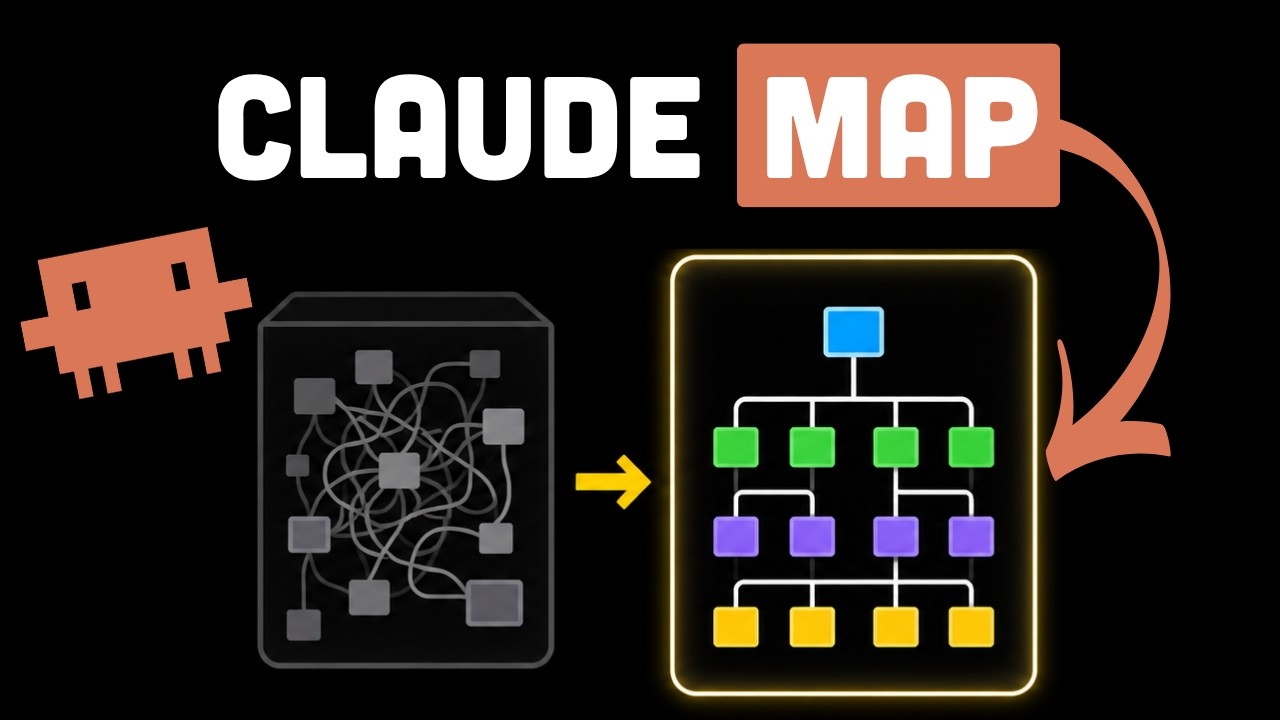
Graphs that teach > graphs that impress. Turn any code into an interactive knowledge graph you can explore, search, and ask questions about. Works with Claude Code, Codex, Cursor, Copilot, Gemini CLI, and more.

OmO: Just type "mass ulw" keyword with your prompt. Now you are the master of graph engineering.
Persistent Context Across Sessions for Every Agent – Captures everything your agent does during sessions, compresses it with AI, and injects relevant context back into future sessions. Works with Claude Code, OpenClaw, Codex, Gemini, Hermes, Copilot, OpenCode + More
Opinionated Oxlint rules for rejecting low-evidence TypeScript and JavaScript patterns
Teams-first Multi-agent orchestration for Claude Code