

DietrichGebert/ponytailPlugins
Makes your AI agent think like the laziest senior dev in the room. The best code is the code you never wrote.
138k
1 add
agent-starter packages reusable setup for Claude Code projects. It combines slash commands, hook scripts, starter configs, and guides so you can scaffold a new project or retrofit an existing one with shared rules and checks. The repo also adds a self-improvement loop that records hook signals and proposes rule updates over time.
Builders who use Claude Code and want a reusable project starter with guardrails and project memory.
You can set up an agent-friendly project once and keep improving its rules from real usage.
Provides skills such as `/new-project`, `/adopt-project`, `/commit`, `/reflect`, `/remember`, `/dream`, `/simplify`, and `/commit-push-pr`.
Includes hooks for file size checks, lint-on-edit, silent error detection, dangerous command blocking, worktree prompts, and session health checks.
Ships `CLAUDE.md`, lint configs, env boundaries, error ID registries, and context truncation helpers in `templates/`.
Documents patterns for large codebases, lint rules, hooks, prompt caching, error IDs, result types, and boundary validation in `guides/`.
Logs hook events into `.harness/ledger.jsonl`, then uses `/reflect` to propose rule, lint, or threshold changes from recurring mistakes.
Bundles marketplace metadata in `.claude-plugin/` so the whole setup can be installed as one unit.
/plugin marketplace add sneg55/agent-starter
/plugin install agent-starter@agent-starter


Skills, hooks, templates, and engineering guides for bootstrapping AI-agent-friendly projects, with a per-project self-improvement loop.
A toolkit for setting up projects that AI agents can work in safely and productively. It scaffolds new projects, retrofits existing ones, and ships enforcement hooks, drop-in configs, and engineering patterns. The differentiator is the self-improvement loop: scaffolded projects capture signal from their own usage and turn it into better rules over time.
| Component | What it does | Where |
|---|---|---|
| Skills | 8 slash commands: scaffold, adopt, commit, reflect, remember, dream | skills/ |
| Hooks | Enforcement (lint, file-size, dangerous-command) + signal capture for the loop | hooks/ |
| Templates | Drop-in configs: Biome, ESLint, ruff, pyright, CLAUDE.md, env boundaries | templates/ |
| Guides | 9 engineering patterns for AI-agent codebases | guides/ |
| Self-improvement loop | Projects learn from their own usage and propose their own rules | across the above |
Provenance: patterns marked "derived from Anthropic's Claude Code source" are reverse-engineered from the Claude Code CLI; everything else is added on top. See About.
This repo doubles as a Claude Code plugin marketplace. Installing the plugin is the recommended path: it loads every skill and wires the enforcement hooks in one step.
/plugin marketplace add sneg55/agent-starter
/plugin install agent-starter@agent-starter
Then run /new-project (new codebase) or /adopt-project (existing one).
Pick the path that matches what you want:
| I want... | Do this |
|---|---|
| Everything (skills + hooks), one step | Plugin install, see Quick start |
| Just the skills, globally | npx skills add sneg55/agent-starter -a claude-code -g |
Just the hooks in ~/.claude | git clone …/agent-starter && cd agent-starter && ./install.sh |
| To point an agent at the repo | See the table below |
No install needed. Give an agent the repo URL and it reads the matching entry file and drives the setup interactively (audit-first, opt-in, nothing overwritten):
| Situation | Say | Agent reads |
|---|---|---|
| New project | "read this repo and set up my project https://github.com/sneg55/agent-starter/" | AGENT.md |
| Existing project | "read this repo and apply it to my project" | ADOPT.md |
| Whole team | ship the setup with the repo so everyone gets it from a git pull | TEAM.md |
TEAM.md is the companion to ADOPT.md: where ADOPT.md installs into one developer's ~/.claude, TEAM.md vendors the setup (hooks, shared config, plugin defaults) into the repo itself.
/loop instruction-review hook, all from hooks/hooks.json../install.sh --with-read-guard.install.sh merges its settings.json wiring idempotently via jq, so re-runs never duplicate entries.Install all skills globally with npx skills: npx skills add sneg55/agent-starter -a claude-code -g (or get them via the plugin).
| Skill | What it does |
|---|---|
/new-project | Interviews you, then scaffolds directory structure, CLAUDE.md, configs, hooks, skills, and the first commit. Mirrors AGENT.md. |
/adopt-project | Audits an existing codebase, proposes components grouped by invasiveness, applies only what you approve. Mirrors ADOPT.md. |
/commit | One well-crafted commit: analyzes the diff, follows repo style, writes a "why not what" message. Includes the Git Safety Protocol. |
/commit-push-pr | Full git flow: branch, commit, push, and create/update a PR with summary and test plan. |
/simplify | Spawns 3 parallel agents (Code Reuse, Quality, Efficiency) to review your diff and fix issues. |
/reflect | The promote step of the loop: reads the .harness ledger and feedback memories, clusters recurring mistakes, proposes gated rule/threshold/lint/ADR changes. |
/remember | Scans auto-memory and proposes promotions to CLAUDE.md, CLAUDE.local.md, or shared memory. Detects duplicates, stale entries, conflicts. |
/dream | Memory consolidation: merges, prunes, and re-indexes memory files across four phases (orient, gather, consolidate, prune). |
Ready-to-use hook scripts in hooks/. The plugin wires the nine defaults; install.sh wires them into ~/.claude, and four more are opt-in behind flags. See guides/hooks-reference.md for the hook system itself. Needs jq and python3.
| Hook | Fires on | What it does |
|---|---|---|
check-file-size.sh | Write/Edit | Warns when a file exceeds size targets. Per-project overrides via .harness/file-size.conf. |
lint-on-edit.sh | Write/Edit | Lints + typechecks the file just written. |
check-silent-errors.sh | Write/Edit | Blocks writes that introduce swallowed/silent error handling. |
block-dangerous-commands.sh | Bash | Blocks destructive shell commands before they run. |
rm-scope-guard.py | Bash | Blocks rm whose targets escape the working directory; allows the rest. |
check-codebase-health.sh | Session start | Surfaces codebase-health signals at the start of a session. |
worktree-session-prompt.sh | Session start | Reports whether this is the shared main checkout or a worktree, and asks before editing the shared one. |
worktree-exit-offer.sh | Stop | Offers to leave a worktree once it is clean and fully pushed. |
suggest-loop-improvements.sh | Prompt submit | On /loop, injects an instruction-review step. |
track-reads.sh + require-read-before-edit.sh | Read / Write+Edit | Opt-in (--with-read-guard): blocks edits to files not read this session. |
check-new-comments.py | Write/Edit/MultiEdit | Opt-in (--with-comment-guard): blocks edits that add comments or docstrings. Toolchain directives pass. |
check-em-dash.py | Write/Edit | Opt-in (--with-em-dash-guard): blocks em dashes in .md / .mdx / .markdown. |
lib/log-event.sh | called by hooks | Appends one JSON event to .harness/ledger.jsonl (the loop's signal capture). |
harness-ledger-stats.sh | on demand | Computes the recurring_events metric over the ledger, merged across worktrees. |
Drop-in configs in templates/. Copy the ones you need.
Lint (paired with guides/lint-rules-for-ai.md):
biome.jsonc + eslint.config.mjs (TypeScript). Biome owns formatting and fast syntactic rules; ESLint owns type-aware correctness (no-floating-promises, the no-unsafe-* family), import resolution (catches hallucinated modules), and security rules.ruff.toml + pyrightconfig.json, the Python counterpart. Ruff owns formatting and fast rules; pyright (strict) owns type-aware analysis.Error handling & boundaries:
errorIds.ts / error_ids.py: central error-ID registry + AppError; every throw references a stable E_DOMAIN_NNN that stays searchable across rewordings. Pairs with guides/error-id-registry.md.env.ts / env.py: single env-var boundary; Zod/pydantic schema is the source of truth, invalid env fails loudly at startup. Pairs with guides/zod-at-the-boundary.md.Context & scaffolding:
truncate-for-context.ts / truncate_for_context.py: head+tail truncator for tool output so cat large.log and npm test don't blow the context window.CLAUDE.md: project-instructions template with the full 4-type memory taxonomy, file format, and git safety rules. Also carries the working rules that hooks cannot enforce: verify a problem before reporting it, how to pick a subagent's model, one worker per worktree, freeze a shared contract before parallel dispatch, never commit internal documents to a public repo, and what to do when a classifier blocks a tool call. An optional response-style section (lead with the ask, no time estimates, no made-up numbers, no uninvited docs) sits at the end for deleting if it is not your taste.NEW_PROJECT_PROMPT.md: copy-paste prompt to scaffold a project from scratch. Fill in the {{placeholders}}.Engineering patterns in guides/.
| Guide | What it covers |
|---|---|
large-codebase-best-practices.md | Directory structure, file-size targets, naming, error handling, CLAUDE.md hierarchy. Derived from Anthropic's Claude Code source. |
lint-rules-for-ai.md | Tiered Biome + ESLint (and ruff + pyright) rules that block the mistakes LLMs make: dropped awaits, any escape hatches, hallucinated imports, half-finished functions. |
hooks-reference.md | The Claude Code hook system: 4 hook types, all 27 events, exit-code behavior, config format, 10 worked examples. |
tool-authoring-pattern.md | The BashTool/-style directory-per-tool layout extracted from Claude Code's source. |
error-id-registry.md | Stable error IDs (E_CFG_003) shared across logs, telemetry, docs, and agents. |
discriminated-union-results.md | Result<Ok, Err> as the one shape every fallible function returns, exhaustiveness-checked by the compiler. |
abort-signal-threading.md | Threading AbortSignal through long-running calls so Ctrl+C, timeouts, and obsoleted work actually stop. |
prompt-caching.md | Structuring prompts so Anthropic's prefix cache hits 80%+, plus the silent cache-breakers to avoid. |
zod-at-the-boundary.md | Validate external data once, at entry; the schema is the source of truth for the type. |
New, added on top of the original Anthropic patterns.
Most starters are a frozen snapshot: every project begins from the same patterns and never learns from how it's actually used. agent-starter ships the machinery for each scaffolded project to improve itself from its own signal.
The loop has four parts. The first three reuse the existing memory + hooks system; only signal capture and measurement are new.
 ① signal → ② store → ③ promote → ④ measure → (back to ①)
   ▲                                              │
   └──────────────────────────────────────────────┘
hooks/lib/log-event.sh appends one JSON event to the project's .harness/ledger.jsonl every time an enforcement hook blocks or warns (file too large, lint failure, swallowed error, edit-before-read). It's best-effort and always exits 0, so logging can never break a hook. Your explicit corrections are already captured as feedback memories, the highest-value signal./reflect skill reads the ledger and your feedback memories, clusters recurring mistakes, and proposes concrete changes for your approval: a new project rule, a hook-threshold tweak, a lint rule, or an ADR. Nothing is auto-applied, you stay in the loop on every change.hooks/harness-ledger-stats.sh computes a recurring_events metric (mistakes that fall in recurring (rule, path-prefix) clusters). Each reflection records a snapshot to .harness/reflections/YYYY-MM-DD.md, so the next reflection can confirm a promoted rule actually reduced the mistakes it targeted.The principle: signal is private (gitignored ledger), wisdom is shared (committed reflections and the rules they produce). New projects scaffolded via AGENT.md / /new-project are born with the loop wired in.
The CLAUDE.md template uses a 4-type memory system:
| Type | Scope | What belongs |
|---|---|---|
| user | Who they are | Role, goals, preferences, knowledge level |
| feedback | How to work | Corrections AND confirmations, both what to avoid and keep doing |
| project | What's happening | Ongoing work, deadlines, incidents, decisions |
| reference | Where to look | Pointers to external systems (Linear, Grafana, Slack, etc.) |
Key principles:
agent-starter started as Anthropic's own engineering patterns, extracted from the Claude Code CLI source and packaged into reusable form. It has since been extended with additional best practices, tooling, and original ideas that go beyond the source material, the flagship being the self-improvement loop. Patterns marked "derived from Anthropic's Claude Code source" are reverse-engineered from the real thing; everything else is added on top.
Licensed under MIT.
Sign in to join the discussion.
No comments yet. Be the first to say what this is good for.
Makes your AI agent think like the laziest senior dev in the room. The best code is the code you never wrote.
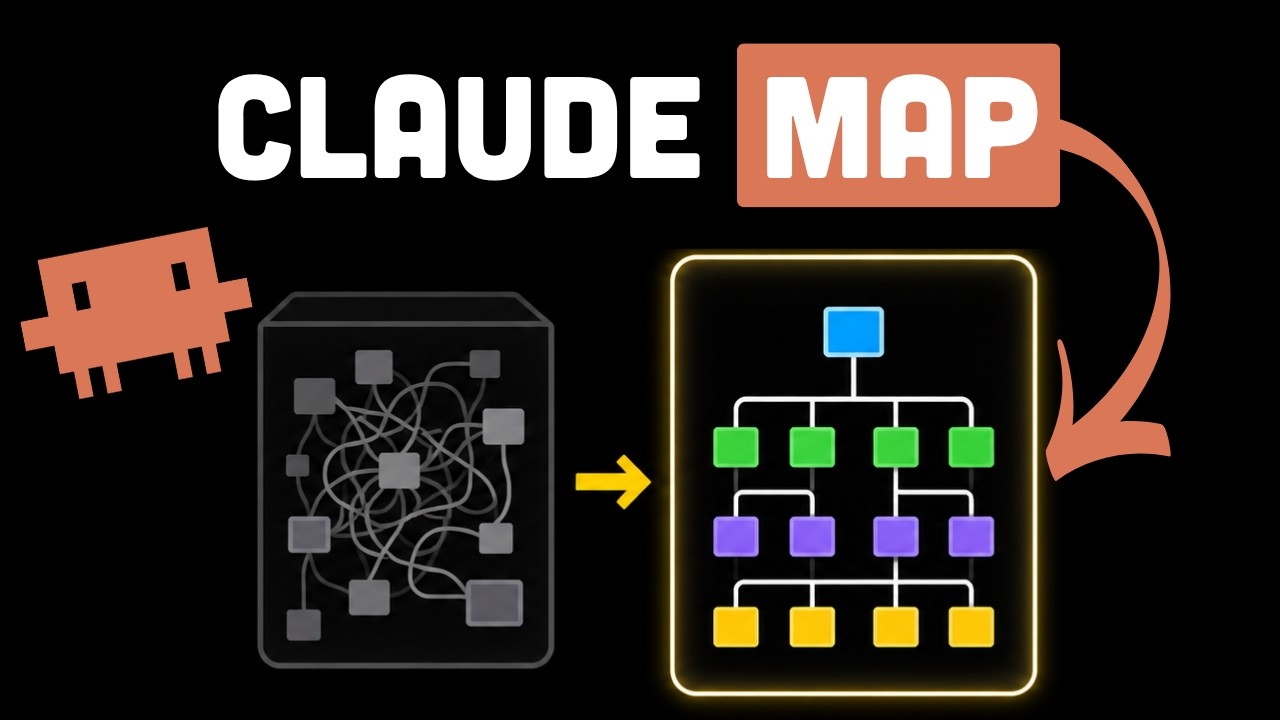
Graphs that teach > graphs that impress. Turn any code into an interactive knowledge graph you can explore, search, and ask questions about. Works with Claude Code, Codex, Cursor, Copilot, Gemini CLI, and more.

OmO: Just type "mass ulw" keyword with your prompt. Now you are the master of graph engineering.
Persistent Context Across Sessions for Every Agent – Captures everything your agent does during sessions, compresses it with AI, and injects relevant context back into future sessions. Works with Claude Code, OpenClaw, Codex, Gemini, Hermes, Copilot, OpenCode + More
Opinionated Oxlint rules for rejecting low-evidence TypeScript and JavaScript patterns
Teams-first Multi-agent orchestration for Claude Code