
HKUDS/
Vibe-Trading

HKUDS/Vibe-TradingOther
"Vibe-Trading: Your Personal Trading Agent"
33k
This project is a complete browser editor for DOCX, XLSX, PPTX, and related formats. It uses OnlyOffice plus a WASM converter on the client side, so documents are opened, edited, and saved without a document server. It also includes embed support, offline PWA support, and WebMCP tools for browser agents that need to open, read, or save documents.
Builders who want browser-based office editing without sending files to a backend.
You can edit and save office documents locally in the browser, even offline, without uploading files.
Opens and edits DOCX, XLSX, PPTX, CSV, and several older office formats in the browser tab.
Conversions, edits, and exports happen on the visitor’s device, with no server upload and no account needed.
After the first visit, the editor can run without a network connection.
The editor can run in an iframe and be controlled through postMessage from a host app.
Exposes browser-side tools such as open, save, read text, and set read-only for in-browser agents.
docker run -d --name document -p 8080:80 ghcr.io/ranuts/document:latest
git clone https://github.com/ranuts/document.git
cd document
pnpm install
pnpm run dev




English | 简体中文 | 日本語 | 한국어 | Deutsch | Español | Português | فارسی
Open and edit Word, Excel and PowerPoint files in a browser tab. There is no server: the OnlyOffice engine and its WASM converter run on the visitor's own device, so documents are never uploaded, and no account is involved.
Live site: edit.chaxus.com
Use it: edit.chaxus.com — nothing to install.
Self-host with Docker:
docker run -d --name document -p 8080:80 ghcr.io/ranuts/document:latest
Run from source:
git clone https://github.com/ranuts/document.git
cd document
pnpm install
pnpm run dev
| Kind | Edit | Also opens |
|---|---|---|
| Documents | .docx | .doc .odt .rtf .txt |
| Spreadsheets | .xlsx .csv | .xls .ods |
| Presentations | .pptx | .ppt .odp |
| annotate, fill, export | .pdf |
Any of them can be exported to PDF. CSV keeps its encoding on the way back out (UTF-8, GB18030 and Latin-1 are sniffed on open).
| Route | What it is |
|---|---|
/ | Landing page. No editor bundle is loaded until you open something. |
/editor | The editor. |
/history | Documents this browser is holding (see below). |
/help, /changelog | Generated from the markdown under content/. |
Parameters on /editor:
| Parameter | Description |
|---|---|
src=<url> | Open a document from a URL (the URL must allow CORS) |
file=<url> | Same, legacy spelling; wins if both are present |
new=docx | Start a blank document (docx, xlsx, pptx) |
saved=<id> | Reopen one of this browser's saved documents — the editor puts its own id here, so a reload returns to the same document |
readonly=1 | Open for viewing: editing and export are disabled |
embed=1 | Embed mode; the host page drives the editor over postMessage |
locale=zh-CN | Interface language |
Documents are never sent anywhere. Where the browser allows it, saving writes straight back into the file you picked, so the document lives in your own file system and not in a downloads folder. Two things are kept in the browser itself, and both are yours to remove:
/history lists what is stored, with a
delete on every row, a delete-all, and a switch to turn autosave off entirely.
Deleting there takes effect immediately. On a shared machine, that is the page
to visit.
Embed the editor and drive it over postMessage. The usual split is: your system handles auth and storage, the iframe handles editing.
<iframe
  id="documentEditor"
  src="https://your-deployment/editor?embed=1"
  style="width: 100%; height: 720px; border: 0"
></iframe>
// Open a document
iframe.contentWindow.postMessage(
  { id: '1', type: 'document:open-url', payload: { url: 'https://example.com/doc.xlsx' } },
  'https://your-deployment',
);

// Listen for the result
window.addEventListener('message', (e) => {
  if (e.data?.type === 'document:opened') console.log('Ready to edit');
  if (e.data?.type === 'document:saved') uploadFile(e.data.payload.file);
});
Embedded editors keep no local history — the document belongs to the host page.
→ Full API reference — every message type, the origin allowlist, read-only mode and the save flow.
Also available as a component: this project powers the document preview in @ranui/preview (docs).
Where the browser supports it, the page registers tools an in-browser agent can
call directly instead of driving the UI: open_document_url,
open_document_buffer, create_document, save_document, get_document_text,
set_readonly, get_document_state. Documents still never leave the device —
the browser fetches and converts them itself. Where the API is absent, this is
a no-op.
A static build — no runtime, no database.
pnpm build # outputs to dist/
Upload dist/. public/_headers carries the caching contract the site expects
(hashed assets immutable, service worker never cached); hosts that ignore it
still work, they just revalidate more.
For Nginx, serve index.html as the fallback for unknown routes:
location / {
  root /var/www/document;
  try_files $uri $uri/ /index.html;
}
.github/workflows/pages-build-site.yml builds and deploys on push to main.
Enable Pages in the repository settings with GitHub Actions as the source.
# Basic
docker run -d --name document -p 8080:80 ghcr.io/ranuts/document:latest

# With HTTPS and basic auth
docker run -d --name document -p 443:443 \
  -v /path/to/certs:/ssl \
  -e SERVER_BASIC_AUTH='user:$2y$...' \
  -e SERVER_HTTP2_TLS=true \
  -e SERVER_HTTP2_TLS_CERT=/ssl/cert.pem \
  -e SERVER_HTTP2_TLS_KEY=/ssl/key.pem \
  ghcr.io/ranuts/document:latest
SERVER_BASIC_AUTH takes a BCrypt hash; double the $ characters for shell
escaping. Caching for the image is configured in sws.toml.
The vendored OnlyOffice build ships its font library in public/fonts/, indexed
by public/sdkjs/common/AllFonts.js. Fonts are fetched on demand — a document
only pulls the ones it actually uses.
→ Font management guide — the indexed catalog's wire
format, the registries, and adding fonts with bin/font-catalog.mjs.
pnpm install --frozen-lockfile
pnpm run dev            # dev server
pnpm run build          # production build (bin/build.sh)
pnpm run lint           # oxlint + tsc + docker config
pnpm run test           # unit tests (Vitest)
pnpm run test:e2e       # end-to-end tests (Playwright, real editor + real WASM)
The end-to-end suite drives the real editor and the real converter rather than
mocks, including document round trips, the embed protocol and the recovery
flow. docs/explorations/ records why each non-obvious piece is the way it is —
worth a look before changing the editor integration.
Issues and pull requests are welcome. main is protected: work on a branch and
open a PR, which runs lint, unit tests and three end-to-end suites (dev server,
Cloudflare Pages semantics, and the production Docker image).
This is a derivative work of ONLYOFFICE (sdkjs and web-apps, (c) Ascensio System SIA), distributed under the AGPL with additional terms under its Section 7: the original product logo must be retained, and no rights under trademark law are granted. The editor therefore keeps the ONLYOFFICE logo in its header and its About pane. See NOTICE for the full text, the vendor version and every change made to it.
ONLYOFFICE is a trademark of Ascensio System SIA. This project is not an official ONLYOFFICE product and is not affiliated with or endorsed by Ascensio System SIA.
Sign in to join the discussion.
No comments yet. Be the first to say what this is good for.
"Vibe-Trading: Your Personal Trading Agent"
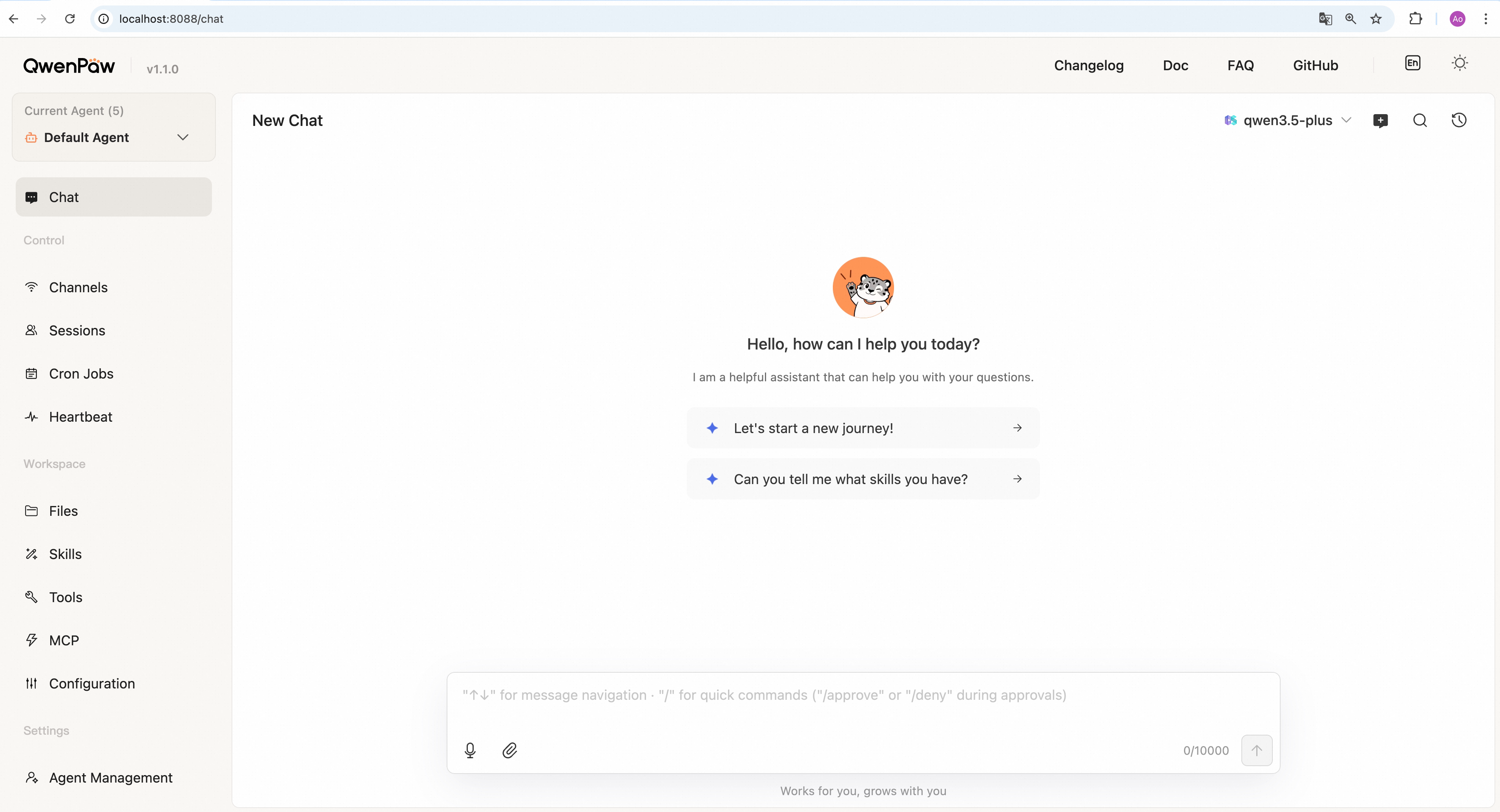
Your Personal AI Assistant; easy to install, deploy on your own machine or on the cloud; supports multiple chat apps with easily extensible capabilities.
User-friendly AI Interface (Supports Ollama, OpenAI API, ...)

macOS video editor built for AI
Open-source Claude Design alternative. One-click import your Claude Code / Codex API key. Prompt → prototype / slides / PDF. Multi-model (Claude, GPT, Gemini, Kimi, GLM, Ollama). BYOK, local-first, MIT.
🤯 LobeHub is your Chief Agent Operator, organizing your agents into 7×24 operations by hiring, scheduling, and reporting on your entire AI team.