
obra/
superpowers

obra/superpowersSkills
An agentic skills framework & software development methodology that works.
285k
1 add
pstack turns a solo founder workflow into reusable skills for Claude Code and Codex. It covers the full loop from validation and planning to review, QA, shipping, monitoring, and reflection, with separate skills for safety, browser work, design, and release tasks.
Builders who want their agent to help them validate ideas, ship code, and review work in a solo-founder loop.
You can move from idea to production with a repeatable set of agent commands instead of re-explaining your process each time.
`/validate` asks the demand questions first and ends with a GO, KILL, or PIVOT decision.
`/plan` runs CEO, design, and engineering review in one pass before you write code.
`/investigate`, `/codex`, and design skills help you debug root causes, get a second opinion, and work on UI.
`/review`, `/cso`, `/qa`, and `/qa-only` cover code review, security, and browser testing.
`/ship`, `/land-and-deploy`, `/document-release`, and `/monitor` handle release, docs, and post-deploy checks.
`/careful`, `/freeze`, and `/guard` reduce accidental edits during risky work.
git clone --single-branch --depth 1 https://github.com/no-session/pstack.git ~/.claude/skills/pstack
cd ~/.claude/skills/pstack && ./setup
The solo founder's AI engineering stack. Fork of gstack, rebuilt for bootstrappers, indie hackers, and solo entrepreneurs who ship fast and charge money.
gstack is built for VC-backed startups with teams. pstack is built for you — one person, one product, one goal: revenue.
Ship the 80% that makes money. The other 20% is earned by paying customers.
AI compresses everything except the hard part: figuring out what people will pay for. pstack is optimized for getting you to that answer as fast as possible.
When you're solo, you need MORE roles, not fewer. There's nobody else checking your work. pstack gives you a product thinker, a designer, a security officer, a code reviewer, a QA tester, and a release engineer — all running in your terminal.
Read the full philosophy: ETHOS.md
| gstack | pstack |
|---|---|
| "Boil the lake" — do the complete thing | Ship what makes money, iterate on what gets traction |
| VC-backed startup framing | Bootstrapper / indie hacker framing |
| Team retros with per-person breakdowns | Solo retros — what did I ship, what's my velocity |
| Assumes PR workflows | Push to main, deploy, done |
This is how solo founders ship. Follow the numbers.
 1. VALIDATE ──→ 2. PLAN ──→ 3. BUILD ──→ 4. REVIEW ──→ 5. SHIP ──→ 6. MONITOR ──→ 7. REFLECT
      │                                                                                    │
      └────────────────────────────── kill it or loop back ────────────────────────────────┘
Before you write a single line of code, answer: will someone pay for this?
| Skill | What it does |
|---|---|
/validate | Start here. Six forcing questions that expose demand reality. Find the narrowest wedge. GO / KILL / PIVOT decision at the end. |
If /validate says kill, kill it. Move to the next idea. Speed of killing bad ideas is your edge.
One shot to review the plan from every angle before writing code.
| Skill | What it does |
|---|---|
/plan | One command. Runs CEO + design + eng review back-to-back. Fully reviewed plan, one shot. |
/plan-ceo-review | Challenge your own strategy. Is this a painkiller or a vitamin? Find the 10-star version. |
/plan-design-review | Rate design dimensions 0-10, explain what a 10 looks like, fix the plan. |
/plan-eng-review | Lock architecture, data flow, edge cases. Catch problems before they become code. |
Solo founders: run /plan and move on. Don't over-plan. The plan is a hypothesis — shipping is the experiment.
Build fast. Use the simplest thing that works. Debug systematically when it breaks.
| Skill | What it does |
|---|---|
/investigate | Systematic debugging. No fixes without root cause. Traces data flow, tests hypotheses. |
/codex | Second opinion from OpenAI Codex. Independent code review, adversarial challenges. |
/design-consultation | Build a design system from scratch. Typography, color, layout — research the landscape first. |
/design-shotgun | Generate multiple design variants, open a comparison board, pick the winner. |
You're shipping alone. These are your code reviewer, security officer, QA lead, and performance engineer.
| Skill | What it does |
|---|---|
/review | Pre-ship code review. SQL safety, trust boundaries, structural issues. Auto-fixes obvious ones. |
/cso | Security audit. OWASP Top 10, STRIDE model, dependency supply chain, secrets check. |
/design-review | Find and fix visual issues, spacing, hierarchy, AI slop — with atomic commits. |
/qa | Test your app in a real browser. Find bugs, fix them, generate regression tests. |
/qa-only | Same as /qa but report-only. Bug reports without touching your code. |
/benchmark | Core Web Vitals, page load times, bundle sizes. Before/after on every change. |
One command. Tests, changelog, version bump, deploy. Done.
| Skill | What it does |
|---|---|
/ship | The main event. Push, deploy, done. One command to production. |
/land-and-deploy | Merge, wait for deploy, verify production health. |
/setup-deploy | One-time setup. Detects your platform (Vercel, Railway, Fly, etc.) automatically. |
/document-release | Auto-update all docs to match what you just shipped. Catches stale READMEs. |
You shipped. Now watch it. Console errors, perf regressions, page failures.
| Skill | What it does |
|---|---|
/monitor | Post-deploy monitoring loop. Watches for errors, regressions, page failures. |
/browse | Give the agent eyes. Real Chromium browser, real clicks, real screenshots. ~100ms per command. |
/connect-chrome | Launch your real Chrome controlled by pstack. Watch every action live. |
Weekly. Look at what you shipped, your velocity, your patterns. Then decide: keep iterating, pivot, or kill this and start the loop again.
| Skill | What it does |
|---|---|
/reflect | Weekly reflect. What did you ship, commit patterns, code quality trends, shipping streaks. |
If the product isn't getting traction after 2-3 loops, go back to Step 1 with a new idea. Kill fast, move fast.
Always available. Not part of the loop — they protect you while you're in it.
| Skill | What it does |
|---|---|
/careful | Warns before destructive commands. Say "be careful" to activate. |
/freeze | Restrict edits to one directory. Prevents accidental changes elsewhere. |
/guard | /careful + /freeze combined. Maximum safety for prod work. |
/unfreeze | Remove the freeze boundary. |
/setup-browser-cookies | Import cookies from your browser into the headless session. Test authenticated pages. |
/pstack-upgrade | Upgrade pstack to latest version. |
Requirements: Claude Code, Git, Bun v1.0+
git clone --single-branch --depth 1 https://github.com/no-session/pstack.git ~/.claude/skills/pstack
cd ~/.claude/skills/pstack && ./setup
Then in Claude Code:
/validate     — describe what you're building (Step 1)
/plan         — review the plan from every angle (Step 2)
  ... build ...   — write code (Step 3)
/review           — catch bugs before they ship (Step 4)
/qa               — test in a real browser (Step 4)
/ship             — push to production (Step 5)
/monitor           — make sure it works (Step 6)
/reflect            — what did I ship this week? (Step 7)
Validate → Plan → Build → Review → Ship → Monitor → Reflect. Kill or loop back. That's the whole workflow.
MIT — same as gstack. Fork it. Make it yours.
Built on top of gstack by Garry Tan. Adapted for the solo founder community.
Sign in to join the discussion.
No comments yet. Be the first to say what this is good for.
An agentic skills framework & software development methodology that works.
Turn any codebase, with its docs, SQL schemas, configs, and PDFs, into a queryable knowledge graph. A /graphify skill for Claude Code, Cursor, Codex, and Gemini CLI: local deterministic AST parsing, every edge explained, no vector store.

Topic in, narrated explainer video out. A Claude Code / Codex skill that turns any topic into a black-canvas motion-graphics explainer video with TTS voiceover, subtitles and a chapter progress bar. Chinese or English; every frame drawn in code with Remotion.
Public repository for Agent Skills
Open-source AI job search: scan job portals, evaluate listings into a structured A-H report with a global 1-5 score, tailor your CV, track applications — runs locally in your AI coding CLI (Claude Code, Codex, OpenCode, Antigravity…)
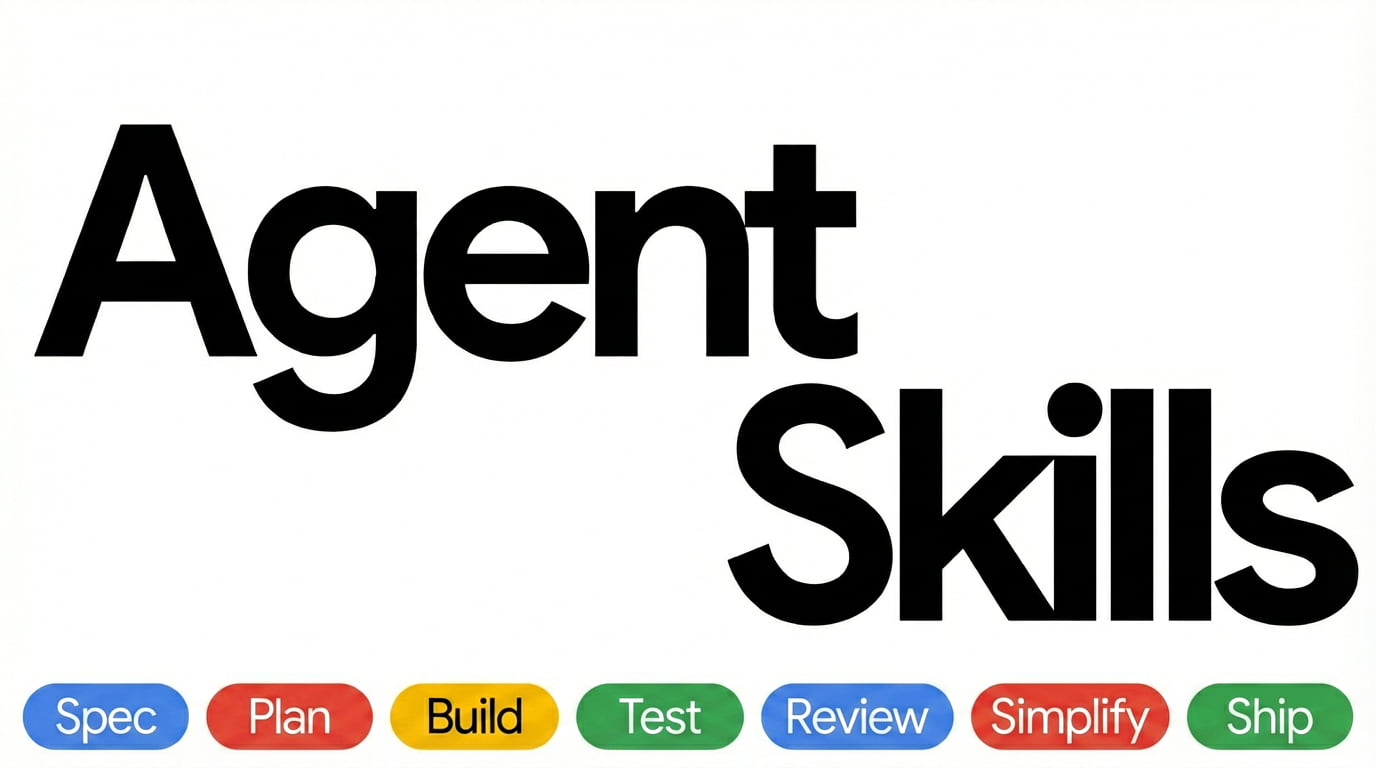
Production-grade engineering skills for AI coding agents.