XXG Portrait Rebuild Light


English | 简体中文 | 日本語 | 한국어
xxg-portrait-rebuild-light is an image-edit skill for existing portraits. V2.1 separately controls physical light, exposure placement, color/style grade, capture-device response, broad skin tone, bounded reflection, and scale/focus-aware microdetail.
The skill changes the lighting without redrawing the person. It preserves identity, facial structure and proportions, natural slight asymmetry, expression, pose, camera view, and composition. It avoids plastic skin, grainy skin, dirty color variation, and fake depth made by exaggerating wrinkles.
Key features
- Provides
texture-only fidelity recovery without changing source lighting, color, focus, depth of field, or scene content.
- Repairs plastic smoothness by separating clean broad tone, source-shaped highlights, and scale/focus-aware regional microdetail.
- Adds seven skin-finish profiles (
P0–P6) for source-matched, satin-matte, soft-daylight, editorial, direct-flash, beauty, and available-light response.
- Adds
E0–E7 exposure recipes that explicitly place highlight headroom, facial midtones, directional shadows, and black point.
- Adds
G0–G8 color/style grades and D0–D8 capture profiles for full-frame digital, medium format, 35mm negative, CCD compact, point-and-shoot flash, smartphone, instant film, and disposable-camera response.
- Separates device response from optics: camera-style edits preserve viewpoint, perspective, crop, focal plane, and depth of field unless optical restyle is explicitly requested.
- Repairs weak backlighting, disconnected indoor window light, flat lighting, unintended crushed shadows, and highlights with no physical source.
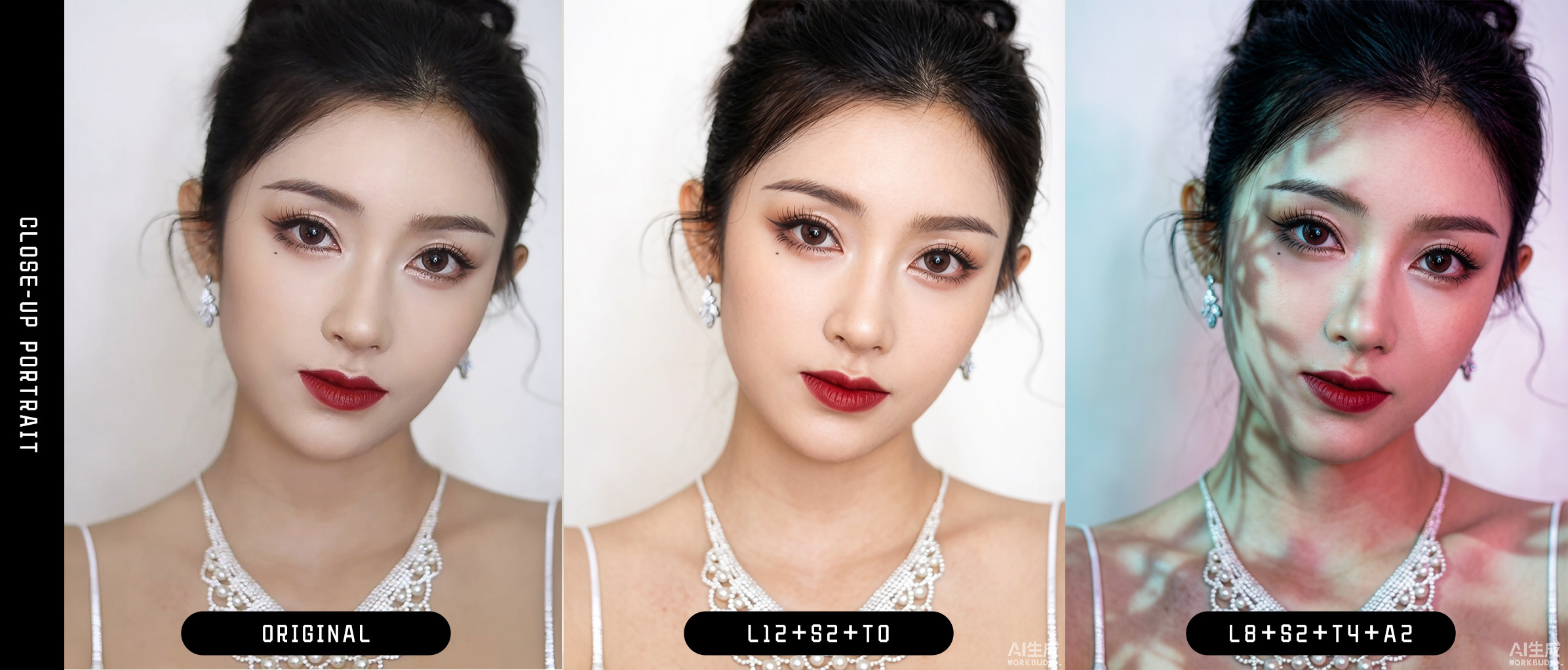
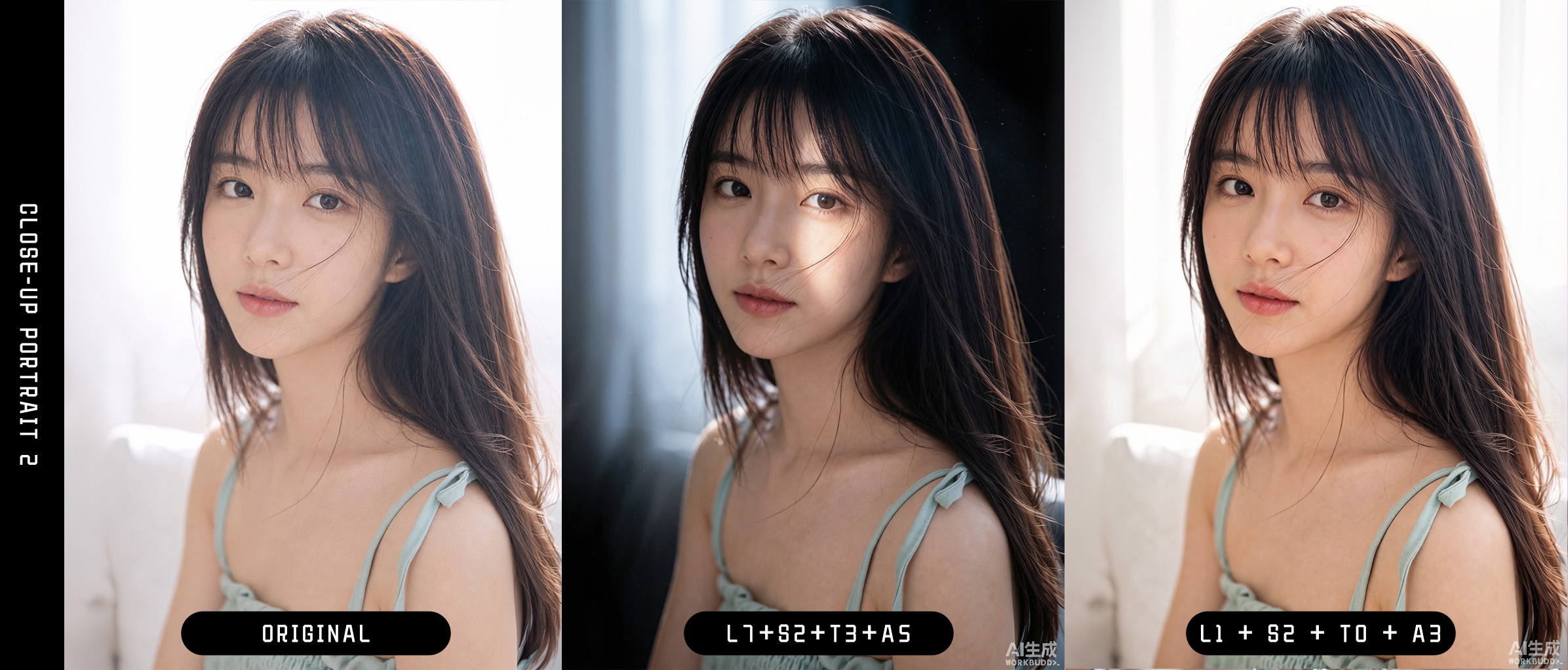
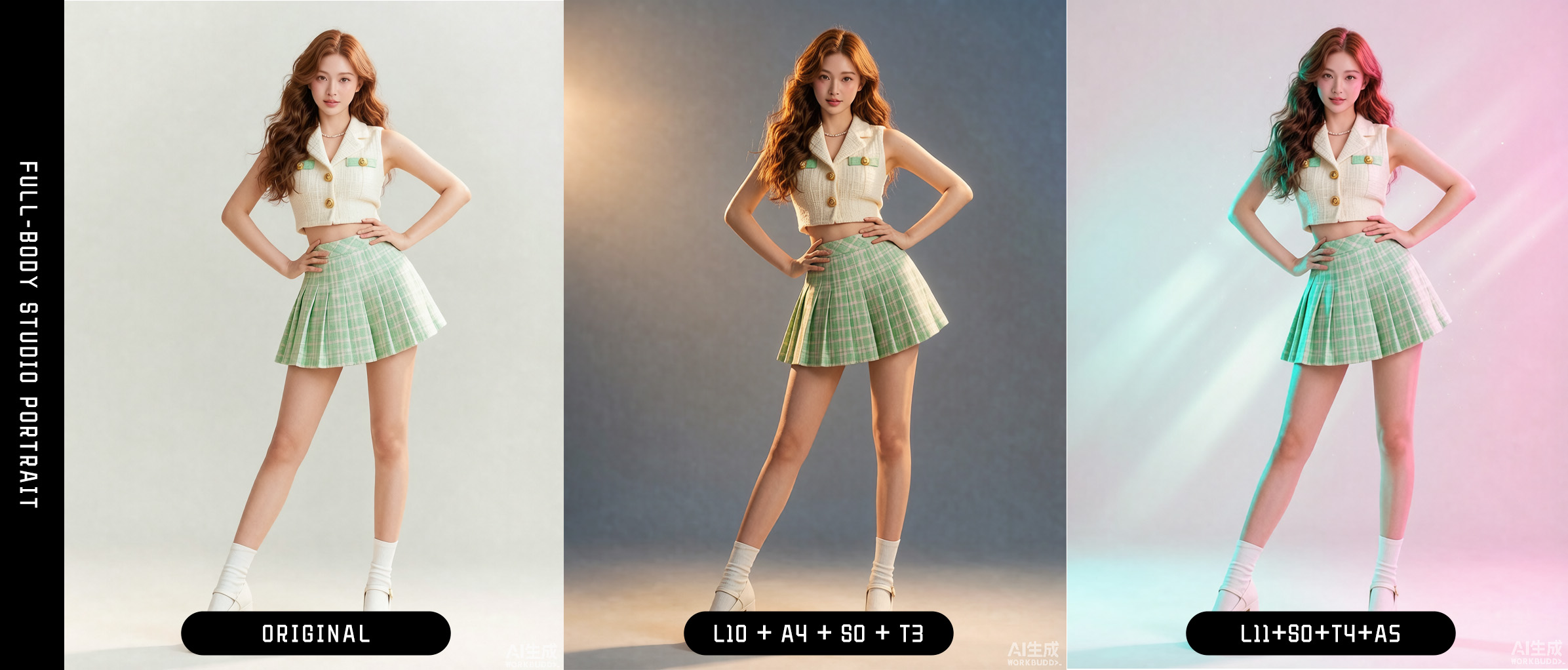
- Supports soft window light, commercial soft light, Rembrandt lighting, cinematic low-key lighting, golden hour, dual-color neon, and diagonal hard light.
- Adds at most one physically coherent atmosphere effect: window shadow, tree shadow, background bokeh, sunset flare, subtle volumetric light, or a full-black backlit subject silhouette.
- Controls subject and background in layers: key light and exposure intent first, then fill, shadows, ambient light, and color temperature.
- Preserves identity, facial feature size and position, expression, pose, wardrobe, background structure, and source framing.
- Reduces the skin-detail target automatically when the face is small, without canceling the requested lighting change.
- Uses the current agent's own image-generation or image-editing capability by default; no separate API is required.
- If the current agent has no image-edit capability, or the edit misses the target, returns one complete compact image-edit prompt.
- Never uses Pillow, NumPy, OpenCV, ImageMagick, or temporary filter scripts to produce the delivered image.
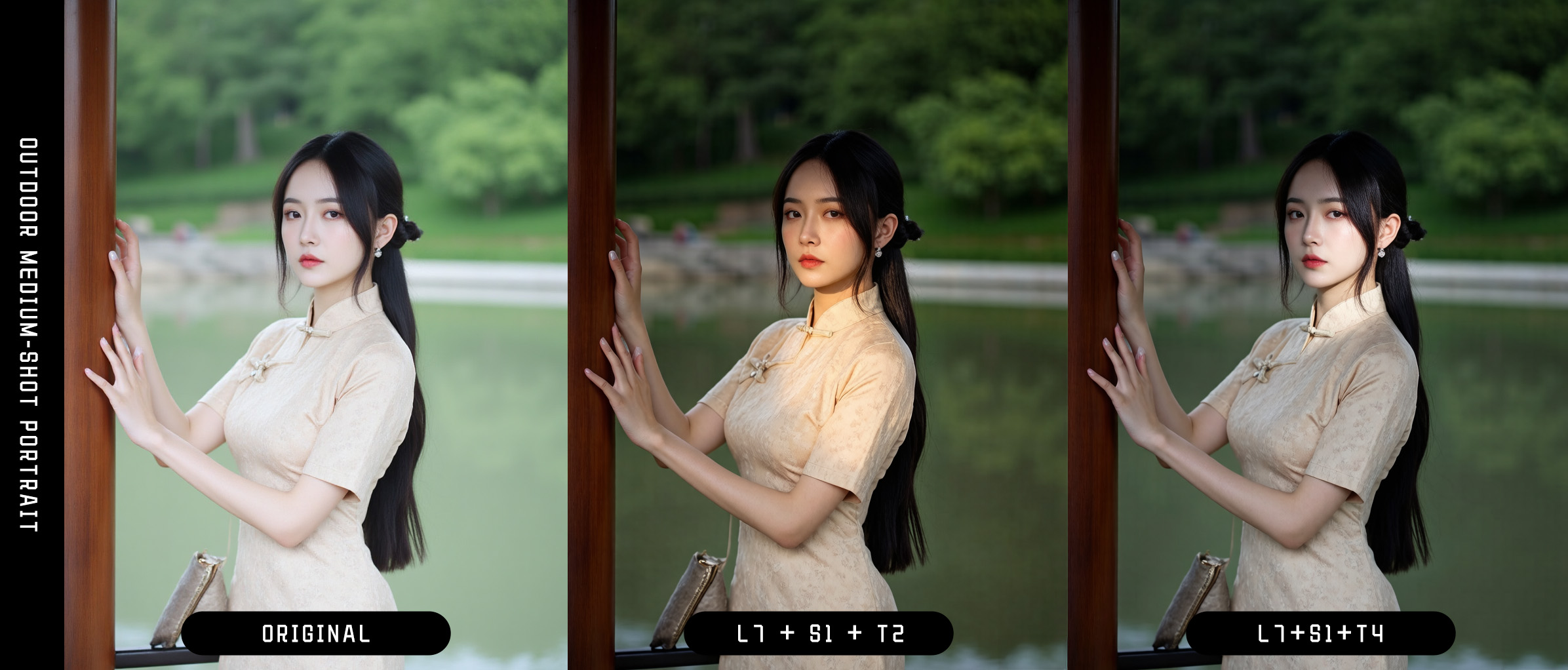
Core method
The skill first makes a director-style lighting decision internally:
Scope → Key L → Exposure E → Fill/Shadow → Skin S/P → Light color T → Look G → Capture D → Atmosphere A
The prompt sent to the image model uses four compact lines, adding RENDER only for a requested grade or device response. Target length is 55–110 English words:
EDIT: Choose the smallest authorized scope; retain source identity, geometry, pose, camera view, optics, framing, and every unauthorized axis.
LIGHT: One L and E with explicit highlight, midtone, shadow, black-point, background, T, and optional A behavior.
RENDER: One G palette/curve plus one D capture response. Omit for G0 + D0.
SKIN: One scale-aware S plus one light-consistent P finish.
AVOID: Only two or three source-specific failures.
The skill does not pile identity audits, object inventories, repeated negatives, and several photographic styles into one prompt. That often causes constraints to cancel each other or produces an unchanged copy.
For skin-only requests, V2.1 forces L0 + E0 + T0 + G0 + D0 + A0. Tone correction changes only E/T/G; capture-style changes only G/D and a logically required E. Relighting changes L/E/T/A. Viewpoint, perspective, crop, focal plane, and depth of field stay source-matched unless the user explicitly requests optical-restyle.
A6 forces E6 silhouette exposure, moves the effective light behind the person, removes all fill and catchlights, and renders the subject interior black. L/T and any G/D treatment affect only the rear source and background; S/P are suppressed.
Recipes
Choose only:
one L light + one E exposure + one S skin scale + one P skin finish + one T light color + one G color/style grade + one D capture response + zero or one A atmosphere
Lighting L
| Code | Purpose |
|---|
L0 | Match the source; repair only flat light, unexplained crushed shadows, abnormal highlights, and harsh transitions |
L1 | Natural backlight, highlight-priority by default; add fill only when explicitly requested |
L2 | Soft natural window light |
L3 | Large commercial soft light |
L4 | Outdoor skylight |
L5 | Indoor practical and mixed lighting |
L6 | Hard single-point light or direct sunlight |
L7 | Low-key diagonal narrow light beam |
L8 | Classic editorial Rembrandt lighting |
L9 | Cinematic low-key warm key / cool ambient light |
L10 | Golden-hour sunset side backlight |
L11 | Cyberpunk cyan/magenta dual-tone neon |
L12 | Clean, even commercial soft light |
Exposure E
| Code | Purpose |
|---|
E0 | Preserve source highlights, midtones, shadows, and black point |
E1 | Balanced natural exposure with clear midtones and directional shadows |
E2 | Protect a bright source/rim and let unlit planes follow available bounce |
E3 | Recover only blocked shadow information while controlling bright sources |
E4 | High-key exposure with textured whites and gentle facial modeling |
E5 | Low-key exposure with selected lit planes and a clean black point |
E6 | Full silhouette exposure; use only with A6 |
E7 | Direct-flash subject exposure with rapid ambient falloff |
Skin scale S
| Code | Purpose |
|---|
S0 | Small face or wide shot; restore only clean skin tone and natural reflection |
S1 | Default for medium shots; low-contrast microtexture with original lip and eye-area detail |
S2 | High-resolution close-up; region-aware pores, fine vellus hair, and existing details |
Skin finish P
| Code | Purpose |
|---|
P0 | Preserve the exact source diffuse/specular response; default for texture-only edits |
P1 | Natural satin-matte balance with bounded key-facing highlights |
P2 | Soft-daylight luminous midtones and broad highlight roll-off |
P3 | Editorial satin response with controlled T-zone highlights |
P4 | Direct-flash response with compact separated highlights |
P5 | Clean beauty response without porcelain uniformity |
P6 | Available-light response with source focus falloff and no added grain or marks |
Color temperature T
| Code | Purpose |
|---|
T0 | Preserve the source white balance |
T1 | Neutral natural daylight |
T2 | Golden warm light with healthy neutral zones retained in the skin |
T3 | Warm key light with cool background ambience |
T4 | Cyan/magenta neon relationship |
T5 | Cool-neutral overcast or blue-hour light without a full-frame blue wash |
T6 | Warm tungsten practicals with distance-based color falloff |
T7 | Mixed daylight/practical balance with believable skin and neutral objects |
Color and style grade G
| Code | Purpose |
|---|
G0 | Preserve the source palette and curve |
G1 | Neutral editorial color with a restrained S-curve |
G2 | Clean commercial color, accurate whites, bright midtones |
G3 | Muted documentary environment with protected skin chroma |
G4 | Warm lit skin with controlled cool background/shadow ambience |
G5 | Pastel editorial midtones and compressed highlights |
G6 | Tonal monochrome with separated skin, hair, clothing, and background |
G7 | Restrained 1970s print response; grain remains opt-in |
G8 | Clean 1990s/Y2K flash color and contrast |
Capture response D
| Code | Purpose |
|---|
D0 | Preserve source capture response |
D1 | Modern full-frame digital: clean detail and smooth highlight roll-off |
D2 | Medium-format digital: smooth tonal steps and restrained sharpening |
D3 | 35mm color negative: gentle highlight compression and softer microcontrast |
D4 | Compact CCD/digicam: direct crisp tone with modest highlight headroom |
D5 | Point-and-shoot direct flash; pair with L6 + E7 |
D6 | Smartphone computational: broad range without HDR halos or crunchy edges |
D7 | Instant-film tone; border and grain remain opt-in |
D8 | Disposable-camera response; exposure defects and grain remain opt-in |
Atmosphere A
| Code | Purpose |
|---|
A0 | Add no atmosphere effect |
A1 | Soft window shadow |
A2 | Sparse natural tree shadow |
A3 | Soft bokeh restricted to the defocused background |
A4 | Gentle lens flare aligned with the sunset direction |
A5 | Very subtle volumetric light with sparse dust motes |
A6 | Force the entire backlit subject to a clean black silhouette; no face, skin, hair, or clothing detail remains visible inside |
See Lighting, skin, color-temperature, and atmosphere recipes for detailed prompt clauses.
Image capabilities by agent
| Agent | Default route |
|---|
| Codex | Read the $imagegen rules, discover the actual tool in ALL_TOOLS, prefer tools.image_gen__imagegen, and pass source images through referenced_image_paths |
| Claude Code | Use the image-generation or image-editing capability installed or built into the current environment |
| OpenClaw | Use the imagegen skill or native image action enabled for the current agent |
| Other agents | Use an equivalent image-edit capability explicitly exposed by the tool registry |
In Codex, the skill never guesses tools.image_gen or input_image. It returns a prompt handoff only after tool discovery confirms that no compatible image capability exists. If the real image tool fails, produces an almost unchanged image, changes identity, or dirties the skin, the skill also returns a short copy-ready prompt.
Requirements
- An agent that supports directory-based
SKILL.md skills.
- An image-generation or image-editing capability in the current agent.
- Python 3.9 or newer, used only for read-only aspect-ratio, mask, and region checks.
- Pillow 9.1 or newer, used only for read-only analysis and never to create the final image.
Install the read-only script dependencies:
python3 -m pip install -r ./xxg-portrait-rebuild-light/requirements.txt
Install in Codex
Personal skill:
mkdir -p ~/.codex/skills
cp -R ./xxg-portrait-rebuild-light ~/.codex/skills/
Shared Agent Skills directory:
mkdir -p ~/.agents/skills
cp -R ./xxg-portrait-rebuild-light ~/.agents/skills/
For a project-level install, place it in .agents/skills/ at the project root. Invoke it explicitly with $xxg-portrait-rebuild-light.
Install in Claude Code
Personal install:
mkdir -p ~/.claude/skills
cp -R ./xxg-portrait-rebuild-light ~/.claude/skills/
Project install:
mkdir -p .claude/skills
cp -R ./xxg-portrait-rebuild-light .claude/skills/
Invoke it with /xxg-portrait-rebuild-light.
Install in OpenClaw
Local install:
openclaw skills install ./xxg-portrait-rebuild-light \
  --as xxg-portrait-rebuild-light
Shared install:
openclaw skills install ./xxg-portrait-rebuild-light \
  --as xxg-portrait-rebuild-light \
  --global
You can also copy the complete directory into the current agent workspace's skills/ directory or the shared ~/.openclaw/skills/ directory.
Install in other agents
Copy the complete xxg-portrait-rebuild-light/ directory into the agent's personal or project skill root. Preserve the relative structure of SKILL.md, requirements.txt, references/, scripts/, and agents/, then reload the skill list.
Usage examples
Tone and exposure correction
Use $xxg-portrait-rebuild-light to edit this portrait with L0 + E1 + S1 + P0 + T7 + G1 + D0 + A0.
Keep the existing light direction. Protect bright-area shape, place facial midtones clearly, open only blocked shadows, and retain a stable black point. Neutralize the unwanted cast while preserving skin hue, white objects, wardrobe color, viewpoint, focal plane, depth of field, and scene content.
Smartphone capture response
Use $xxg-portrait-rebuild-light to edit this portrait with L0 + E1 + S1 + P1 + T0 + G0 + D6 + A0.
Preserve the physical light and optics. Use broad usable dynamic range, neutral skin color, restrained local tone mapping, and controlled edge sharpening; keep bright sources shaped and shadows directional, without changing crop, focal plane, or depth of field.
Classic fashion editorial
Use $xxg-portrait-rebuild-light to edit this portrait with L8 + E1 + S2 + P3 + T1 + G1 + D2 + A0.
A large soft key from the upper front-side creates restrained Rembrandt lighting; subtle fill preserves the eye socket, one cheek falls into a deep soft shadow, and the eyes receive one source-consistent catchlight. Keep the skin clean and healthy with low-contrast photographic microtexture.
Cinematic low-key warm/cool
Use $xxg-portrait-rebuild-light to edit this portrait with L9 + E5 + S1 + P3 + T3 + G4 + D1 + A5.
A warm side key shapes selected illuminated planes under explicit low-key exposure with no frontal fill. Keep cool color only in the background and rim, with extremely subtle source-aligned haze; illuminated skin remains chromatically clean and facial lines are not used for sculpting.
Golden-hour backlight
Use $xxg-portrait-rebuild-light to edit this portrait with L10 + E2 + S1 + P2 + T2 + G1 + D1 + A4.
Warm sunset light from the side-rear outlines the hair and shoulders. Expose for the sunset highlights with no frontal fill; let the unlit side of the face fall naturally into a partial silhouette, allow slight bloom on lit edges, and give the background matching oblique warm light and long shadows.
Cyberpunk neon
Use $xxg-portrait-rebuild-light to edit this night portrait with L11 + E5 + S1 + P6 + T4 + G4 + D1 + A3.
Separate the cyan rim light clearly from the magenta key while preserving a natural skin-tone zone in the center of the face. Keep bokeh only in the defocused background, never over the eyes or skin.
Full-black backlit silhouette
Use $xxg-portrait-rebuild-light to edit this portrait with L10 + E6 + S1 + P0 + T2 + G0 + D0 + A6.
Place the effective light behind the person and expose for the bright background. Remove all frontal and side fill, catchlights, and internal subject illumination. Render the face, skin, hair, clothing, and body as one clean continuous black silhouette while preserving the original outer contour, proportions, pose, camera view, and composition.
Soft window light with window shadow
Use $xxg-portrait-rebuild-light to edit this indoor portrait with L2 + E1 + S1 + P2 + T1 + G0 + D0 + A1.
Soft window light from the upper-left front creates a broad, gradual left-to-right falloff; faint room fill preserves the shadow side. One low-contrast window shadow continues across the person and adjacent wall and must not look pasted on.
Portrait with tree shadows
Use $xxg-portrait-rebuild-light to edit this outdoor portrait with L4 + E1 + S1 + P2 + T1 + G0 + D0 + A2.
Broad skylight illuminates the person. Sparse tree shadows break softly across facial and clothing curvature, may cross parts of the eyes and cheeks where physically plausible, and continue into the background in the same direction with source-consistent color and smooth transitions.
Output standard
- The target key light, light-to-shadow relationship, or atmosphere effect is immediately visible at normal viewing size.
- The subject remains the same person; facial features are neither beautified nor made artificially symmetrical.
- Subject, clothing, and background obey the same light sources.
- Shadow depth, highlight roll-off, and silhouette strength follow the selected exposure intent instead of flattening the scene to keep everything visible.
- E clearly controls highlight headroom, subject midtones, directional shadows, and black point; G/D produce one coherent palette and capture response without unauthorized optical change.
- Source complexion remains clean and continuous, with bounded source-shaped highlights and regional detail limited by scale, focus, and illumination.
- Grain, added marks, random color variation, global sharpening, and darker facial lines are never used to imitate realism.
- Window shadows, tree shadows, bokeh, sunset flare, and light beams have a plausible source and landing area.
- With
A6, the complete subject interior is clean black with no facial, skin, hair, clothing, or catchlight detail; identity continuity is judged from the preserved outer contour, proportions, pose, and framing.
- Preserve composition, orientation, aspect ratio, and the subject's share of the frame. Proportional downscaling to an image model's maximum resolution is allowed; exact source pixel dimensions are not required.
Related files
License
Licensed under the MIT License.