
JuliusBrussee/
caveman

🪨 why use many token when few token do trick — Claude Code skill that cuts 65% of tokens by talking like caveman
105k
1 add
Dify is a workspace for building LLM apps with visual workflows, RAG pipelines, and agent tools. It connects to many model providers, lets you manage prompts and app behavior, and includes observability so you can tune what ships.
Builders who want one place to design, test, and deploy agentic apps with model and tool support.
You can move from prototype to production without rebuilding your LLM app stack.
Build and test AI workflows on a canvas.
Ingest documents and retrieve context from PDFs, PPTs, and other common formats.
Define agents with function calling or ReAct and connect built-in or custom tools.
Work with many hosted and self-hosted model providers and OpenAI-compatible APIs.
Create prompts, compare model behavior, and add chat features like text-to-speech.
Track logs and performance, then improve prompts, datasets, and models from production data.
Use the platform through APIs so it can fit into your own app logic.
cd dify
cd docker
cp .env.example .env
docker compose up -d
Dify Cloud · Self-hosting · Documentation · Dify edition overview














Dify is an open-source LLM app development platform. Its intuitive interface combines AI workflow, RAG pipeline, agent capabilities, model management, observability features (including Opik, Langfuse, and Arize Phoenix) and more, letting you quickly go from prototype to production. Here's a list of the core features:
Before installing Dify, make sure your machine meets the following minimum system requirements:
- CPU >= 2 Core
- RAM >= 4 GiB
The easiest way to start the Dify server is through Docker Compose. Before running Dify with the following commands, make sure that Docker and Docker Compose v2.24.0 or later are installed on your machine:
cd dify
cd docker
cp .env.example .env
docker compose up -d
After running, you can access the Dify dashboard in your browser at http://localhost/install and start the initialization process.
Please refer to our FAQ if you encounter problems setting up Dify. Reach out to the community and us if you are still having issues.
If you'd like to contribute to Dify or do additional development, refer to our guide to deploying from source code
1. Workflow: Build and test powerful AI workflows on a visual canvas, leveraging all the following features and beyond.
2. Comprehensive model support: Seamless integration with hundreds of proprietary / open-source LLMs from dozens of inference providers and self-hosted solutions, covering GPT, Mistral, Llama3, and any OpenAI API-compatible models. A full list of supported model providers can be found here.
3. Prompt IDE: Intuitive interface for crafting prompts, comparing model performance, and adding additional features such as text-to-speech to a chat-based app.
4. RAG Pipeline: Extensive RAG capabilities that cover everything from document ingestion to retrieval, with out-of-box support for text extraction from PDFs, PPTs, and other common document formats.
5. Agent capabilities: You can define agents based on LLM Function Calling or ReAct, and add pre-built or custom tools for the agent. Dify provides 50+ built-in tools for AI agents, such as Google Search, DALL·E, Stable Diffusion and WolframAlpha.
6. LLMOps: Monitor and analyze application logs and performance over time. You could continuously improve prompts, datasets, and models based on production data and annotations.
7. Backend-as-a-Service: All of Dify's offerings come with corresponding APIs, so you could effortlessly integrate Dify into your own business logic.
Cloud
We host a Dify Cloud service for anyone to try with zero setup. It provides all the capabilities of the self-deployed version, and includes 200 free GPT-4 calls in the sandbox plan. If you run into issues with Dify Cloud, contact our Cloud support team.
Self-hosting Dify Community Edition
Quickly get Dify running in your environment with this starter guide.
Use our documentation for further references and more in-depth instructions.
Dify for enterprise / organizations
We provide additional enterprise-centric features. Send us an email to discuss your enterprise needs.
Star Dify on GitHub and be instantly notified of new releases.
For custom configuration, observability, and deployment options, see Advanced Setup.
Dify welcomes contributions of all kinds:
Choose the channel that best fits your question:
To protect your privacy, please avoid posting security issues on GitHub. Instead, report issues to security@dify.ai, and our team will respond with detailed answer.
This repository is licensed under the Dify Open Source License, based on Apache 2.0 with additional conditions.
Sign in to join the discussion.
No comments yet. Be the first to say what this is good for.
🪨 why use many token when few token do trick — Claude Code skill that cuts 65% of tokens by talking like caveman

The best-benchmarked open-source AI memory system. And it's free.

Orca is the ADE for working with a fleet of parallel agents. Run any coding agent with your own subscription. Available on desktop, mobile and remote runtime.
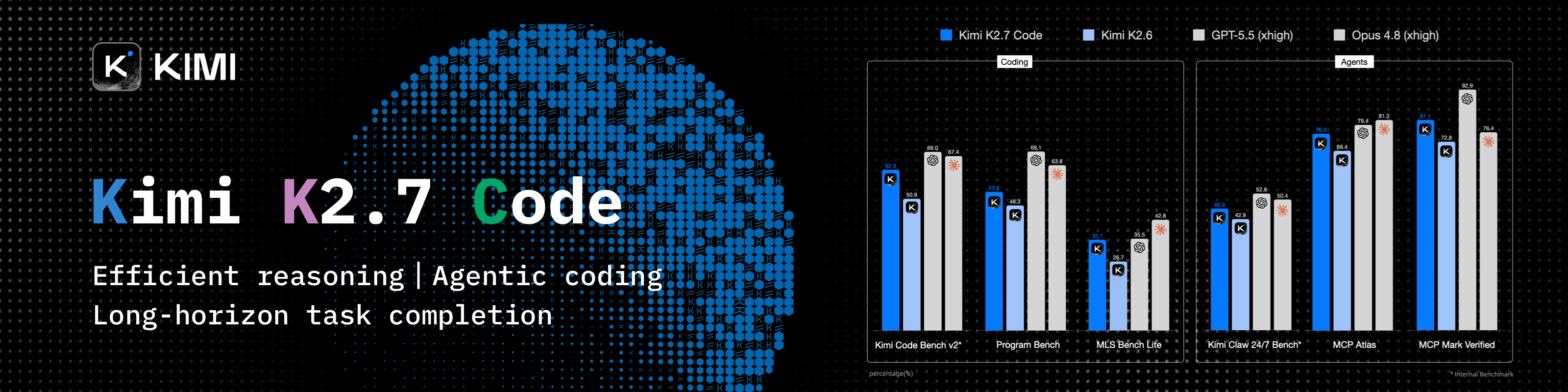
A cross-platform desktop All-in-One assistant for Claude Code, Codex, OpenCode, OpenClaw, Grok Build & Hermes Agent. Only official website: ccswitch.io

Never stop coding. Free MIT AI gateway: one endpoint, 352 providers (150+ free), 1200+ models Kimi, Claude, GPT, Gemini, GLM, DeepSeek, MiniMax. Works with Claude Code, Codex, Cursor, OpenCode, Cline & Copilot. Quota-aware auto-fallback, RTK+Caveman compression saves 15-95% tokens, MCP/A2A, Desktop/PWA. Built by 550+ contributors

Compress tool outputs, logs, files, and RAG chunks before they reach the LLM. 20% fewer tokens for coding agents, 60-95% fewer tokens for JSON, same answers. Library, proxy, MCP server.