

DietrichGebert/ponytailPlugins
Makes your AI agent think like the laziest senior dev in the room. The best code is the code you never wrote.
138k
1 add
VibeUE plugs into Unreal Engine’s native MCP stack and adds domain-specific editor services plus lazy-loaded skills. It is built for agents that operate through Unreal’s endpoint, so they can batch Python, call editor services, and use skills for tasks the engine’s base toolsets do not cover well.
Builders who want their agent to drive Unreal Engine work through MCP instead of manual editor steps.
You can let an agent edit, inspect, profile, and validate Unreal projects through the editor’s own MCP endpoint.
Adds utility tools to Unreal’s native Model Context Protocol server, including Python execution, discovery helpers, research, and terrain data access.
Registers domain services as Unreal toolsets so agents can work with Blueprints, materials, landscape, foliage, animation, Niagara, UMG, audio, StateTree, and behavior trees.
Ships markdown skill packs that load through Unreal’s AgentSkill system and can be discovered with `ListSkills` and loaded with `GetSkills`.
Includes frame timing and Unreal Insights trace capture plus analysis for CPU and GPU troubleshooting.
Adds transaction, workflow, and validation support so agents can batch changes, roll them back, and track affected assets.
Lets agents run `unreal.*` Python and inspect Unreal APIs from inside the editor.
cd /path/to/YourProject/Plugins
git clone https://github.com/kevinpbuckley/VibeUE.git
Plugins/VibeUE/BuildAndLaunchGame.ps1                  # builds + launches the editor
Plugins/VibeUE/BuildAndLaunchGame.ps1 -StrictRebuild   # full recompile (warnings-as-errors)
Plugins/VibeUE/BuildAndLaunchGame.ps1 -Map /Game/Maps/MyMap   # open a specific map (issue #554)
Plugins/VibeUE/BuildAndLaunchGame.sh --engine /path/to/UE5
Plugins/VibeUE/BuildAndLaunchGame.sh --engine /path/to/UE5 --strict-rebuild
Plugins/VibeUE/BuildAndLaunchGame.sh --engine /path/to/UE5 --map /Game/Maps/MyMap
ModelContextProtocol.GenerateClientConfig ClaudeCode
VibeUE.GenerateAgentConfig ClaudeCode




VibeUE is the MCP Expansion + AI Editor Toolset for Unreal Engine 5.8+. Unreal 5.8 added a
built-in MCP server and AI toolsets; VibeUE is an MCP Expansion that plugs straight into them and
adds a deep AI Editor Toolset — a library of editor capabilities — Blueprints, materials, landscape, foliage, animation, Niagara, UMG, audio, StateTree,
Behavior Trees & Blackboards, gameplay tags, input, UVs, performance/profiling, and more — registered into the engine's own
ToolsetRegistry and ModelContextProtocol server, plus rich domain skills served through
Unreal's native AgentSkill system. Any MCP-capable agent (Claude Code, Cursor, Copilot, …) drives
your editor through Unreal's standard MCP endpoint.
⚠️ VibeUE requires Unreal's native MCP to be set up first — enable the Unreal MCP plugin (which auto-enables Toolset Registry) and the Editor Tools plugin, then start the MCP server. Follow Epic's guide: Unreal MCP in the Unreal Editor. VibeUE then expands that endpoint — no separate server and no in-editor chat. A free API key (set in Editor Preferences → Plugins → VibeUE) unlocks the real-world terrain tools; everything else works without one.
Unreal 5.8 ships its own AI toolsets (Blueprints, materials, actors, assets, meshes, data tables, …). VibeUE complements them — it focuses on the domains and depth the engine doesn't cover:
build_graph builder.TransactionService wraps the editor's transaction buffer (undo / redo /
checkpoints) so an agent can group and roll back its own edits — the engine's toolsets expose none.WorkflowService adds an authoritative engine/build manifest, durable
task journals with affected-asset provenance, asynchronous PIE scenarios (compile → input →
assertion → capture → guaranteed teardown), and dry-run-first resumable bulk maintenance.unreal.* Python in the editor and introspect the whole API.It deliberately does not duplicate the engine's general tools (basic asset/actor/blueprint/material CRUD, screenshots, logs, PIE) — agents use Unreal's native toolsets for those.
Unreal's native AI toolsets have zero performance tooling — they can start PIE/Simulate but can't
measure anything. VibeUE's PerformanceService fills that gap so an agent can actually diagnose and
fix frame rate:
frame_timing() — Game/Render/GPU/RHI thread split + a CPU-vs-GPU-bound verdict and a
concrete next-step hint. Run this first — optimising the GPU does nothing on a CPU-bound frame.start_trace / stop_trace / get_trace_status, with bookmark
and region_start / region_end markers.analyse() — reads the trace and log back and returns a perf summary (frame stats, worst
frames, hitches, notable log lines).start_standalone — profile a representative standalone build, not just the
editor viewport.import unreal
print(unreal.PerformanceService.frame_timing()) # CPU vs GPU bound — diagnose FIRST
unreal.PerformanceService.start_trace("cap", "") # Insights trace
# … reproduce the workload (ideally under PIE / standalone) …
unreal.PerformanceService.stop_trace()
print(unreal.PerformanceService.analyse("both", ""))
Pair with the profiling and frame-rate skills for the full CPU/GPU drill-down.
VibeUE plugs into three native UE 5.8+ systems:
ToolsetRegistry) — VibeUE's services register as UToolsetDefinitions, so their
methods become AICallable tools on the MCP endpoint. They're also BlueprintCallable, so the same
methods are callable from Python as unreal.<Name>Service.<method>().ModelContextProtocol) — a small set of VibeUE utility tools are registered
directly on the endpoint: execute_python_code, discover_python_module/_class/_function,
list_python_subsystems, deep_research, terrain_data.AgentSkillToolset) — ~36 markdown skill packs register as native UAgentSkills,
discoverable via ListSkills and loaded lazily via GetSkills, alongside the engine's own skills.Efficient usage (for agents): execute_python_code is the workhorse — it batches a whole
multi-step task into one round-trip and reaches every VibeUE service plus the full unreal.* API. Use
call_tool only for skills and the few engine toolsets with no Python path (screenshots, etc.). See
Content/samples/AGENTS.md.sample for the full agent guide.
Requirements: Unreal Engine 5.8+ · Git
VibeUE is an expansion of Unreal's built-in MCP support, so enable that first. Full details in Epic's guide: Unreal MCP in the Unreal Editor.
ModelContextProtocol.StartServer). Default endpoint
http://127.0.0.1:8000/mcp (port/path configurable). Enabling Tool Search keeps an agent's
context small — it sees list_toolsets / describe_toolset / call_tool and loads tools on demand.cd /path/to/YourProject/Plugins
git clone https://github.com/kevinpbuckley/VibeUE.git
Build with the project script:
Plugins/VibeUE/BuildAndLaunchGame.ps1                  # builds + launches the editor
Plugins/VibeUE/BuildAndLaunchGame.ps1 -StrictRebuild   # full recompile (warnings-as-errors)
Plugins/VibeUE/BuildAndLaunchGame.ps1 -Map /Game/Maps/MyMap   # open a specific map (issue #554)
On Linux or macOS, use the platform-detecting shell script:
Plugins/VibeUE/BuildAndLaunchGame.sh --engine /path/to/UE5
Plugins/VibeUE/BuildAndLaunchGame.sh --engine /path/to/UE5 --strict-rebuild
Plugins/VibeUE/BuildAndLaunchGame.sh --engine /path/to/UE5 --map /Game/Maps/MyMap
Then Edit → Plugins → enable VibeUE and restart. Its services, tools, and skills now register onto the same endpoint, alongside the engine's own.
Two console commands from the editor (open the console with `):
1. Write the MCP server config (.mcp.json at the project root):
ModelContextProtocol.GenerateClientConfig ClaudeCode
(supports ClaudeCode, Cursor, VSCode, Gemini, Codex, or All.)
2. Write VibeUE's agent guide so the assistant uses the efficient patterns:
VibeUE.GenerateAgentConfig ClaudeCode
This writes the guide to the correct file for your agent — CLAUDE.md (Claude Code), GEMINI.md
(Gemini), AGENTS.md (Codex / Hermes / Cursor), or .github/copilot-instructions.md (Copilot) — or pass
All to write CLAUDE.md + GEMINI.md + AGENTS.md at once. It resolves the plugin location
automatically, so it works whether VibeUE was installed from FAB or Git. The guide goes in a
managed block, so re-run any time to refresh without disturbing your own notes. Pass import to link
the guide with a one-line @import instead of copying it (Claude Code / Gemini only — other agents
don't resolve imports, so they always get a copy).
The MCP server is loopback-only with no authentication — same-machine use only (per Epic's docs).
The guide teaches: discover before you call (discover_python_class), batch with execute_python_code,
load skills via ListSkills/GetSkills, and when to reach for deep_research / terrain_data.
Skills are lazy-loaded domain knowledge (workflows, gotchas, property formats) served by Unreal's
native AgentSkillToolset:
# discover (summaries only — cheap)
call_tool(tool_name="ListSkills", toolset_name="ToolsetRegistry.AgentSkillToolset")

# load the packs you need (full markdown, lazy)
call_tool(tool_name="GetSkills", toolset_name="ToolsetRegistry.AgentSkillToolset",
          arguments={"skillPaths": ["/VibeUE/Python/init_unreal_PY.VibeUE_blueprints"]})
ListSkills is the live source of truth for what's available (it reads each pack's SKILL.md).
Skills tell you what to do and why; use discover_python_class('unreal.<Name>Service', method_filter='…')
for exact signatures before writing code.
Native engine prerequisites (enable in Step 1 — Epic's MCP stack):
| Plugin | Purpose |
|---|---|
Unreal MCP (ModelContextProtocol) | The native MCP server endpoint |
Toolset Registry (ToolsetRegistry) | Native AI toolset + AgentSkill registration (auto-enabled by Unreal MCP) |
Editor Tools (EditorToolset) | The engine's own AI toolsets — VibeUE complements these |
Enabled automatically by VibeUE: PythonScriptPlugin (the unreal.* API),
EditorScriptingUtilities, and the domain plugins its services need — Niagara, MetaSound,
EnhancedInput, ModelViewViewModel, StateTree, MeshModelingToolset,
GameplayTagsEditor. (VibeUE also depends on
ToolsetRegistry + ModelContextProtocol, so enabling VibeUE pulls them in — but you still enable
Editor Tools and start the server per Step 1.)
BuildAndLaunchGame.ps1 (project root or Plugins/VibeUE/) stops the running editor, builds, and
relaunches:
-StrictRebuild — full plugin recompile under warnings-as-errors-Clean — wipe intermediate/binaries first-SkipBuild — relaunch onlyVibeUE intentionally keeps no static method catalog in this README — the surface evolves with the engine. The authoritative, always-current references are:
ListSkills → which domains exist and when to use them.discover_python_class('unreal.<Name>Service') → exact method signatures.describe_toolset('VibeUE.<Name>Service') → the toolset's tools + JSON schemas (token-heavy;
prefer skills + discovery).MIT — see LICENSE. Project home: https://www.vibeue.com/
Sign in to join the discussion.
No comments yet. Be the first to say what this is good for.
Makes your AI agent think like the laziest senior dev in the room. The best code is the code you never wrote.
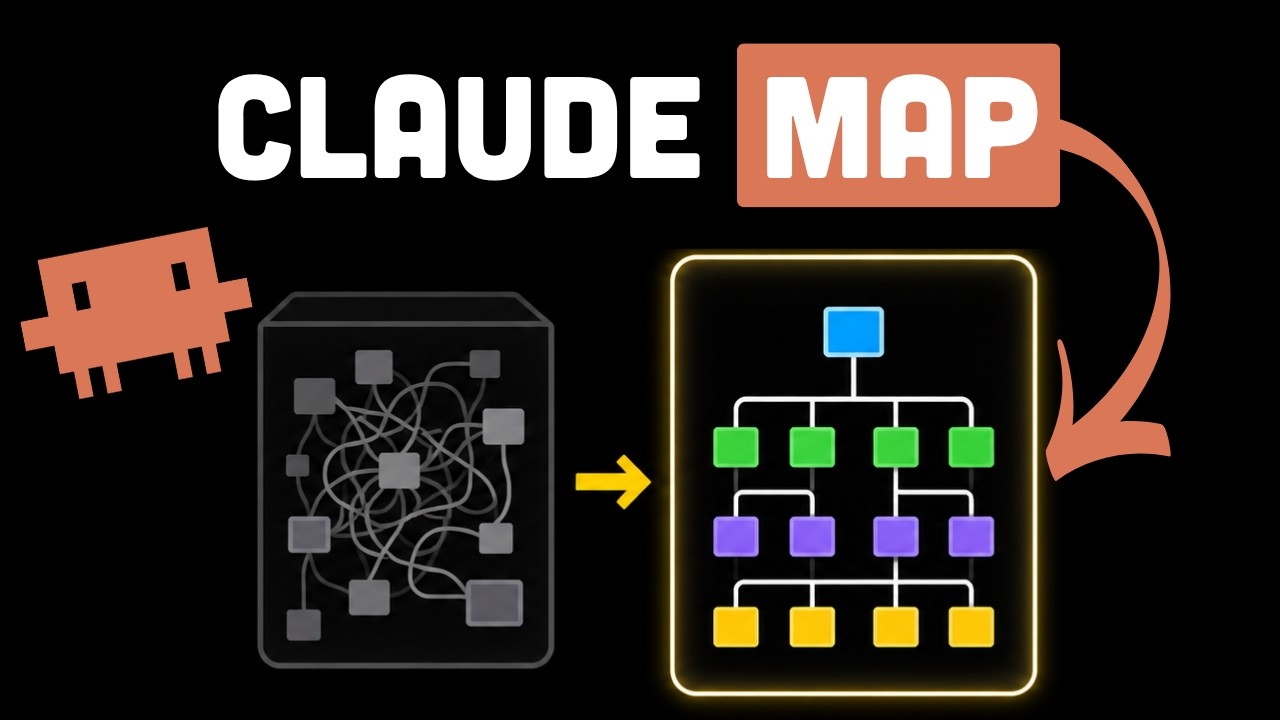
Graphs that teach > graphs that impress. Turn any code into an interactive knowledge graph you can explore, search, and ask questions about. Works with Claude Code, Codex, Cursor, Copilot, Gemini CLI, and more.

OmO: Just type "mass ulw" keyword with your prompt. Now you are the master of graph engineering.
Persistent Context Across Sessions for Every Agent – Captures everything your agent does during sessions, compresses it with AI, and injects relevant context back into future sessions. Works with Claude Code, OpenClaw, Codex, Gemini, Hermes, Copilot, OpenCode + More
Opinionated Oxlint rules for rejecting low-evidence TypeScript and JavaScript patterns
Teams-first Multi-agent orchestration for Claude Code