
DietrichGebert/ponytailPlugins
Makes your AI agent think like the laziest senior dev in the room. The best code is the code you never wrote.
138k
1 add
This repository packages epistemic protocols that insert checkpoints into AI collaboration at key decision points. The main protocols live in separate folders, while shared rules, hooks, and marketplace metadata tie them together for Claude Code and Codex.
Builders who want Claude Code or Codex to ask better questions, check understanding, and keep work aligned before implementation.
You can catch wrong direction early, before it turns into code, rollout work, or rework.
Each protocol maps to a command such as `/inquire`, `/bound`, `/grasp`, or `/apportion` for a specific decision point.
`epistemic-cooperative` adds onboarding, probing, triage, review, and instruction-auditing skills; `route` adds session-start and per-prompt routing.
The README provides a one-line installer and separate plugin install commands for the utility plugins.
The repo includes a Codex marketplace manifest and matching `.codex-plugin` files beside the Claude manifests.
Shared docs like `CLAUDE.md`, `AGENTS.md`, `docs/mission-bridge.md`, and the `premise/` files explain how the layers fit together.
curl -fsSL https://raw.githubusercontent.com/jongwony/epistemic-protocols/main/scripts/install.sh | bash
claude plugin install epistemic-cooperative@epistemic-protocols
claude plugin install route@epistemic-protocols
curl -fsSL https://raw.githubusercontent.com/jongwony/epistemic-protocols/main/scripts/install-codex.sh | bash
codex plugin marketplace add /path/to/epistemic-protocols
When AI collaboration goes off-track, you redo everything. These protocols catch misalignment early — often at the plan level, before it hardens into code or other downstream work. Fix the direction before the implementation compounds it.
Correcting a wrong direction at the plan level can cost one conversation turn. Once it hardens into code, rollout steps, or downstream explanations, it can cost hours of rework. These protocols insert structured checkpoints at decision points — intent, goal, context, perspective, execution, applicability, recall, and comprehension — so you and AI can surface, judge, and adapt misalignment before it compounds.
Stated Mission — the public hook: catch wrong directions early, especially at the plan level. This is the clearest entry story and how most users reach for the protocols.
Realized Machinery — the actual coverage: structured checkpoints span planning, analysis, decision, execution, verification, recall, and comprehension. Protocols such as Merismos (goal apportionment into conditioned execution units), Epharmoge (post-execution applicability), Anamnesis (session recall), and Katalepsis (comprehension verification) extend beyond plan-level alone.
The two layers serve different audiences: the README carries the narrow public contract; SKILL.md and CLAUDE.md describe the full machinery. See docs/mission-bridge.md for the governance rules that keep these layers aligned.
Install every protocol:
curl -fsSL https://raw.githubusercontent.com/jongwony/epistemic-protocols/main/scripts/install.sh | bash
Then invoke a protocol at the decision point you are at — for example /inquire before handing work to the AI, or /bound before a refactor that crosses several domains.
The two utility plugins are opt-in, so the one-liner leaves them out. epistemic-cooperative adds learning and deficit recognition (/onboard, /probe) plus contributor tooling; route carries the session hooks — a per-prompt routing directive, at session start the installed-protocol deficit table with the premise index beneath it, and again at the tool calls the matcher can see are a premise document's moment — an instruction surface changing, work handed to an agent — that document's entry. Add either on its own:
claude plugin install epistemic-cooperative@epistemic-protocols
claude plugin install route@epistemic-protocols
With epistemic-cooperative installed, /onboard gives a quick recommendation from your recent sessions and can continue into guided learning with scenarios, trials, and quizzes.
This repository is also a Codex plugin marketplace. To add it from GitHub:
curl -fsSL https://raw.githubusercontent.com/jongwony/epistemic-protocols/main/scripts/install-codex.sh | bash
For local development from a checkout:
codex plugin marketplace add /path/to/epistemic-protocols
The Codex marketplace keeps the same plugin boundaries as Claude Code: each protocol is its own plugin, and epistemic-cooperative carries the utility skills. The marketplace lives at .agents/plugins/marketplace.json; each plugin keeps its Codex manifest beside its Claude manifest at <plugin>/.codex-plugin/plugin.json.
Protocol skill sources live in each plugin directory under <plugin>/skills/<name>/SKILL.md. The repository does not ship a pre-materialized .agents/skills/ symlink view because Codex marketplace discovery can scan both plugin manifests and Agent Skills symlinks, producing duplicate skill entries.
Hosts that need an Agent Skills-style view should materialize it outside the Codex marketplace checkout or use host-specific packaging. Runtime tool grounding still varies by tool, so protocol behavior in non-Claude-Code hosts is provisional pending accumulated cross-host use evidence.
| Protocol | Command | When to use |
|---|---|---|
| Aitesis | /inquire | AI charges ahead without asking what it needs to know |
| Euporia | /elicit | You have intent but the decision coordinates are implicit — reverse-trace them from the externalized substrate (codebase, rules, past sessions) until intent crystallizes |
| Heuresis | /ideate | The candidate field for a decision is empty or has prematurely converged — widen it into a diverse set before any selection, not after |
| Proplasma | /preview | Right before committing to a direction — the candidates read fine but you'd have to see them to judge; contrast cheap discard-committed probes first |
| Hypotyposis | /sketch | A form has to be made and you cannot say what it should be, but you'd know it on sight — sketch it, mark what does not fit, revise the kept version, and finish on the one you recognize |
| Prothesis | /frame | Need to settle which lens to look through before the analysis starts — one lens or several |
| Analogia | /ground | AI's advice sounds right in theory but unclear in your context |
| Periagoge | /induce | One or more concrete cases accumulating into an unnamed essence — crystallize the emerging abstraction |
| Merismos | /apportion | About to hand a goal to an autonomous run — cut it into units that each fit one interval and close each unit first — on its own done-condition where one compiles, on your recorded acceptance where none does, or on a reservation where a judgment rather than a check settles it |
| Epharmoge | /contextualize | AI's output is correct but doesn't fit your situation |
| Elenchus | /sublate | About to externalize a working context that may have decayed — vet it dialectically first |
| Horismos | /bound | An epistemic boundary is undefined — direction/priority, scope, type/concept, or who decides (ownership) |
| Anamnesis | /recollect | You vaguely remember something was discussed before but cannot name it — one session, or a line of work, topic, or concept spread across several |
| Katalepsis | /grasp | Code, a paper, or a big change you need to actually understand — you can't follow it yet, or you nod along and aren't sure. Verify your understanding is genuine before you approve or build on it |
| Hyphegesis | /conduct | Multiple cognitive moves whose order, independence, reconciliation, stopping (termination), and routing aren't obvious — conduct how the whole session's work runs before starting |
Concern clusters: Planning (/inquire, /elicit, /ideate, /preview, /sketch) · Analysis (/frame, /ground, /induce) · Execution (/apportion) · Verification (/contextualize, /sublate) · Cross-cutting (/bound, /recollect, /grasp, /conduct)
Two plugins sit beside the protocols. Both are opt-in for the Claude Code one-liner:
claude plugin install epistemic-cooperative@epistemic-protocols
claude plugin install route@epistemic-protocols
Skills that act at their own decision points — around the protocols, on the work itself, and on the prose that steers the agent.
| Command | When to use |
|---|---|
| Finding the protocol | |
/onboard | New here — get one recommendation from your recent sessions, then optionally learn by scenario, trial, and quiz |
/probe | Something feels off but you cannot name which deficit it is — several hypotheses, routed by your recognition |
| Shaping the work | |
/triage | A pile of GitHub issues needs to become focused work units, each fused with the project's northstar and handed to a session by pointer |
/forge | You need a prompt or a standing skill recipe grounded in a vendor reference (a model prompt guide, the Codex Goals spec), not one written from memory |
/reduced-space-test | A claim that a stand-in behaves like the real target — test it in a bounded space and carry the untested remainder forward explicitly |
/gate-check | An option set is about to be presented to you — an independent advisor rules it genuine, collapsed, or malformed, and its cited grounds are verified first |
| Reviewing a change | |
/review-loop | Drive a change through review until every finding is verified against the codebase and disposed of, re-reviewing each round |
| Auditing instruction prose | |
/place | An instruction file keeps growing — route each clause to where it belongs (a load tier, the ledger, or deletion) |
/white-bear | Prose that tells the agent what not to do — find prohibition framing and negated anchoring that keep the wrong target in view |
/zero-shot | Prose that anchors on examples where a principle would generalize — find and name those spots |
| Steering the project | |
/realign | The project guide's direction line no longer matches where the work is going — fuse the inscribed line, outside signals, and your present understanding |
| Delegating to Codex | |
/goal-research | A factual research question you want scoped and externally verified in a background Codex session, with the full trace returned |
Context-driven protocol routing. A session-start hook places the installed-protocol deficit table and the premise index at the head of context, once per context epoch; a per-prompt hook places a short directive beside each prompt. When the accumulated context shows a deficit exactly one installed core protocol resolves, the agent invokes that protocol, nudges when several fit, and stays silent when none does. The invoked protocol's own first gate keeps your judgment where it was.
Each protocol targets a specific decision point where human-AI collaboration can drift. Public docs lead with the plan-level hook because it is the clearest entry story; contributor docs explain the broader machinery spanning planning, execution, verification, recall, and comprehension. For the bridge between those layers, see docs/mission-bridge.md. For architecture details and design philosophy, see CLAUDE.md.
New to the repo? Start with ONBOARDING.md. The intended usage: paste it into a fresh Claude Code session — the file carries an embedded instruction block that turns Claude into an onboarding buddy. Claude checks your environment against the setup checklist, routes you to the protocol that best matches your current stance, walks you through the core docs in order, and surfaces the contribution workflow and conventions.
Entry-point routing happens up front, so you can experience the protocols while onboarding onto them:
/onboard (epistemic-cooperative) for a quick recommendation plus scenario/trial/quiz walkthrough/grasp (katalepsis) over CLAUDE.md or a specific SKILL.md/ground (analogia), with your existing usage as the concrete domainroute plugin's session-start tableFor the architecture and principles behind the protocols themselves, read CLAUDE.md and the axiom files under .claude/rules/.
| Protocol | Greek | Meaning |
|---|---|---|
| Prothesis | πρόθεσις | Setting forth |
| Katalepsis | κατάληψις | Grasping, comprehension |
| Horismos | ὁρισμός | A bounding |
| Aitesis | αἴτησις | Request, inquiry |
| Analogia | ἀναλογία | Proportion |
| Periagoge | περιαγωγή | Turning-around |
| Euporia | εὐπορία | Way through, resourcefulness |
| Merismos | μερισμός | Apportionment |
| Epharmoge | ἐφαρμογή | Application, fitting |
| Elenchus | ἔλεγχος | Cross-examination, refutation |
| Anamnesis | ἀνάμνησις | Recollection |
| Hyphegesis | ὑφήγησις | Leading the way, guiding from ahead |
| Proplasma | πρόπλασμα | Preliminary model, first mold |
| Hypotyposis | ὑποτύπωσις | Outline, first sketch |
| Heuresis | εὕρεσις | Finding, discovery |
MIT
Sign in to join the discussion.
No comments yet. Be the first to say what this is good for.
Makes your AI agent think like the laziest senior dev in the room. The best code is the code you never wrote.
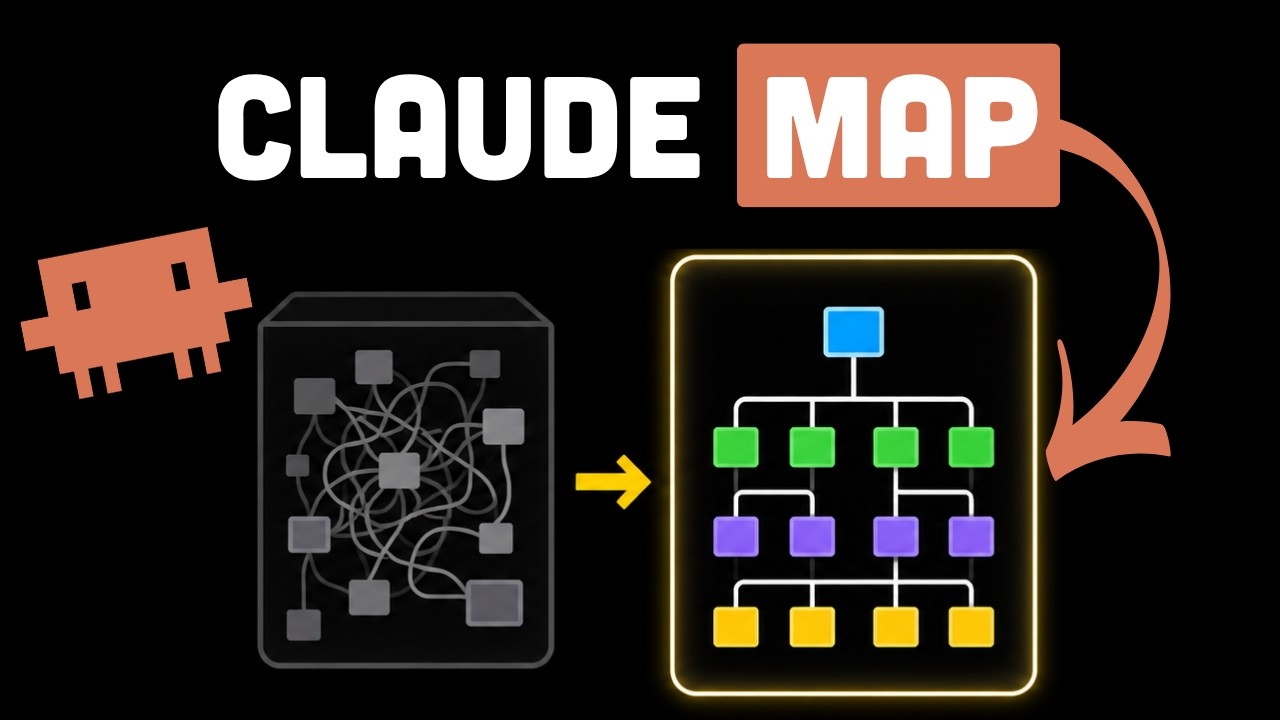
Graphs that teach > graphs that impress. Turn any code into an interactive knowledge graph you can explore, search, and ask questions about. Works with Claude Code, Codex, Cursor, Copilot, Gemini CLI, and more.

OmO: Just type "mass ulw" keyword with your prompt. Now you are the master of graph engineering.
Persistent Context Across Sessions for Every Agent – Captures everything your agent does during sessions, compresses it with AI, and injects relevant context back into future sessions. Works with Claude Code, OpenClaw, Codex, Gemini, Hermes, Copilot, OpenCode + More
Opinionated Oxlint rules for rejecting low-evidence TypeScript and JavaScript patterns
Teams-first Multi-agent orchestration for Claude Code