

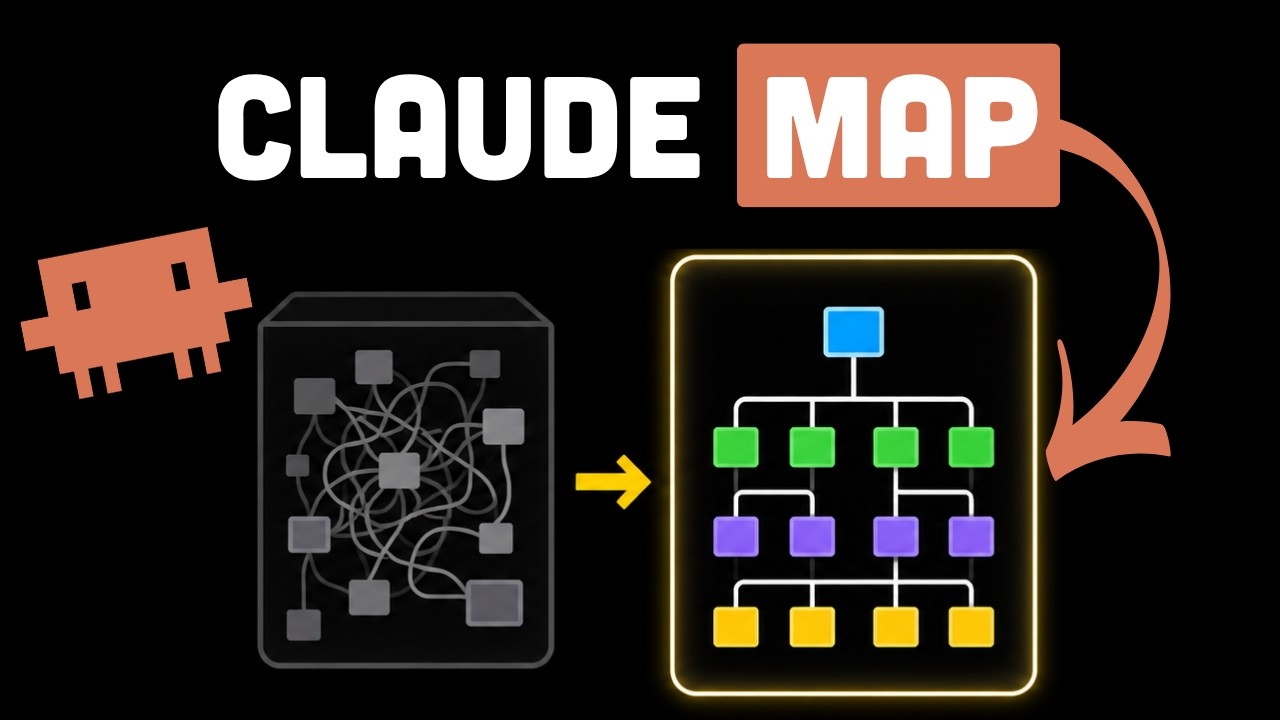
Graphs that teach > graphs that impress. Turn any code into an interactive knowledge graph you can explore, search, and ask questions about. Works with Claude Code, Codex, Cursor, Copilot, Gemini CLI, and more.
82k
ResumeHQ is a plugin bundle that plugs into Claude Code and Codex to help you search jobs, score fit, tailor a resume, and write a cover letter. It uses deterministic scoring and an audit pipeline before it generates final documents.
Builders who want Claude Code or Codex to help with resumes, cover letters, and job matching.
You can turn a job description into a tailored resume package with fit checks and scoring before you apply.
Checks a master resume against the job description before tailoring starts, and stops when the role is a genuine mismatch.
Creates tailored resume drafts, cover letters, and DOCX output from the same job description.
Finds live jobs, ranks them against your resume, and shows ATS and HR-style scores.
Matches claims back to resume text and keeps a separate evidence record for review.
Ships as plugin manifests, slash commands, MCP tools, and local codex surfaces for both editors.
/plugin marketplace add jananthan30/Resume-Builder
/plugin install resume-builder
codex plugin marketplace add .
/resume-builder:setup
/resume-builder:resume [paste a job description here]
$resume-team [paste a job description here]
/resume-builder:find-jobs Senior Data Scientist in New York
Every AI resume tool promises to "beat the ATS." This one has a harder rule: it never invents experience — and when a job is a genuine mismatch, it declines to tailor at all and tells you why. Finds jobs, scores your fit with deterministic engines (not LLM vibes), tailors through a fail-closed pipeline where an independent auditor can veto the writer, and publishes its own scoring failures. Works as a Claude Code plugin, Codex plugin, or standalone web app.




Upload a resume → paste the job posting → keyword-match and recruiter-style heuristic scores with concrete fixes, in under 30 seconds. Try it free.
Most resume tools only score the resume you bring to them. ResumeHQ goes further:
| Feature | Jobscan | Rezi | Teal | ResumeHQ |
|---|---|---|---|---|
| Keyword + semantic match scoring | ✅ | ✅ | ✅ | ✅ |
| Recruiter-style heuristic review | ❌ | ❌ | ❌ | ✅ |
| Discover matching jobs | ❌ | ❌ | ❌ | ✅ |
| Score jobs against your resume | ❌ | ❌ | ❌ | ✅ |
| Auto-tailor resume to JD | ✅ | ✅ | ❌ | ✅ |
| ATS-compliant DOCX output | ❌ | ✅ | ❌ | ✅ |
| Application tracker | ❌ | ❌ | ✅ | ✅ |
| Works in Claude Code / claude.ai / Codex | ❌ | ❌ | ❌ | ✅ |
| Open source | ❌ | ❌ | ❌ | ✅ |
| Publishes its scoring benchmarks — including the bugs | ❌ | ❌ | ❌ | ✅ |
| Refuses to fabricate — declines to tailor genuine mismatches, audits every claim against your real resume | ❌ | ❌ | ❌ | ✅ |
You paste a job description (or search for jobs). The system:
The candidate-fit gate always runs first and cannot be bypassed by ATS/HR scores. After it passes, safe read/scoring work may run concurrently while authorization, DOCX generation, and tracker mutation remain ordered.
Works with Claude Code (CLI/IDE), Codex (CLI/app/IDE), and claude.ai (web/Projects).
Step 1: Install the plugin
Claude Code:
/plugin marketplace add jananthan30/Resume-Builder
/plugin install resume-builder
Codex from a local checkout:
codex plugin marketplace add .
Then restart Codex and install Resume Builder from the Resume Builder Local marketplace.
Step 2: Configure the runtime
Claude Code exposes the plugin setup command:
/resume-builder:setup
This walks you through everything:
pip install -r requirements.txt)config.json with your name, email, phone, LinkedInFor Codex, install Python 3.10+, run python -m pip install -r requirements.txt,
and create config.json with a valid master_resume_path. The installed Codex
surface exposes the Resume Team as $resume-team; it does not expose the
Claude-style /resume-builder:* command namespace.
Step 3: Start building resumes
Claude Code:
/resume-builder:resume [paste a job description here]
Codex:
$resume-team [paste a job description here]
$resume-team publishes an authorized, digest-verified resume.md draft. It does
not by itself create a DOCX or complete an application package.
Or find jobs first:
/resume-builder:find-jobs Senior Data Scientist in New York
| Command | What It Does |
|---|---|
/resume-builder:setup | One-time setup wizard (installs Python deps, creates config, links Pro account) |
/resume-builder:job-fit [JD] | Deterministic master-vs-JD gate (fit bar, default 50, and zero hard knockouts) before tailoring |
/resume-builder:resume [JD] | Full application: tailored resume + cover letter + scoring + DOCX + tracking |
/resume-builder:tailor-resume [JD] | Resume only (no cover letter) |
/resume-builder:cover-letter [JD] | Cover letter only |
/resume-builder:find-jobs [title] [location] | Discover and score matching jobs from live job boards |
/resume-builder:batch-resume | Process multiple job descriptions in parallel |
/resume-builder:writing-coach [file] | Audit and rewrite resume bullets using 10 writing rules |
/resume-builder:resume-team [JD] | Publish an authorized resume.md draft through the native Researcher → Writer → Auditor → Editor workflow |
If running Claude Code locally from the cloned repo, use short names: /resume,
/tailor-resume, /find-jobs, etc. In Codex, invoke $resume-team.
Some Claude Code commands can provide prompt-only previews before setup.
Production resume generation through /resume-builder:resume,
/resume-builder:resume-team, or Codex $resume-team requires Python,
config.json, the deterministic candidate-fit preflight, and the evidence,
human-voice, and canonical-integrity audit helpers; those gates are never skipped.
| Command | Works immediately? | With setup? |
|---|---|---|
/resume-builder:job-fit | No — requires the configured master and deterministic preflight | Digest-bound score, threshold, and hard-knockout decision |
/resume-builder:resume | No — the native team and deterministic audits require setup | Full audited resume + automated ATS/HR scoring and DOCX output |
/resume-builder:resume-team / $resume-team | No — requires macOS/Linux, the configured master resume, and Python audit helpers | Authorized, digest-verified resume.md draft; DOCX/tracker finalization is still pending |
/resume-builder:cover-letter | Yes — the assistant writes the letter | + DOCX output |
/resume-builder:writing-coach | Yes — full writing audit | Same |
/resume-builder:find-jobs | Yes — shows results (no score) | + ATS/HR fit scoring per job |
/resume-builder:setup | Yes — runs the setup wizard | N/A |
| MCP scoring tools | No — needs Python | evidence_match, score_resume, score_ats, score_hr, score_with_llm, explain_score, extract_text, discover_jobs |
After running /resume-builder:setup, the MCP scorer auto-starts and provides these tools that Claude Code or Codex can call natively:
| Tool | What It Does |
|---|---|
evidence_match | Requirement-by-requirement evidence matching, with the exact excerpt behind each conclusion (recommended) |
score_resume | Legacy ATS + HR analysis in one call |
score_ats | Keyword + semantic match scoring (8 heuristic components) |
score_hr | Recruiter-style heuristic review (6 factors + F-pattern) |
score_with_llm | LLM-augmented rubric scoring (requires ANTHROPIC_API_KEY) |
explain_score | Actionable improvement suggestions with missing keywords |
extract_text | Extract text from DOCX/PDF/MD/TXT files |
discover_jobs | Search live job boards and score each job against your resume |
All listed MCP tools support cloud-first scoring — they try the cloud API first and fall back to local scoring automatically. Legacy direct rewrite endpoints or functions are not production-authorized tailoring paths. The capability-isolated native Resume Team is the sole production rewrite and draft-publication path.
The /find-jobs command and discover_jobs MCP tool search live job boards and rank results by how well each job matches your resume — answering "which jobs should I actually apply to?" with data.
/resume-builder:find-jobs Senior Product Manager in San Francisco
/resume-builder:find-jobs Data Scientist remote
How it works:
Sample output:
Rank  Title                        Company        ATS   HR    Salary
────  ───────────────────────────  ─────────────  ────  ────  ──────────────
#1    Senior Data Scientist        Pfizer          82%   74%  $120k–$150k
#2    Data Scientist II            Goldman Sachs   79%   71%  $110k–$140k
#3    ML Engineer – NLP            Microsoft       74%   68%  $130k–$160k
API keys required for job search:
ADZUNA_APP_ID and ADZUNA_APP_KEY to your .envA universal "ATS score" does not exist. Recruiting systems parse, search, filter, evaluate requirements and sometimes rank — using materially different mechanisms — so a single percentage cannot describe them all.
This tool answers a question that is answerable:
Your resume provides strong evidence for 17 of 21 important requirements. One must-have has no evidence found. Eligibility is UNVERIFIED.
Every conclusion cites the exact resume excerpt behind it, with character offsets you can verify.
python evidence_match.py --resume resume.docx --jd job.txt --verify
Three results stay separate and are never multiplied together:
| Output | Meaning |
|---|---|
| Eligibility | PASS / FAIL / UNVERIFIED on explicit hard requirements |
| Qualification Evidence Fit | How strongly the resume supports the role's requirements |
| Evidence Quality | How explicit and traceable that evidence is |
A missing licence is UNVERIFIED, not FAIL — the resume did not establish it, which is not proof the candidate lacks it. Only explicit contradictory evidence (an expired licence) produces FAIL.
Why this resists gaming. The model classifies evidence; Python computes every number. Repeating a phrase twenty times collapses to one piece of evidence, a parent skill never satisfies a child requirement (Python does not imply TensorFlow), and unapproved synonyms are downgraded rather than accepted. Scores replay exactly from stored judgments with no LLM call:
python evidence_match.py --replay match.json
Because the model only classifies and Python computes every number, the model
is configuration rather than policy — a weaker judge produces measurably wrong
labels, never quietly drifting scores. Set either role with a
provider:model spec; a bare name still means Anthropic.
# Careful extraction, cheap judging — the split that trades cost against risk
export EVIDENCE_EXTRACTOR_MODEL="anthropic:claude-sonnet-5"
export EVIDENCE_JUDGE_MODEL="deepseek:deepseek-chat"

# Or run entirely on self-hosted weights; nothing leaves the machine
export EVIDENCE_JUDGE_MODEL="local:qwen3"
export EVIDENCE_LOCAL_BASE_URL="http://localhost:11434/v1"
Providers: anthropic, xai, moonshot, deepseek, dashscope (Qwen,
Singapore), dashscope-cn (Qwen, Beijing — cheaper, but candidate data leaves
the region), openrouter, together, fireworks, groq, local (vLLM /
Ollama / llama.cpp). Each reads its own key — DEEPSEEK_API_KEY,
XAI_API_KEY, DASHSCOPE_API_KEY, and so on. Defaults are unchanged, so an
existing install keeps behaving exactly as before.
A model that cannot stop reasoning is a poor fit for the judge role whatever its sticker price: judging is bounded classification, and reasoning tokens bill at the output rate, which is already ~80% of the cost here.
Using an aggregator? Pin the backend. One OpenRouter model slug can be
served by several backends at different quantizations, so two runs can record
the same judge_model and be materially different models — the same failure as
recording a constant model name, one layer up.
export EVIDENCE_JUDGE_MODEL="openrouter:qwen/qwen3.8-max"
export EVIDENCE_OPENROUTER_PROVIDER="deepinfra"     # disables silent failover
export EVIDENCE_OPENROUTER_QUANTIZATIONS="fp8"      # optional, recorded too
A pin becomes part of the recorded identity (qwen/qwen3.8-max@deepinfra/fp8)
and therefore part of the cache key. Without one the model id is recorded as
…@unpinned, so a stored score never claims a reproducibility it does not have.
Aggregators are well suited to comparing candidates; pin before you trust a
number, and prefer a direct provider key once a model is chosen.
Extraction and judging are configured separately because they carry different risk. Extraction must quote the posting verbatim and classify hard gates, and runs once per match. Judging is bounded classification and runs once per requirement — roughly ten times the volume, and where the money goes.
The model is part of the result's identity. extractor_model and
judge_model are written into the audit record and hashed into the cache key,
so two models never share a cache entry and a cheap-model score can never be
served as a frontier-model one. Changing either invalidates cached results by
design.
Before switching, measure. Zero adversarial inversions is what makes this engine better than keyword matching, so re-run the ablations and compare against the current baseline rather than assuming a cheaper model holds:
RUN_LIVE_LLM=1 python -m benchmarks.evidence.runner --with-llm
Routing resumes to a third-party provider sends candidate data outside Anthropic.
pii_redactorruns before every hosted call regardless of provider, andlocal:keeps everything on your own machine — but the choice of endpoint is a data-handling decision, not just a pricing one.
Retained for the comparison table and existing API integrations.
Heuristic keyword/semantic match scoring. It does not simulate any real ATS. There is no universal ATS algorithm — Workday, Greenhouse, Taleo, and other systems parse, search, filter, and rank differently, and modern products increasingly use requirement-based semantic matching rather than raw keyword counts. Treat this score as an advisory match diagnostic, never as a pass/fail prediction.
| Component | Weight | What It Measures |
|---|---|---|
| Phrase Match | 25% | Multi-word industry phrases present in both texts |
| Keyword Match | 20% | Lemmatized keywords with synonym expansion |
| Weighted Industry Terms | 15% | Domain-specific terminology with recency decay |
| Semantic Similarity | 10% | SBERT vector cosine similarity between resume and JD |
| BM25 Score | 10% | Probabilistic relevance ranking (BM25Plus) |
| Job Title Match | 10% | Exact JD title in resume header/summary |
| Graph Centrality | 5% | Infers missing skills from related skills via NetworkX |
| Skill Recency | 5% | Exponential decay — recent experience weighted higher |
Additional checks: Hidden text detection, readability analysis (Flesch-Kincaid Grade 10-12 optimal), format risk assessment.
Applies recruiter-inspired heuristics as an advisory review of experience and presentation signals. It does not predict how any actual recruiter will react — it is a structured checklist, not a behavioral model.
| Factor | Weight | What It Measures |
|---|---|---|
| Job Fit | 15-30% | Domain/therapeutic area, experience type, education, role level |
| Experience Fit | 10-20% | Years of experience vs. JD requirements, Goldilocks zone |
| Skills Match | 10-30% | Demonstrated skills (action verbs) vs. listed skills |
| Career Trajectory | 10-15% | Title progression via linear regression slope |
| Impact Signals | 15-25% | Metrics density + Bloom's Taxonomy verb power levels |
| Competitive Edge | 10% | Company/university prestige signals |
| F-Pattern Visual | +/-5pts | Layout heuristics (golden triangle, left-rail alignment) |
Weights adapt to detected seniority (junior / mid / senior / executive / career-pivot); ranges shown. Risk penalties: Job hopping (-8 to -15 pts), unexplained gaps (-5 to -15 pts), recent instability.
Claude-powered rubric evaluation that catches nuances the algorithmic scorers miss — tone, coherence, storytelling quality.
| Tier | Price | What You Get |
|---|---|---|
| Free | $0 | 5 cloud scores (then automatic local scoring fallback for CLI/MCP users) |
| Pro | $12/mo | Unlimited checks, full keyword gap + deep AI analysis, 10 AI rewrites/mo, 30 cover letters/mo |
| Ultra | $29/mo | Everything in Pro + 100 AI rewrites/mo, 1,000 cover letters/mo |
Note for Claude Code / claude.ai users: Your Anthropic subscription already handles resume writing via Claude. The scorer server only does ATS + HR scoring, so Pro is all you need — you do not need Ultra.
Sign up at getresumehq.com. After signing up, run /resume-builder:setup to link your Pro account in one step.
┌─────────────────────────────────────────────────────────────┐
│             Claude Code / claude.ai                          │
│  /resume  /tailor-resume  /cover-letter  /find-jobs  /setup  │
├─────────────────────────────────────────────────────────────┤
│                                                             │
│  ┌──────────┐  ┌──────────┐  ┌──────────┐  ┌───────────┐  │
│  │  ATS     │  │  HR      │  │  LLM     │  │  Writing  │  │
│  │  Scorer  │  │  Scorer  │  │  Scorer  │  │  Coach    │  │
│  │ (8-comp) │  │ (6-fact) │  │ (Claude) │  │ (10 rules)│  │
│  └────┬─────┘  └────┬─────┘  └────┬─────┘  └─────┬─────┘  │
│       └──────────────┴─────────────┘               │        │
│                      │                             │        │
│              ┌───────┴───────┐              ┌──────┴─────┐  │
│              │  MCP Server   │              │   DOCX     │  │
│              │  (FastMCP 3)  │              │ Generator  │  │
│              │  Cloud-first  │              │ (Workday)  │  │
│              └───────┬───────┘              └────────────┘  │
│                      │                                      │
│            ┌─────────┴──────────┐                           │
│            │  Cloud API         │                           │
│            │  resume-scorer     │                           │
│            │  .fly.dev          │                           │
│            │  (JWT + API key)   │                           │
│            └────────────────────┘                           │
│                                                             │
├─────────────────────────────────────────────────────────────┤
│  Job Discovery: Adzuna + Remotive + JSearch → light score → │
│  full ATS+HR score → ranked results                         │
├─────────────────────────────────────────────────────────────┤
│  Orchestration State (state.json) — Multi-Agent DAG        │
│  Application Tracker (Excel) — Auto-updated per run        │
└─────────────────────────────────────────────────────────────┘
The MCP server operates in thin client mode: it tries the cloud API first for scoring, and falls back to local scoring if the cloud is unavailable or not configured. LLM scoring always runs locally using your own API key (BYOK).
1. /resume-builder:setup            One-time setup (install deps, create config, link Pro)
2. Create your master resume         YOUR_MASTER_RESUME.md with full work history
3. /resume-builder:find-jobs [JD]   Optional — discover matching jobs scored by fit
4. /resume-builder:resume [JD]      Paste a job description — get a full application
5. /resume-builder:writing-coach    Optional — audit and improve writing quality
Each resume command follows a gated workflow:
The scoring engine and MCP server are on PyPI:
pip install resumehq

# Serve the scorer to Claude/any MCP client over stdio:
resumehq-mcp
If you prefer not to use the plugin system:
git clone https://github.com/jananthan30/Resume-Builder.git
cd Resume-Builder

pip install -r requirements.txt

# Download NLTK data (one-time)
python -c "import nltk; nltk.download('wordnet'); nltk.download('punkt_tab')"

cp .env.example .env
cp config.example.json config.json
Then edit .env (API keys) and config.json (your info), and use commands without the resume-builder: prefix (e.g., /resume instead of /resume-builder:resume).
The scoring API is hosted at https://resume-scorer.fly.dev. Free users get 5 scored resumes, then local scoring activates automatically. Sign up or upgrade at getresumehq.com.
The easiest way to link your account is via the setup wizard:
/resume-builder:setup
Or manually add to your .env:
SCORER_CLOUD_URL=https://resume-scorer.fly.dev
SCORER_CLOUD_API_KEY=rb_your_api_key_here
The .mcp.json file configures the MCP server to auto-start with Claude Code:
{
  "mcpServers": {
    "ai-resume-tuner": {
      "command": "python",
      "args": ["mcp_scorer.py"],
      "cwd": "/path/to/Resume-Builder",
      "env": {
        "SCORER_CLOUD_URL": "https://resume-scorer.fly.dev"
      }
    }
  }
}
Environment variables:
| Variable | Required | Default | Description |
|---|---|---|---|
SCORER_CLOUD_URL | No | https://resume-scorer.fly.dev | Cloud scoring API URL |
SCORER_CLOUD_API_KEY | No | — | Your cloud API key (rb_...). Anonymous scoring (5 free) works without this. |
ANTHROPIC_API_KEY | No | — | For LLM scoring (always runs locally with your key) |
ADZUNA_APP_ID | No | — | For job discovery (free at developer.adzuna.com) |
ADZUNA_APP_KEY | No | — | For job discovery |
RAPIDAPI_KEY | No | — | Enables the JSearch job source (aggregated boards) |
Create a file with your complete work history. Supported formats: .docx, .pdf, .md, or .txt. This is the single source of truth — all tailored resumes are generated from it. DOCX is recommended since most people already have their resume in that format.
FULL NAME, CREDENTIALS
City, State ZIP | Phone | Email | LinkedIn

PROFESSIONAL SUMMARY
[Your comprehensive summary with all skills and experience]

PROFESSIONAL EXPERIENCE

JOB TITLE | COMPANY NAME | City, State
Month Year – Month Year

• Achievement with quantified impact
• Another achievement with metrics

EDUCATION

Degree Name
University Name, City, State | Year – Year

CERTIFICATIONS
• Certification Name – Issuing Body
Set the path to this file in your config.json as master_resume_path.
Heuristic keyword/semantic match diagnostic. It measures textual overlap with one job description — it does not predict whether any employer's system will advance your resume.
| Score | Rating | Meaning |
|---|---|---|
| 80-100% | Excellent | Very high keyword/phrase overlap with this JD |
| 65-79% | Good | Strong textual match with this JD |
| 50-64% | Fair | Moderate match — several JD terms missing |
| 35-49% | Low | Weak textual match — many JD terms missing |
| 0-34% | Poor | Little keyword overlap with this JD |
Recruiter-inspired heuristic review. The recommendation labels describe heuristic factor strength only — not any recruiter's actual decision.
| Score | Recommendation | Meaning |
|---|---|---|
| 85%+ | STRONG INTERVIEW | Strong across heuristic factors |
| 70-84% | INTERVIEW | Competitive across heuristic factors |
| 55-69% | MAYBE | Marginal across heuristic factors |
| <55% | PASS | Weak across heuristic factors |
The scoring API runs locally (python scorer_server.py --port 8100) or is hosted at https://resume-scorer.fly.dev.
| Endpoint | Method | Auth | Description |
|---|---|---|---|
/health | GET | No | Server health and version info |
/api/match | POST | Yes | Evidence match — requirement-level results with exact excerpts (recommended) |
/score/ats | POST | Yes | Legacy keyword/semantic match scoring (8 weighted components) |
/score/hr | POST | Yes | Recruiter-style heuristic scoring |
/score/both | POST | Yes | Legacy ATS + HR combined in one call (JSON by default, SSE with Accept: text/event-stream) |
/score/llm | POST | Yes | LLM scoring via Claude |
/score/combined | POST | Yes | All 3 blended (70% rules / 30% LLM) |
/score/batch | POST | Yes | Score multiple resume/JD pairs |
/explain | POST | Yes | Detailed score explanation |
/jobs/discover | POST | Yes | Search jobs + score against resume |
| Endpoint | Method | Description |
|---|---|---|
/auth/register | POST | Create account (email + password) |
/auth/login | POST | Login and get JWT token |
/auth/api-key | POST | Create an API key (requires JWT) |
/auth/usage | GET | Check usage stats and remaining scores |
/billing/checkout | POST | Start Stripe checkout for Pro upgrade |
/billing/portal | POST | Stripe customer portal |
Authorization: Bearer <token> (from /auth/login)X-API-Key: rb_... (from /auth/api-key or web dashboard)curl -X POST https://resume-scorer.fly.dev/score/ats \
-H "X-API-Key: rb_your_api_key" \
-H "Content-Type: application/json" \
-d '{"resume_text": "Your resume text...", "jd_text": "Job description text..."}'
curl -X POST https://resume-scorer.fly.dev/jobs/discover \
  -H "X-API-Key: rb_your_api_key" \
  -H "Content-Type: application/json" \
  -d '{"resume_text": "Your resume...", "job_title": "Data Scientist", "location": "New York", "max_results": 10}'
The ATS scorer auto-detects the job domain and applies domain-specific adjustments:
| Domain | Detection Method | Key Adjustments |
|---|---|---|
| Clinical Research | SBERT prototype embeddings | Publications bonus, transferable skills mapping |
| Pharma/Biotech | Keyword + semantic hybrid | Regulatory terminology weighting, pipeline experience |
| Technology | Keyword + semantic hybrid | Portfolio links bonus, 1.3x skill recency weight |
| Finance | Keyword + semantic hybrid | Deal artifacts required, 1.5x prestige weight |
| Consulting | Keyword + semantic hybrid | Impact metrics required, 1.4x prestige weight |
| Healthcare | Keyword + semantic hybrid | Certifications required, quality improvement focus |
Works for any profession. The scorer auto-detects domain and applies appropriate weights:
| Domain | Example Roles |
|---|---|
| Clinical Research | CRA, Medical Monitor, Study Director, Clinical Operations |
| Pharma/Biotech | Regulatory Affairs, Medical Science Liaison, Drug Safety |
| Technology | Software Engineer, Product Manager, Data Scientist, ML Engineer |
| Finance | Investment Analyst, Financial Controller, Risk Manager |
| Consulting | Management Consultant, Strategy Analyst, Business Advisor |
| Healthcare | Nurse Manager, Quality Director, Health Administrator |
| General | Any role not matching a specific domain — uses universal scoring |
The DOCX generator produces files optimized for Applicant Tracking Systems (Workday, Taleo, Greenhouse, Lever):
| Component | Technology |
|---|---|
| AI Agent Framework | Claude Code / claude.ai |
| LLM | Claude (Anthropic) |
| MCP Server | FastMCP 3.0 (auto-starts with plugin, cloud-first thin client) |
| Embeddings | Sentence Transformers (all-MiniLM-L6-v2) |
| NLP | NLTK (lemmatization), TextStat (readability) |
| Search | BM25Plus (rank-bm25), NetworkX (skill graphs) |
| Job Discovery | Adzuna API + Remotive API + JSearch (RapidAPI) |
| API Server | FastAPI + Uvicorn |
| Cloud Hosting | Fly.io (auto-stop/start, persistent volume) |
| Auth | JWT (PyJWT) + SQLite-backed API keys |
| Billing | Stripe (subscription management) |
| Document Generation | python-docx |
| PDF Parsing | pdfplumber |
| Tracking | openpyxl (Excel) |
Resume-Builder/
├── agents/                     # Claude plugin-installed Researcher/Writer/Auditor/Editor definitions
├── .codex/agents/              # Native Codex Researcher/Writer/Auditor/Editor definitions
├── .claude/agents/             # Native Claude Code equivalents
├── .claude-plugin/             # Plugin manifest
│   └── plugin.json             # Plugin metadata (name, version, author)
├── .codex-plugin/              # Codex plugin manifest
│   └── plugin.json             # Codex metadata and install-surface copy
├── .agents/plugins/
│   └── marketplace.json        # Local Codex marketplace entry
├── skills/resume-team/         # Installable Codex Resume Team entrypoint
├── commands/                   # Slash commands (plugin format)
│   ├── setup.md                # One-time setup wizard
│   ├── job-fit.md              # Deterministic master-vs-JD candidate-fit gate
│   ├── resume.md               # Full application (native four-role team)
│   ├── resume-team.md          # Shared fail-closed coordinator protocol
│   ├── tailor-resume.md        # Resume only
│   ├── cover-letter.md         # Cover letter only
│   ├── find-jobs.md            # Job discovery + scoring
│   ├── batch-resume.md         # Batch processing
│   └── writing-coach.md        # Human Voice + Impact rules (0-16)
├── hooks/                      # Plugin hooks
│   └── hooks.json              # SessionStart: checks if scoring is ready
├── .mcp.json                   # MCP server config (auto-starts scorer)
├── .codex.mcp.json             # Codex MCP server config
├── mcp_scorer.py               # MCP scoring server (7 production-supported surfaces)
├── job_discovery.py            # Job search + two-tier scoring (Adzuna + Remotive + JSearch)
├── data/                       # Reference databases for scoring
│   ├── keywords_*.json         # Domain-specific keyword databases (6 domains)
│   ├── skill_taxonomy.json     # Skill categories with decay constants
│   ├── company_prestige.json   # Company prestige scoring
│   ├── university_rankings.json# University prestige scores
│   ├── acronyms.json           # Industry acronym expansion
│   └── action_verbs.json       # Verb power classifications
├── ats_scorer.py               # ATS scoring engine (2,800+ lines)
├── hr_scorer.py                # HR scoring engine (2,900+ lines)
├── llm_scorer.py               # LLM-powered rubric scorer
├── scorer_server.py            # FastAPI REST API (v3.0 — auth, usage, billing)
├── pii_redactor.py             # PII redaction via Presidio (pre-LLM API calls)
├── docx_generator.py           # ATS/Workday-compliant DOCX generator
├── orchestration_state.py      # Multi-agent state management (DAG)
├── multi_agent_team.py         # Vendor-neutral, offline, fail-closed team controller
├── candidate_fit_preflight.py  # Deterministic fit-bar/no-knockout first gate
├── native_resume_team.py       # Hardened Codex/Claude CLI adapter and draft publisher
├── schemas/
│   ├── resume-team-handoff.schema.json # Strict public role handoff contract
│   ├── resume-team-authorization.schema.json # Three-vote authorization contract
│   ├── resume-team-final-receipt.schema.json # Durable draft-authorization sidecar contract
│   └── resume-team-result.schema.json # Draft-stage runtime result contract
├── tracker_utils.py            # Excel application tracker utilities
├── resume_builder.py           # Retired direct-rewrite CLI; native-team migration guard
├── requirements.txt            # Python dependencies
├── config.example.json         # Config template
├── .env.example                # Environment variable template
├── AGENTS.md                   # Project context for Codex
├── CLAUDE.md                   # Project context for Claude Code
├── LICENSE                     # MIT License
└── README.md                   # You are here
Codex and Claude Code use the same resume-team/v2 control flow without API
keys or a third-party orchestration framework. Project custom-agent role files
omit model pins and follow their host's inheritance rules. The hardened runtime
does not inherit transient parent-session or user configuration: by default its
managed CLI model/reasoning selection is unknown and must not be described as a
specific model, profile, or Ultra setting.
/resume-builder:resume-team [JD];
the four roles load from the plugin-root agents/ directory.$resume-team [JD]. The skill uses
python native_resume_team.py --host codex as the authoritative production
path; each role runs from an empty temporary working directory with tool
surfaces disabled. A project checkout also registers the four read-only
custom roles from .codex/agents/ for interactive inspection, but those
manual roles are not the capability-isolated publication path.config.json, the configured master resume, candidate_fit_preflight.py, and
the local deterministic audit helpers. Windows preflight fails closed with
POSIX_RUNTIME_REQUIRED. No
external model API key is required for the role agents.--model <exact-model> and/or
--reasoning-effort ultra; it has no profile option. These Codex-only flags
must not be passed to Claude.candidate_fit_preflight.py against the exact JD and only the configured
master resume—never a prior tailored resume. The canonical
candidate-fit-policy-v3 report must clear the fit bar (default 50) with
trustworthy extraction, zero hard knockouts, passed: true, and no codes. Scores below the bar
(including 60–69) or hard knockouts return REJECTED:CANDIDATE_FIT;
unavailable, malformed, stale, or mismatched reports return
FAILED:CANDIDATE_FIT_PREFLIGHT. No automatic or manual workflow bypass exists.Malformed, stale, replayed, ambiguous, timed-out, unavailable, side-effecting,
or partially published runs fail closed. A runtime resume-team-result/v2
PUBLISHED result means only
that an authorized, digest-verified resume.md draft was atomically written and
read back. It does not mean DOCX generation, tracker update, cleanup, or package
completion. /resume-builder:resume and /resume-builder:tailor-resume must
complete their ordered DOCX, tracker, artifact-verification, cleanup, and report
gates before claiming package success; a score cannot override an authenticity
gate.
Every PUBLISHED result includes the independently reproducible
candidate_fit_report and candidate_fit_report_digest, plus an inline
resume-team-final-receipt/v2 authorization_receipt, its canonical
authorization_receipt_digest, and a durable authorization_receipt_path.
The sidecar conforms to schemas/resume-team-final-receipt.schema.json.
Downstream finalization resolves the path against the output directory when
relative, requires its resolved parent to be that directory, reads only a regular
non-symlink JSON sidecar, and matches its canonical digest, run/case IDs, exact
passing candidate-fit report/digest, and draft and verified-target digests against
the result, configured master, exact JD, and independently hashed resume.md.
It also recomputes the master source_digest from config.json, recomputes
job_description_digest from the fixed sibling job_description.txt, and requires
a SHA-256 Researcher artifact plus distinct same-host native Researcher/Auditor IDs.
The receipt must also carry a same-draft PASS auditor_attestation and the complete
passing authorization_report: no codes, exactly three ordered named PASS votes on
the same draft with distinct IDs, canonical_digest(report) == authorization_digest, and an identical ordered vote_invocation_ids list. The
same check is repeated immediately before DOCX generation. Cleanup preserves the
receipt as durable audit evidence.
Finalization is code-bound: callers retain the captured runtime result, invoke
final_receipt_verifier.py with its exact receipt path, digest, and config, and use only
create_resume_from_md_authorized, create_cover_letter_from_md_authorized, and
add_application_authorized. Each wrapper revalidates authorization at the
side-effect boundary; tracker success requires a literal True return.
The constructive-provenance experiment established that a self-consistent
model-supplied evidence ledger is not a trust root. Such a ledger is accepted only
when its digest is independently attested. Production therefore anchors every
changed line directly to coordinator-attested, same-role master-resume spans and
applies the closed lexical verifier. constructive_provenance.py is a conditional
checker and test artifact, not an alternative publication path.
Claude role definitions and the native runtime use an explicit zero-tool allowlist, so they cannot actively inspect workspace files; Claude Code may still supply its normal project startup instructions and basic environment context. Codex custom agents use a read-only sandbox, which prevents writes but is not a filesystem-read isolation boundary. In both cases, scoped payloads describe coordinator data flow rather than every byte of host-provided context. Codex currently has no documented per-custom-agent built-in-tool denylist, so manual Codex role instructions prohibit unrelated reads and must not be represented as capability isolation.
The /writing-coach command applies human-voice and impact rules to every bullet point. Core rules include:
Contributions are welcome! Some ideas:
git checkout -b feature/your-feature
# ... make changes ...
git commit -m "Add your feature"
git push origin feature/your-feature
MIT License — see the LICENSE file for details.
docs/)If this project helps you land interviews, give it a star ⭐
Sign in to join the discussion.
No comments yet. Be the first to say what this is good for.
Graphs that teach > graphs that impress. Turn any code into an interactive knowledge graph you can explore, search, and ask questions about. Works with Claude Code, Codex, Cursor, Copilot, Gemini CLI, and more.

An agent organization for Claude Code, structured as a company — 15+ departments, 125+ skills, each independently installable.

Context window optimization for AI coding agents. Sandboxes tool output (98% reduction), persists session memory, and enforces routing across 17 platforms via MCP + hooks.
Persistent file-based planning for AI coding agents and long-running tasks. Crash-proof markdown plans, session recovery after /clear and compaction, per-turn re-injection against context rot, deterministic completion gate. Manus-style. Install from npm, the Claude Code plugin marketplace, or npx skills. Codex, Cursor, OpenCode, 60+ agents.
Self-organizing AI second brain for Obsidian + Claude Code. Drop any source and Claude reads, links, and files it into one connected knowledge graph of plain Markdown you own. AI note-taking, personal knowledge management (PKM), and an open-source Notion alternative. Based on Karpathy's LLM Wiki pattern.
Universal SEO skill for Claude Code. 25 sub-skills + 18 sub-agents covering technical SEO, E-E-A-T, schema, GEO/AEO, backlinks, local SEO, maps intelligence, semantic clustering, e-commerce SEO, international SEO, Google APIs, and PDF/Excel reporting. Optional DataForSEO, Firecrawl, and Banana extensions.