

affaan-m/
ECC

affaan-m/ECCHarnesses
The agent harness performance optimization system. Skills, instincts, memory, security, and research-first development for Claude Code, Codex, Opencode, Cursor and beyond.
258k
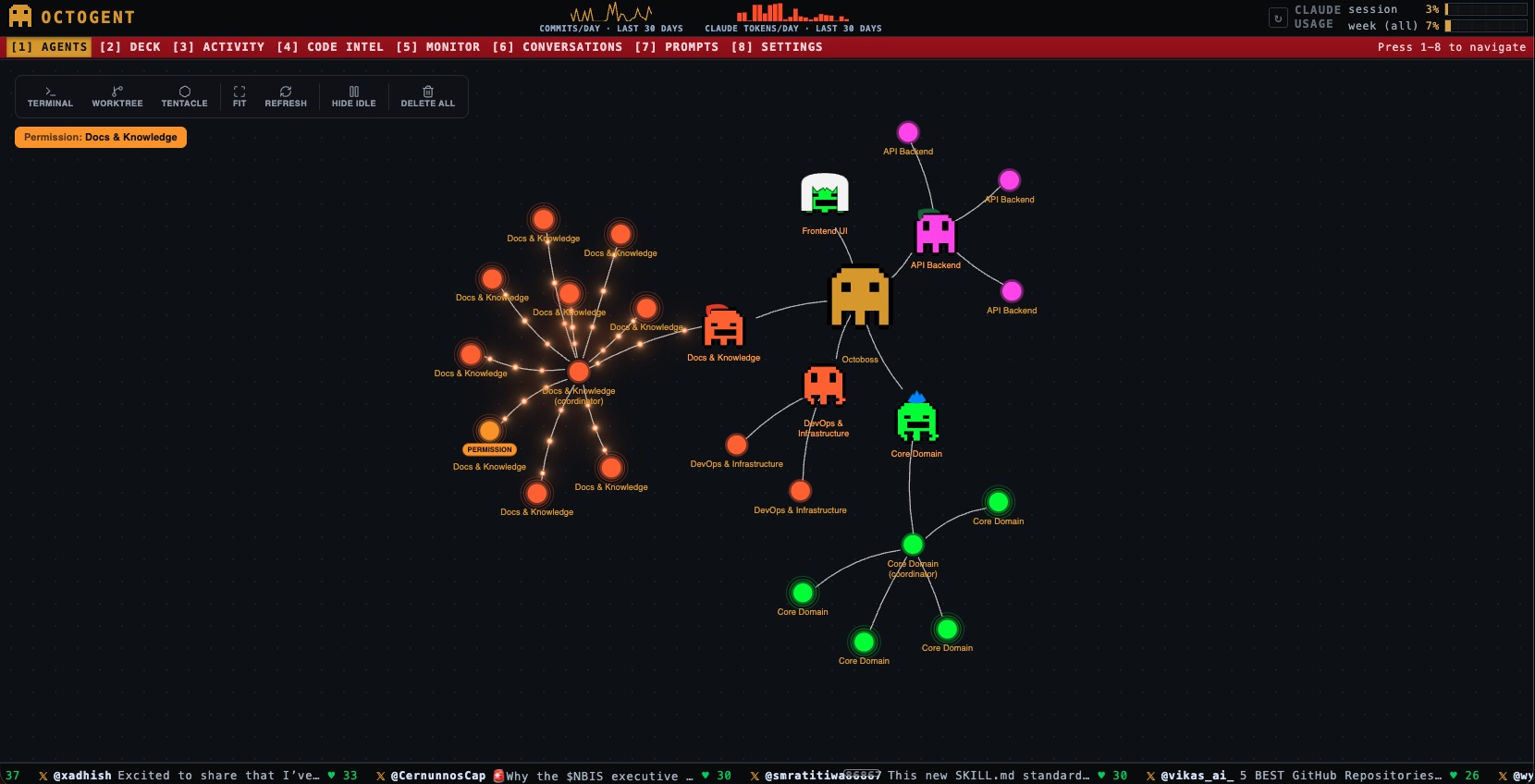
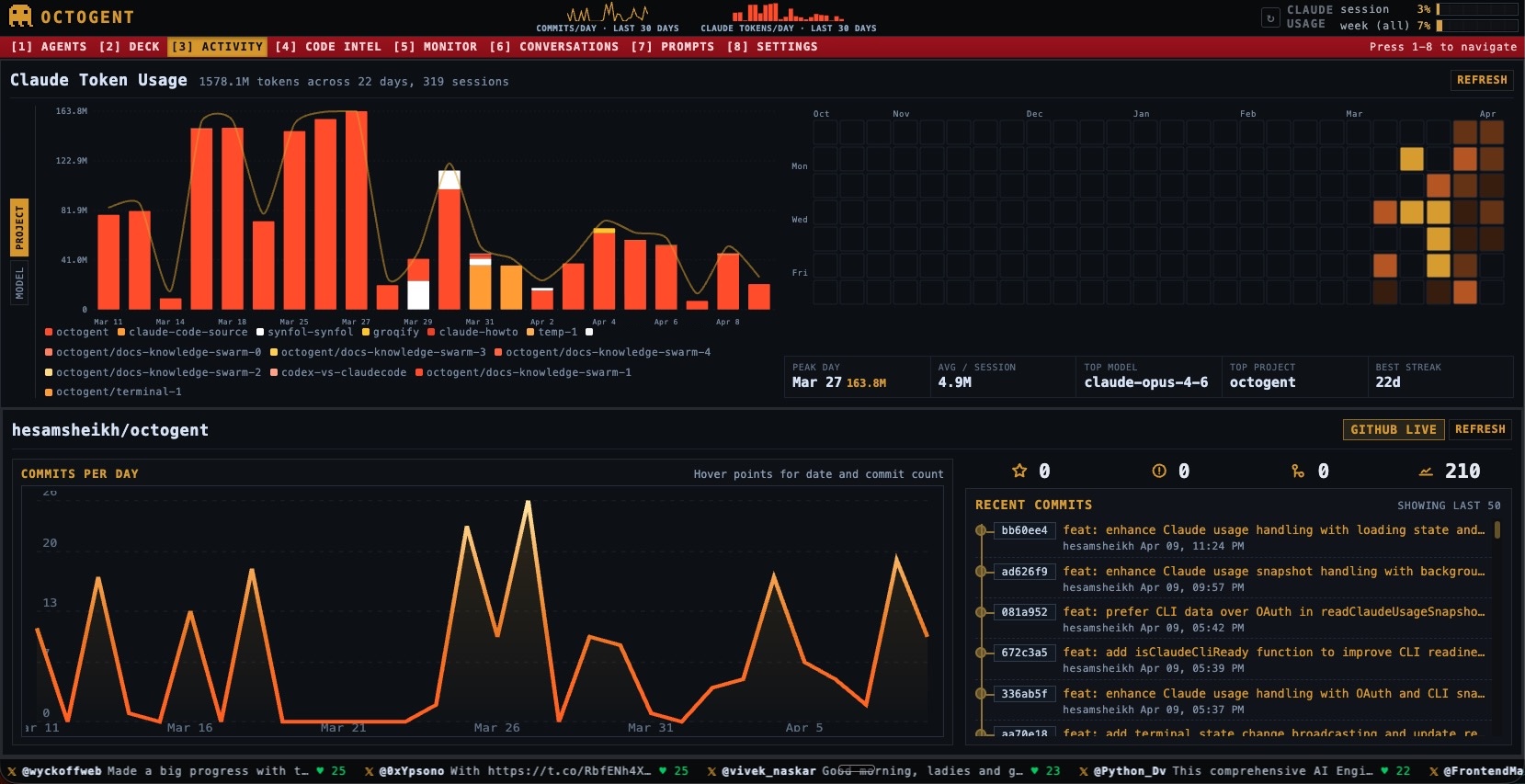
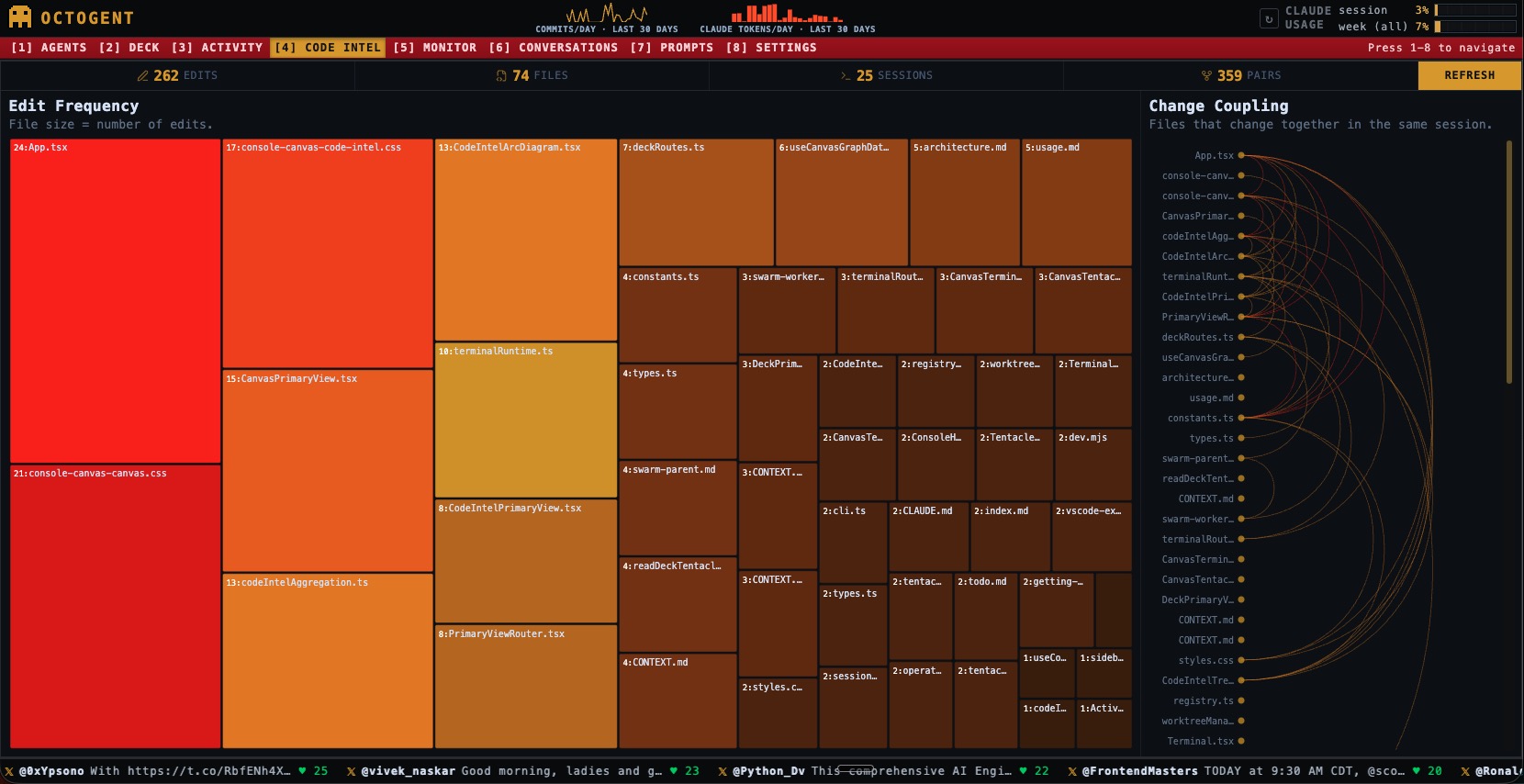
Octogent gives Claude Code a local dashboard, an API, and file-based work slices called tentacles. Each tentacle holds scoped context, notes, and a `todo.md` that the system can turn into worker prompts and tracked tasks. It also coordinates terminals, worktrees, and child agents so parallel work stays visible.
Builders who want Claude Code sessions organized around scoped tasks instead of one long chat thread.
You can coordinate several Claude Code agents at once without losing track of what each one is doing.
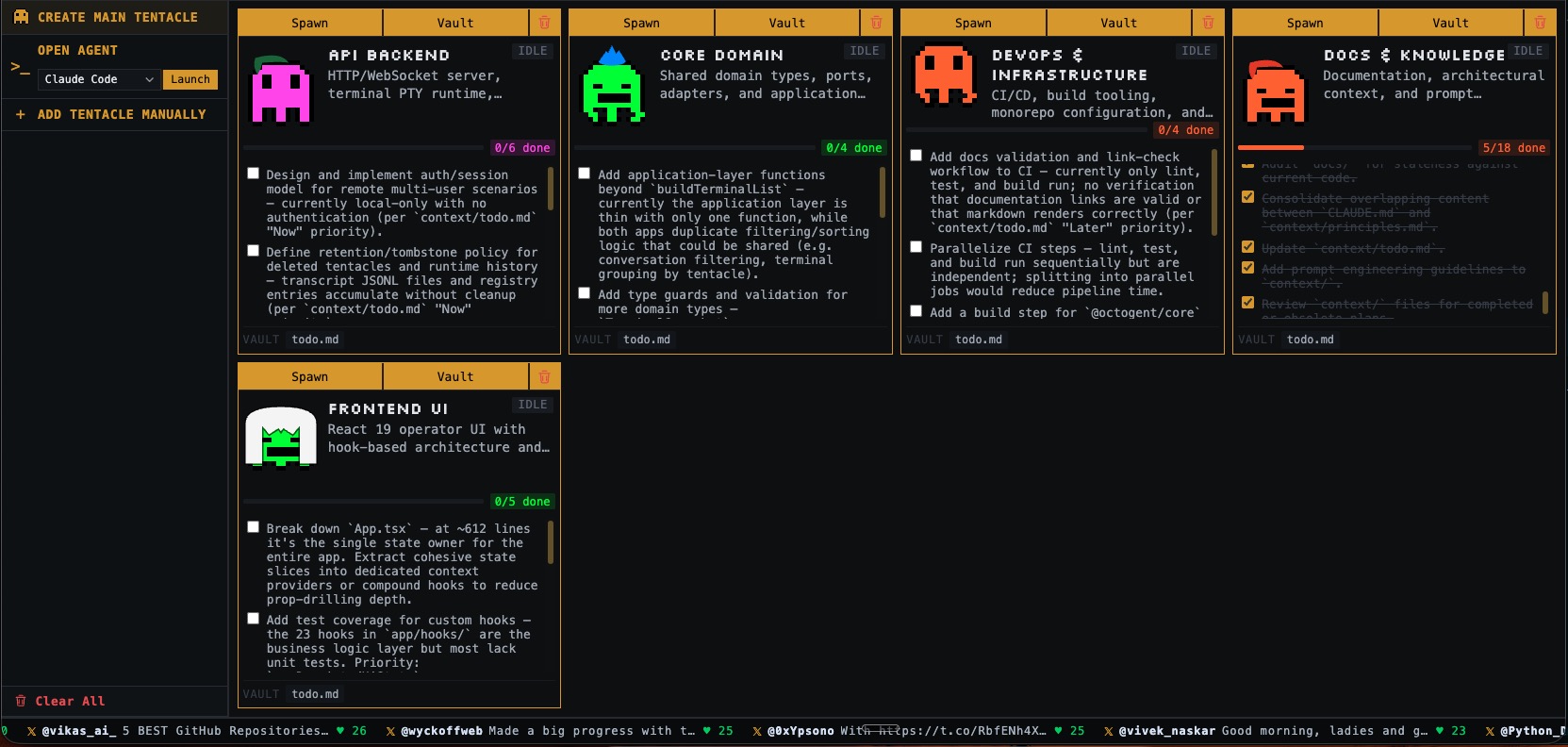
Creates `.octogent/tentacles/<tentacle-id>/` folders with agent-readable `CONTEXT.md`, `todo.md`, and notes for one job area.
Reads checkbox items from `todo.md` and uses unfinished items to generate worker prompts and delegate work.
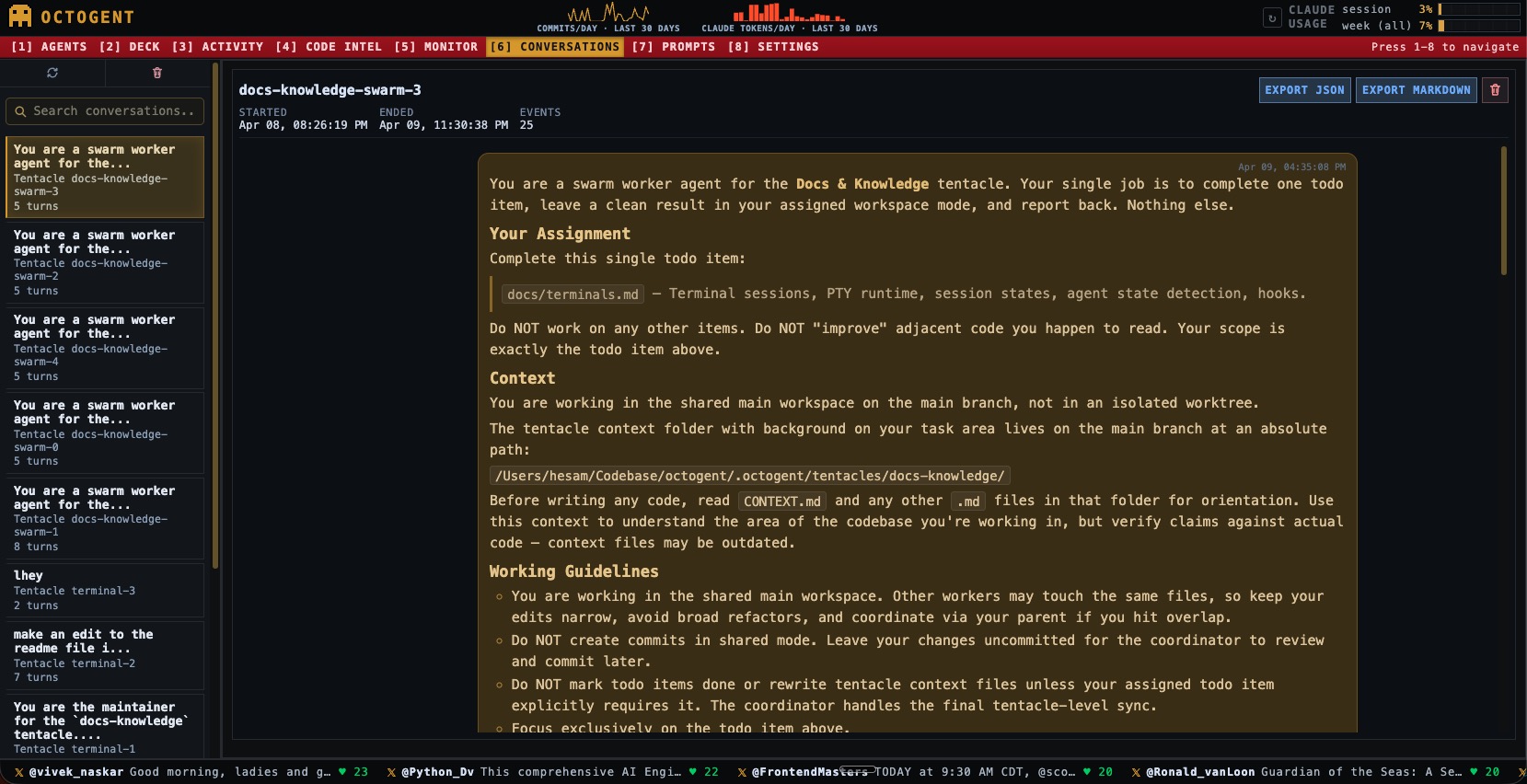
Lets one Claude Code agent spawn other Claude Code agents, assign work, and exchange short messages with them.
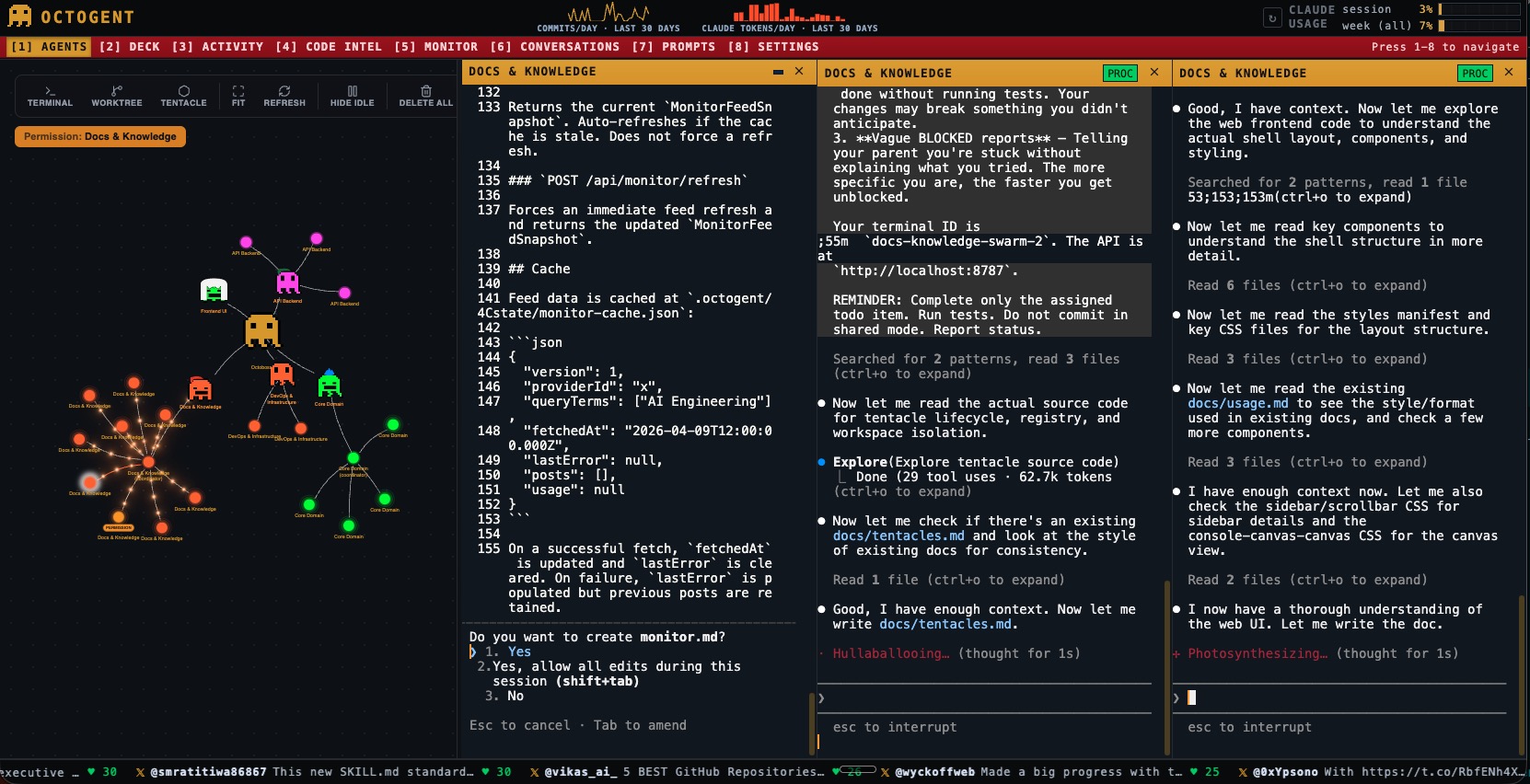
Manages multiple PTY sessions and optional worktree isolation under `.octogent/worktrees/<worktree-id>/`.
Provides a local API and web interface for terminal lifecycle, persistence, websocket transport, and orchestration state.
Uses Claude hooks to feed agent state, transcripts, and idle events into the API for richer UI tracking.
pnpm install
pnpm dev
Octogent is not published to the npm registry yet.
pnpm install
pnpm dev
pnpm install
pnpm build
npm install -g .
octogent
too many terminals, not enough tentacles




It's really not fun to have ten Claude Code sessions open at once, constantly switching between them and trying to remember what each one was supposed to do. Things get blurry fast when one agent is doing documentation, another is touching the database, another is changing the API, and another is somewhere in the frontend. Octogent tries to fix that by giving each job its own scoped context, notes, and task list, while also making it possible for Claude Code to spawn other Claude Code agents, assign them work, and communicate with them.
This repo is a personal exploration of what an AI coding environment might look like when terminal coding agents are treated as parts of a bigger orchestration layer, not the final interface by themselves. The point is not to hide Claude Code behind abstractions. The point is to make multi-agent work less chaotic for the developer on a real codebase.
 |  |
 |  |
 |  |
todo.md as an execution surface so tasks stay visible, trackable, and ready for delegationA tentacle is a folder under .octogent/tentacles/<tentacle-id>/ that holds agent-readable markdown such as CONTEXT.md, todo.md, and any extra notes needed for that slice of the codebase.
The octopus metaphor is literal: one octopus, many tentacles, different work happening at the same time.
A tentacle is a scoped job container. It gives one slice of work its own files, notes, and todo.md so the agent is not forced to reconstruct the entire codebase context from chat history.
What it does:
For the full model, see Tentacles and Working With Todos.
In Octogent, a tentacle is not only a task bucket. It is also where the job keeps its local context. That can include notes about one part of the codebase, implementation details, handoff files, and a todo.md that tracks what still needs to happen. A Claude Code agent can read and update those files as the work moves forward.
That means you can:
For the full model, see Tentacles and Working With Todos.
One of the main ideas here is that Claude Code should not only be treated as a single terminal session waiting for a human prompt. In Octogent, one Claude Code agent can coordinate other Claude Code agents, assign them specific jobs, and exchange short messages with them while the human stays at the orchestration layer.
This is different from Claude Code's subagent spawning, since it allows you to directly see and control what each worker agent is doing.
That means Octogent is not just a dashboard for multiple terminals. It is also a way to structure parent-worker behavior around scoped tasks and shared context files.
For the current model, see Orchestrating Child Agents and Inter-Agent Messaging.
Octogent separates three concerns that usually get mixed together in a pile of terminals:
.octogent/tentacles/<tentacle-id>/. CONTEXT.md explains the area, todo.md supplies executable work items, and extra markdown files hold notes or handoffs..octogent/worktrees/<worktree-id>/ on octogent/<worktree-id> branches.Deck reads the tentacle files directly, parses checkbox items from todo.md, and uses incomplete items to generate worker prompts. Claude hooks feed the API with agent state, transcript, and idle events so the UI can show more than raw terminal output.
pnpm install
pnpm dev
This starts the API and web app for local development.
Octogent is not published to the npm registry yet.
For local development:
pnpm install
pnpm dev
For a local global CLI install from a clone:
pnpm install
pnpm build
npm install -g .
octogent
The registry install flow npm install -g octogent will only work after the package is published.
On first run, Octogent creates the local .octogent/ scaffold automatically, assigns a stable project ID, picks an available local API port starting at 8787, and opens the UI unless OCTOGENT_NO_OPEN=1 is set.
22+claude installed for the supported agent workflowgit for worktree terminalsgh for GitHub pull request featurescurl for the current Claude hook callback flowStartup fails if neither claude nor another supported provider binary is installed. The current docs only cover Claude Code.
.octogent/ keeps project-local scaffold and worktrees~/.octogent/projects/<project-id>/state/ keeps runtime state, transcripts, monitor cache, and metadata.octogent/tentacles/<tentacle-id>/ keeps the context files and todos that agents readPTY sessions survive browser reloads during the idle grace period, but they do not survive an API restart. Octogent marks previously running terminal records as stale on startup when it cannot reattach them to a live PTY session; use octogent terminal list, stop, kill, and prune to inspect and clean them up. Octogent caps live PTY sessions at 32 by default to protect the host; set OCTOGENT_MAX_TERMINAL_SESSIONS to a positive integer to tune that limit for larger orchestration runs.
Octogent is not actively reviewing pull requests right now. If you still open one and any code was written with AI, disclose which coding agent and model were used. For contributor workflow and expectations, see CONTRIBUTING.md.
Sign in to join the discussion.
No comments yet. Be the first to say what this is good for.
The agent harness performance optimization system. Skills, instincts, memory, security, and research-first development for Claude Code, Codex, Opencode, Cursor and beyond.
from vibe coding to agentic engineering - practice makes claude perfect
🌊 The original agent meta-harness. Deploy intelligent multi-player swarms, coordinate autonomous workflows, and build conversational AI systems. Features adaptive memory, self-learning intelligence, RAG integration, and native Claude Code / Codex / Hermes and many more Integrated
Practical patterns, starters & CLI tools for loop engineering with AI coding agents. Design systems that prompt and orchestrate agents (inspired by Addy Osmani and Boris Cherny). Includes loop-audit, loop-init, loop-cost.

Git. Ship. Done - Core

The most RAM efficient harness