

JuliusBrussee/
caveman

🪨 why use many token when few token do trick — Claude Code skill that cuts 65% of tokens by talking like caveman
105k
1 add
Portal publishes local services through self-hosted or public relays, so you can share a localhost app without port forwarding, inbound firewall changes, or a hosted tunnel account. The tunnel process handles routing, end-to-end tenant TLS, ECH, and optional x402 payment gates.
Builders who want their local services, tools, or agents reachable through Portal while they work in Claude Code, Codex, or Cursor.
You can expose a local app or API on a public URL and keep control over routing, trust, and payment rules.
You can run your own relay with `docker compose up` and avoid depending on a vendor operator.
`portal expose 3000` publishes a localhost service and prints a public HTTPS URL.
You can map multiple local services under one public name with `--http-route`.
The tunnel can require payment before proxying a route, using `--x402-pay-to` and route payment rules.
The repo includes installable assets for Codex, Claude Code, and Cursor, plus a shared `portal-expose` skill.
`portal agent run`, `dashboard`, `restart`, and `stop` manage long-running tunnels from a TOML config.
# GitHub CLI
gh skill install gosuda/portal-tunnel portal-deploy/portal-expose

# skills CLI
npx skills add gosuda/portal-tunnel --skill portal-expose
curl -fsSL https://github.com/gosuda/portal-tunnel/releases/latest/download/install.sh | bash
portal expose 3000
$ProgressPreference = 'SilentlyContinue'
irm https://github.com/gosuda/portal-tunnel/releases/latest/download/install.ps1 | iex
portal expose 3000
portal agent run --config config.toml
portal agent dashboard --config config.toml
portal agent restart --config config.toml
portal agent stop --config config.toml

# Foreground mode skips OS service installation.
portal agent run --config config.toml --foreground
git clone https://github.com/gosuda/portal-tunnel
cd portal-tunnel && cp .env.example .env
docker compose up
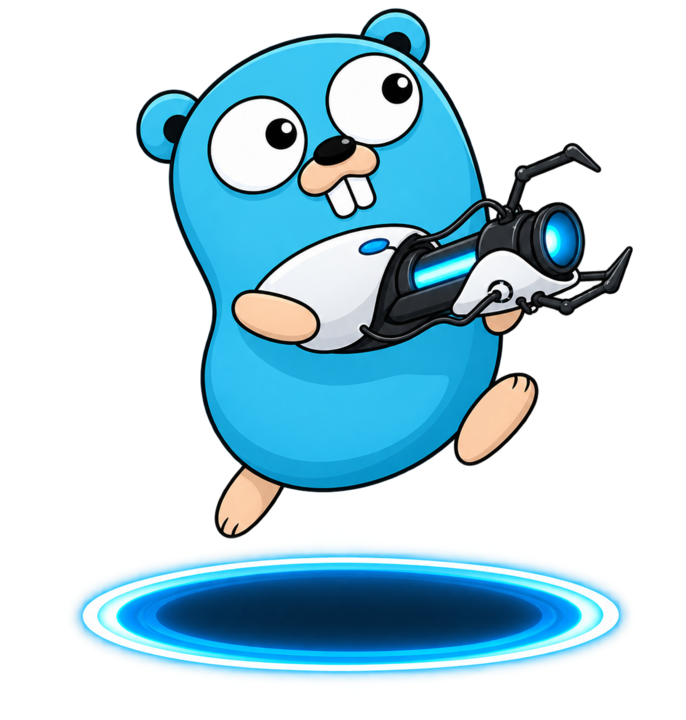


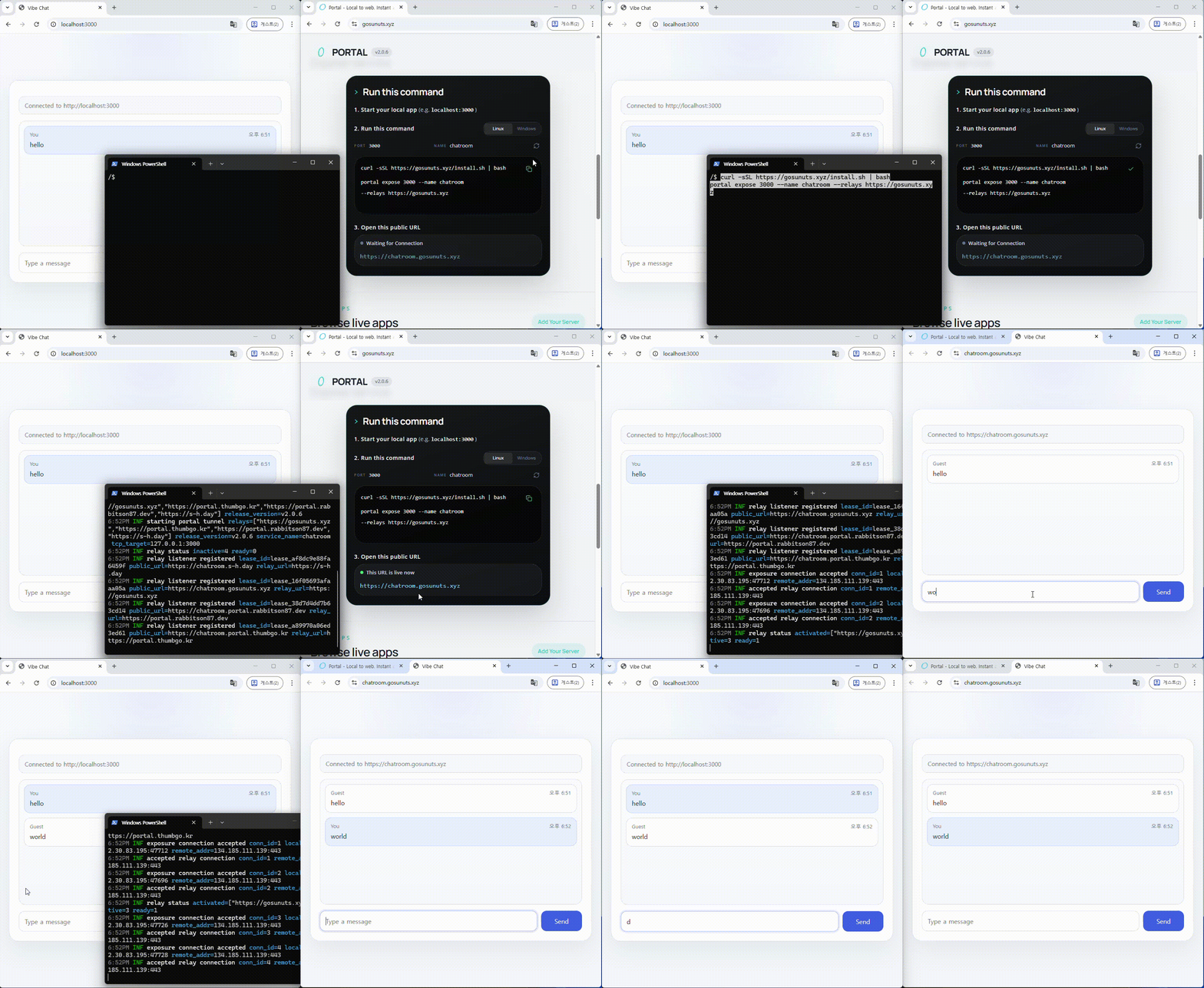
Expose local services through self-hosted or public relays.
No port forwarding. No inbound firewall rules. No manual DNS setup. No accounts.
Portal is a local tunnel runtime and relay network for publishing services to the agentic web. It publishes local apps, APIs, tools, and agents through self-hosted or public relays, keeps routing and x402 payment policy in the tunnel process, and avoids requiring a hosted vendor account.
Self-Hostable, Fully Open Source - Run your own relay with a single command. The relay is MIT-licensed with no enterprise tier, no feature gating, and no call-home. Your relay, your rules.
Anonymous Relay Network - Connect to public relays without a hosted account or central operator. Combine self-hosted relays with public relays in a pool to split trust across independent operators you choose.
End-to-End Tenant TLS And ECH - Because relays are trustless, Portal terminates tenant TLS at the user's endpoint instead of the relay. Portal also provides ECH to avoid exposing the real hostname in plaintext SNI.
Built-in MITM Detection - Portal actively self-probes its own connection after real traffic begins. It compares TLS keying material exported on both sides and treats a mismatch as suspected relay-side TLS termination.
No Accounts, No API Keys - Authentication uses SIWE-compatible signing with a locally generated secp256k1 key pair. No email, no registration, no vendor lock-in.
Built-in x402 Payments - Routed HTTP paths can require Sui gasless
USDC or Casper wCSPR x402 payment before proxying. Browser apps can import
/x402/client.js, and native clients can call /x402/prepare directly and
send X-PAYMENT.
| Portal | ngrok | Cloudflare Tunnel | frp | |
|---|---|---|---|---|
| Public localhost URL | Yes | Yes | Yes | Yes |
| Self-hostable | Yes | Enterprise only | No | Yes |
| Open source | MIT | No | Client only | Apache 2.0 |
| Custom domain | Yes | Paid plans | Yes | Yes |
| End-to-end tenant TLS | Yes | No | No | No |
| SNI hiding (ECH) | Yes | No | No | No |
| MITM self-probe | Built-in | No | No | No |
| Multi-relay failover | Yes | Managed | Built-in | No |
| Account required | No | Yes | Yes | No |
| Native x402 payments | Yes | No | No | No |
The repository includes a portal-deploy plugin for Codex, Claude Code, and Cursor. The shared portal-expose skill inspects a local app, opens a Portal tunnel, configures explicitly requested x402 paid routes, verifies the public URL and payment challenge, and hands off the lifecycle.
Install the skill with either CLI:
# GitHub CLI
gh skill install gosuda/portal-tunnel portal-deploy/portal-expose

# skills CLI
npx skills add gosuda/portal-tunnel --skill portal-expose
Then ask your agent:
GET /paid with x402, and verify the payment challenge.”Host-specific Codex, Claude Code, and Cursor marketplace setup is in plugins/portal-deploy/README.md.
macOS / Linux:
curl -fsSL https://github.com/gosuda/portal-tunnel/releases/latest/download/install.sh | bash
portal expose 3000
Windows (PowerShell):
$ProgressPreference = 'SilentlyContinue'
irm https://github.com/gosuda/portal-tunnel/releases/latest/download/install.ps1 | iex
portal expose 3000
Portal prints a public HTTPS URL for your local app instantly. More examples:
# Custom name and relay
portal expose 3000 --name myapp --relays https://portal.example.com --discovery=false

# Prefer IVNP overlay transport when available
portal expose 3000 --overlay

# Mount frontend and API behind one URL
portal expose --name myapp \
  --http-route /api=http://127.0.0.1:3001 \
  --http-route /=http://127.0.0.1:5173

# Require Sui USDC x402 payment before proxying a route
portal expose --name paid-app \
  --http-route "/paid=http://127.0.0.1:3001 GET:0.01" \
  --http-route /=http://127.0.0.1:5173 \
  --x402-pay-to 0x...

# Raw TCP port (Minecraft, databases, SSH)
portal expose localhost:25565 --name minecraft --tcp
See CLI Reference for the full route syntax and API Reference for the x402 helper endpoints.
Use Portal Agent directly when tunnels should keep running outside your terminal. It runs as a local OS service, keeps every tunnel in one TOML config alive, and provides a dashboard for public relay management.
portal agent run --config config.toml
portal agent dashboard --config config.toml
portal agent restart --config config.toml
portal agent stop --config config.toml

# Foreground mode skips OS service installation.
portal agent run --config config.toml --foreground
See Portal Agent for the config format.
git clone https://github.com/gosuda/portal-tunnel
cd portal-tunnel && cp .env.example .env
docker compose up
For public deployment with DNS automation (ACME), TCP/UDP port ranges, and relay policy, see Deployment.
Browser
  -> Relay SNI router  (reads only routing token, forwards raw bytes)
  -> Reverse session
  -> Portal tunnel     (performs TLS handshake locally, derives session keys)
  -> Local service
/v1/sign, using the relay only as a keyless signing oracle. The relay signs
handshake digests but never receives session keys.When ECH is enabled, the relay also cannot see the actual tenant hostname. It routes by an opaque token derived from the tunnel identity, while the real SNI stays inside the ECH-protected ClientHello.
Portal's official public relay registry is:
https://raw.githubusercontent.com/gosuda/portal-tunnel/main/registry.json
Tunnel clients include this registry by default. If you operate a public Portal
relay, open a pull request to add your relay URL to registry.json.
See CONTRIBUTING.md.
MIT License - see LICENSE.
Sign in to join the discussion.
No comments yet. Be the first to say what this is good for.
🪨 why use many token when few token do trick — Claude Code skill that cuts 65% of tokens by talking like caveman

The best-benchmarked open-source AI memory system. And it's free.

Orca is the ADE for working with a fleet of parallel agents. Run any coding agent with your own subscription. Available on desktop, mobile and remote runtime.
A cross-platform desktop All-in-One assistant for Claude Code, Codex, OpenCode, OpenClaw, Grok Build & Hermes Agent. Only official website: ccswitch.io

Never stop coding. Free MIT AI gateway: one endpoint, 352 providers (150+ free), 1200+ models Kimi, Claude, GPT, Gemini, GLM, DeepSeek, MiniMax. Works with Claude Code, Codex, Cursor, OpenCode, Cline & Copilot. Quota-aware auto-fallback, RTK+Caveman compression saves 15-95% tokens, MCP/A2A, Desktop/PWA. Built by 550+ contributors

Compress tool outputs, logs, files, and RAG chunks before they reach the LLM. 20% fewer tokens for coding agents, 60-95% fewer tokens for JSON, same answers. Library, proxy, MCP server.