
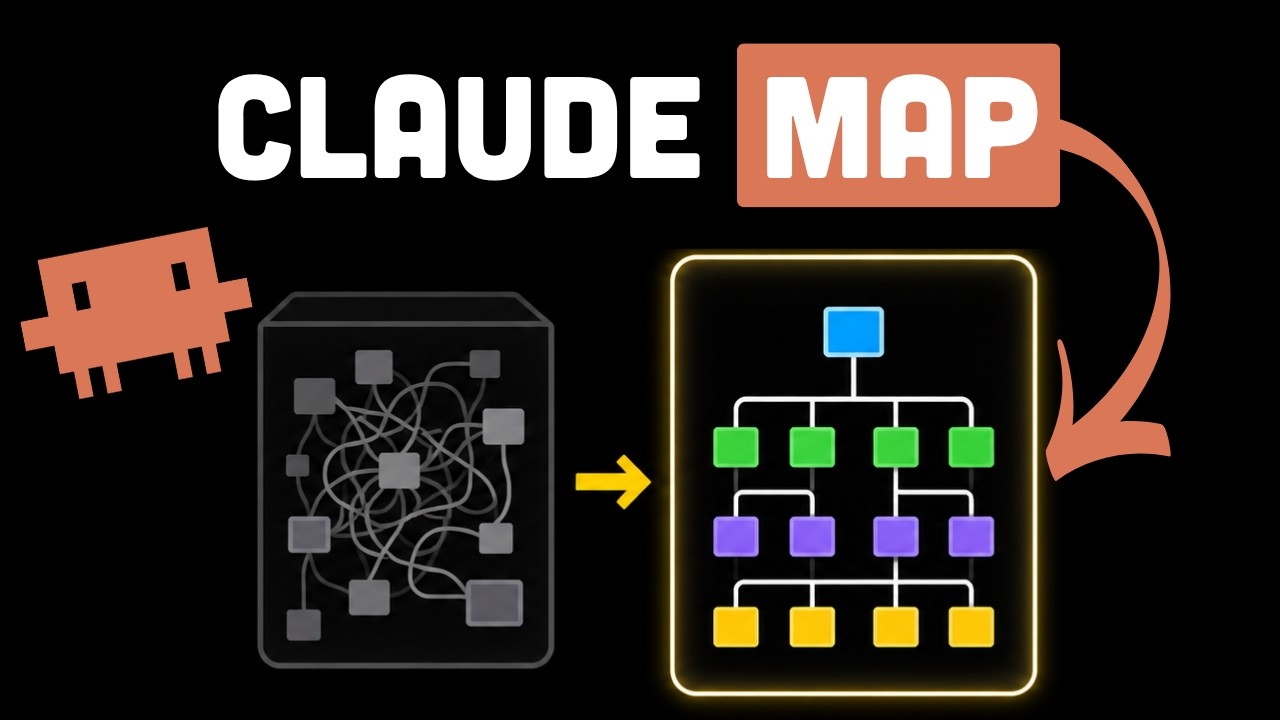
Graphs that teach > graphs that impress. Turn any code into an interactive knowledge graph you can explore, search, and ask questions about. Works with Claude Code, Codex, Cursor, Copilot, Gemini CLI, and more.
82k
HyperGrok packages a seven-agent trading desk for Grok Bot and related editors. The desk uses separate roles for market research, strategy, risk, execution, and review, with skills and rules that keep each step explicit. It also ships checks, scripts, and a public template so you can install the desk, run the opening market snapshot, and follow the same approval and execution flow each time.
Builders who want Grok Bot, Claude Code, or Cursor to operate a structured Hyperliquid trading desk.
You can move from trade idea to approved order, execution, and review with a repeatable agent workflow.
Defines Desk Lead, Market Analyst, Research Analyst, Strategist, Risk Manager, Execution Trader, and Trade Reviewer as separate agents.
Ships `SKILL.md` files for bootstrap, Hyperliquid setup, market data, orders, positions, WebSocket feeds, risk limits, monitoring, and review.
The Execution Trader sends only the ticket you approved and reconciles it by exchange response and client order id.
`scripts/opening_bell.py` reads public Hyperliquid market data and prints a live snapshot without needing wallet access.
`scripts/desk_doctor.py` verifies the release, team files, reviewed skill bytes, desk folders, and public connectivity.
Includes manifests for Grok, Claude, and Cursor, plus a public template and version-pinned skill pointers.
python3 scripts/opening_bell.py --coin ETH
idea -> evidence -> risk sign-off -> your approval -> one send -> reconciliation -> review
TICKET HG-20260816-01 | mainnet
market ETH-PERP  side buy  size 0.4827 ETH (~$1,448)
entry limit 3,000 Gtc     stop sell 0.4827 @ 2,900 market (sent with the entry)
risk $51.00 = 0.5% of equity $10,200 (clearinghouseState 14:11 UTC)  R = 100
sized on a stressed stop: 100 + 3.00 slippage + 2.65 fees = 105.65 per ETH
approve with: "approve HG-20260816-01"
/plugin marketplace add galleonlabs/hypergrok-trading-desk
/plugin install hypergrok@hypergrok
npm exec --package=skills@1.5.23 -- skills add galleonlabs/hypergrok-trading-desk

Turn your Grok Bot into a 7-agent Hyperliquid trading desk.
Add the public Desk Lead to Grok Bot. It opens with a live, zero-key Hyperliquid market snapshot, builds research, risk, execution and review as separate agents, then proves the floor is ready. They brief you on markets, size your trades, send what you approve and tell you honestly how it went. You bring the ideas. Let them cook.

Click Add to Grok Bot, then send HyperGrok Desk Lead one message:
Start the desk.
That is the supported one-click, one-message install. The public template carries all seventeen reviewed skills as version-pinned pointers, with no memories, routines or plugins.
If the public template is unavailable, open Grok Bot and paste this to any Bot:
Set up the HyperGrok trading desk from https://github.com/galleonlabs/hypergrok-trading-desk/blob/v1.4.3/skills/hypergrok-bootstrap/SKILL.md. Follow the bootstrap skill, use https://github.com/galleonlabs/hypergrok-trading-desk/blob/v1.4.3/SETUP.md for the complete runbook, and finish with its evidence receipt.
The desk starts in research mode. The first demo uses only Hyperliquid's public /info endpoint: no wallet, account read or order. Add a testnet API wallet when you want to practise with play money, and a mainnet one when you are ready.
The first thing the Desk Lead shows is useful, live output—not a configuration form:
python3 scripts/opening_bell.py --coin ETH
It reports source and UTC time, mid/mark/oracle, 24-hour change and volume, hourly funding, open interest, spread and depth at 5/10/25 bps. Twenty book levels stop a few bps from the mid on a liquid perp, so it re-reads the book at a coarser nSigFigs page until each band is measured, names the page every figure came from, and still marks a band no page reaches as a floor rather than a total. scripts/desk_doctor.py then checks the release, team files, the reviewed skill bytes, desk folders and public connectivity. Both are read-only and standard-library Python.
| Bot | What they do for you |
|---|---|
| Desk Lead | Your main contact. Runs the floor, keeps every trade moving through the same clean process. |
| Market Analyst | Live Hyperliquid data on demand: price, depth, funding, open interest, candles. Timestamped and sourced. |
| Research Analyst | What is happening and what is scheduled: fundamentals, news, catalysts, onchain and social context. |
| Strategist | Turns your idea into explicit rules, backtests it honestly on Hyperliquid history, paper-trades it on testnet. |
| Risk Manager | Keeps your written limits, sizes every trade from your live account, watches the book, and can say no. |
| Execution Trader | The one Bot with the keys. Sends the ticket you approved, once, and reconciles it from the exchange record. |
| Trade Reviewer | Keeps the desk journal and grades every trade on process and outcome, separately. |
Six sit together on the Trading Floor group chat; the Trade Reviewer works by DM. Every trade follows the same path:
idea -> evidence -> risk sign-off -> your approval -> one send -> reconciliation -> review
"Brief me on ETH." The Market Analyst pulls mid, mark, funding, open interest, 24h volume and depth at 5/10/25 bps from the exchange, and posts a brief with sources and UTC times.
"I want to long ETH at 3,000 with a stop at 2,900." The Desk Lead opens HG-20260816-01, the Risk Manager reads your account live and comes back with a ticket:
TICKET HG-20260816-01 | mainnet
market ETH-PERP  side buy  size 0.4827 ETH (~$1,448)
entry limit 3,000 Gtc     stop sell 0.4827 @ 2,900 market (sent with the entry)
risk $51.00 = 0.5% of equity $10,200 (clearinghouseState 14:11 UTC)  R = 100
sized on a stressed stop: 100 + 3.00 slippage + 2.65 fees = 105.65 per ETH
approve with: "approve HG-20260816-01"
You type approve HG-20260816-01. The Execution Trader sends entry and stop in one grouped order, reads the exchange response, confirms it on the book, and reports the order ids. When it closes, the Trade Reviewer tells you what it cost, whether the process was clean, and one thing worth keeping.
"Can we test whether funding extremes mean-revert?" The Strategist writes the rules with you, pulls a year of candles and funding, runs a backtest with fees and an out-of-sample split, and reports the trade distribution, not a headline number. Like it? Paper-trade it on testnet through the same desk.
"Watch ETH and tell me if funding flips negative." A routine on the desk computer watches the WebSocket feed and pings you when it happens.
Seventeen skills, in the portable SKILL.md format, shared by all your Bots.
Bootstrap - pinned release install, Opening Bell, team construction, desk doctor and a receipt that distinguishes what happened from what still needs a manual step.
Hyperliquid - setup and API wallets, market data, account state, orders (limit, IOC, take-profit and stop-loss with grouping, client order ids), positions and margin, WebSocket feeds, advanced actions (dead-man's switch, TWAP, spot), and a compact API reference. Copy-pasteable curl for reads; the official Python SDK and @nktkas/hyperliquid for anything that signs.
Desk - how the team works: operating model, the trade lifecycle and ticket, risk limits and sizing arithmetic, the execution protocol, monitoring and routines, post-trade review, incident playbooks, and the strategy lab.
Perpetual futures can liquidate an account. HyperGrok is documentation and instructions, not financial advice.
The same agents/, skills/ and rules/ load as a plugin: seventeen skills, and the seven roles as subagents.
In Claude Code, install it from this repository:
/plugin marketplace add galleonlabs/hypergrok-trading-desk
/plugin install hypergrok@hypergrok
In Grok Build and Cursor, open the repository and enable the plugin.
The same pack installs as a skill:
npm exec --package=skills@1.5.23 -- skills add galleonlabs/hypergrok-trading-desk
Live listings: skills.sh · cursor.directory · botdirectory.ai
Either way, run /desk-operating-model to begin.
SETUP.md     what your Grok Bot follows to build the desk
agents/      seven roles: Bot profile card + full system prompt
skills/      seventeen skills (bootstrap, hyperliquid-*, desk-*)
template/    exact public Grok Bot profile and skill hashes
scripts/     zero-key Opening Bell, desk doctor and release checks
docs/        how it works, FAQ, provenance
assets/      the mascot - use it as your Bots' avatar
| Doc | |
|---|---|
| How the desk works | roles, files, trust boundaries |
| FAQ | keys, approvals, testnet, customising the team |
| Skills index | every skill and who uses it |
| Grok Bot template | public profile, publish contract and clean-install evaluation |
| Provenance | sources and licences |
| Contributing · Security · Changelog |

Supported by the pump.fun community
MIT licensed, with the copyright and permission notice retained when reusing copies or substantial portions. Created by Andrew Wilkinson and Galleon Labs.
See reuse and attribution for a ready-to-copy credit line. If HyperGrok Trading Desk helps your work, a star on the original repository is appreciated and entirely optional.
Sign in to join the discussion.
No comments yet. Be the first to say what this is good for.
Graphs that teach > graphs that impress. Turn any code into an interactive knowledge graph you can explore, search, and ask questions about. Works with Claude Code, Codex, Cursor, Copilot, Gemini CLI, and more.

An agent organization for Claude Code, structured as a company — 15+ departments, 125+ skills, each independently installable.
Context window optimization for AI coding agents. Sandboxes tool output (98% reduction), persists session memory, and enforces routing across 17 platforms via MCP + hooks.
Persistent file-based planning for AI coding agents and long-running tasks. Crash-proof markdown plans, session recovery after /clear and compaction, per-turn re-injection against context rot, deterministic completion gate. Manus-style. Install from npm, the Claude Code plugin marketplace, or npx skills. Codex, Cursor, OpenCode, 60+ agents.
Self-organizing AI second brain for Obsidian + Claude Code. Drop any source and Claude reads, links, and files it into one connected knowledge graph of plain Markdown you own. AI note-taking, personal knowledge management (PKM), and an open-source Notion alternative. Based on Karpathy's LLM Wiki pattern.
Universal SEO skill for Claude Code. 25 sub-skills + 18 sub-agents covering technical SEO, E-E-A-T, schema, GEO/AEO, backlinks, local SEO, maps intelligence, semantic clustering, e-commerce SEO, international SEO, Google APIs, and PDF/Excel reporting. Optional DataForSEO, Firecrawl, and Banana extensions.