
JuliusBrussee/
caveman

🪨 why use many token when few token do trick — Claude Code skill that cuts 65% of tokens by talking like caveman
105k
1 add
zoetrope turns Claude Code and Codex transcripts into a live flow graph in your terminal or browser. It shows the main agent, subagents, and tool calls, and it can either replay a saved session or follow a running one as new lines arrive.
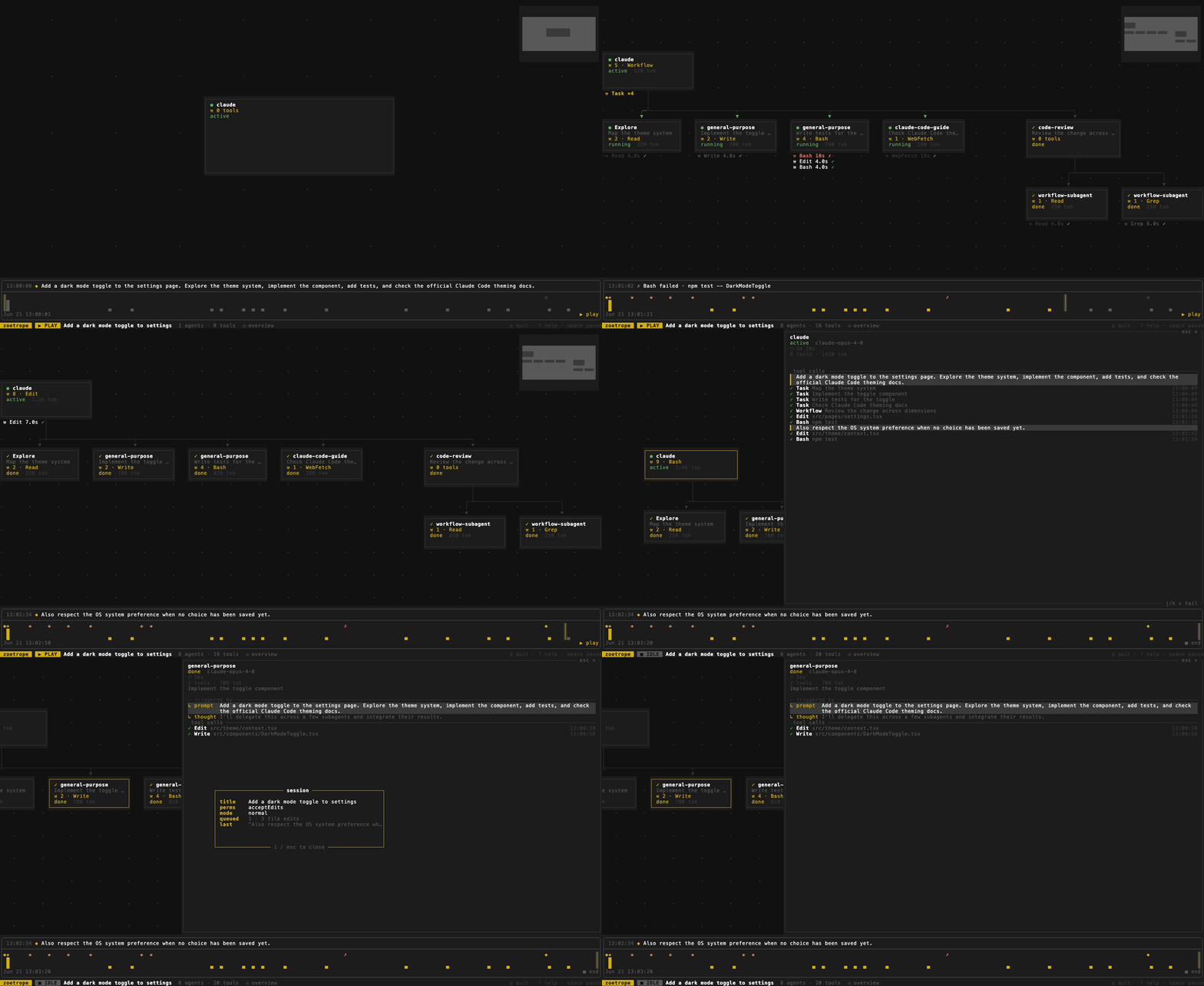
Builders who use Claude Code or Codex and want a visual read on what their agent is doing.
You can watch an agent session unfold as a graph, then replay or inspect it without rereading raw logs.
Draws the main agent, spawned subagents, and tool activity as nodes and edges that update while the session runs.
Replays a finished transcript at session pace, or follows a live session as new events are written.
Shows the prompt that spawned an agent, its model, reasoning context, and every tool call with timings.
Runs the same core in the browser via WebAssembly so you can drop in a transcript without installing anything.
Opens the exact session for a Herdr pane and can attach the graph over the agent pane with a hotkey.
brew install furkankly/tap/zoetrope
cargo install zoetrope
git clone https://github.com/furkankly/zoetrope
cd zoetrope
cargo build --release
./target/release/zoe

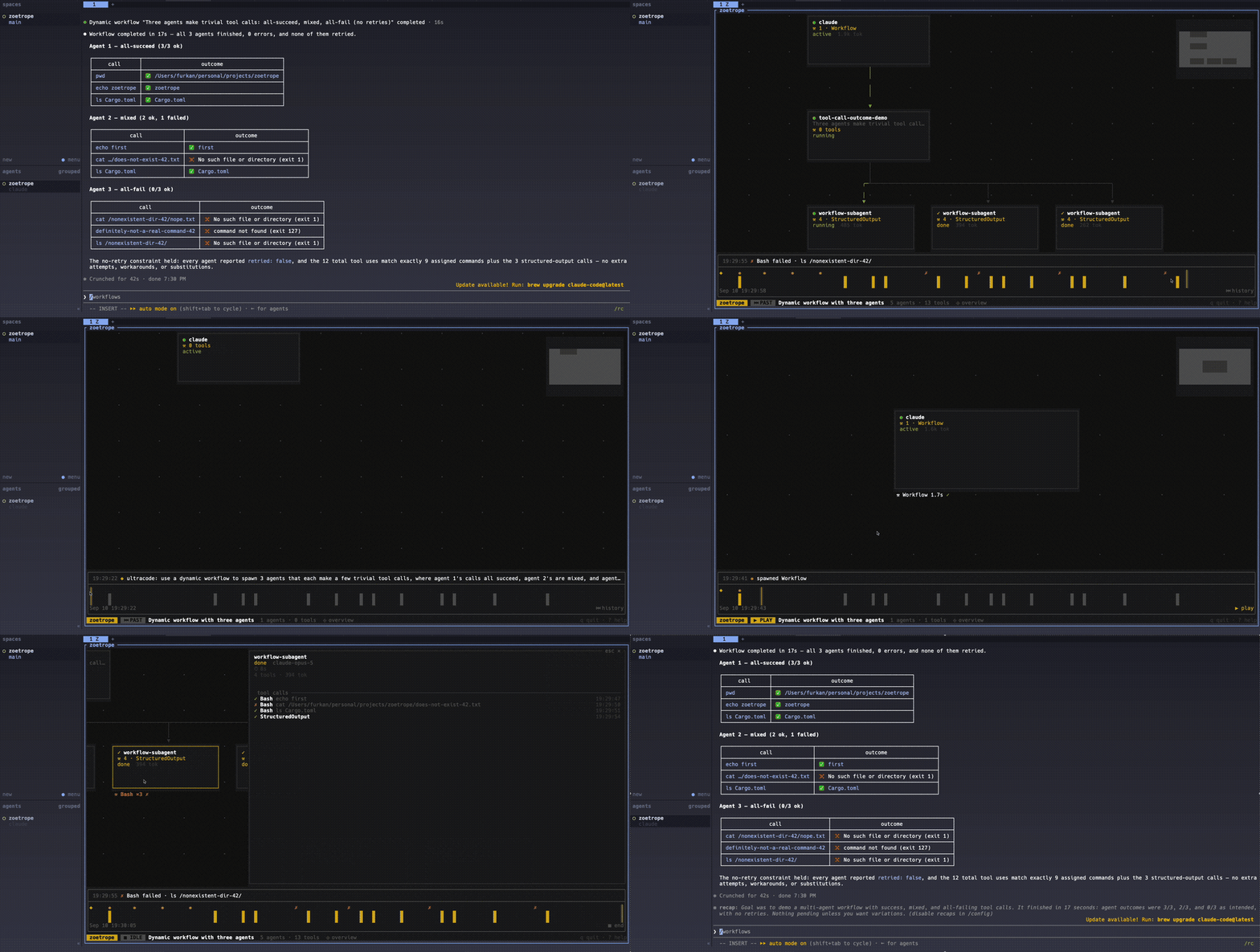
Watch a Claude Code or Codex session as a live flow graph, in your terminal or your browser.


zoetrope.furkankly.dev · the whole app in your browser, the same binary compiled to WASM
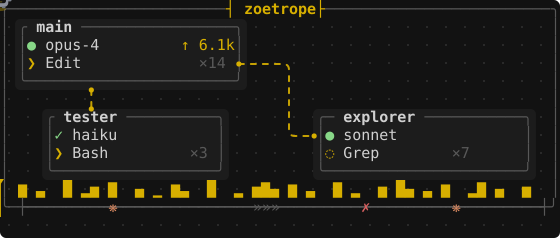
Claude Code and Codex write a transcript for every session. zoetrope reads it and draws the session as a graph in your terminal: the main agent, the agents it spawns, and the tools each one runs, updating live as it goes. Point it at a finished run and it replays, paced by the session's own timestamps. Point it at a running one and it follows along. It's read-only, and nothing leaves your machine.
Built on ratatui and rataflow.
| Agent | Sessions live in | Replay | Follow live | Browser |
|---|---|---|---|---|
| Claude Code | ~/.claude/projects/ | ✓ | ✓ | ✓ sessions and subagents |
| Codex CLI and desktop app | ~/.codex/sessions/ | ✓ | ✓ | ✓ sessions and subagents |
zoetrope reads a session from any of its files and tells the formats apart by
content, so zoe <file> works for either, and zoe <id> finds a session by id
across both.

Homebrew — macOS and Linux:
brew install furkankly/tap/zoetrope
Cargo — needs a Rust toolchain:
cargo install zoetrope
Prebuilt binaries — no toolchain needed. Every
release carries archives for
macOS (Apple Silicon and Intel), Linux (musl, arm64 and x86_64) and Windows
(x86_64). Unpack one and put zoe on your PATH.
Whichever route you take, the command is zoe. Or build from source:
git clone https://github.com/furkankly/zoetrope
cd zoetrope
cargo build --release
./target/release/zoe
No install at all: try it in your browser. Drop a transcript on the page and get the same graph.
Herdr is a terminal multiplexer built for running coding
agents side by side. It knows which agent occupies a pane and the id of the
session running there, so the plugin in
herdr-plugin/
opens that exact session in zoe, without you naming a file or an id.
herdr integration install claude          # and/or codex, so Herdr learns session ids
herdr plugin install furkankly/zoetrope/herdr-plugin
herdr plugin action invoke setup-keys --plugin furkankly.zoetrope
Focus an agent pane and press prefix+shift+z. The graph opens over the pane,
follows the session live, and the same key closes it. There are placements for
a split and a tab as well, and the plugin's
README
covers both.
zoe                          # follow the current project's live session
zoe <dir>                    # follow another project's session
zoe <file.jsonl>             # replay a recording from the start (any file of a session)
zoe <id>                     # replay a session by id, or a unique prefix of one
zoe <file.jsonl> --follow    # open a recording at its live edge
zoe <file.jsonl> --speed N   # playback speed (default 8.0)
zoe --provider codex ...     # force the format instead of detecting it from the file
zoe inspect <file|id>        # print the session tree and exit (no TUI)
Give it a file and it reads the whole transcript, then keeps watching for new lines. Give it a directory, or no argument at all, and it finds the newest session in that project and follows it live. Whichever way you start, the controls are the same: scrub, follow, pause, jump back to live.
The same engine also runs in the browser, compiled to WebAssembly via ratzilla. Open a session from disk, or drop a transcript on the page. It stays local there too.
The graph
⚒ bash ×5, or ⚒ bash 0.5s
ticking during a single call), resolving to ✓ or ✗Time travel
Inspection
zoe inspect prints the whole tree headlessly, so it runs anywhere without a TTYReading your sessions
space play/pause · [ ] prev/next prompt · End or g jump to live · drag the
bar to seek · ? for everything else.
| Key | Action |
|---|---|
space | play / pause (resumes from the playhead) |
[ / ] | previous / next prompt era |
End / g | jump to the live edge |
s | toggle gap compression (faithful pacing vs. skip idle stretches) |
| mouse drag | seek along the scrubber |
o / f | camera: Overview / Follow |
r | relayout (tidy the graph) |
arrows / Tab / Shift-Tab | move between agents |
h j k l | pan the graph |
+ / - / 0 | zoom in / out / reset |
c | center on the selected agent |
| click | open an agent's detail panel |
j / k / PgUp / PgDn | scroll the detail panel |
i | session info overlay |
? | help overlay |
esc | close an overlay / clear the selection |
q / ctrl-c | quit |
j / k scroll the detail panel when an agent is selected, otherwise they pan the graph.
Hand the camera to the action with f and it glides to whichever agent just did
something. This is what watching a live run looks like:
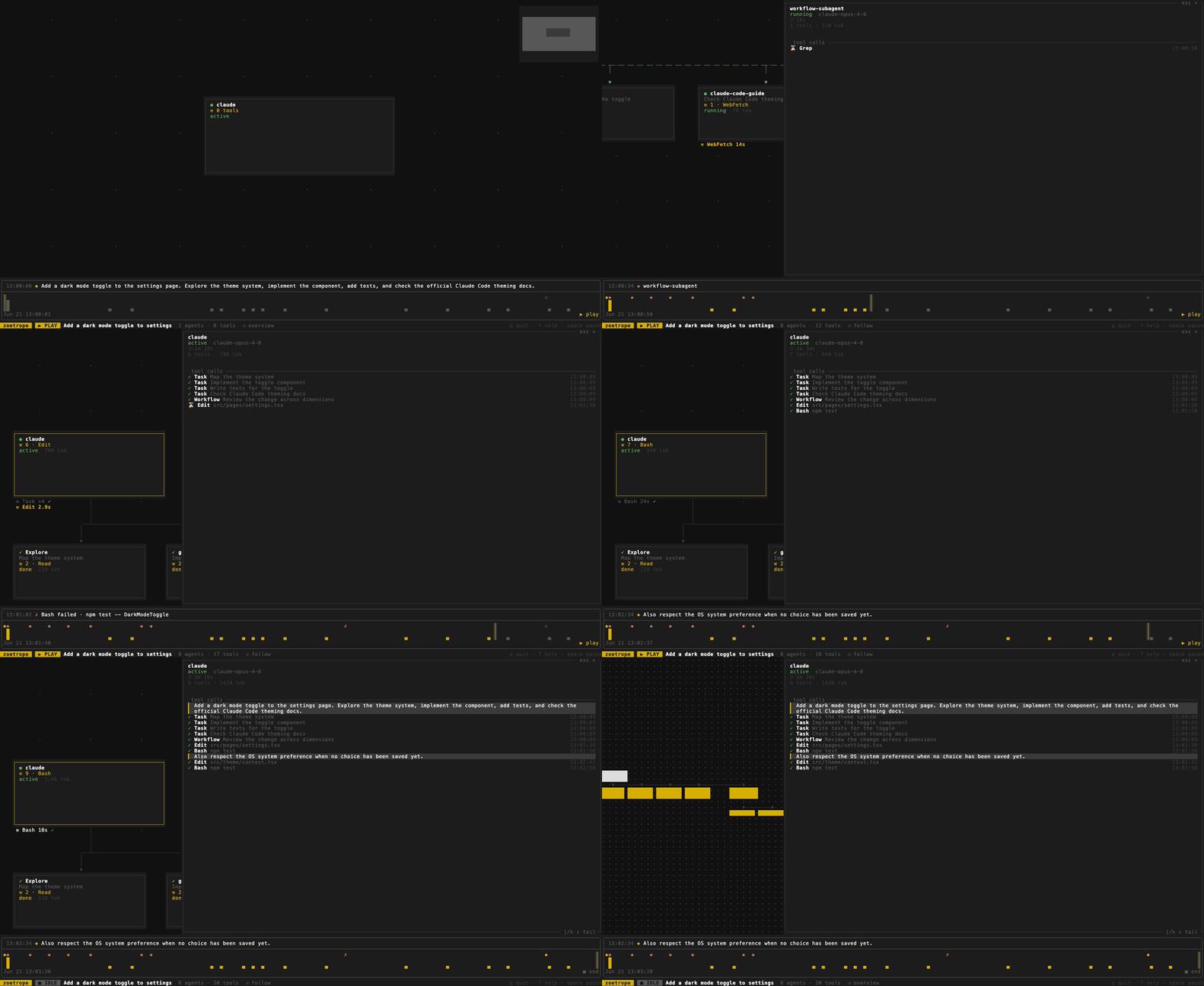
Or drive it yourself: pan, zoom where you point, open an agent's panel, and drag the scrubber to travel back through the session.
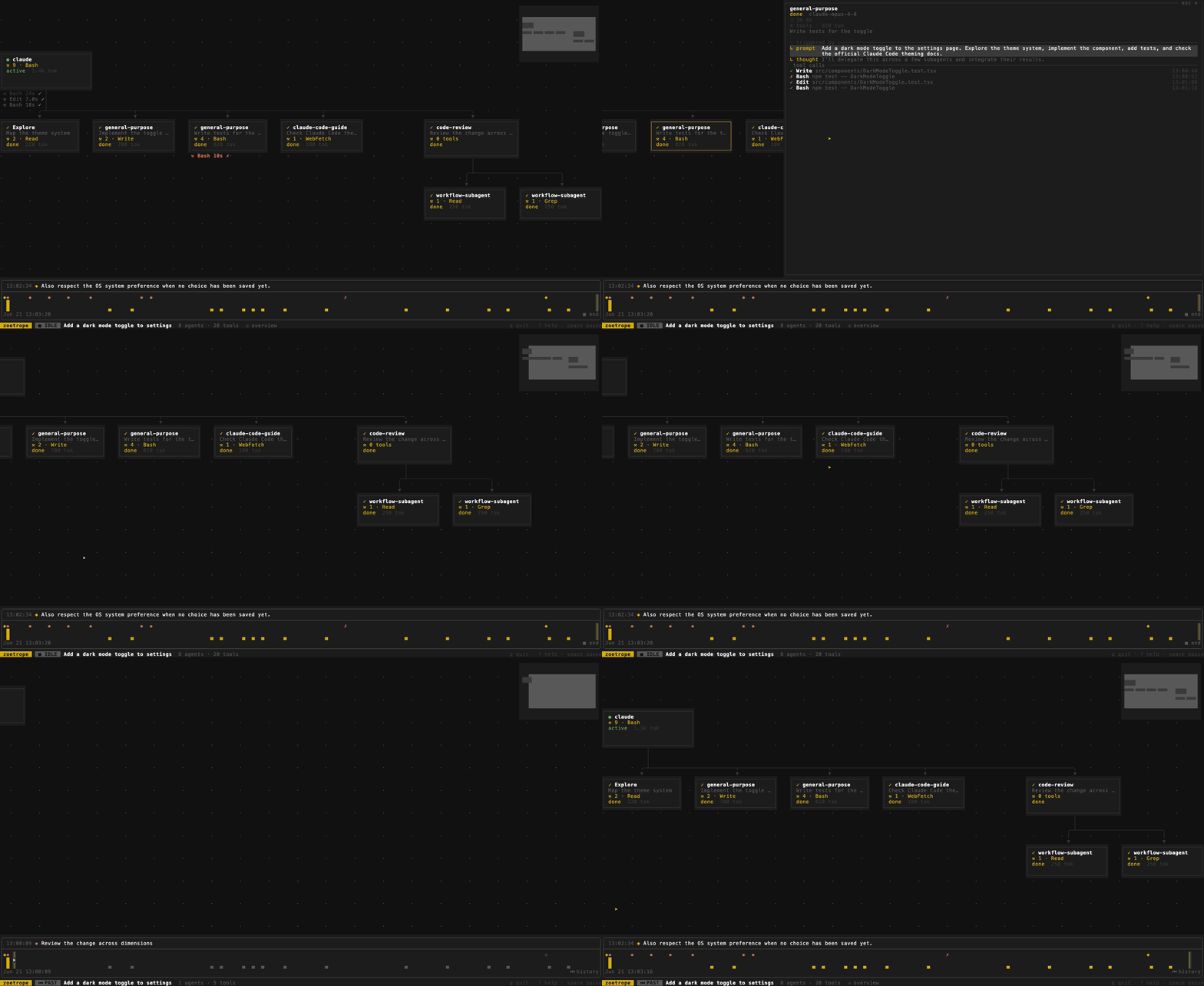
zoetrope treats the transcript as an append-only event log. It tails the files, parses each line defensively, and folds them into a derived model of agents, tool calls, and prompts. Nothing is mutated in place. The model is a pure function of the facts seen so far, so seeking backwards is exact.
A few of the pieces that turn a log into a watchable session:
toolUseId, a workflow's runId, a journal
result) rather than from guessing at strings or timing.r to relayout). The camera follows the action
until you touch it, then stays where you put it.tokio is pulled in without its net feature. cargo tree is the proof. This is
a property you can check, not a promise.The model, the timeline and the rendering all live in the portable core, a
library with no IO that compiles for any target, including WebAssembly. The native
frontend (the zoe binary in this
crate) and the browser frontend (the zoetrope-web crate under web/wasm/, which
runs the hosted app) sit on top of it and differ only in their IO and event loop.
See docs/DESIGN.md for the module map and the transcript format,
and docs/ARCHITECTURE.md for the invariants above in full.
The transcript formats zoetrope reads are undocumented and internal to Claude Code and Codex, so they can change without warning. zoetrope is built to degrade rather than break: unrecognized records are skipped, missing fields fall back, and a malformed line never takes down the session. If a new release of either makes something render oddly, please open an issue.
Pull requests are welcome. Support for another agent is one provider directory
under src/provider/; docs/DISCOVERY.md
says what one consists of and what proves it.
feat(timeline): index the playhead by event instead of wall-clock, fix(tailer): fold appends at the live edge without rebuilding). The changelog is generated from them with git-cliff, and non-conforming commits are dropped.cargo fmt, cargo clippy and cargo test before opening a PR.zoetrope-web, in web/wasm/) that only builds for wasm32, so it is
excluded from the root workspace and no root cargo command touches it. From the
repo root, build it with bash web/scripts/build-wasm.sh and lint it with
cd web/wasm && cargo clippy (its .cargo/config.toml defaults the target to wasm32).MIT.
Sign in to join the discussion.
No comments yet. Be the first to say what this is good for.
🪨 why use many token when few token do trick — Claude Code skill that cuts 65% of tokens by talking like caveman

The best-benchmarked open-source AI memory system. And it's free.

Orca is the ADE for working with a fleet of parallel agents. Run any coding agent with your own subscription. Available on desktop, mobile and remote runtime.
A cross-platform desktop All-in-One assistant for Claude Code, Codex, OpenCode, OpenClaw, Grok Build & Hermes Agent. Only official website: ccswitch.io

Never stop coding. Free MIT AI gateway: one endpoint, 352 providers (150+ free), 1200+ models Kimi, Claude, GPT, Gemini, GLM, DeepSeek, MiniMax. Works with Claude Code, Codex, Cursor, OpenCode, Cline & Copilot. Quota-aware auto-fallback, RTK+Caveman compression saves 15-95% tokens, MCP/A2A, Desktop/PWA. Built by 550+ contributors

Compress tool outputs, logs, files, and RAG chunks before they reach the LLM. 20% fewer tokens for coding agents, 60-95% fewer tokens for JSON, same answers. Library, proxy, MCP server.