
DietrichGebert/ponytailPlugins
Makes your AI agent think like the laziest senior dev in the room. The best code is the code you never wrote.
138k
1 add
fablize is a Claude Code plugin that wraps Opus in a set of verified procedures: finish the task, show evidence, and verify the result before claiming done. It uses hooks, commands, and task-specific routing so the agent follows the right discipline for debugging, rendering, and multi-step work.
Builders who use Claude Code and want verified completion, not just confident output.
You can make your agent show evidence, verify the result, and stop less often at false completion.
Runs and observes artifacts like HTML, SVG, games, and charts before allowing completion.
Uses `goals.py` to break work into steps and refuse a groundless done state.
Follows reproduce, compare hypotheses, and trace the causal chain for debugging work.
Blocks claims that something will be done without the action actually happening.
Injects only the verified discipline that matches the current task.
/plugin marketplace add fivetaku/fablize
/plugin install fablize
bash ${CLAUDE_PLUGIN_ROOT}/setup/setup.sh # choose local (recommended) or globalEnglish | 한국어


A Claude Code plugin that makes Opus (or any Claude model) see a task through to the end — with evidence and verification — as procedure, not as luck.
When Fable 5 shipped, I ran a controlled comparison of Fable 5 and Opus 4.8 (an A/B set of 19 runs plus 26 real working sessions, ~1,500 tool calls). The finding:
fablize applies only the procedures whose effect was verified. It does not raise the model's ceiling; it makes the model reach its own ceiling.
| Trait | Transferable? | Reason |
|---|---|---|
| Verification grounding (run & observe the artifact) | ✅ shipped | A procedure Opus skipped "not because it can't, but because it didn't." Injecting it raised render-verification behavior measurably. |
| Multi-story completion + evidence gate | ✅ shipped | A procedure — decompose, checkpoint, refuse completion without proof. |
| Systematic investigation (reproduce → hypotheses → causal chain) | ✅ shipped | A procedure — on par with what the strong model already does. |
| Early-stop prevention | ✅ shipped | A deterministic hook — catches "I'll do X" without doing it. |
| Out-of-spec defect discovery | ❌ not possible | Capability. Injection was refuted — the model finds it, or it doesn't. |
| Open-ended creative detail | ❌ not possible | Capability. Shows only where there is no fixed answer. |
| Self-driven propagation depth | ❌ not possible | Capability. Directed propagation transfers; self-started depth does not. |
The non-transferable rows are the model's job (or a human's), not a harness's. When you hit them, fablize tells you to escalate instead of pretending.
goals.py decomposes work and refuses a groundless "done."Negligible or unverified ideas (style mimicry, broad reasoning injection, a silent-recovery guard, a review-recall scan) are not shipped. They stay in personal development until a controlled experiment confirms their effect.
/plugin marketplace add fivetaku/fablize
/plugin install fablize
The per-task router (a UserPromptSubmit hook) registers automatically.
For always-on operation (the rules resident in context), run once:
bash ${CLAUDE_PLUGIN_ROOT}/setup/setup.sh # choose local (recommended) or global
Uninstall: bash ${CLAUDE_PLUGIN_ROOT}/setup/uninstall.sh
If fablize helps, a ⭐ on the repo means a lot — setup asks once (a single opt-in question); it never stars without your explicit "yes".
/fablize or phrases like "see it through", or automatically when installed always-on./effort xhigh suggestion.MIT — see LICENSE.
Sign in to join the discussion.
No comments yet. Be the first to say what this is good for.
Makes your AI agent think like the laziest senior dev in the room. The best code is the code you never wrote.
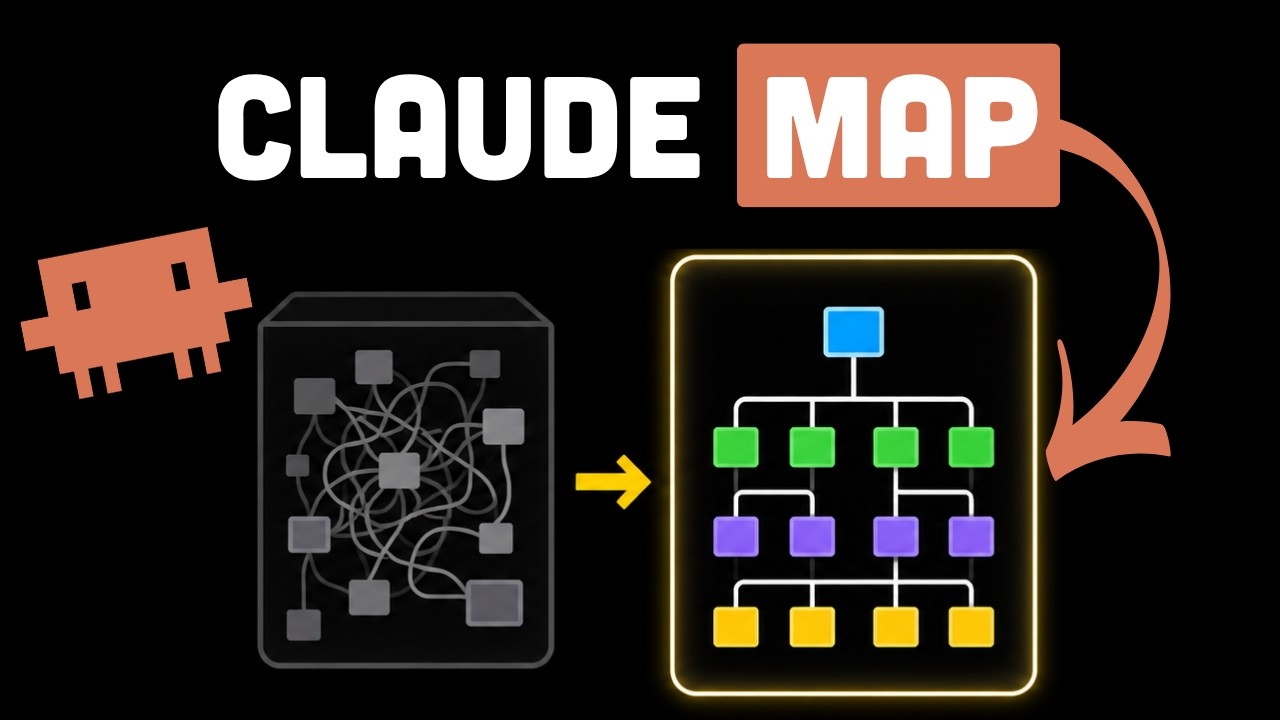
Graphs that teach > graphs that impress. Turn any code into an interactive knowledge graph you can explore, search, and ask questions about. Works with Claude Code, Codex, Cursor, Copilot, Gemini CLI, and more.

OmO: Just type "mass ulw" keyword with your prompt. Now you are the master of graph engineering.
Persistent Context Across Sessions for Every Agent – Captures everything your agent does during sessions, compresses it with AI, and injects relevant context back into future sessions. Works with Claude Code, OpenClaw, Codex, Gemini, Hermes, Copilot, OpenCode + More
Opinionated Oxlint rules for rejecting low-evidence TypeScript and JavaScript patterns
Teams-first Multi-agent orchestration for Claude Code