
DietrichGebert/ponytailPlugins
Makes your AI agent think like the laziest senior dev in the room. The best code is the code you never wrote.
138k
1 add
Claude Kit bundles a Claude Code plugin with skills, agents, hooks, and output styles that enforce evidence-based work. It centers on plan review, test-first implementation, verification gates, and reviewable shipping steps.
Builders who use Claude Code and want a workflow that keeps plans, tests, and reviews tied to evidence.
You can ship changes with fewer skipped checks because the workflow asks for artifacts before it accepts a done claim.
Skills like `test-first`, `verification-gate`, and `investigate-root-cause` require concrete evidence at each step.
Agents cover planning, architecture review, experience review, investigation, testing, code review, security review, and codebase scouting.
Init configures hooks such as auto-formatting, dangerous-command blocking, secret detection, and sensitive-file guards.
Includes brainstorm, deep research, implementation, review, and token-efficient styles that Claude Code can auto-discover.
`/claudekit:init` writes project rules, hooks, and MCP server configs into `.claude/` and `.mcp.json`.
/plugin marketplace add duthaho/claudekit-marketplace
/plugin install claudekit
/claudekit:init
A verification-first engineering toolkit for Claude Code. Built for senior ICs and tech leads who already know how to ship production code — and want a workflow that keeps the discipline tight without getting in the way.
15 skills, 8 agents, one philosophy: every claim has evidence. No tests pass — trust me. No it works in my IDE. No I think the cache is stale. Skills produce artifacts you could paste into a code review.
verification-gate runs before any "done" claim — runs the tests, checks the negative path, exercises the change in a non-IDE environment, cross-checks the original ask./plugin marketplace add duthaho/claudekit-marketplace
/plugin install claudekit
/claudekit:init
/claudekit:init interactively scaffolds rules, hooks, and MCP server configs into your project's .claude/ directory. Output styles ship with the plugin and are auto-discovered by Claude Code (no init step required).
| Phase | Skills | What's enforced |
|---|---|---|
| Investigate | investigate-root-cause, map-codebase, audit-dependencies | Every claim about the system has a <file:line> citation. No memory-based assertions. |
| Design | shape-spec, write-plan, plan-review, plan-review-architecture, plan-review-experience | Plans have file paths, exact test commands, falsifiable acceptance criteria, named rollbacks. Reviewed before implementation. |
| Implement | test-first, incremental-shipping | Red-green-refactor with pasted runner output. Vertical slices behind feature flags. Refactors prove behavior preservation with test/perf deltas. |
| Verify | verification-gate, evidence-driven-debugging | Mandatory pre-completion gate. Active debugging keeps a paper trail. |
| Ship | code-review-loop, release-and-changelog | Reviewable PRs with verification evidence pasted. Atomic releases with diff-built changelogs. |
| Setup (off-spine) | init | One-time scaffolding wizard for project-level config. |
All 15 skills are user-invocable as /claudekit:<name>.
Five Claude Code output styles ship with the plugin. They're auto-discovered by Claude Code — no init step required. Switch via /config or by setting outputStyle in .claude/settings.local.json.
| Style | When to use |
|---|---|
| Brainstorm | Creative exploration — divergent thinking, multiple alternatives, structured trade-offs before any code |
| Deep Research | Thorough investigation — completeness over speed, evidence-cited findings with confidence levels |
| Implementation | Code-focused execution — minimal prose, action-oriented updates, follow established patterns |
| Review | Critical analysis — find issues first, severity-tagged findings, actionable suggestions |
| Token Efficient | Compressed output — minimal prose, code-first, no preambles |
All styles use keep-coding-instructions: true, so Claude's default coding/testing/verification discipline still applies underneath.
Each agent has a single dispatcher and a clear job. No agent-bloat.
| Agent | Job | Dispatched by |
|---|---|---|
claudekit:planner | Decompose specs into executable plans | write-plan |
claudekit:architect | Score architecture dimension of a plan | plan-review-architecture |
claudekit:experience-reviewer | Score UX + DX dimension of a plan | plan-review-experience |
claudekit:investigator | Root-cause investigation with evidence chain | investigate-root-cause, evidence-driven-debugging |
claudekit:tester | Design and write tests with red-green discipline | test-first |
claudekit:code-reviewer | Pre-merge structural review of diffs | code-review-loop |
claudekit:security-auditor | OWASP-aligned review of sensitive paths | code-review-loop (sensitive paths) |
claudekit:scout | Codebase mapping and dependency audits | map-codebase, audit-dependencies |
/claudekit:init configures| Category | What | Location |
|---|---|---|
| Rules | API, frontend, migrations, security, testing | .claude/rules/ |
| Hooks | auto-format, block-dangerous-commands, detect-secrets, guard-sensitive-files, notifications | .claude/hooks/ + settings.local.json |
| MCP Servers | Context7, Sequential, Playwright, Memory, Filesystem | .mcp.json |
Output styles ship with the plugin (in output-styles/) and are auto-discovered by Claude Code; no init step needed.
Every claudekit skill has 8 required sections:
Pick the chain that matches your task. Each one ends at a real stopping point — not every project needs every step.
The chains below show the full discipline. Scale it to the change — the ceremony is negotiable, the evidence is not. Size the change first, then run only what the tier earns:
| Tier | What it is | Design ceremony | Evidence (never scales) |
|---|---|---|---|
| Trivial | One-line / single-file / describable in one sentence (typo, config value, rename) | Skip shape-spec, write-plan, plan-review | verification-gate, then code-review-loop on the diff |
| Small | One focused change, ≤ ~3 files, design obvious | Skip shape-spec and plan-review; a lightweight inline plan is enough | verification-gate → code-review-loop |
| Standard | Multi-file, multi-session, or real design decisions | Full chain: shape-spec → write-plan → plan-review | verification-gate → code-review-loop |
The one rule that never scales: verification-gate always runs, and code-review-loop runs on any diff you ship — on a typo as much as a rewrite. Ceremony scales to the change; evidence does not scale to zero. A skipped gate is how "trust me" comes back, which is the exact failure claudekit exists to prevent. When you're genuinely unsure which tier a change is, pick the smaller one and say so — the plan contract catches scope growth and upgrades the tier if the work turns out bigger.
"There's a request. No code yet."
shape-spec → write-plan → plan-review → [test-first + incremental-shipping] → verification-gate → code-review-loop
test-first and incremental-shipping are paired, not sequential — every task goes through red-green-refactor while the whole slice ships behind a feature flag. For library, plugin, or CLI work that ships a tagged version, append → release-and-changelog.
"Something is broken. Fix the cause, not the symptom."
investigate-root-cause → test-first (regression test) → verification-gate → code-review-loop
evidence-driven-debugging activates inside Phase 3 of investigate-root-cause when you need runtime instrumentation (logs, breakpoints, probes) to test the hypothesis.
"Improve structure. Preserve behavior. Prove preservation."
map-codebase → incremental-shipping (refactor-with-evidence section) → verification-gate → code-review-loop
The refactor-with-evidence section requires before/after test deltas (and perf numbers if perf-sensitive). That's the whole discipline — no behavior-preservation claim without measured proof.
"How does X work? What calls Y? What's the blast radius?"
map-codebase
Standalone. Output is an evidence-cited map you can attach to a plan or hand to a teammate. Only chain into shape-spec if exploration revealed a real problem worth specifying.
"A CVE landed. Or it's quarterly hygiene. Or you're adding a new package."
audit-dependencies
Standalone. Produces a per-dep table (declared / imports / verdict) plus advisory verdicts with reachability proof. Action items go into a follow-up PR.
"This diff touches auth, payments, crypto, sessions, or tokens."
code-review-loop (auto-dispatches security-auditor on sensitive paths)
No prep skill needed. code-review-loop detects sensitive paths from the diff and dispatches both code-reviewer and security-auditor automatically. You get OWASP-aligned findings alongside structural ones.
"You're about to cut a tagged version of a library, plugin, or CLI."
audit-dependencies → release-and-changelog
For library/plugin authors before tagging. The audit catches stale deps and unaccounted CVEs; the release skill builds the changelog from the actual diff (not from memory) and makes the release commit atomic.
In practice, devs skip steps for trivial work — so scale the chain deliberately, per Sizing the work above, rather than silently. The chains show the full discipline; the tier tells you how much of it this change earns — but the evidence gate is never the part you skip.
CI (.github/workflows/validate.yml) lints every skill against the 8-section
anatomy above, checks plugin.json/marketplace.json version sync, enforces
token budgets on the always-loaded skill/agent frontmatter (the "no agent-bloat"
claim, measured), and exercises the evidence gate. Run locally before committing:
node scripts/validate-plugin.cjs
node scripts/token-report.cjs --check
node scripts/test-verify-evidence.cjs
scripts/verify-evidence.cjs is the evidence gate itself — dogfooding the
"every claim has evidence" philosophy against the agent's own output:
--citations <file> — resolves file:line citations in an artifact against
real paths and line ranges.--tripwires — scans git diff HEAD for fake-green tampering: deleted test
files, added test skips, new TODO/FIXME.--rerun <file> [--cmd "<command>"] — re-runs the test suite and diffs the
actual result against the result claimed in the artifact; a claimed pass
that's actually red, or divergent pass/fail counts, fails the gate. The
verdict is ground-truthed from the run's exit code, so a pasted output block
can't fake green. The command is auto-detected (npm test / pytest) or
given with --cmd; --detect-only prints what would run.It exits non-zero when a claim can't be verified.
MIT
Built by duthaho.
Sign in to join the discussion.
No comments yet. Be the first to say what this is good for.
Makes your AI agent think like the laziest senior dev in the room. The best code is the code you never wrote.
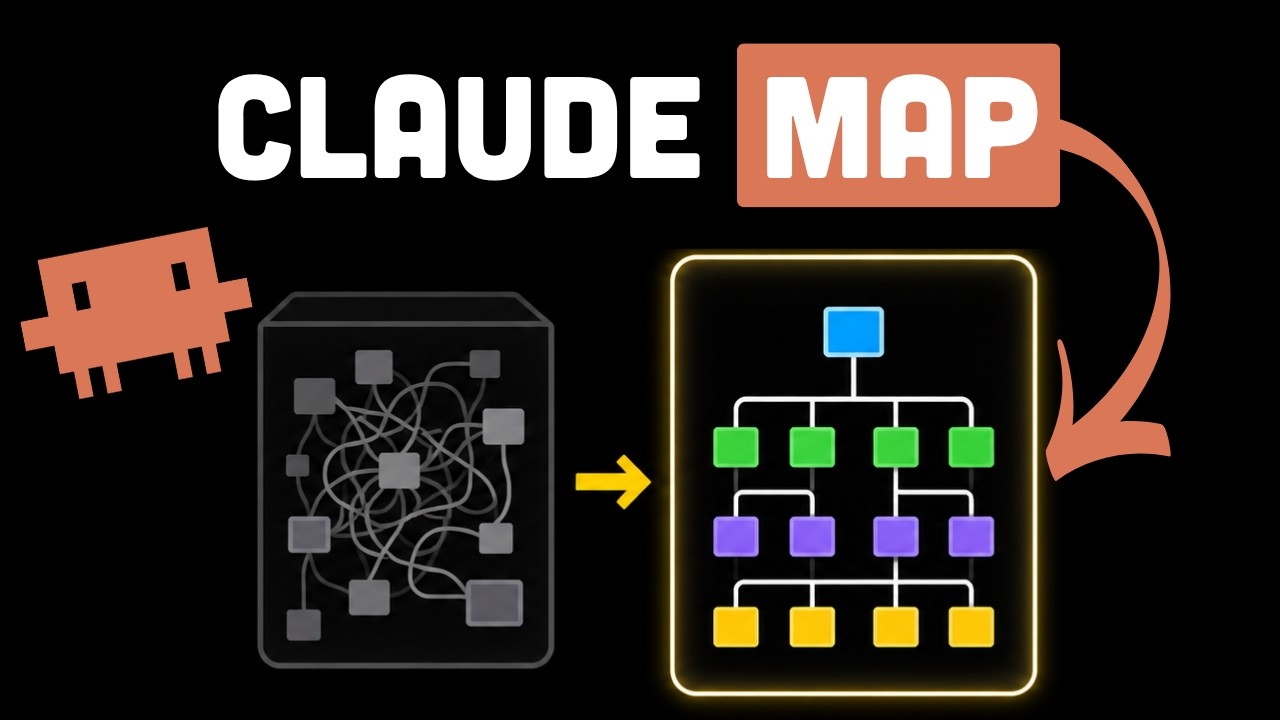
Graphs that teach > graphs that impress. Turn any code into an interactive knowledge graph you can explore, search, and ask questions about. Works with Claude Code, Codex, Cursor, Copilot, Gemini CLI, and more.

OmO: Just type "mass ulw" keyword with your prompt. Now you are the master of graph engineering.
Persistent Context Across Sessions for Every Agent – Captures everything your agent does during sessions, compresses it with AI, and injects relevant context back into future sessions. Works with Claude Code, OpenClaw, Codex, Gemini, Hermes, Copilot, OpenCode + More
Opinionated Oxlint rules for rejecting low-evidence TypeScript and JavaScript patterns
Teams-first Multi-agent orchestration for Claude Code