

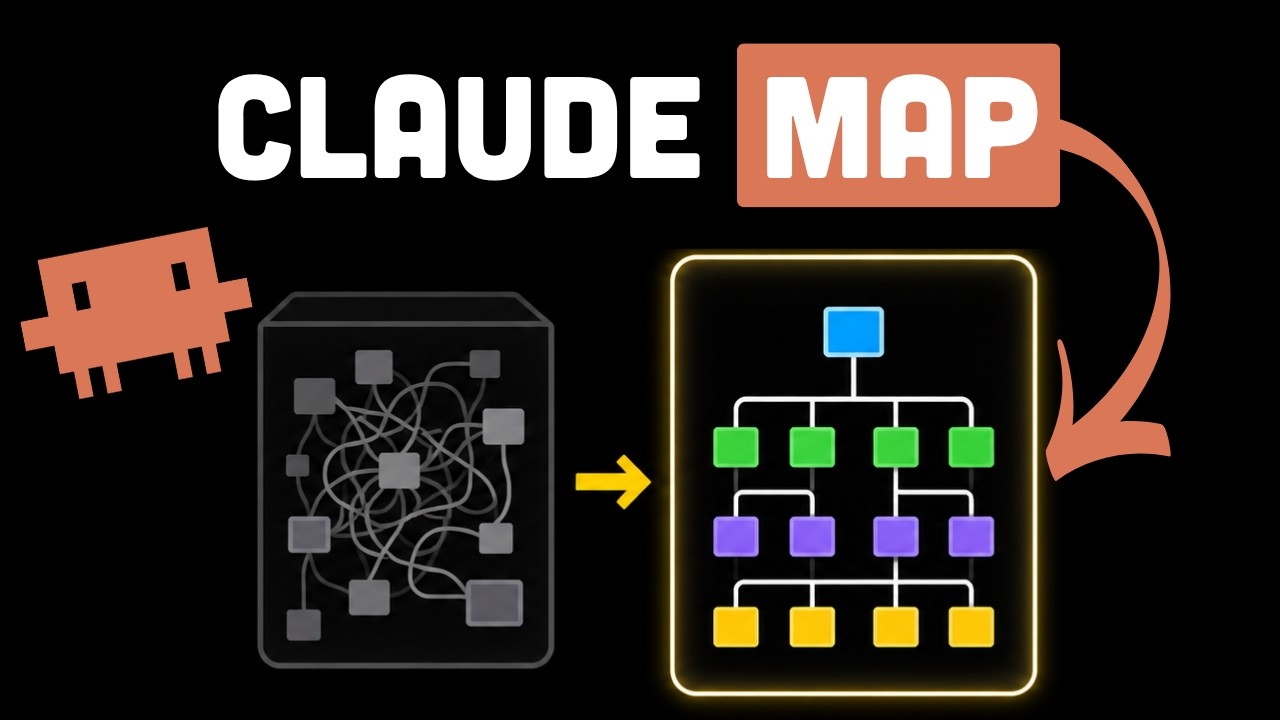
Graphs that teach > graphs that impress. Turn any code into an interactive knowledge graph you can explore, search, and ask questions about. Works with Claude Code, Codex, Cursor, Copilot, Gemini CLI, and more.
82k
Story Skills packages fiction-writing workflows as Agent Skills plus plugin metadata for Claude Code and Codex. The skills cover story setup, characters, worldbuilding, plot, chapter drafting, revision, and maintenance. The companion `story` CLI validates the project structure, checks continuity, rebuilds indexes, counts words, imports manuscripts, and exports finished work. The project uses markdown files with YAML frontmatter so agents can edit story state directly and keep the bible, chapters, and continuity records aligned.
Builders who use Claude Code or Codex to draft and manage fiction in markdown.
You can draft stories with reusable workflow skills and catch continuity mistakes before they reach a reader.
`story-init` creates the story bible, folders, and registries for a new project.
Skills for character management, worldbuilding, plot structure, chapter writing, revision continuity, and story maintenance.
The CLI checks deaths, payoffs, questions, casts, and durable state so contradictions show up as file-addressed errors.
Templates in `templates/github/` run checks on pushes and can draft the next chapter on a schedule.
`story import` breaks a manuscript into a project, and `story export` or `story build` turns chapters back into deliverables.
# Codex plugin
codex plugin marketplace add danjdewhurst/story-skills
codex plugin add story-skills@story-skills

# Claude Code plugin (type these inside a Claude Code session, not a shell)
/plugin marketplace add danjdewhurst/story-skills
/plugin install story-skills@story-skills
npx skills add danjdewhurst/story-skills

# Or with Bun
bunx skills add danjdewhurst/story-skills
# Add the marketplace
codex plugin marketplace add danjdewhurst/story-skills

# Install the plugin
codex plugin add story-skills@story-skills
git clone https://github.com/danjdewhurst/story-skills.git
cp -r story-skills/skills/* ~/.agents/skills/

# Or install to a specific repo as repo-scoped skills
cp -r story-skills/skills/* .agents/skills/
# Add the marketplace
/plugin marketplace add danjdewhurst/story-skills

# Install the plugin
/plugin install story-skills@story-skills
git clone https://github.com/danjdewhurst/story-skills.git

# Copy skills to your project (any of these work)
cp -r story-skills/skills/* .github/skills/
cp -r story-skills/skills/* .agents/skills/

# Or install globally
cp -r story-skills/skills/* ~/.copilot/skills/
Agent Skills for planning, tracking, and drafting fiction in markdown.
Story Skills gives agents a shared project format for fiction: a story bible, character files, worldbuilding notes, factions, artifacts, plot arcs, scene state, continuity questions, promises/payoffs, timelines, and chapter drafts. Everything is plain markdown with YAML frontmatter, packaged as standard Agent Skills with Codex and Claude Code plugin support.
The companion CLI treats the story bible as a checkable contract: a continuity engine catches dead characters walking, payoffs that land before their setup, unfired Chekhov guns, and stale story state — deterministically, before a reader ever could.



Install it as a Codex or Claude Code plugin, with the Agent Skills CLI, or copy the
skills/folders into any agent that supportsSKILL.md.
# Codex plugin
codex plugin marketplace add danjdewhurst/story-skills
codex plugin add story-skills@story-skills

# Claude Code plugin (type these inside a Claude Code session, not a shell)
/plugin marketplace add danjdewhurst/story-skills
/plugin install story-skills@story-skills
For compatible SKILL.md agents, you can also install the bundle with the Agent Skills CLI:
npx skills add danjdewhurst/story-skills

# Or with Bun
bunx skills add danjdewhurst/story-skills
Then ask "Start a new story" to scaffold the project.
Long-range consistency is the thing language models are worst at and prompts cannot fix. Story Skills makes it deterministic: character deaths, promises/payoffs, open questions, scene casts, and durable knowledge/object state live in frontmatter, and story continuity treats contradictions like a compiler treats type errors.
examples/the-unraveled-thread/ is a deliberately broken mystery. It passes story validate and story links cleanly — every file is well-formed — but the story itself doesn't hold together:
$ story continuity examples/the-unraveled-thread
Continuity check failed: 4 errors, 3 warnings
error: chapters/chapter-04.md lists edran-vale, who died in chapter-02; move posthumous appearances to mentions
error: continuity/promises/the-broken-compass.md pays off in chapter-02 before it is planted in chapter-03
error: continuity/questions/who-burned-the-mill.md resolves in chapter-02 before it is introduced in chapter-03
error: continuity/state.md knowledge-state[0] references missing chapter chapter-05
warning: chapters/chapter-03.md POV character nessa-thorn is not listed in characters
warning: continuity/promises/the-sealed-letter.md was planted in chapter-01, 3 chapters ago, and has no payoff yet
warning: continuity/state.md object-state[0] status active conflicts with worldbuilding/artifacts/vales-compass.md status destroyed
These findings are exact, file-addressed, and reproducible — CI asserts them on every commit. Intentional flashbacks and posthumous appearances stay legal via the chapter mentions field. story doctor and story next fold the same checks into prioritized repair actions.
# Add the marketplace
codex plugin marketplace add danjdewhurst/story-skills

# Install the plugin
codex plugin add story-skills@story-skills
For local skill authoring without a plugin install:
git clone https://github.com/danjdewhurst/story-skills.git
cp -r story-skills/skills/* ~/.agents/skills/

# Or install to a specific repo as repo-scoped skills
cp -r story-skills/skills/* .agents/skills/
Codex detects repo and user skills automatically. The plugin install is still the recommended path for this bundle.
# Add the marketplace
/plugin marketplace add danjdewhurst/story-skills

# Install the plugin
/plugin install story-skills@story-skills
VS Code with Copilot discovers skills from multiple directories:
git clone https://github.com/danjdewhurst/story-skills.git

# Copy skills to your project (any of these work)
cp -r story-skills/skills/* .github/skills/
cp -r story-skills/skills/* .agents/skills/

# Or install globally
cp -r story-skills/skills/* ~/.copilot/skills/
Skills can activate when your request matches a skill description, or you can invoke them manually.
Cursor supports the SKILL.md standard:
git clone https://github.com/danjdewhurst/story-skills.git

cp -r story-skills/skills/* .agents/skills/
Windsurf discovers skills from workspace and global directories:
git clone https://github.com/danjdewhurst/story-skills.git

# Copy skills to your project
cp -r story-skills/skills/* .windsurf/skills/

# Or install globally
cp -r story-skills/skills/* ~/.codeium/windsurf/skills/
Cascade can invoke a matching skill automatically. You can also use @skill-name to invoke one directly.
Gemini CLI supports the same SKILL.md format via the Agent Skills standard:
# Install all skills globally
gemini skills install https://github.com/danjdewhurst/story-skills.git

# Or install a specific skill
gemini skills install https://github.com/danjdewhurst/story-skills.git --path skills/story-init
gemini skills install https://github.com/danjdewhurst/story-skills.git --path skills/character-management
gemini skills install https://github.com/danjdewhurst/story-skills.git --path skills/worldbuilding
gemini skills install https://github.com/danjdewhurst/story-skills.git --path skills/plot-structure
gemini skills install https://github.com/danjdewhurst/story-skills.git --path skills/chapter-writing
gemini skills install https://github.com/danjdewhurst/story-skills.git --path skills/revision-continuity
gemini skills install https://github.com/danjdewhurst/story-skills.git --path skills/story-maintenance

# Or link locally after cloning
git clone https://github.com/danjdewhurst/story-skills.git
gemini skills link story-skills/skills
Gemini discovers the skills and can activate them when your request matches a skill description.
The skills use the same SKILL.md format that OpenCode supports natively:
git clone https://github.com/danjdewhurst/story-skills.git

# Copy skills to your project
cp -r story-skills/skills/* .opencode/skills/

# Or install globally
cp -r story-skills/skills/* ~/.config/opencode/skills/
OpenCode also searches common skill paths such as .claude/skills/, so compatible project-level skills can be discovered automatically.
These skills follow the open Agent Skills standard: SKILL.md files with YAML frontmatter. If your agent supports the Agent Skills CLI, install the bundle directly:
npx skills add danjdewhurst/story-skills

# Or with Bun
bunx skills add danjdewhurst/story-skills
Use --skill <name> to install only specific skills, or --agent <name> to target a supported agent. You can also copy the skill folders into any compatible agent's skills directory.
For non-agent use:
| Skill | What it does | Try saying |
|---|---|---|
| story-init | Scaffolds the story bible, folders, and registries | "Start a new story" |
| character-management | Creates character profiles with relationships, traits, arcs, and family trees | "Create a character" |
| worldbuilding | Builds locations and systems: magic, politics, technology, religion, and more | "Design a magic system" |
| plot-structure | Plans arcs with structures like three-act, hero's journey, Save the Cat, and kishotenketsu | "Create a plot arc" |
| chapter-writing | Drafts chapters through an outline-first workflow that pulls from story context | "Write the next chapter" |
| revision-continuity | Revises drafts, audits continuity, and keeps character state, timeline, and arc changes consistent | "Continuity-check chapter 3" |
| story-maintenance | Runs deterministic CLI checks for validation, continuity, reports, indexing, links, word counts, import, and export | "Validate my story project" |
For stronger prose, pair chapter-writing with better-writing. It adds voice calibration, anti-generic writing checks, and a final prose-quality pass, and installs the same way:
npx skills add forjd/better-writing
The optional story CLI handles deterministic project maintenance while the skills handle the creative workflow.
bun install
bun run story --help
The package also exposes a Node-compatible bin with no runtime dependencies. It is not on the npm registry yet, so run it straight from GitHub:
npx --yes --package github:danjdewhurst/story-skills story --help
The CLI needs Node 18 or newer.
For copied-skill installs, story-maintenance includes a bundled scripts/story.js fallback that agents can run with Node.
The CLI is for deterministic maintenance only. Agents should write story content directly to markdown files, not create project-local build or generator scripts to emit the story.
| Command | Purpose |
|---|---|
story init "The Last Ember" | Scaffold a story project with the standard markdown layout |
story add character "Sera Voss" | Create entity files for characters, locations, systems, factions, artifacts, arcs, chapters, scenes, questions, promises, and glossary terms |
story rename character sera-voss "Sera Vale" | Rename an entity and update kebab-case references |
story remove promise old-setup | Remove an entity and scrub metadata references |
story migrate [path] | Upgrade a project to the current schema |
story validate [path] | Check required files, schema version, YAML frontmatter, registries, and word-count warnings |
story reindex [path] | Rebuild registry tables from the current markdown files |
story wordcount [path] --write | Count chapter prose and update chapter frontmatter plus the chapter registry |
story links [path] | Check character, location, chapter, and arc cross-references/backlinks |
story continuity [path] | Check deterministic continuity contracts: deaths, promises/payoffs, questions, casts, and durable state |
story import draft.md --title "The Lost Coast" | Split an existing manuscript into a new story project and suggest entity candidates |
story report [path] --actionable | Summarize inventory and optionally include next actions |
story next [path] | Recommend the next deterministic writing or maintenance actions |
story doctor [path] | Show health checks with actionable repair steps |
story export [path] --out manuscript.md | Combine chapters into a single manuscript markdown file |
story build [path] --format epub | Build disposable markdown, EPUB, or DOCX artifacts in dist/ |
EPUB and DOCX builds target plain prose: *italic* and **bold** become italic and bold runs, scene-break lines (***, ---) become a * * * separator paragraph, and other markdown structure such as lists or tables is flattened to text. The markdown export keeps chapter text as-is.
story rename and story remove update entity ids in frontmatter reference fields and in markdown link targets. They never edit prose, so a character called "Port" can be renamed without touching the word "port" in chapter text.
Commands that change a frontmatter value regenerate that file's frontmatter from the parsed values, which drops any YAML comments in it. Files whose values do not change are left untouched.
For a complete starter transcript, read docs/first-20-minutes.md. For the project contract, read docs/schema-v2.md and schemas/story.schema.json.
A story project with deterministic checks is a story project an agent can advance unattended. The templates/github/ workflows turn a story repository into a self-drafting book:
story-checks.yml runs story validate, story links, and story continuity on every push and pull request, so a chapter PR cannot merge with a continuity contradiction.draft-next-chapter.yml runs Claude Code on a schedule: it asks story next for the next deterministic action, drafts the next chapter with the chapter-writing skill, updates scene records and continuity state, runs the maintenance checks, and opens a pull request for review.Copy both files into .github/workflows/ in the repository that holds your story project, add an ANTHROPIC_API_KEY secret, and review one chapter PR per morning.
GitHub does not start story-checks.yml for a pull request opened with the built-in GITHUB_TOKEN, so the draft workflow runs the same checks itself after drafting. Pass a personal access token as github_token if you want the checks workflow to run on those PRs as well.
Most writers don't start from a blank page. story import reverse-engineers a Story Skills project from work in progress:
story import draft.md --title "The Lost Coast" --genre mystery
It splits the manuscript on chapter headings (or imports a directory of chapter files), creates the full project layout with accurate word counts and registries, and prints recurring proper-name candidates so an agent can follow up with story add character and story add location to build out the bible.
Running story-init creates this layout:
my-story/
├── story.md                  # Story bible — title, genre, themes, POV, tense
├── characters/
│   └── _index.md             # Character registry
├── worldbuilding/
│   ├── _index.md             # World overview
│   ├── locations/
│   ├── systems/
│   ├── factions/
│   └── artifacts/
├── plot/
│   ├── _index.md             # Arc overview
│   ├── arcs/
│   └── timeline.md
├── scenes/
│   └── _index.md             # Machine-readable scene registry
├── continuity/
│   ├── state.md              # Character, object, and knowledge state
│   ├── questions/
│   │   └── _index.md
│   └── promises/
│       └── _index.md
├── glossary/
│   ├── _index.md
│   └── terms/
└── chapters/
    └── _index.md             # Chapter registry
Every story element is a markdown file with YAML frontmatter. The skills cross-reference those files so the project stays consistent:
story.md is the top-level bible read by all skillsstory.md includes schema-version: 2 so the CLI can detect incompatible project formatssera-voss, chapter-01)_index.md files serve as registries for each domainexamples/the-last-ember/ for a complete fantasy example: three characters, two locations, a magic system, a plot arc with foreshadowing, and a drafted first chapter.examples/harbor-of-second-light/ for a near-future coastal mystery example with memory technology, a posthumous witness arc, populated continuity state, and a drafted first chapter.examples/the-unraveled-thread/ for a deliberately broken project that demonstrates every class of finding the continuity engine reports.Development uses Bun for tests and coverage:
bun run test
bun run test:coverage
bun run test:examples
bun run check:metadata
The copied-skill fallback CLI is generated from the package entrypoint. After changing CLI source, rebuild and check it before release:
bun run build:fallback
bun run check:fallback
node skills/story-maintenance/scripts/story.js --help
Codex uses .codex-plugin/plugin.json as its plugin version source. Claude Code uses .claude-plugin/plugin.json. Every published change needs a new version in both files and in package.json so installed users receive updates; keep marketplace entries unversioned to avoid duplicate version state.
Cut a release with the release script, which bumps all three files, runs the CI checks, commits chore: release X.Y.Z, tags vX.Y.Z, pushes, and creates a GitHub release with generated notes. It requires a clean main that matches origin/main and a logged-in gh:
bun run release patch          # or minor, major, or an explicit version like 1.2.0
bun run release patch --dry-run  # run the checks and print the plan without changing anything
Distribution metadata lives in .claude-plugin/ for Claude Code and .codex-plugin/ plus .agents/plugins/marketplace.json for Codex. The plugins/story-skills symlink is intentional: Codex marketplace entries must point at a child plugin directory, so the symlink exposes the repo-root plugin without duplicating skills/.
Sign in to join the discussion.
No comments yet. Be the first to say what this is good for.
Graphs that teach > graphs that impress. Turn any code into an interactive knowledge graph you can explore, search, and ask questions about. Works with Claude Code, Codex, Cursor, Copilot, Gemini CLI, and more.

An agent organization for Claude Code, structured as a company — 15+ departments, 125+ skills, each independently installable.
Context window optimization for AI coding agents. Sandboxes tool output (98% reduction), persists session memory, and enforces routing across 17 platforms via MCP + hooks.
Persistent file-based planning for AI coding agents and long-running tasks. Crash-proof markdown plans, session recovery after /clear and compaction, per-turn re-injection against context rot, deterministic completion gate. Manus-style. Install from npm, the Claude Code plugin marketplace, or npx skills. Codex, Cursor, OpenCode, 60+ agents.
Self-organizing AI second brain for Obsidian + Claude Code. Drop any source and Claude reads, links, and files it into one connected knowledge graph of plain Markdown you own. AI note-taking, personal knowledge management (PKM), and an open-source Notion alternative. Based on Karpathy's LLM Wiki pattern.
Universal SEO skill for Claude Code. 25 sub-skills + 18 sub-agents covering technical SEO, E-E-A-T, schema, GEO/AEO, backlinks, local SEO, maps intelligence, semantic clustering, e-commerce SEO, international SEO, Google APIs, and PDF/Excel reporting. Optional DataForSEO, Firecrawl, and Banana extensions.