
obra/
superpowers

obra/superpowersSkills
An agentic skills framework & software development methodology that works.
285k
1 add
Autostar is a `.skill` package that turns a goal into tracks, verifiers, steps, laps, and rounds. It measures each attempt, keeps or reverts changes, records reflections, and stores longer-term learning in local memory or a project pack.
Builders who want their agent to improve code, docs, or writing against explicit measures instead of vague feedback.
You can run repeatable improvement loops with scoring, memory, and clear reports instead of one-off prompts.
Breaks a goal into measurable tracks and evaluates each one separately.
Uses deterministic checks, external tools, LLM judges, hybrid scoring, or human gates.
Runs step, lap, and round cycles with approval, plateau handling, and budget checks.
Stores run history, summaries, and long-term dispositions in a local backend or project pack.
Writes JSON and JSONL outputs like `progress.json`, `step_log.jsonl`, and `reflections.jsonl`.
Ships as a `.skill` bundle with scripts to validate and package for Claude Code and Claude.ai.
# Clone the repo
git clone https://github.com/chrisvoncsefalvay/autostar.git

# Copy the skill into your Claude Code skills directory
cp -r autostar/autostar-skill ~/.claude/skills/autostar-skill
npx skills add chrisvoncsefalvay/autostar
# Download the .skill file from the latest release
curl -sL https://github.com/chrisvoncsefalvay/autostar/releases/latest/download/autostar-skill.skill -o autostar.skill

# Unzip into your skills directory
unzip autostar.skill -d ~/.claude/skills/
python autostar-skill/scripts/package_skill.py --target claude-ai dist/
python autostar-skill/scripts/runtime_profile.py list
python autostar-skill/scripts/runtime_profile.py show claude-code
python autostar-skill/scripts/runtime_profile.py check-mission claude-code --verifier external_tool --verifier llm_judge
python autostar-skill/scripts/runtime_profile.py resolve claude-ai --project-pack ./memory-pack
python -m pip install pyyaml jsonschema pytest
python autostar-skill/scripts/quick_validate.py autostar-skill/
If you can measure it, you can improve it.
Soft RLVR for the masses. a* turns any measurable goal into a structured optimisation loop. You define what "good" looks like. a* runs experiments, scores the results, learns from every attempt, and converges on the best version within your budget.
No reward model to train. No environment to build. No GPU cluster to provision. Just a goal, an evaluator, and an agent that knows how to search.



If you just want to install the skill and try it once in Claude Code:
npx skills add chrisvoncsefalvay/autostar
Then invoke it in Claude Code:
/skill autostar
The skill handles onboarding, confirms the mission with you, and runs experiments within your approved budget.
Most artifacts live where quality is real but hard to verify fully. Code can be type-checked but not beauty-checked. Prose can be spell-checked but not tone-checked.
Traditional RLVR (reinforcement learning from verifiable rewards) needs rewards you can compute with certainty: math proofs, unit tests, formal proofs. That covers a narrow slice of what people want to improve.
a* uses verifiable-ish rewards instead. It combines hard signals (type checkers, linters, test suites) with soft ones (LLM judges, human gates). Each track has its own verifier. The system runs enough steps per lap to build statistical confidence.
The result: an optimisation loop for anything you can split into measurable dimensions. Code quality, documentation, prompt engineering, writing style, API design, accessibility.

a* runs in five phases:
An interactive dialogue — never skipped, never auto-inferred. The system breaks your goal into tracks (measurable dimensions), sets up verifiers, sets constraints, agrees a budget, and gets your approval before running.
Baseline measurement, tool checks, disposition library query, and final mission confirmation.
The core cycle:
Step  → mutate artifact, evaluate all tracks, ratchet (keep/revert)
Lap   → N steps with same parameter family → statistical verdict
Round → set of laps → mandatory reflection (worth pursuing? ask user? pivot?)
Each round ends with a structured reflection: Worth pursuing? Ask the user? Pivot? The system escalates when scores plateau, tracks diverge, or budget pace is at risk — always with specific questions, not vague updates.
A built-in visualiser renders live progress as an inline HTML dashboard.
The canonical source of truth is one local persistent backend for the whole system. Short-term run logs stay append-only inside a run, while long-term memory is stored in that backend and exported as human-readable JSON/JSONL mirrors.
Within a run:
step_log.jsonl and reflections.jsonl are append-only sources of truthhypothesis_stack.json, track_trajectories.json, and momentum.json are derived snapshotsAcross runs:
Memory access modes:
| Mode | Meaning |
|---|---|
direct_backend | Runtime can use the canonical local backend directly |
connector_backed | Runtime reaches memory through a connector |
project_pack | Runtime uses a text-first project pack with manual sync |
none | Short-term memory only |
Dispositions are the long-term knowledge base. They shape future actions based on what worked and what didn't. Claude's built-in memory is useful for chat continuity, but it is not the system of record for a* learning.
Baseline vs. final scores, trajectory charts, reflection log, what worked, what didn't, and budget accounting.
Every track declares one of five verifier types:
| Type | Signal | Use when |
|---|---|---|
| Deterministic | Formula / regex / rule | Word count, format compliance, schema validation |
| External tool | CLI subprocess | pyright, pytest, eslint, lighthouse, vale, bandit |
| LLM judge | Structured LLM call with fixed scoring criteria | Readability, tone, documentation quality |
| Hybrid | Tool + LLM judge, aggregated | Factual accuracy (entity check gates quality score) |
| Human gate | Pause and ask the user | Brand approval, legal sign-off, aesthetics |
Verifiers are immutable during a run. Changing the evaluator mid-run is the main failure mode of autonomous optimisation — a* prevents it by design.
LLM judge tracks run in self mode (host agent judges inline) or external mode (separate model via subprocess). External mode keeps mutator and judge independent, and handles safety-filter conflicts: sensitive domains can use a judge that won't refuse to score legitimate content.
The contract: a* writes a JSON request, calls your command, and reads a JSON response (score + rationale) from stdout. Bring any model with a CLI wrapper.
When a safety filter refuses an LLM call, a* rephrases and retries up to twice. If retries fail, it offers the user specific options: switch to an external judge, adjust criteria, skip the track, or abort. All rejections are logged.
a* writes structured, machine-readable output for external tools:
| File | Format | Updated |
|---|---|---|
step_log.jsonl | JSONL | After every step |
reflections.jsonl | JSONL | After every round |
tracks.json | JSON | Once at run start |
mission.json | JSON | Once at run start |
progress.json | JSON | After every step |
progress.json is the single-file state snapshot. Poll it from dashboards, CLI tools, or downstream agents without parsing JSONL. Schemas for all formats are in schemas/.
pyyaml + jsonschema (for validation/packaging scripts)unzip (if installing from a release archive)# Clone the repo
git clone https://github.com/chrisvoncsefalvay/autostar.git
# Copy the skill into your Claude Code skills directory
cp -r autostar/autostar-skill ~/.claude/skills/autostar-skill
Or install via skill.sh:
npx skills add chrisvoncsefalvay/autostar
Or install directly from a release:
# Download the .skill file from the latest release
curl -sL https://github.com/chrisvoncsefalvay/autostar/releases/latest/download/autostar-skill.skill -o autostar.skill

# Unzip into your skills directory
unzip autostar.skill -d ~/.claude/skills/
Build the Claude.ai upload archive:
python autostar-skill/scripts/package_skill.py --target claude-ai dist/
Upload dist/autostar-claude-ai-skill.zip to Claude.ai as a custom Skill.
For long-term memory in Claude.ai:
The .skill format is a ZIP archive with SKILL.md and supporting files. Other agent frameworks can use it through a runtime adapter — see autostar-skill/references/runtime-capabilities.md. Without that layer, treat compatibility as partial.
Bundled adapters: Claude Code, Codex, Gemini CLI, Pi (full support); Claude.ai (reduced support); chat-only (unsupported boundary). Profiles and a template for new adapters live in autostar-skill/runtime-profiles/.
Inspect or select profiles with:
python autostar-skill/scripts/runtime_profile.py list
python autostar-skill/scripts/runtime_profile.py show claude-code
python autostar-skill/scripts/runtime_profile.py check-mission claude-code --verifier external_tool --verifier llm_judge
python autostar-skill/scripts/runtime_profile.py resolve claude-ai --project-pack ./memory-pack
python -m pip install pyyaml jsonschema pytest
python autostar-skill/scripts/quick_validate.py autostar-skill/
Invoke the skill in Claude Code:
/skill autostar
Or trigger it with natural language:
a* guides you through onboarding, gets your approval, and runs within your budget.
autostar/
  autostar-skill/              # The distributable skill
    SKILL.md                   # Main instruction set
    assets/                    # Visualiser template
    scripts/                   # Packaging, validation, runtime profile tools
    references/                # Onboarding, verification, budgeting, memory,
                               #   runtime adapters (Claude Code, Codex, Gemini,
                               #   Pi, Claude.ai, chat-only, template)
    runtime-profiles/          # Machine-readable capability profiles per runtime
  schemas/                     # JSON Schemas for output formats
  .github/workflows/           # CI: validate on PR; CD: build .skill on tag
  LICENSE
  README.md
a* is built on seven principles:
No silent inference. Every decision requires explicit user confirmation. Inferred values are defaults, never silent assumptions.
Immutable evaluation. Verifiers and scoring rules do not change during a run. The evaluator is the ground truth.
Statistical confidence. Laps run multiple steps to get distributions, not point estimates. Verdicts emerge from the data, not single observations.
Bidirectional learning. The system learns from success and failure equally. Failed attempts record their failure modes, not just "failed."
Reflection without action. Every round ends with a recorded reflection, even when nothing changes.
User in the loop at key moments. The system escalates on plateaus, diverging tracks, pace risk, and repeated failures — with specific questions, not vague updates.
Memory as decision-maker. Dispositions shape every major action. The system gets better at the same class of problem over time.
These are hard constraints enforced by the skill's structure, not suggestions.
python -m pip install pyyaml jsonschema pytest
python autostar-skill/scripts/package_skill.py autostar-skill/ dist/
python autostar-skill/scripts/package_skill.py --target all dist/
Validates the skill and produces dist/autostar-skill.skill.
Contributions are welcome. The skill's behaviour lives entirely in SKILL.md and its reference files — no runtime code to compile, no models to train.
Please open an issue before large changes.
Chris von Csefalvay (@epichrisis)
Author of Post-Training: A Guide for Developers and AI Engineers (No Starch Press). Building tools that make post-training techniques accessible to practitioners — because the gap between "this works in a paper" and "this works in my project" is where most of the value lives.
MIT. See LICENSE.
Sign in to join the discussion.
No comments yet. Be the first to say what this is good for.
An agentic skills framework & software development methodology that works.

Turn any codebase, with its docs, SQL schemas, configs, and PDFs, into a queryable knowledge graph. A /graphify skill for Claude Code, Cursor, Codex, and Gemini CLI: local deterministic AST parsing, every edge explained, no vector store.

Topic in, narrated explainer video out. A Claude Code / Codex skill that turns any topic into a black-canvas motion-graphics explainer video with TTS voiceover, subtitles and a chapter progress bar. Chinese or English; every frame drawn in code with Remotion.
Public repository for Agent Skills
Open-source AI job search: scan job portals, evaluate listings into a structured A-H report with a global 1-5 score, tailor your CV, track applications — runs locally in your AI coding CLI (Claude Code, Codex, OpenCode, Antigravity…)
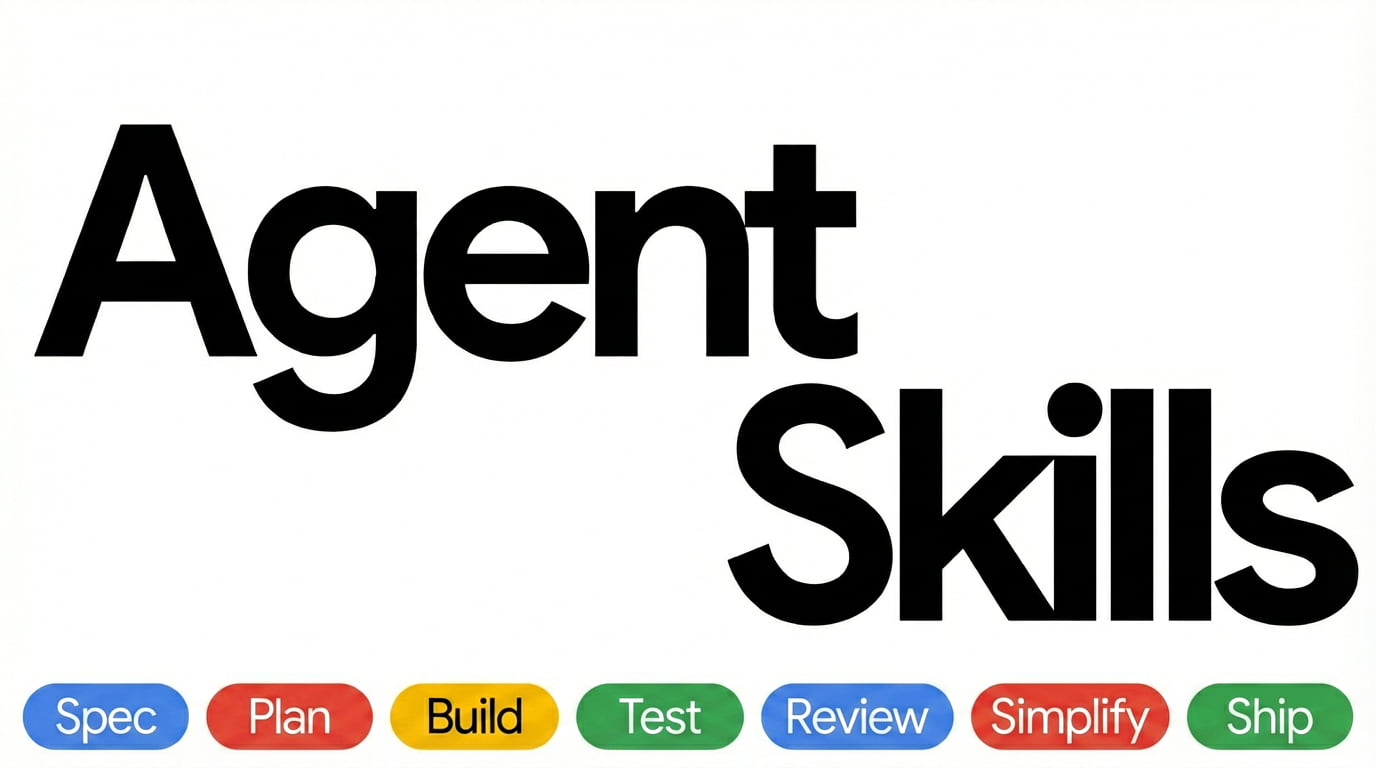
Production-grade engineering skills for AI coding agents.