Portable AI agent runtime for the JVM. One @Agent class runs on Spring AI, LangChain4j, Anthropic, or 9 more behind one SPI. Token streaming, tool calls, human approvals, and governance over WebSocket, SSE, gRPC, or WebTransport/HTTP3. Speaks MCP, A2A, and AG-UI.
C# coding-agent harness (.NET 10, Microsoft Agent Framework) — sessions, tools, permissions, providers, MCP, plugins

Universal memory runtime for AI agents
A theoretical reconstruction of the Claude Mythos architecture, built from first principles using the available research literature.
Model Context Protocol management suite/factory. An MCP that can generate and manage other local MCPs in multiple languages. Uses the official SDKs for code gen.
A minimal yet powerful framework for creating AI agents with full control over tools, providers, and execution flow.
Next-gen AI memory layer with importance scoring, temporal decay, hierarchical memory, and YMYL prioritization
Build an agent harness and control it end-to-end. Open-source SDK for production AI agents in Python & TypeScript - any model, any cloud.
Open-source, self-hosted Claude Code - a terminal AI assistant and the Python framework behind it. Tool-calling, sandboxed execution, multi-agent teams, skills, checkpoints, unlimited context - on Pydantic AI, any model.

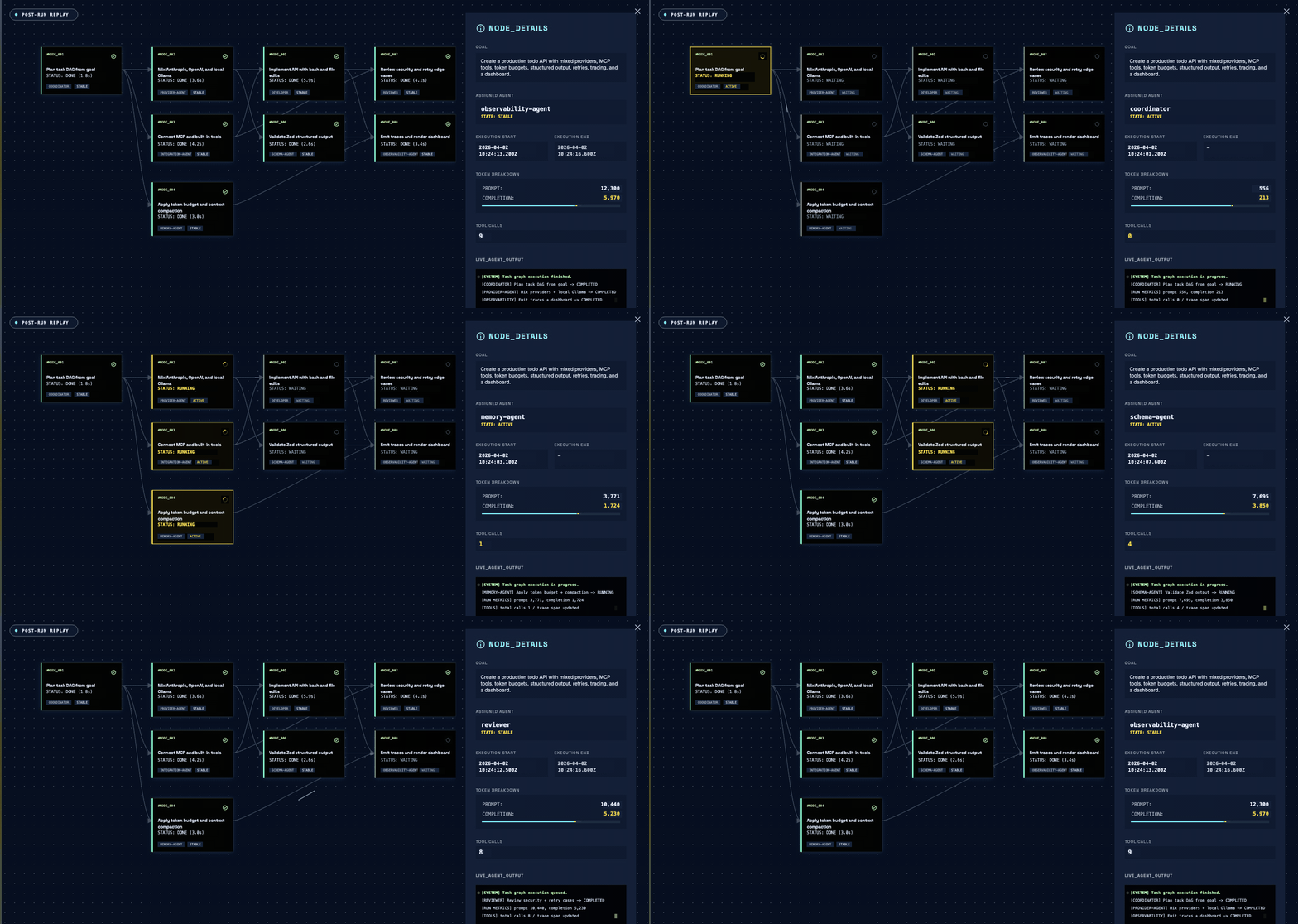
TypeScript multi-agent framework that runs in your own environment: consequential actions wait for approval and every run leaves a verifiable record. Describe the goal, not the graph. 13 built-in providers (Claude, OpenAI, Gemini, DeepSeek and more) plus any OpenAI-compatible endpoint, local models included.
Koog is a JVM (Java and Kotlin) framework for building predictable, fault-tolerant and enterprise-ready AI agents across all platforms – from backend services to Android and iOS, JVM, and even in-browser environments. Koog is based on our AI products expertise and provides proven solutions for complex LLM and AI problems