

obra/
superpowers

obra/superpowersSkills
An agentic skills framework & software development methodology that works.
285k
1 add
Hermes Field Kit packages a catalog of Hermes-compatible skills that have been used in real workflows and documented with behavior tests. The repository keeps skills discoverable under `skills/`, tracks them in `catalog.json`, and validates the bundle with scripts in `scripts/` and schemas in `schemas/`. It is designed for people who want a stable, reproducible skill pack rather than an open-ended prompt dump. Each skill follows the same admission rule, versioning approach, and documentation contract.
Builders who want Hermes Agent skills they can install and reuse across real tasks.
You can add proven, reproducible workflows to Hermes Agent without rebuilding them from scratch.
Lists reusable skills such as session handoff, stack doctor, token audit, and change review under `skills/<skill-name>/`.
Separates field-tested skills from experimental ones and explains the promotion rule for moving a skill into the stable catalog.
Defines required `SKILL.md` content, triggers, limitations, examples, and behavior-oriented test cases in `docs/skill-specification.md` and `schemas/test-cases.schema.json`.
Checks tap layout, catalog agreement, frontmatter, behavior cases, JSON validity, and secret patterns with `scripts/validate.py`.
Runs extra checks for published skills, public-tree safety, Markdown links, and Python parsing with `scripts/validate_release_wave.py`.
Provides `templates/skill-template/` as a starting scaffold for new skill authoring.
inspect -> diagnose -> plan -> execute -> verify -> hand off
hermes skills inspect asimons81/hermes-field-kit/hermes-stack-doctor
hermes skills install asimons81/hermes-field-kit/hermes-stack-doctor --yes
python scripts/validate.py
python -m unittest discover -s tests -v
python scripts/validate_release_wave.py
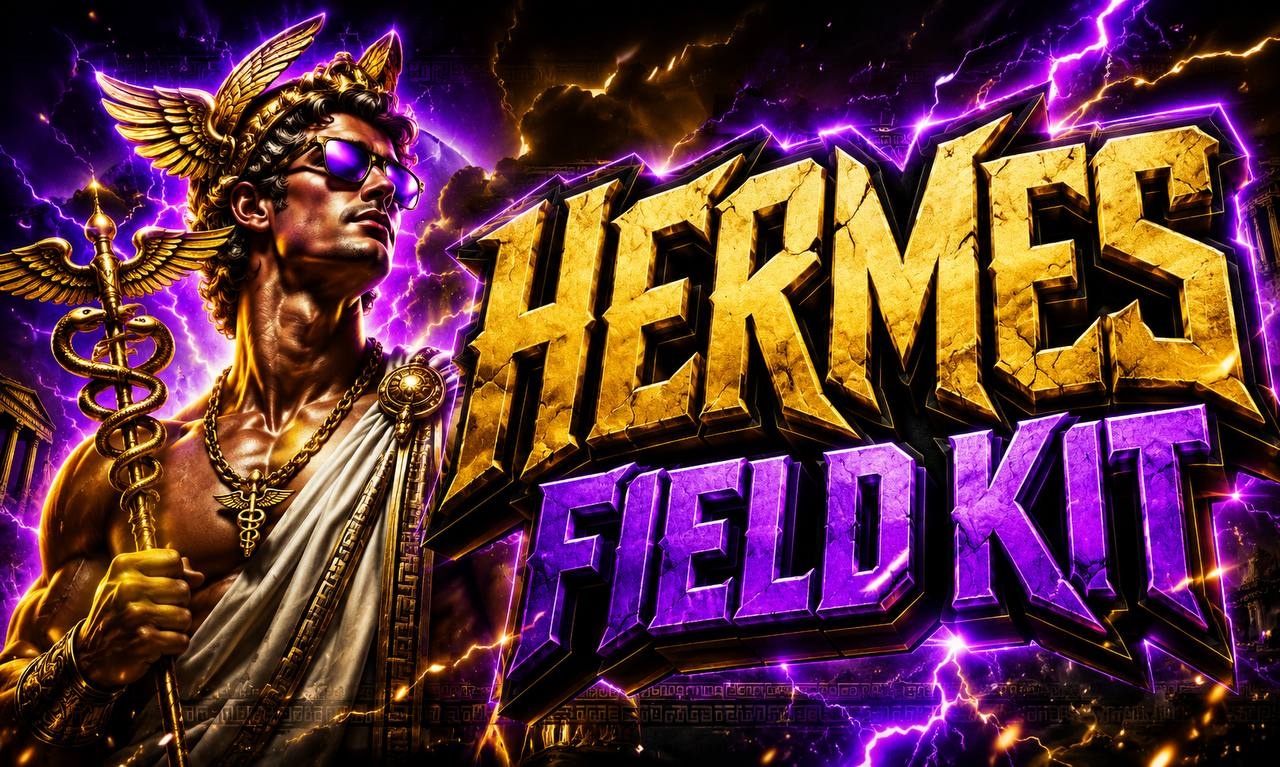


Field-tested, open-source skills for Hermes Agent.
Tags: hermes-agent · hermes-ai · ai-agents · agent-skills · developer-tools · automation · open-source · tonysimons_
Hermes Field Kit is a curated collection of reusable workflows that have earned their place through real, repeated use. It is intentionally not a bulk skill dump. Experimental entries are explicitly marked while they accumulate the field evidence required for stable promotion.
Version 1.0.1 is the current tagged release. The 1.1.0 release branch expands the working catalog to thirteen stable skills plus six experimental skills.
The catalog includes private-by-default analytics, source-locked writing, evidence discipline, session continuity, Hermes-native work decomposition, post-build review, and an operational Field Kit organized around:
inspect -> diagnose -> plan -> execute -> verify -> hand off
The repository applies the same admission rule to every future stable skill.
A skill belongs in the stable catalog only when all three statements are true:
Generated filler, speculative prompts, thin wrappers, and untested skill bundles do not qualify. Experimental skills must have a concrete use case, explicit limitations, behavior tests, and a defined path to stable promotion.
SKILL.mdskills/<skill-name>/See the skill specification for the complete contract.
skills/<skill-name>/       Published tap-discoverable skills
catalog.json               Machine-readable index and category metadata
templates/skill-template/  Nonfunctional authoring scaffold
schemas/                   Machine-readable catalog and test schemas
scripts/validate.py         Dependency-free repository validator
scripts/validate_release_wave.py  Published-skill and public-tree hardening validator
tests/                     Validator contract tests
docs/                      Installation, design, testing, and release policy
.github/                   Contribution forms, dependency updates, and CI
what-have-we-done-today experimental: Scan today's sessions, kanban boards, and cron runs across all profile stores and write an append-friendly daily markdown recap.dont-lie-to-me experimental: Separate observation, sourced claims, user reports, inference, unknowns, and contradictions before strong factual or completion claims.hermes-change-review experimental: Review implementation independently for intent fidelity, repository quality, and actual verification evidence.hermes-environment-migration: Safely migrate Hermes environments with staged archives, integrity manifests, secret separation, selective imports, verification, and rollback.hermes-gateway-doctor: Diagnose gateway failures from process, adapter, credential-posture, log, delivery, and persistence evidence without automatic repair.hermes-kanbanize experimental: Turn settled conversation/spec context into a Hermes-native Kanban graph with acceptance criteria, blocking edges, a verified frontier, and execution gating.hermes-profile-audit: Compare a profile's declared responsibilities with its actual tools, skills, persistence, access, and observed behavior without rewriting it.hermes-session-handoff experimental: Build a portable continuation packet with verified state, artifacts, blockers, re-verification needs, and an exact fresh-session prompt.hermes-skill-audit: Audit global and profile-local skills for dependencies, frontmatter, usage integrity, cron references, duplicates, and upstream drift.hermes-skill-consolidate experimental: Safely consolidate or restructure overlapping skills with read-only planning, scope-bound approval, rollback snapshots, staged writes, and post-change verification.hermes-stack-doctor: Discover the installation architecture, delegate to focused evidence contracts, and report a GREEN, YELLOW, or RED stack verdict without repairs.hermes-token-audit: Audit token usage and cost with live schema discovery, aggregate-first privacy, and clear separation between estimates and provider billing.hermes-update-doctor: Investigate update failures by separating remote drift, repository divergence, process locks, stale caches, partial installs, and runtime mismatches.interview-me: Ask one high-value question at a time, inspect available sources before questioning, and stop when more questions would not change the next action.omarchy-theme-maker: Derive a contrast-checked Omarchy theme palette from any image, install it as the theme background, and apply it with omarchy theme set.oss-tool-trust-audit: Read source and release machinery, treat popularity as context rather than proof, and separate technical legitimacy from adoption fit.pre-build-feature-audit: Run a read-only duplicate check across source, history, branches, issues, pull requests, roadmaps, and contributor guidance.repo-readiness-audit: Determine whether a Git repository is ready for development, release, handoff, or contribution using independent evidence from repository and collaboration surfaces.x-analytics-import: Validate, normalize, import, and compare X Analytics CSV exports through a repeatable private-by-default workflow.x-post-writer: Draft, rewrite, and repurpose short-form X content with source fidelity, format routing, and claim verification.Read Design Principles for the reasoning behind these rules.
Install any published skill by its repository-qualified identifier:
hermes skills inspect asimons81/hermes-field-kit/hermes-stack-doctor
hermes skills install asimons81/hermes-field-kit/hermes-stack-doctor --yes
Replace hermes-stack-doctor with any name from the published-skills list. Start a new Hermes session after installation because discovery may be cached for the lifetime of an existing session.
See Installation for inspection, installation, update behavior, removal, manual installation, and platform paths.
python scripts/validate.py
python -m unittest discover -s tests -v
python scripts/validate_release_wave.py
The repository validator checks tap layout, catalog agreement, frontmatter, behavior cases, supporting paths, JSON validity, and common secret patterns. The hardening validator runs contract tests for every published skill, runs bundle validators where supplied, parses every Python file, checks relative Markdown links, rejects generated artifacts, and scans the public tree for private or credential-bearing material.
Start with CONTRIBUTING.md. New skill proposals use the dedicated GitHub issue form and must include evidence of real use without exposing private information.
The repository and catalog use Semantic Versioning. Individual skills carry their own SemVer version in SKILL.md. No release tag will be created solely for the scaffold.
See Release Process and Compatibility.
Never submit API keys, session tokens, private analytics exports, customer data, unpublished credentials, or personal configuration. Report suspected exposure privately as described in SECURITY.md.
This is an independent community repository for skills compatible with Hermes Agent. It is not an official Nous Research repository and does not imply endorsement.
Apache License 2.0. See LICENSE.
Sign in to join the discussion.
No comments yet. Be the first to say what this is good for.
An agentic skills framework & software development methodology that works.
Turn any codebase, with its docs, SQL schemas, configs, and PDFs, into a queryable knowledge graph. A /graphify skill for Claude Code, Cursor, Codex, and Gemini CLI: local deterministic AST parsing, every edge explained, no vector store.

Topic in, narrated explainer video out. A Claude Code / Codex skill that turns any topic into a black-canvas motion-graphics explainer video with TTS voiceover, subtitles and a chapter progress bar. Chinese or English; every frame drawn in code with Remotion.
Public repository for Agent Skills
Open-source AI job search: scan job portals, evaluate listings into a structured A-H report with a global 1-5 score, tailor your CV, track applications — runs locally in your AI coding CLI (Claude Code, Codex, OpenCode, Antigravity…)
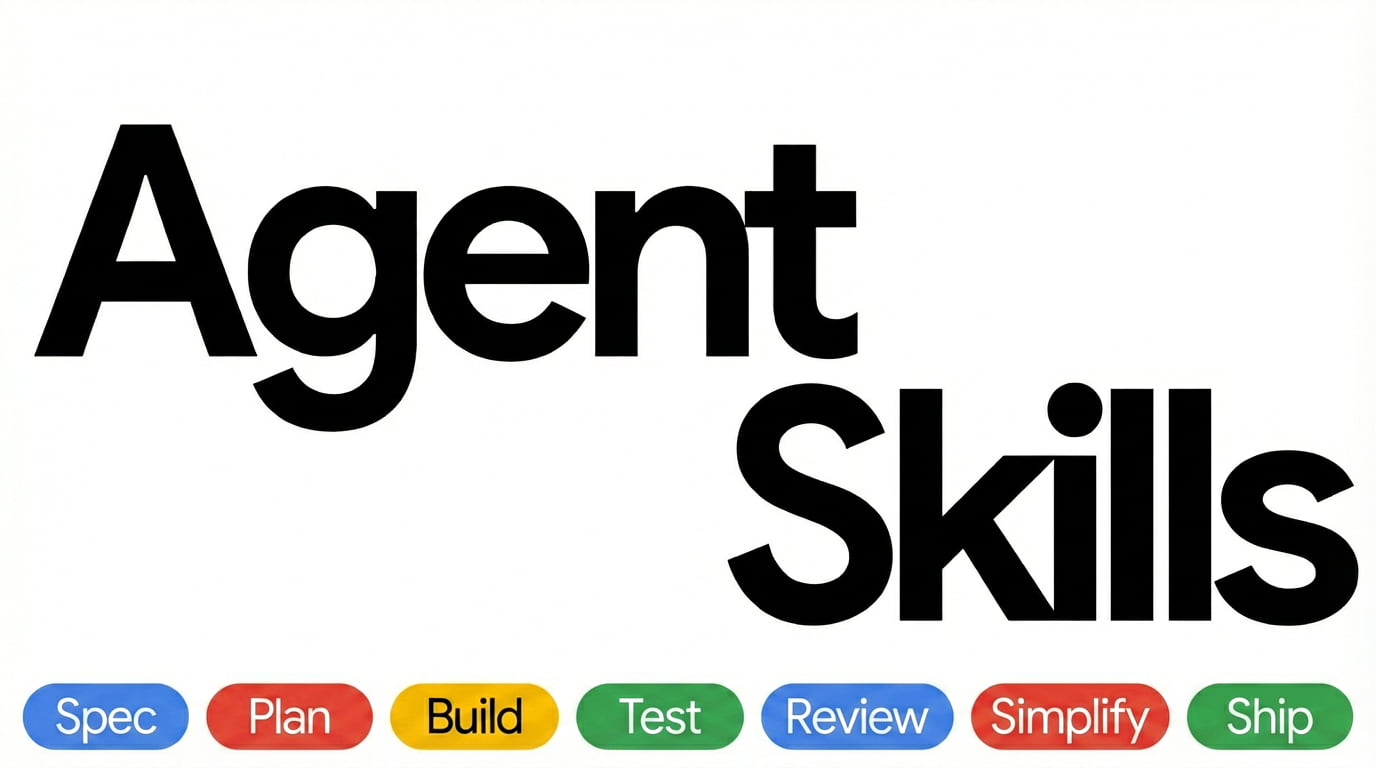
Production-grade engineering skills for AI coding agents.