
DietrichGebert/ponytailPlugins
Makes your AI agent think like the laziest senior dev in the room. The best code is the code you never wrote.
138k
1 add
This plugin turns Claude Code into a content factory that researches a topic, writes the article, checks facts, adds schema and visuals, publishes to WordPress as a draft, and verifies the live page. It is built as a plugin bundle with skills, agents, hooks, scripts, schemas, and install files that work together as one pipeline.
Builders who want Claude Code to handle SEO content production, publishing, and site audits in a repeatable workflow.
You can move from keyword to drafted, fact-checked, WordPress-ready content with fewer manual steps and tighter quality checks.
Runs `/article` as a multi-stage workflow for research, outline, writing, fact-checking, optimization, and publish prep.
Runs `/website-audit` to crawl a site and fan out specialist audit agents for SEO analysis.
Uses `skills/`, `agents/`, and `subskills/` to break the work into focused steps with least-tool isolation.
Uses `hooks/` scripts for cost checks, schema validation, session startup, and cleanup.
Includes install helpers and a WordPress MU-plugin path for publishing and metadata handling.
Uses `schemas/` and `references/` to keep outputs validated and the workflow consistent.




Production-grade SEO + GEO content factory for Claude Code
Research → write → fact-check → optimize → publish → monitor, on the
Google + AI search dual front — ChatGPT, Perplexity, Claude, Gemini, Google AI Overviews
Open-sourced by Loamwright(沃匠), the SEO agency that runs it in production — founder Lewei Zhang
English | 简体中文
Quick Start • Pipeline • Features • Architecture • Quality Gates • Hard Rules • Public Tree • Contributing
A Claude Code plugin that turns one command — /article "your keyword" — into a
researched, cited, humanized, visually designed, schema-marked long-form article,
published to WordPress as a draft and verified on the live URL. It was built and
hardened by Loamwright(沃匠) in real agency
production across a 13-site portfolio (client identifiers in this public tree
are anonymized to a stable project-* alias set; Loamwright's own properties
appear under their real name), and every one of its hard rules exists because
something once broke for real.
Two standalone entry points ship in the same plugin:
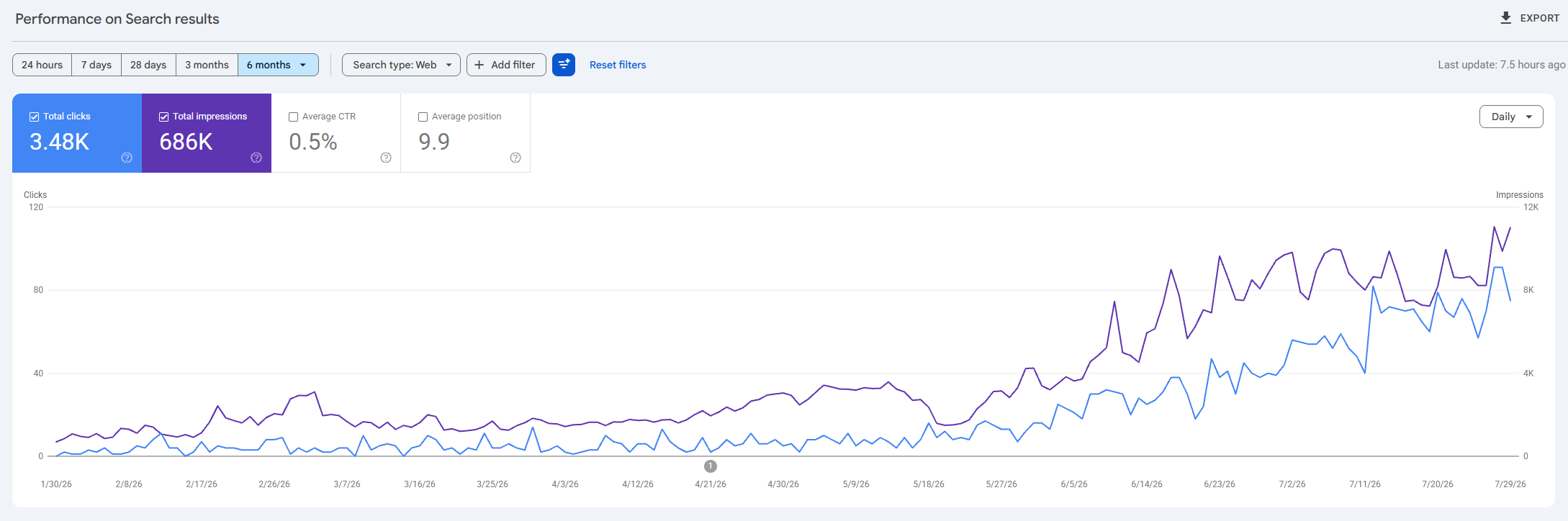
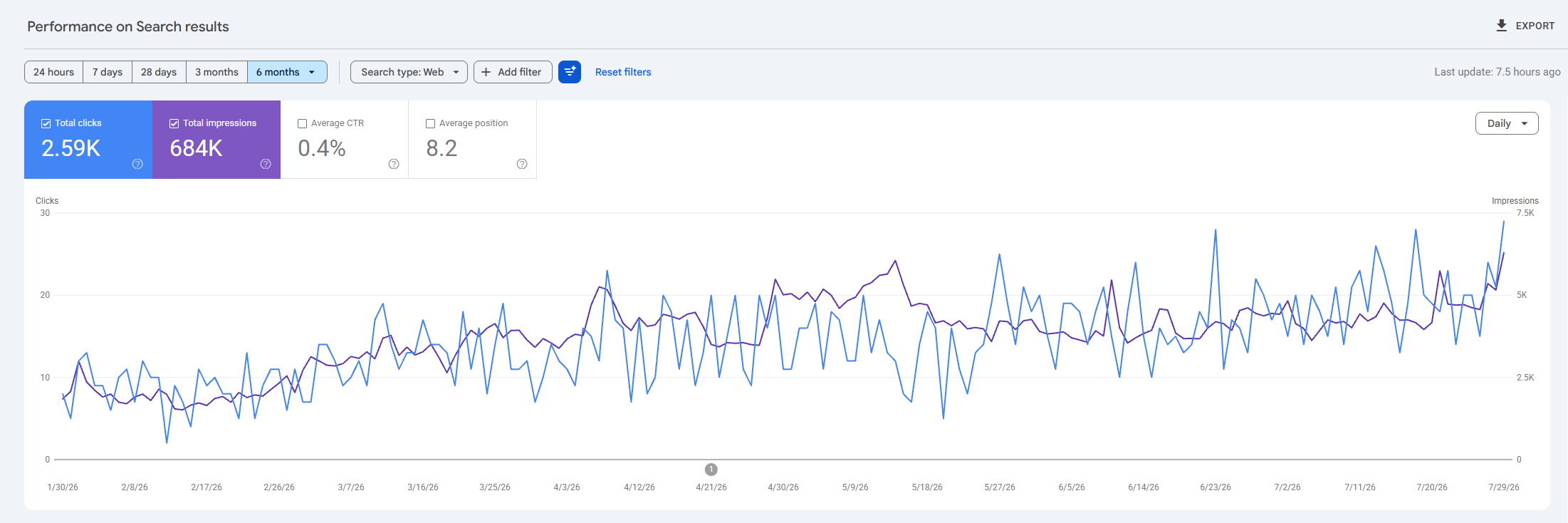
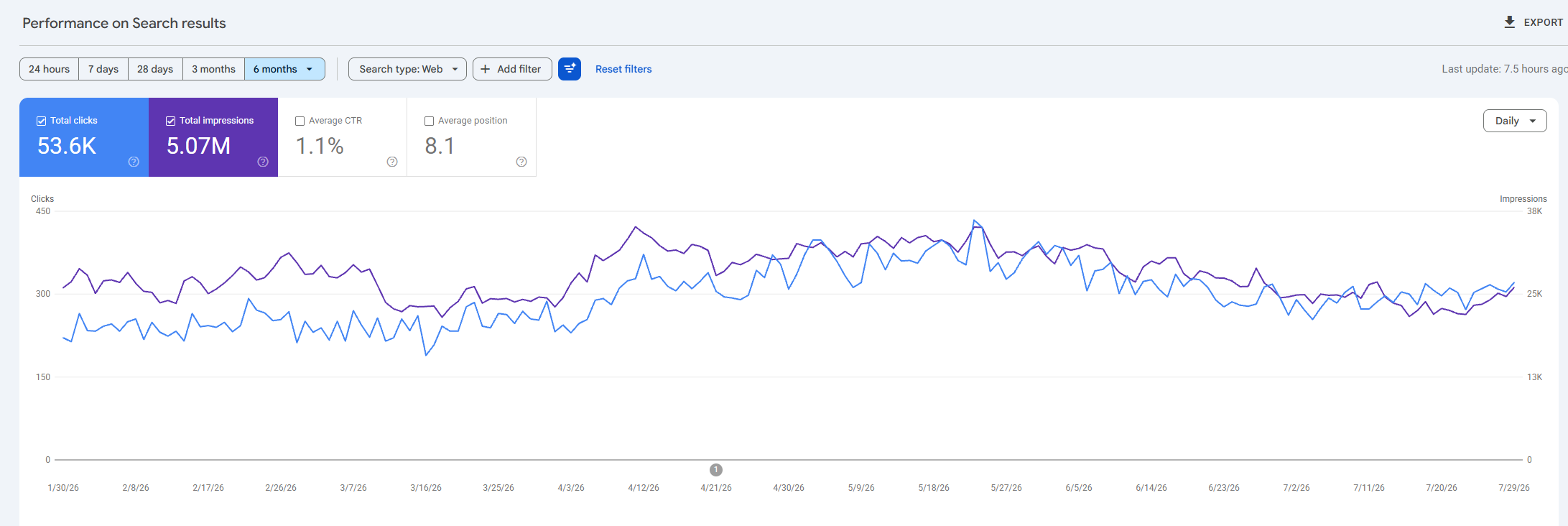
/article pipeline (5 phases, 45-stage deterministic orchestrator)/website-audit crawls up to 500 pages and fans out 15 specialist agentsSix months of production testing across dozens of sites — publishing with zero backlink building — shows Google Search Console clicks and impressions climbing linearly, on content alone. Three sites from the portfolio (6-month windows, Daily view, site names withheld):
A new site lifting off from zero — 3.48K clicks · 686K impressions:
A steady linear climb — 2.59K clicks · 684K impressions:
At scale — 53.6K clicks · 5.07M impressions:
You're welcome to put it to the test on your own site.
| Component | Count |
|---|---|
| Orchestrator skills (L1/L2) | 8 |
| Atomic subskills (L3) | 67 |
| Subagents, least-tool isolation (L4) | 34 |
| Python utilities (L5) | 230+ |
| Article format templates | 27 |
| RAG reference docs | 102 |
| JSON Schema contracts | 22 |
| Pipeline stages (deterministic state machine) | 45 |
| Render-lint leak classes | 13 (L1–L13) |
| Post-publish live-URL checks | 29 |
| Hard rules derived from production failures | 14 |
# 1. Install into Claude Code
/plugin install /path/to/xuanran-seo-blog-writer/

# 2. Initialize a project (any industry — the wizard detects your archetype)
/init https://your-website.com
#  → interactive setup: brand voice, products, competitors, GEO baseline
#  → outputs projects/{slug}/business-context.json + brand guideline

# 3. Write a complete SEO + GEO article
/article "best espresso grinder under $300"
#  → 5000-word draft, 4 AI-generated 4K images, real data charts
#  → 8-10 APA-7 references, every stat fact-checked against its source
#  → JSON-LD schema, full RankMath meta, scoped article CSS
#  → publishes as DRAFT; goes live only on your explicit confirmation

# 4. Or audit an entire site
/website-audit https://example.com --max-pages 200
#  → SEO Health Score 0-100, enterprise HTML report + action plan
| Dependency | Purpose | Notes |
|---|---|---|
| Python 3.11+ | Runtime for scripts, lints, publishers | pip install -r requirements.txt |
| Claude Code | Host + LLM orchestration | plugin host |
| OpenAI API | Image generation (gpt-image-2) | optional relay providers supported |
| Tavily API | Research / SERP extraction | free tier works; key-pool rotation built in |
| WordPress | Publishing target | Application Password over HTTPS |
| SerpApi, GSC/GA4, Vertex | Rank tracking, first-party data, image fallback | optional |
Credentials are collected by the /init wizard and stored outside the repo in
~/.xuanran-seo/credentials/. Nothing secret ever lives in the plugin tree.
Research  →  Plan  →  Build  →  Optimize  →  Publish  →  Monitor
   │           │         │          │            │           │
 SERP +     format +  N parallel  humanize +  images +   T+7/14/30/90
 keyword    angle +   offline     visual      CSS wrap + rank / AI
 gaps +     outline + writers +   design +    RankMath + visibility /
 community  image     fact-check  lint gates+ 29 live    drift / decay
 research   prompts   citations   4 QA gates  checks     refresh
scripts/pipeline/orchestrator.py, 45 stages) dispatches every stage and
verifies every artifact. The LLM never gets to "forget" a stage; completion
gates read each artifact's verdict, not just its existence.memory/workspace/{task_id}/, validated against schemas/*.schema.json.
No shared context, no prompt-drift contamination.[claim:cN] marker; the fact-checker fetches
the cited URL and verifies the number appears on the page, replaces
fabrications, then builds the APA-7 References block (link-resolved, ≤15 entries).status: "publish" requires explicit opt-in per
conversation or a per-project standing policy.wp:html wrapping;
RankMath meta via the canonical REST bridge (an MU-plugin ships in install/).┌──────────────────────────────────────────────────────────────┐
│ L1 Master orchestrators │
│ skills/seo-blog (article pipeline, 5 phases) │
│ skills/website-audit (full-site audit) │
│ skills/weekly-digest (industry news digest) │
├──────────────────────────────────────────────────────────────┤
│ L2 Phase orchestrators │
│ phase-research → phase-build → phase-optimize │
│ → phase-publish → phase-monitor │
├──────────────────────────────────────────────────────────────┤
│ L3 Atomic subskills (67) │
│ format-selector, outline-architect, section-drafter, │
│ fact-check-and-citation, humanizer, visual-designer, │
│ schema-generator, cta-placement, localization-pass, ... │
├──────────────────────────────────────────────────────────────┤
│ L4 Subagents (34) — least-tool isolation │
│ writer (Read+Write only), researcher (web, SSRF-guarded),│
│ fact-checker, reviewer (no pipeline history — no bias), │
│ 15× audit-*, image-prompt-designer, image-visual-qa, ... │
├──────────────────────────────────────────────────────────────┤
│ L5 Python utilities (230+) │
│ _core/ file bus, cost ledger, credential hub, SSRF │
│ pipeline/ orchestrator state machine + publish gates │
│ build/ markdown→HTML, assembler, charts, CSS gen │
│ lint/ 30 deterministic checkers (L1–L13 render, …) │
│ openai/ image pipeline (4K, batch+realtime+fallback) │
│ wordpress/ REST client, publisher, taxonomy, verify │
│ monitor/ rank, drift, decay, internal link graph │
└──────────────────────────────────────────────────────────────┘
Least-tool isolation is enforced per agent — the writer cannot browse, the reviewer cannot see pipeline history, only the researcher and fact-checker have web access, and every URL fetch passes an SSRF guard.
Deterministic lint gates run first (all must be clean):
| Gate | Checks |
|---|---|
| Render lint | 13 leak classes (L1–L13): escaped HTML, scaffold markers, BOM, GFM task-list brackets, competitor links, … |
| Stat-grid contract | display figures fit their cards (≤16 chars, digit-led) |
| Keyword density | asymmetric band 0.4–1.5% (hard veto only above) |
| PAA alignment | FAQ answers match Google's People-Also-Ask phrasing |
| Locale spelling | dialect consistency (en-US / en-GB / en-CA …) |
| Local uniqueness | Sterling-Sky-style 80/20 anti-doorway scoring (local mode) |
| Image placeholders | 5 drift classes between slots, files and body markers |
Then four LLM quality gates (all must pass, with a 5-level repair-escalation loop capped at 4 rounds):
Every rule below exists because a real production incident demanded it. The full
text with enforcement details lives in CLAUDE.md.
| # | Rule |
|---|---|
| 1 | Exact-keyword fidelity — a new keyword variant is a new article; never silently canonicalize to a near-neighbor. |
| 2 | Project CSS injection is mandatory at publish — the wrapper class must equal the CSS scope selector exactly. |
| 3 | RankMath meta via the canonical REST bridge — never the legacy route, never updateMeta for schema. |
| 4 | Always verify the live URL after publish — HTTP 200 from the API can coexist with a front-end 500. |
| 5a | Default WordPress status is draft — going live requires explicit user opt-in. |
| 5 | References section + article signature are mandatory — visible, link-resolvable, APA-7. |
| 6 | Markdown is NOT an executor — every documented behavior needs a real script and a real invocation. |
| 7 | Parallel sessions must be isolated — env-pinned project identity, locked shared files, one driver per workspace. |
| 8 | Competitor domains are never cited — machine-enforced at 9 layers, end to end. |
| 9 | Classify SDK errors by exception type — and test against real SDK error objects, not invented strings. |
| 10 | Test the end-to-end seam — green helper tests prove nothing about the assembled behavior. |
| 11 | A contract change is a fan-out edit — update every instruction layer that states the contract. |
| 12 | A gate must read the verdict — "artifact exists" and "artifact says pass" are different questions. |
| 13 | Article CSS is a 3-hop artifact — skill → project → post; fixing the generator fixes nothing already shipped. |
xuanran-seo-blog-writer/
├── .claude-plugin/       Plugin + marketplace manifests
├── skills/               8 L1/L2 orchestrators (seo-blog, website-audit, phases…)
├── subskills/            67 atomic L3 capabilities
├── agents/               34 L4 subagents (least-tool isolation)
├── scripts/              230+ L5 Python utilities
├── references/           102 RAG-loaded knowledge docs
├── schemas/              22 JSON Schema contracts
├── templates/            27 article format templates
├── hooks/                Cost guard, schema validation, session lifecycle
├── install/              Installers + WordPress MU-plugins (RankMath bridge)
├── bin/                  Session launchers (parallel multi-project)
├── projects/             Per-client archives — created by /init, never committed
├── CLAUDE.md             Dev conventions + the 14 hard rules
└── CHANGELOG.md          Full version history (anonymized)
This public repository is a sanitized export of a private production tree
(scripts/release/opensource_export.py builds it: whitelist copy → anonymization
map → leak scan). Three things are intentionally absent:
projects/{slug}/) — created locally by /init; the
public tree ships only a placeholder README.tests/, 150+ files) and eval
fixtures — they encode client-specific incidents; CI-grade linting
(ruff, mypy --strict) still applies to every contribution.memory/, docs/) — session archives and design
history referenced by CHANGELOG entries.All third-party client site names in code comments, docs and the changelog are
anonymized to a stable alias set (project-alpha, project-bravo, …,
*.example.com). The maintainer's own brand — Loamwright(沃匠)— appears under
its real name.
# ~/.xuanran-seo/config.yaml (created by /init)
cost_limits:
  per_article: 2.00      # USD ceilings — pipeline halts for approval
  daily: 10.00
  weekly: 30.00
  monthly: 50.00
models: {}               # model routing overrides (never hardcoded in scripts)
~/.xuanran-seo/credentials/ via the credential hub
(env var → file → keychain). Never in the repo, never in git.~/.xuanran-seo/active-project, or pin per session with
bin/launch-session.ps1 <slug> / .sh for parallel multi-site work.scripts/_core/credential_hub.pyscripts/_core/ssrf_guard.py)Follow the Rule 6 contract:
scripts/**.py first — markdown alone is not an executorruff check . and mypy --strict scripts/ cleangrep -rn "your_script" skills/ subskills/ scripts/ hooks/
must show a real invocationSupport policy (best-effort; how to report bugs and security issues): see SUPPORT.md.
VERSION is the single source of truth; python -m scripts._core.manifest_consistency_check --apply
syncs the plugin + marketplace manifests and installers. CI fails on drift.
This plugin is the production engine of Loamwright (Chinese name: 沃匠), an SEO agency founded by Lewei Zhang (X @leweijames · LinkedIn). Everything the tool enforces — GEO/AI-search optimization, E-E-A-T scoring, citation integrity, draft-first publishing discipline — is the same playbook we run for clients across e-commerce, B2B manufacturing, local services and content sites.
Want this level of SEO run for your site? → loamwrightseo.com · we take on a limited number of new projects each quarter.
Apache-2.0 © 2026 Lewei Zhang — Loamwright(沃匠). See NOTICE.
Built with deep research, paranoid red-teaming, and the assumption that markdown alone is not an executor.
Sign in to join the discussion.
No comments yet. Be the first to say what this is good for.
Makes your AI agent think like the laziest senior dev in the room. The best code is the code you never wrote.
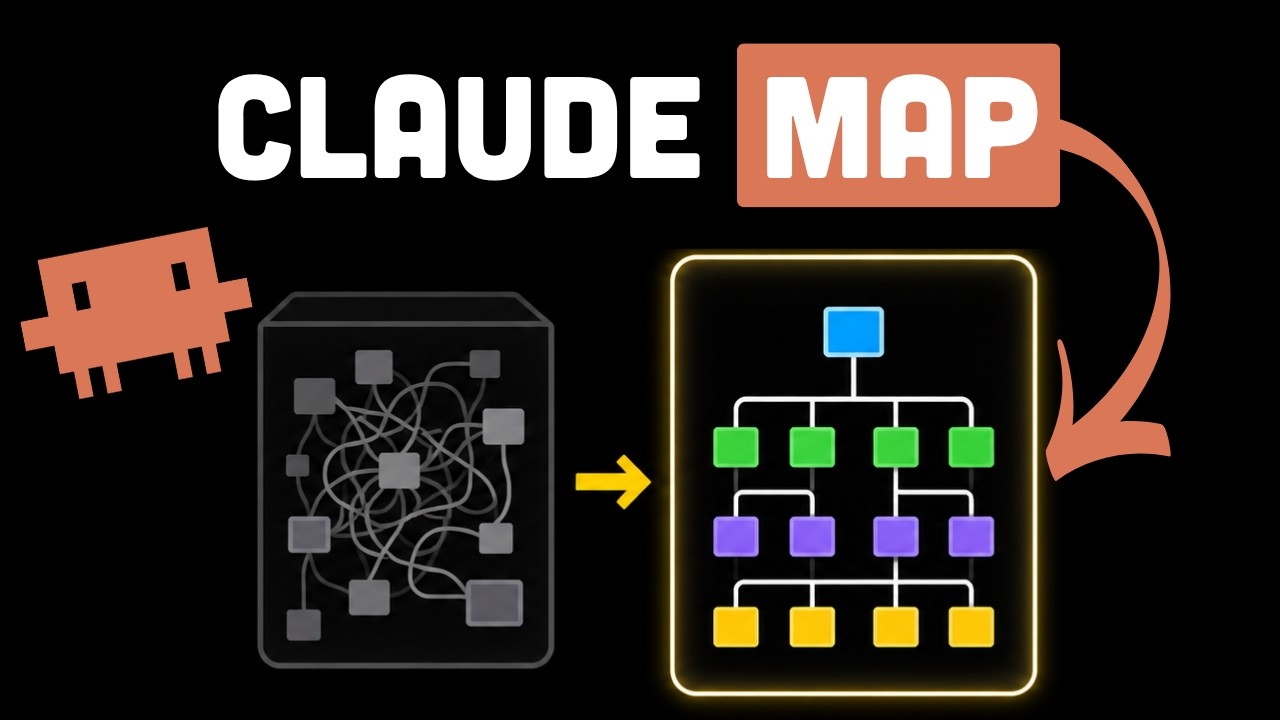
Graphs that teach > graphs that impress. Turn any code into an interactive knowledge graph you can explore, search, and ask questions about. Works with Claude Code, Codex, Cursor, Copilot, Gemini CLI, and more.

OmO: Just type "mass ulw" keyword with your prompt. Now you are the master of graph engineering.
Persistent Context Across Sessions for Every Agent – Captures everything your agent does during sessions, compresses it with AI, and injects relevant context back into future sessions. Works with Claude Code, OpenClaw, Codex, Gemini, Hermes, Copilot, OpenCode + More
Opinionated Oxlint rules for rejecting low-evidence TypeScript and JavaScript patterns
Teams-first Multi-agent orchestration for Claude Code