
affaan-m/
ECC

affaan-m/ECCHarnesses
The agent harness performance optimization system. Skills, instincts, memory, security, and research-first development for Claude Code, Codex, Opencode, Cursor and beyond.
258k
`intuitive-flow` is a portable workflow kit that gives agent-run repos a small human surface and a larger agent surface. It organizes reusable behavior in skills, keeps repo guidance in `CLAUDE.md` and `AGENTS.md`, and uses update scripts to manage selected skills and local state.
Builders who want their agent-led repo to stay small, consistent, and easier to maintain across Claude Code, Codex, and Gemini CLI.
You can keep agent work structured around reusable skills and repo-local rules instead of rewriting the same process in every project.
Curates and installs selected skills from multiple sources through an explicit allowlist and routed policy.
Uses `CLAUDE.md` and `AGENTS.md` so each repo carries its own instructions instead of a copied manual.
Provides routes for pruning stale surfaces, merging duplicate guidance, and realigning docs with code.
Adds routes for turning fuzzy work into plans, contracts, and review before implementation.
Ships `scripts/update.sh` and supporting scripts to sync skills and manage on-demand installs.
Includes `.githooks/` and `.claude/settings.json` for local agent behavior and repository automation.
git clone --depth=1 https://github.com/MiaoDX/intuitive-flow.git ~/intuitive-flow
~/intuitive-flow/scripts/update.sh
INTUITIVE_FLOW_ON_DEMAND_SKILLS=plan-bakeoff ~/intuitive-flow/scripts/update.sh
bun install
bun run setup:hooks
bun run verify
An opinionated operating model for agent-written software.
intuitive-flow is a portable workflow kit for Claude Code and Codex. It keeps
the human surface small, puts reusable workflows in skills, and gives each repo
local CLAUDE.md / AGENTS.md guidance instead of a copied process manual.




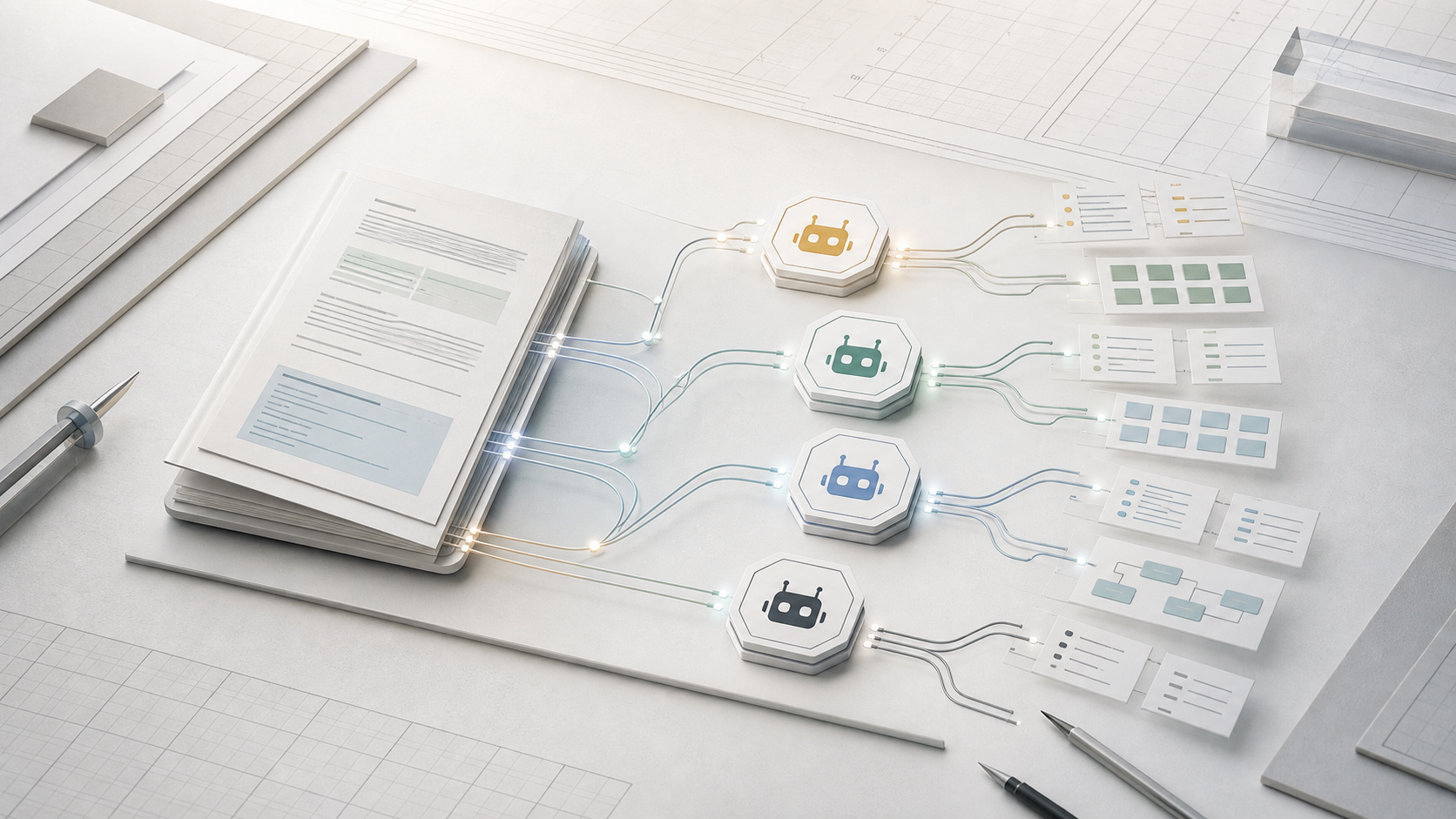
AI agents write all my code, so the repo needs two surfaces.
The human surface should stay tiny: README.md, ARCHITECTURE.md,
STATUS.md, and docs/human/**. This is where I decide what the project is,
what good means, and what must not break.
Everything else is agent territory: source code, plans, logs, generated evidence, retrospectives, scratch work, and low-level churn. Humans can inspect it when something is risky or broken. They should not have to live there.
intuitive-flow exists to make the counter-pressure explicit. AI coding changes
the default shape of a repo: agents are good at adding code, tests, plans, logs,
and helper surfaces, but they are less likely to stop and ask whether the repo
became easier to understand.
The first job is maintenance through entropy reduction. A repo needs regular passes that remove stale surfaces, merge duplicate guidance, clean known seams, realign docs with code, and make the next human or agent less surprised.
The second job is deliberate feature development. New work should not jump straight from idea to implementation when the scope is fuzzy. It should become a plan, get challenged against the repo's language and boundaries, turn into an execution contract, and only then be implemented and verified.
See BELIEFS.md for the doctrine behind this workflow.
The operating bias is deliberately small:
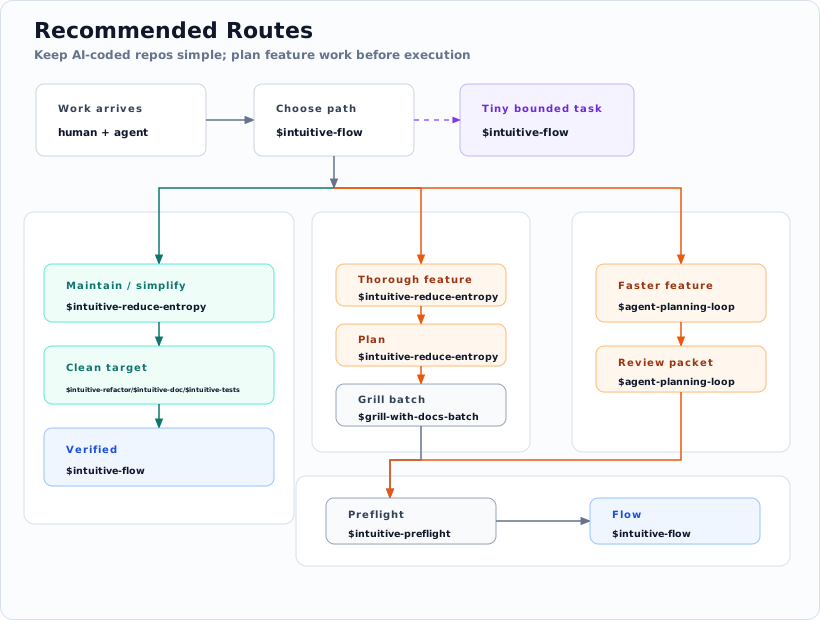
Start by choosing the kind of work:
| Work | Route |
|---|---|
| Maintain or simplify a repo | $intuitive-reduce-entropy in repo entropy mode, then route selected cleanup to the owning skill and verify it |
| Research a question that needs multiple sources or competing claims reconciled | $research for evidence-led investigation with traceable sources and explicit confidence |
| Build a feature with unresolved scope or risk | $intuitive-preflight, using plan entropy, planning scouts, or grill-batch only when the contract needs them, then $intuitive-flow |
| Challenge an existing agent proposal | $cross-review for a bounded second opinion, then stop or route only the accepted recommendation |
| Align multiple planning perspectives | $agent-planning-loop -> $intuitive-preflight -> $intuitive-flow |
| Do a tiny bounded task | $intuitive-flow directly, when the change is local and easy to verify |
The rule of thumb is simple: reduce repo entropy when the codebase itself is getting harder to work in; use research when a decision needs evidence from multiple sources; use a planning path when the next feature is still unclear; use direct flow only when the task is already bounded.
The managed portfolio is explicit, not a broad import. This repo assigns
default, routed, on-demand, and host-specific policy to individual skills in
scripts/default-skill-allowlist.txt
and leaves the rest upstream until real use justifies promotion. Default and
routed entries install normally; on-demand entries remain registered without
occupying the normal discovery surface.
| Source | Stars | Selected | Skills used |
|---|---|---|---|
anthropics/skills |  | 1 | skill-creator |
skills-directory/skill-codex |  | 1 | codex |
mattpocock/skills |  | 7 | codebase-design, domain-modeling, grill-with-docs, grilling, handoff, improve-codebase-architecture, tdd |
DietrichGebert/ponytail |  | 5 | ponytail, ponytail-audit, ponytail-debt, ponytail-help, ponytail-review |
garrytan/gstack |  | 7 | gstack-autoplan, gstack-browse, gstack-investigate, gstack-open-gstack-browser, gstack-plan-eng-review, gstack-qa, gstack-review |
open-gsd/gsd-core |  | 11 | gsd-discuss-phase, gsd-execute-phase, gsd-ingest-docs, gsd-new-project, gsd-phase, gsd-plan-phase, gsd-surface, gsd-update, plus on-demand status/resume helpers |
Selections come from the allowlist. Upstream totals change independently and are intentionally not duplicated here.
Clone Intuitive Flow when you want the update scripts and local skill sync:
git clone --depth=1 https://github.com/MiaoDX/intuitive-flow.git ~/intuitive-flow
~/intuitive-flow/scripts/update.sh
Install a registered on-demand skill for one update run by naming it explicitly:
INTUITIVE_FLOW_ON_DEMAND_SKILLS=plan-bakeoff ~/intuitive-flow/scripts/update.sh
A later default update removes Intuitive-owned on-demand installs that are no longer selected. Host-specific external entries install only for their declared agent host.
For local development in this checkout:
bun install
bun run setup:hooks
bun run verify
Generated diagrams, vendored tools, planning scratchpads, and implementation evidence are context, not current truth unless a human doc promotes them.
PRs are welcome from humans and AI agents. The most useful contributions are sharper shared rules and fixes to workflows that drift as the underlying CLIs evolve.
MIT - see LICENSE.
Sign in to join the discussion.
No comments yet. Be the first to say what this is good for.
The agent harness performance optimization system. Skills, instincts, memory, security, and research-first development for Claude Code, Codex, Opencode, Cursor and beyond.
from vibe coding to agentic engineering - practice makes claude perfect
🌊 The original agent meta-harness. Deploy intelligent multi-player swarms, coordinate autonomous workflows, and build conversational AI systems. Features adaptive memory, self-learning intelligence, RAG integration, and native Claude Code / Codex / Hermes and many more Integrated
Practical patterns, starters & CLI tools for loop engineering with AI coding agents. Design systems that prompt and orchestrate agents (inspired by Addy Osmani and Boris Cherny). Includes loop-audit, loop-init, loop-cost.

Git. Ship. Done - Core

The most RAM efficient harness