
DietrichGebert/ponytailPlugins
Makes your AI agent think like the laziest senior dev in the room. The best code is the code you never wrote.
138k
1 add
LibreEmbed-Claude-Code packages embedded domain knowledge into Claude Code plugins, commands, skills, hooks, and templates. It is organized around the parts of embedded work that builders actually run into: board bring-up, drivers, RTOS patterns, debug trace, OTA updates, and safety-critical design.

Builders who use Claude Code to work on embedded systems, firmware, and IoT devices.
You can guide your agent with embedded-specific workflows instead of forcing web-app habits onto hardware work.
Fifteen plugins cover ARM Cortex-M, bare metal, bootloaders, buses, debug tracing, embedded Linux, testing, firmware updates, FPGA integration, IoT protocols, memory, power, RTOS, safety, and sensors.
Each plugin maps to a command such as `/rtos`, `/iot`, `/cortex-m`, `/comm-bus`, and `/firmware-update`.
The `hooks/` folder includes shell hooks like `pre-tool-use.sh`, `post-tool-use.sh`, and `session-start.sh` to shape agent behavior around tool use and sessions.
`templates/CLAUDE.md` gives a starting project instruction file for Claude Code-based embedded projects.
`learning-paths/beginner.md`, `learning-paths/intermediate.md`, and `learning-paths/advanced.md` stage the workflow from first board bring-up to shipping firmware.
/rtos design a task structure for a sensor logger that samples 4 channels at 1 kHz and writes to QSPI flash every 100 ms
Embedded systems, firmware, and IoT development with Claude Code — 15 specialized plugins from bare metal to RTOS


Skills, agents, commands, and workflows for embedded systems development with Claude Code.
Most LLM-assisted coding patterns assume a web stack. Embedded development isn't web. The toolchain is GCC + OpenOCD + a hardware debugger. The runtime is bare metal or a 32 KB RTOS. The bugs live in a register on a chip you can hold in your hand. The feedback loop is "compile, flash, watch the LED, decide."
LibreEmbed is the Claude Code stack for that work. Fifteen plugins covering the layers that actually matter when you're bringing up a board, writing a driver, debugging across SWD, or shipping firmware that has to survive a reflash in the field.
Andrej Karpathy framed the broader change in December 2025:
"I've never felt this much behind as a programmer. The profession is being dramatically refactored."
"New vocabulary: agents, subagents, their prompts, contexts, memory, modes, permissions, tools, plugins, skills, hooks, MCP, LSP, slash commands, workflows, IDE integrations..."
Embedded development has resisted that refactor longer than most domains. The reasons are real — proprietary toolchains, hardware-in-the-loop testing, safety constraints, vendor lock-in — but the result is that embedded teams have lagged in adopting agent-assisted workflows. LibreEmbed exists to close that gap. Each plugin encodes a slice of embedded expertise as agent prompts + commands + skills, so the agent can think alongside you when you're trying to figure out why the chip won't enumerate over USB.
| Claude Code component | LibreEmbed provides |
|---|---|
| Plugins | 15 domain plugins (RTOS, ARM Cortex-M, comm buses, IoT, FPGA, safety-critical, more) |
| Agents | Domain-specialist agents for each plugin — e.g., RTOS engineer, ARM Cortex-M expert, IoT protocol designer |
| Commands | Quick-access slash commands per plugin (/rtos, /comm-bus, /iot, /cortex-m, etc.) |
| Skills | Reusable pattern libraries — calibration routines, sensor fusion, bootloader patterns, OTA workflows |
| Hooks | Pre/post tool hooks for safety nets (e.g., warn before flashing untested code) |
| Templates | Project scaffolds, CLAUDE.md per plugin, Makefile + linker script starting points |
LibreEmbed-Claude-Code/
├── 15 plugins              # one per embedded subdomain
│   ├── arm-cortex-m       # ARM Cortex-M0/M3/M4/M7/M33 programming
│   ├── bare-metal          # Register manipulation, linker scripts, minimal runtime
│   ├── bootloader-design   # Bootloader architecture, secure boot, A/B partitions
│   ├── communication-buses # I2C, SPI, UART, CAN, USB protocols + drivers
│   ├── debug-trace         # JTAG, SWD, ITM, ETM, printf debugging, logic analyzers
│   ├── embedded-linux      # Yocto, Buildroot, device trees, kernel modules
│   ├── embedded-testing    # On-target unit tests, HIL testing, hardware mocks
│   ├── firmware-update     # OTA updates, dual-bank flash, rollback mechanisms
│   ├── fpga-integration    # MCU+FPGA integration, soft cores, HDL basics
│   ├── iot-protocols       # MQTT, CoAP, LwM2M, BLE, LoRaWAN, Zigbee, Thread
│   ├── memory-management   # Static allocation, pools, stack/heap analysis
│   ├── power-management    # Sleep modes, power budgeting, energy harvesting
│   ├── rtos-patterns       # FreeRTOS, Zephyr, task design, IPC, priority inversion
│   ├── safety-critical     # IEC 61508, DO-178C, MISRA C, certification patterns
│   └── sensor-integration  # Driver bring-up, calibration, filtering, fusion
├── 3 learning paths        # beginner → intermediate → advanced
├── templates               # Per-project CLAUDE.md, Makefile, linker, devicetree
└── hooks                   # Safety hooks (flash-warning, secret-scrub, etc.)
Each plugin ships an agent (specialist persona with deep domain knowledge), a command (quick slash invocation), and a skill (reusable pattern library).
| Plugin | Agent / Command | What it does |
|---|---|---|
| arm-cortex-m | /cortex-m | CMSIS, HAL vs. LL, startup code, vector table, MPU configuration, MMU on Cortex-A boundaries. ARM Cortex-M0+/M3/M4/M7/M33. |
| bare-metal | /bare-metal | Register-level programming, linker scripts, minimal runtime (no libc), C++ on embedded, freestanding builds. |
| memory-management | /memory | Static allocation strategies, memory pools, stack analysis via GCC -fstack-usage, heap-less design, fragmentation patterns. |
| power-management | /power | Sleep modes (run / sleep / stop / standby), peripheral clock gating, wake sources, power budgeting, energy harvesting designs. |
| Plugin | Agent / Command | What it does |
|---|---|---|
| communication-buses | /comm-bus | I2C (master/slave, clock stretching, multi-master), SPI (modes, DMA, CS handling), UART (DMA, ring buffers, flow control), CAN (frame format, filters, error states), USB CDC/HID. |
| sensor-integration | /sensor | Sensor driver bring-up, factory calibration, Allan variance, complementary + Kalman filtering, sensor fusion (IMU + magnetometer + GPS). |
| iot-protocols | /iot | MQTT (QoS levels, retained messages, LWT), CoAP, LwM2M device management, BLE GATT, LoRaWAN class A/B/C, Zigbee, Thread. |
| Plugin | Agent / Command | What it does |
|---|---|---|
| rtos-patterns | /rtos | FreeRTOS + Zephyr task design, IPC primitives (queues, mutexes, semaphores, event groups), priority inversion + inheritance, watchdog patterns, deferred interrupt processing. |
| embedded-linux | /embedded-linux | Yocto + Buildroot, device tree authoring, kernel module patterns, init systems (systemd vs. OpenRC vs. BusyBox init), userspace driver patterns. |
| bootloader-design | /bootloader | First-stage vs. second-stage bootloaders, secure boot chains, signature verification, A/B partition designs, fail-safe rollback, ROM bootloader interaction. |
| firmware-update | /firmware-update | OTA update protocols, dual-bank flash, delta updates (bsdiff/Heatshrink), version negotiation, anti-rollback, signed-by-vendor enforcement. |
| Plugin | Agent / Command | What it does |
|---|---|---|
| fpga-integration | /fpga | MCU + FPGA designs, AXI bus integration, soft-core CPUs (RISC-V on FPGA), DMA across the boundary, HDL basics for the embedded developer. |
| debug-trace | /debug-embedded | JTAG + SWD setup, OpenOCD + pyOCD, ITM (Instrumentation Trace Macrocell), ETM (Embedded Trace Macrocell), printf-over-SWO, logic analyzer captures, oscilloscope vs. logic analyzer trade-offs. |
| Plugin | Agent / Command | What it does |
|---|---|---|
| embedded-testing | /embedded-test | On-target unit tests (Unity, CMocka, Ceedling), Hardware-in-the-Loop (HIL) test rigs, hardware peripheral mocks, golden-image regression, CI for embedded. |
| safety-critical | /safety | IEC 61508 SIL levels, DO-178C aviation, ISO 26262 automotive, MISRA C compliance, formal verification basics, freedom-from-interference. |
# Clone
git clone https://github.com/HermeticOrmus/LibreEmbed-Claude-Code.git ~/projects/LibreEmbed-Claude-Code

# Install all 15 plugins into Claude Code
cd ~/projects/LibreEmbed-Claude-Code
./setup.sh

# Or install just the plugins you need
./setup.sh --only rtos-patterns,communication-buses,iot-protocols
Then in any Claude Code session at your firmware project root:
/rtos design a task structure for a sensor logger that samples 4 channels at 1 kHz and writes to QSPI flash every 100 ms
See QUICK_START.md for the full walkthrough on a real board (STM32F4 Discovery + ICM-20948 IMU).
The repo is organized by experience level. Pick your entry point:
You've programmed C. Maybe you've blinked an LED on Arduino. You want to graduate to a real MCU + GCC toolchain + a hardware debugger, with Claude Code helping you avoid the obvious mistakes.
You have a schematic + a populated PCB on your desk. The crystal is the right frequency. The power rails measure clean. Now you need to write the first firmware that confirms the board works. Claude Code as your bring-up partner.
→ learning-paths/intermediate.md
OTA updates that don't brick devices. Watchdog patterns that catch real failures. CI/CD for firmware. Long-term support patterns. The work that makes firmware credible for production.
LibreEmbed makes no calls home and does not require any vendor account beyond what your toolchain itself needs.
Embedded is wide. Fifteen plugins is a start; depth varies per plugin (see CHANGELOG.md for the per-plugin maturity matrix). PRs are especially welcome for:
See CONTRIBUTING.md for the contribution model.
This repository is part of a growing family of open-source toolkits for Claude Code.
set -euo pipefail discipline plus 15 failure-mode examplesStar the family, not just one — that's how the suite stays coherent.
Sign in to join the discussion.
No comments yet. Be the first to say what this is good for.
Makes your AI agent think like the laziest senior dev in the room. The best code is the code you never wrote.
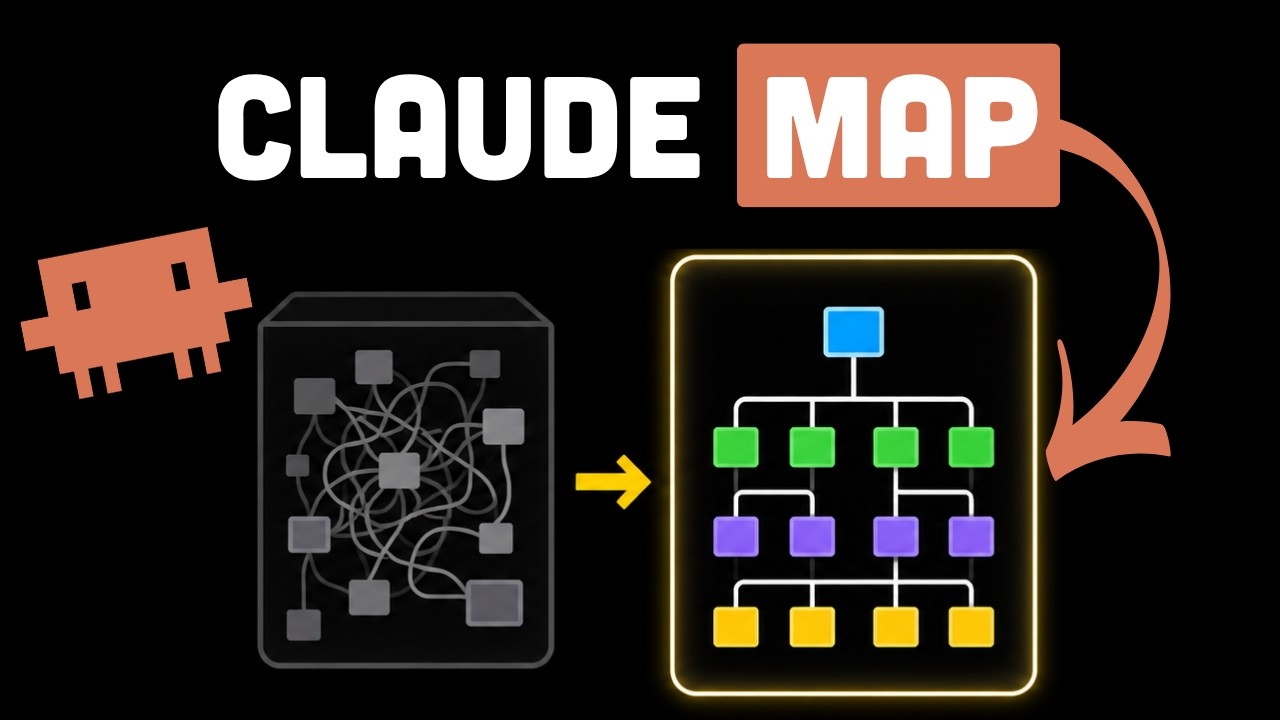
Graphs that teach > graphs that impress. Turn any code into an interactive knowledge graph you can explore, search, and ask questions about. Works with Claude Code, Codex, Cursor, Copilot, Gemini CLI, and more.

OmO: Just type "mass ulw" keyword with your prompt. Now you are the master of graph engineering.
Persistent Context Across Sessions for Every Agent – Captures everything your agent does during sessions, compresses it with AI, and injects relevant context back into future sessions. Works with Claude Code, OpenClaw, Codex, Gemini, Hermes, Copilot, OpenCode + More
Opinionated Oxlint rules for rejecting low-evidence TypeScript and JavaScript patterns
Teams-first Multi-agent orchestration for Claude Code