
obra/
superpowers

obra/superpowersSkills
An agentic skills framework & software development methodology that works.
285k
1 add
SureForge is an instruction-only skill for complex agent work. It adds a staged workflow with research, planning, execution, delivery, and independent review so the agent does not skip checks or call partial work finished.
Builders who want Claude Code, Codex, or Cursor to slow down for unclear, multi-step work and verify before shipping.
You can get agent work that asks better questions, follows a plan, and proves the result before it is handed over.
The skill tells the agent to read what is already there, look at the problem from multiple angles, and ask only the questions that change the decision.
It requires a plan that maps acceptance criteria to steps, inspection units, and verification methods before any change starts.
It makes the agent inspect the exact candidate, try the recipient path, and report what was checked and what was not.
It adds a fresh-context reviewer for plan and delivery, with a limit on review rounds and a blocked result if the review cannot be completed.
The skill ships as `SKILL.md` plus reference files and templates, with no runtime, hook, or dependency.
`evals/`, `review/`, `scripts/`, and `tests/` check the skill package, evaluation data, install copies, and verification behavior.
npx skills add Da7-Tech/SureForge
npx skills add Da7-Tech/SureForge --agent claude-code --agent codex --agent cursor --agent devin --agent hermes-agent -y
An instruction-only Agent Skill for complex work. It tells an AI agent to research before it asks, ask before it plans, plan before it builds, verify before it delivers, and to get an independent review before it calls anything done.
Version 1.0.0. MIT license. Maintained by Da7-Tech.
Agents fail in predictable ways on big tasks. They start building before the request is understood. They treat a skipped question as a yes. They check a sample and call it complete. They re-read their own work and call it a review. They run out of review rounds and ship anyway.
SureForge is the working procedure that grew out of dealing with exactly those failures, written down so an agent can follow it. The pattern behind it is simple: the time spent understanding, planning, and checking up front is far less than the time spent redoing work, patching it, and re-checking it by hand afterwards. Fewer do-overs means fewer tokens over the life of a task, less of your attention spent on review, and work that is right the first time far more often.
It is plain text: a short entry point plus reference files the agent loads when it needs them. There is no runtime, no hook, and no dependency. The agent follows it the way it follows any other skill.
The skill is the skills/sureforge/ folder: one SKILL.md plus the reference files and templates it links to. Installing means putting a copy of that folder where your agent looks for skills. Nothing runs at install time and nothing runs afterwards; the agent reads the text when the skill is selected.
With the Skills CLI (Node.js 22.20 or newer), from your project:
npx skills add Da7-Tech/SureForge
The CLI asks which agents to install for and copies the folder into each one's skill directory. To skip the prompt, name the agents with the CLI's identifiers, for example:
npx skills add Da7-Tech/SureForge --agent claude-code --agent codex --agent cursor --agent devin --agent hermes-agent -y
Add -g to install at user level instead of in the current project. The CLI may write a skills-lock.json in your project; that file can contain local paths, so look at it before committing it. npx skills update refreshes installed skills and npx skills remove uninstalls them.
Manual install: copy the whole skills/sureforge/ folder, including LICENSE, references/, and assets/, into the directory your host reads. Copying only SKILL.md is not enough, because it links to the other files.
| Host | Project directory | User directory |
|---|---|---|
| Claude Code | .claude/skills/sureforge/ | ~/.claude/skills/sureforge/ |
| Codex | .agents/skills/sureforge/ | ~/.agents/skills/sureforge/ |
| Cursor | .agents/skills/sureforge/ or .cursor/skills/sureforge/ | ~/.cursor/skills/sureforge/ or ~/.agents/skills/sureforge/ |
| Devin CLI | .devin/skills/sureforge/ | ~/.config/devin/skills/sureforge/ |
| Hermes Agent | .hermes/skills/sureforge/ | ~/.hermes/skills/sureforge/ |
These are the directories the pinned Skills CLI and the hosts' own documentation used when this was checked (dates and details in platforms.md). Hosts change their paths; if a skill is not discovered, check the host's current documentation first.
To read the skill without installing anything, open SKILL.md. It is the same text the agent gets.
Ask for it by name:
Use SureForge for this task. Research the important unknowns before you ask me anything, then give me a plan I can check before you build.
For high-stakes work, ask for full mode:
Use SureForge in full mode. Do not pass a gate without three verification methods of your own and three from an independent reviewer. If a reviewer or tool is missing, tell me instead of pretending.
Small tasks are meant to stay small. If you ask SureForge to fix a typo, the instructions call for fixing the typo and checking the diff, not for starting a research project.
Four phases, each ending in a gate that is READY, REPAIR, or BLOCKED:
Three tiers set how much of this runs:
| Tier | When | What the agent owes |
|---|---|---|
| Light | Small, reversible, clearly specified | Understand, do the minimal change, check it. |
| Standard | Substantial multi-step work with bounded consequences | Four gates, two complementary checks per gate, independent review at plan and delivery when one is available. |
| Full | You asked for it, or the consequences are high-risk or hard to reverse | Three verification methods from the agent and three chosen freely by a fresh-context reviewer at every gate; a critic for material disputes. |
Independent review means a reviewer that has not seen the author's reasoning, self-rating, or preferred verdict. It gets the artifact, the request, the contract, and the material it needs, and it picks its own methods. Every finding is investigated before anything is changed: confirmed, refuted with evidence, unresolved, duplicate, or out of scope. There are at most three review rounds per gate, and running out of rounds is a BLOCKED result, not a delivery.
When something is missing (no internet, no question tool, no reviewer, no renderer), the skill says so and uses a named fallback rather than pretending the check happened.
skills/sureforge/ is the skill: SKILL.md, seven reference files (the four phases, the review protocol, a verification catalog, dated platform notes), and templates for the reviewer brief, critic brief, task ledger, and coverage ledger. This folder is all a user needs.evals/ is the evaluation kit: thirteen failure scenarios with pass/fail oracles, twenty activation prompts with expected tiers, five synthetic benchmark tasks with hidden grading criteria, a three-arm study protocol, an abstract gate model, and a strict aggregator for run records.review/ holds the review contract the skill was built against and a neutral intake for fresh-context reviewers.scripts/ and tests/ check the package itself: inventory, metadata, links, licenses, privacy patterns, archive integrity, and installation. See Verification for the commands.Three kinds of evidence, kept apart because they prove different things.
Mechanical checks you can rerun from this repository: the unit tests (see Verification) pass on Python 3.11 and 3.14, and every fault listed in scripts/mutation_audit.py is caught by them when seeded into a temporary copy. The skill passes the reference skills-ref validator at the commit pinned in review/toolchain.json.
Installation checks, run locally with Skills CLI 1.5.23 in an isolated project: copies installed for the five CLI targets Claude Code, Cursor, Codex, Devin, and Hermes (four directories, since Cursor and Codex share one) were byte-identical to skills/sureforge/, and Devin CLI 3000.6.14 listed the installed skill. Installation from the public repository is checked when a release is tagged and recorded in that release's notes, not here.
Behavior, from two pilots that checked whether models actually follow the text and stay inside its limits. The run logs are kept by the maintainer, outside this repository.
The pilots used small synthetic tasks that a strong model gets right with or without help; they were built to test adherence and safety, not to show the gains that come on real, underspecified work where the failures listed above actually happen. A three-arm comparison on the maintainer's own task set and on visual-document work is the next step.
Four rounds of independent review preceded this release; the findings and what changed are in the changelog.
From the repository root, with Python 3.11 or newer:
python3 -B -m scripts.check_package
python3 -B -m unittest discover -s tests -v
The first command checks the file inventory, skill metadata, links, licenses, requirement references, evaluation data, syntax, version consistency across the public documents, and privacy patterns. The second runs the package, gate-model, and metrics tests. To seed each listed implementation fault into a temporary copy and confirm the tests catch it (a few minutes):
python3 -B -m scripts.mutation_audit
To compare an installed copy with the source:
python3 -B -m scripts.verify_install --installed path/to/installed/sureforge
To build or verify a review archive (a normalized ZIP with a manifest of file hashes):
python3 -B -m scripts.package_review --output path/outside/the/repo/SureForge-review.zip
python3 -B -m scripts.package_review --verify path/to/SureForge-review.zip --archive-only
See CONTRIBUTING. In short: keep the skill text short and portable, add a test with every behavior change, keep personal data out of the repository, and do not claim measured benefits that were not measured.
The packaging follows the Agent Skills specification and its guidance on authoring and evaluation. Workflow references considered during design include Superpowers, Spec Kit, and BMAD. The text here is original.
MIT. See LICENSE.
Sign in to join the discussion.
No comments yet. Be the first to say what this is good for.
An agentic skills framework & software development methodology that works.
Turn any codebase, with its docs, SQL schemas, configs, and PDFs, into a queryable knowledge graph. A /graphify skill for Claude Code, Cursor, Codex, and Gemini CLI: local deterministic AST parsing, every edge explained, no vector store.

Topic in, narrated explainer video out. A Claude Code / Codex skill that turns any topic into a black-canvas motion-graphics explainer video with TTS voiceover, subtitles and a chapter progress bar. Chinese or English; every frame drawn in code with Remotion.
Public repository for Agent Skills
Open-source AI job search: scan job portals, evaluate listings into a structured A-H report with a global 1-5 score, tailor your CV, track applications — runs locally in your AI coding CLI (Claude Code, Codex, OpenCode, Antigravity…)
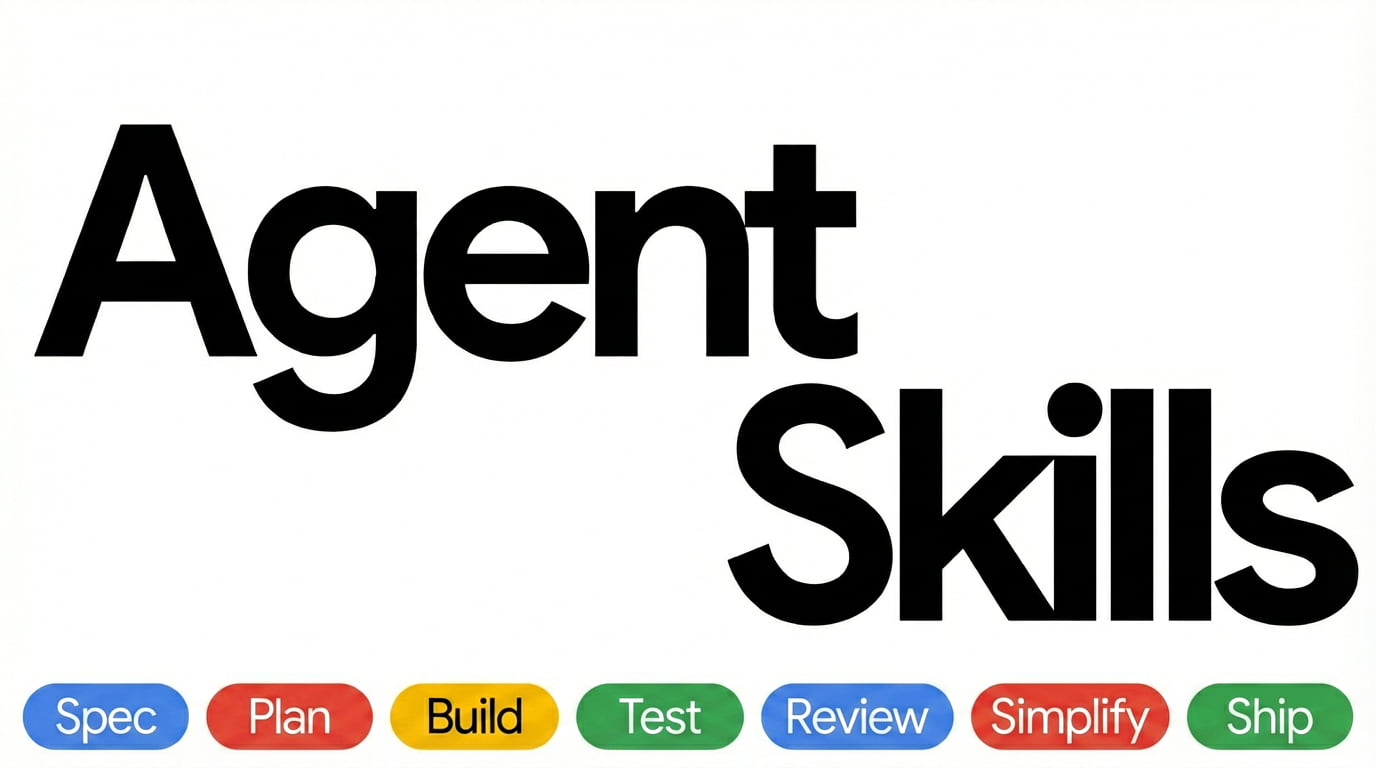
Production-grade engineering skills for AI coding agents.