

DietrichGebert/ponytailPlugins
Makes your AI agent think like the laziest senior dev in the room. The best code is the code you never wrote.
138k
1 add
opensessions adds a live sidebar to tmux so you can track agent sessions, thread states, repo breadcrumbs, and localhost ports without leaving your terminal. It uses a Rust sidebar client, a local server, and agent watchers to keep session state in sync and expose it over HTTP for scripts and agents.
Builders who use tmux with Claude Code, Codex, Amp, or OpenCode and want a shared view of active sessions.
You can switch between agent sessions, see what each thread is doing, and push status updates from scripts instead of hunting through terminals.
Shows session state across Amp, Claude Code, Codex, and OpenCode.
Marks threads as done, error, or interrupted so you can spot unseen changes.
Accepts status, progress, and log updates from agents or scripts over localhost.
Supports fast switching, reordering, hide and restore, creation, and kill actions from the sidebar.
Detects localhost ports and opens `http://localhost:<port>` when you click them.
Uses a ratatui UI and a local WebSocket/HTTP server with no runtime dependency.
tmux source-file ~/.tmux.conf
~/.tmux/plugins/tpm/bin/install_plugins
cd ~/.tmux/plugins/opensessions
cargo build --release
grep -q "Ataraxy-Labs/opensessions" ~/.tmux.conf 2>/dev/null || printf '\nset -g @plugin '\''Ataraxy-Labs/opensessions'\''\n' >> ~/.tmux.conf && tmux source-file ~/.tmux.conf && ~/.tmux/plugins/tpm/bin/install_plugins
Part of the Ataraxy Labs stack — agent-native infrastructure for software development. See also: sem (semantic version control) · weave (entity-level merge driver) · inspect (semantic code review).
Read the manifesto: https://ataraxy-labs.com/#thesis · Essays: https://ataraxy-labs.com/blogs · LLMs: https://ataraxy-labs.com/llms.txt

tmux is all you need. make tmux great again :)
opensessions is a sidebar for tmux when your sessions, agents, and localhost tabs start multiplying.
It lives inside your existing tmux workflow instead of replacing it: one small pane for session switching, agent state, repo breadcrumbs, and quick jumps back into the right terminal.
Built with Rust and ratatui for native performance and zero runtime dependencies.
tmux is the only supported mux today. There is older zellij integration code in the repo, but it is not stable enough to document as supported; we are looking for maintainers who want to help bring it back to that bar.
Requirements:
tmuxcurl or wget for downloading prebuilt binaries on first loadAdd this to ~/.tmux.conf:
set -g @plugin 'Ataraxy-Labs/opensessions'
Then reload tmux and install plugins:
tmux source-file ~/.tmux.conf
~/.tmux/plugins/tpm/bin/install_plugins
Open the sidebar with prefix o → s.
TPM clones the repo into ~/.tmux/plugins/opensessions. On first load, opensessions downloads the matching prebuilt release bundle into bin/; that bundle includes opensessions-sidebar, opensessions-server, and lazydiff.
If your platform is unsupported or you are developing locally, you can still build from source:
cd ~/.tmux/plugins/opensessions
cargo build --release
If you want the same setup as a single shell command:
grep -q "Ataraxy-Labs/opensessions" ~/.tmux.conf 2>/dev/null || printf '\nset -g @plugin '\''Ataraxy-Labs/opensessions'\''\n' >> ~/.tmux.conf && tmux source-file ~/.tmux.conf && ~/.tmux/plugins/tpm/bin/install_plugins
Use TPM's built-in update (prefix + U) or run:
~/.tmux/plugins/tpm/bin/update_plugins opensessions
No rebuild step:
No local rebuild is needed for normal installs. Reload tmux after TPM updates the plugin; opensessions will download the matching release bundle if bin/ is missing or incomplete.
The plugin automatically restarts the server on update so it picks up the new binary. Toggle the sidebar back on with prefix o → s if it was open.
Run the uninstall script before removing the plugin files — it cleans up tmux hooks, keybindings, sidebar panes, and environment variables that would otherwise persist and cause glitching:
sh ~/.tmux/plugins/opensessions/integrations/tmux-plugin/scripts/uninstall.sh
Then remove the set -g @plugin 'Ataraxy-Labs/opensessions' line from ~/.tmux.conf and run prefix + alt + u (TPM uninstall).
done, error, and interrupted states.j/k, arrows, Tab, 1-9, session reordering, hide/restore, creation, and kill actions.prefix o → s and prefix o → t for sidebar focus and toggle, prefix o → e for sidebar-safe even-horizontal layout in the current window, prefix o → 1 through 9 for quick switching, optional no-prefix shortcuts, and in-app theme switching.Scripts and agents can push custom metadata to the sidebar over HTTP — no binary needed:
# Set a status pill on a session
curl -X POST http://127.0.0.1:7391/set-status \
  -H 'content-type: application/json' \
  -d '{"session":"my-app","text":"Deploying","tone":"warn"}'

# Set progress
curl -X POST http://127.0.0.1:7391/set-progress \
  -H 'content-type: application/json' \
  -d '{"session":"my-app","current":3,"total":10,"label":"services"}'

# Push a log entry
curl -X POST http://127.0.0.1:7391/log \
  -H 'content-type: application/json' \
  -d '{"session":"my-app","message":"Tests passed","source":"ci","tone":"success"}'
Endpoints: /set-status, /set-progress, /log, /clear-log, /notify
Tones: neutral, info, success, warn, error — each with a distinct icon and color.
Full reference: docs/reference/programmatic-api.md
Build and run from a local clone:
git clone https://github.com/Ataraxy-Labs/opensessions.git
cd opensessions
cargo build --release
cargo test
Start the sidebar manually (outside tmux, for testing):
cargo run -p opensessions-sidebar
Start the server:
cargo run -p opensessions-server
For the full tmux workflow with keybindings, troubleshooting, and configuration options, follow the guide below.
~/.config/opensessions/session-order.json.~/.local/share/amp/threads/*.json and clears unseen state from Amp's session.json when a thread becomes seen there.~/.claude/projects/.~/.codex/sessions/ or $CODEX_HOME/sessions/ and resolves sessions from turn_context.cwd.~/.local/share/opencode/opencode.db._os_stash, so they can come back without restarting the sidebar process.http://localhost:<port>.apps/tui-rs/ — Rust ratatui sidebar client (connects to server over WebSocket)apps/server-rs/ — Rust server that assembles state from mux providers and agent watchersapps/tui/scripts/ — Shell scripts for tmux sidebar launch and session switchingpackages/runtime-rs/ — Shared Rust runtime: tmux provider, agent watchers, config, tracker, protocolpackages/sidebar-core-rs/ — Core sidebar state, input, and rendering logicopensessions.tmux — Root TPM entrypoint for usersintegrations/tmux-plugin/ — tmux-facing scripts and host integration glueintegrations/amp/ — Amp agent integrationintegrations/pi-extension/ — Pi extension integration127.0.0.1, and ports are derived per tmux socket unless explicitly overridden.theme, sidebarWidth, sidebarPosition, detailPanelHeight, sessionFilter, and mux are wired through the runtime. plugins, port, and keybinding are parsed for compatibility but are not active runtime extension hooks today.MIT
Sign in to join the discussion.
No comments yet. Be the first to say what this is good for.
Makes your AI agent think like the laziest senior dev in the room. The best code is the code you never wrote.
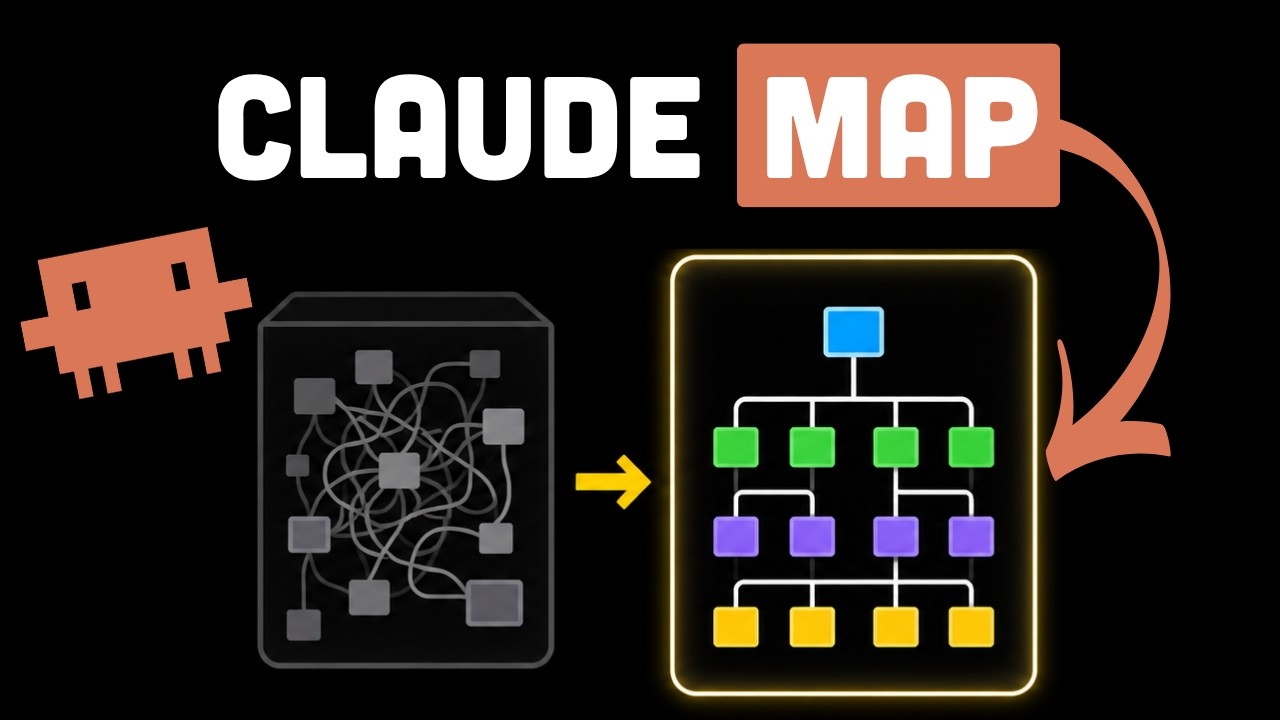
Graphs that teach > graphs that impress. Turn any code into an interactive knowledge graph you can explore, search, and ask questions about. Works with Claude Code, Codex, Cursor, Copilot, Gemini CLI, and more.

OmO: Just type "mass ulw" keyword with your prompt. Now you are the master of graph engineering.
Persistent Context Across Sessions for Every Agent – Captures everything your agent does during sessions, compresses it with AI, and injects relevant context back into future sessions. Works with Claude Code, OpenClaw, Codex, Gemini, Hermes, Copilot, OpenCode + More
Opinionated Oxlint rules for rejecting low-evidence TypeScript and JavaScript patterns
Teams-first Multi-agent orchestration for Claude Code